Cleveland Museum of Art
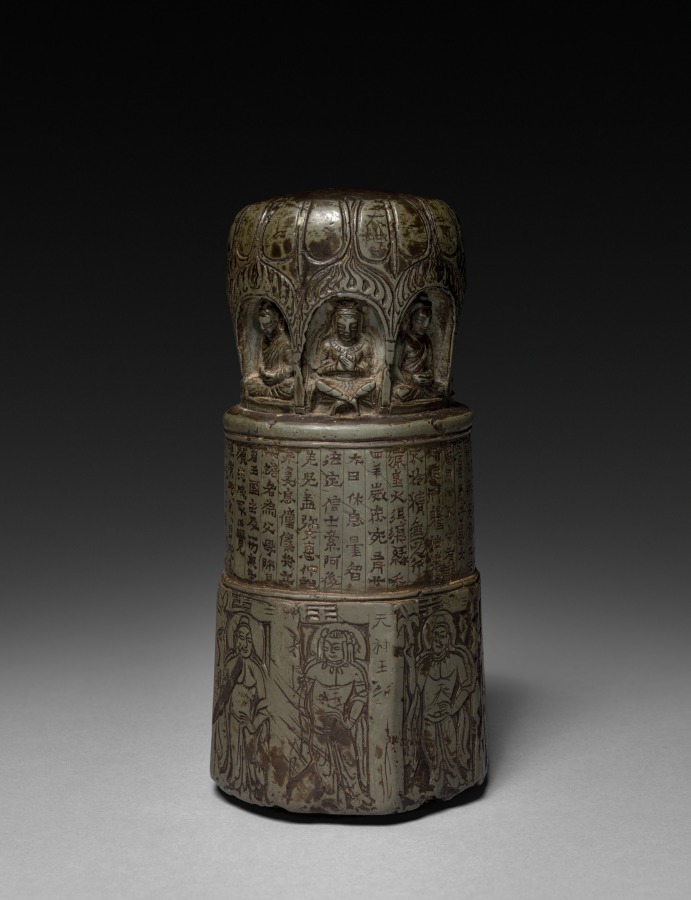
Miniature Votive Stupa
- Date
- 435 CE
- Medium
- steatite
- Culture
- China, Gansu province, Northern Wei dynasty (386-534)
- Department
- Chinese Art
- Institution
- Cleveland Museum of Art
- Object ID
- 155644
From the Cleveland Museum of Art record
This sutra pillar, inscribed with a sacred Buddhist text, belongs to a group of miniature stupas ( jingta ) that were found exclusively in the Gansu corridor, Northwest China. Ranging in date between AD 426–36, some of them bear the names of the lay Buddhist donors who commissioned them. A stupa is an architectural round structure built for the veneration of Buddhist relics. Miniature stupas may have commemorated the visit of a sacred site or represented donations to religious communities and sites. There are trigrams, three horizontal lines, broken or continuous, above each of the eight bodhisattvas in the stupa's lower section.
The authoritative record is held by Cleveland Museum of Art. LinkedCulture surfaces this object and its connections; it does not alter institutional metadata.
Get printable QR codesHide QR codes
Open QR codes for this object page and the museum record. They stay collapsed until needed.
Provenance & credit
As published by the source institution. Coverage varies — not every institution's open-data feed includes ownership history.
- Credit line
- Purchase from the J. H. Wade Fund
- Provenance
- ?-1990: (Compagnie de la Chine et des Indes, Paris, France, sold to the Cleveland Museum of Art) | 1990-: The Cleveland Museum of Art, Cleveland, OH
Related across collections
Semantically similar works from Cleveland Museum of Art and other institutions.