
Cleveland Museum of Art
Kriophoros (Ram-Bearer), Statuette
- Date
- 650–600 BCE
- Medium
- terracotta and polychrome
- Culture
- Greece, Crete
- Department
- Greek and Roman Art
- Institution
- Cleveland Museum of Art
In Greek art, the kriophoros is usually a shepherd or, later, Hermes. This statuette may be unique in presenting a warrior-hero as kriophoros. It is certainly one of the earliest sculptural representations of this type. The figure appears to be wearing a helmet, secured under the chin with a painted strap. Double outlines, reinforced at the bottom with incision and adorned with dotted circles in the area of the nipples, were used to suggest breastplates. A thick waist belt, decorated with painted crosshatched lines, is clearly the heroic zoster (warrior's belt). As described in ancient Homeric poetry, the zoster is the ultimate symbol of valor and prowess, worn by such heroes as the brothers Agamemnon and Menelaos and old King Nestor. This figure is shown in the solemn act of presenting a ram, most likely as a sacrificial offering, to a god or goddess. This heroic figure is shown presenting a ram, most likely as a sacrificial offering to a god or goddess.
The authoritative record is held by Cleveland Museum of Art. LinkedCulture surfaces this object and its connections; it does not alter institutional metadata.
Related across collections
Semantically similar works from Cleveland Museum of Art and other institutions.
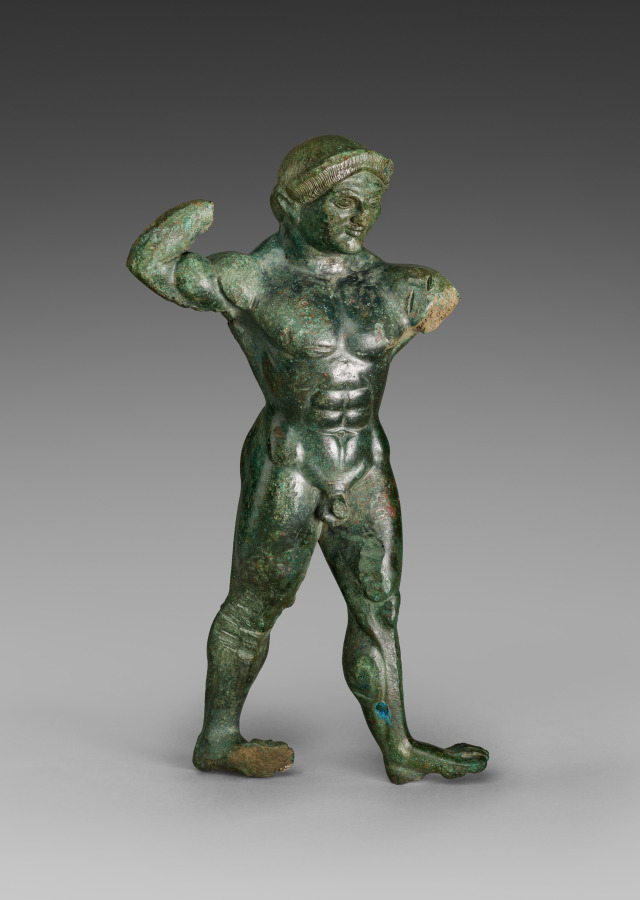
Statuette of Herakles
Cleveland Museum of Art

Statuette of Hermes
Getty Museum

Statuette of a Warrior
Getty Museum
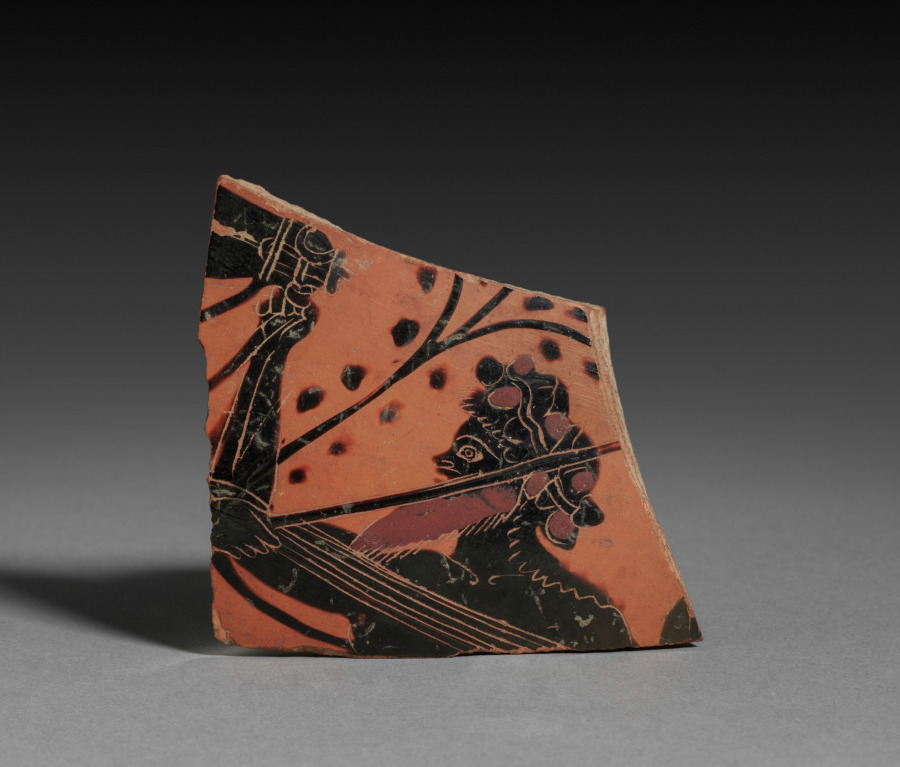
Fragment from Black-Figure Neck-Amphora (Storage Vessel): Satyr and Horse
Cleveland Museum of Art

Attic Black-Figure Amphora
Getty Museum

Herm of Dionysos
Getty Museum

Herm of Hermes
Getty Museum

Attic Black-Figure Neck Amphora
Getty Museum

Statuette of Hermes
Getty Museum

Statuette of Hercules
Getty Museum

Statue of Herakles
Getty Museum

Attic Black-Figure Neck-Amphora
Getty Museum