Cleveland Museum of Art
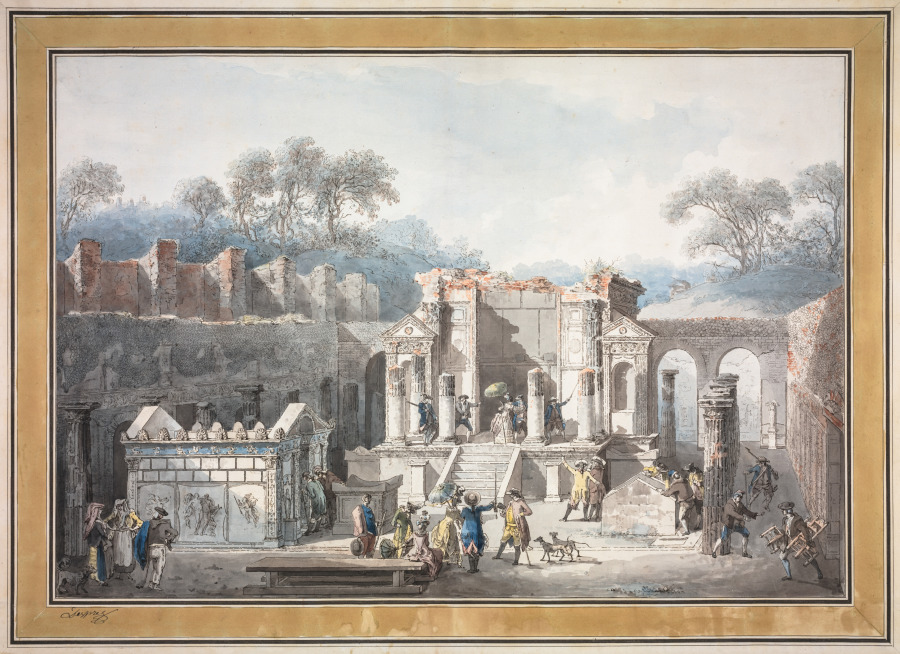
The Temple of Isis at Pompeii
Francesco PiranesiLinkedCulture matchlcp-6299d44340f3
- Date
- 1788
- Medium
- etching, hand-colored with watercolor
- Culture
- Italy, 18th century
- Department
- Prints
- Institution
- Cleveland Museum of Art
- Object ID
- 161941
From the Cleveland Museum of Art record
Buried under layers of volcanic ash since the eruption of Mount Vesuvius in 79 CE, the ancient Roman sites of Herculaneum and Pompeii were rediscovered and excavated in the 1700s. Remarkably well preserved, the two cities captured the imagination of Enlightenment Europe. Artists Francesco Piranesi and Louis Jean Desprez capitalized on the popularity of the ancient sites, creating an innovative souvenir of Pompeii. Etched by Piranesi, the prints were based on Desprez’s real-life observations. The latter artist hand colored and signed select impressions that the two advertised as dessins coloriés , or colored drawings, meant only for hommes de goût , or "men of taste." Francesco Piranesi visited Pompeii with his father in the 1770s.
The authoritative record is held by Cleveland Museum of Art. LinkedCulture surfaces this object and its connections; it does not alter institutional metadata.
Get printable QR codesHide QR codes
Open QR codes for this object page and the museum record. They stay collapsed until needed.
Provenance & credit
As published by the source institution. Coverage varies — not every institution's open-data feed includes ownership history.
- Credit line
- John L. Severance Fund
- Provenance
- ?–2001: (Hill-Stone, New York, NY, sold to The Cleveland Museum of Art, Cleveland, OH) | March 5, 2001–: The Cleveland Museum of Art, Cleveland, OH
Related across collections
Semantically similar works from Cleveland Museum of Art and other institutions.