Cleveland Museum of Art
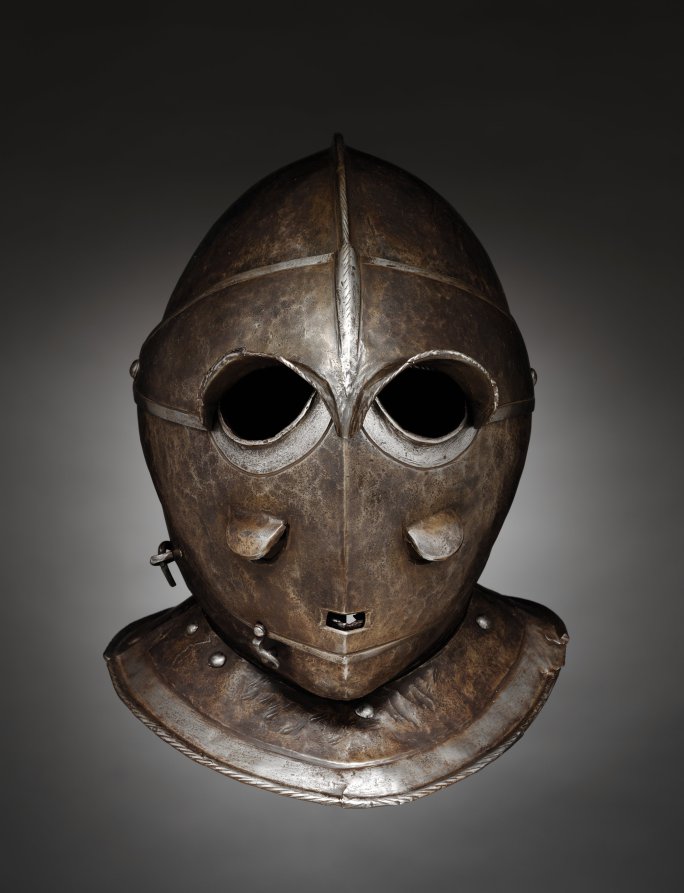
Savoyard Helmet (Todenkopf)
- Date
- c. 1600–20
- Medium
- steel, blackened
- Culture
- Italy or Germany, early 17th century
- Department
- Medieval Art
- Institution
- Cleveland Museum of Art
- Object ID
- 171077
From the Cleveland Museum of Art record
The term “Savoyard helmet” is used today to evoke the elite cavalry units formed by Charles Emanuel I, Duke of Savoy (1580-1630). Such helmets were designed principally to withstand and protect the wearer from shot from the powerful wheel-lock guns of the day, though their secondary function was to intimidate and terrify. The design of the helmet suggests a human face or skull. They were known as todenkopf or “death’s head” helmets in Germany. The helmet would have originally been associated with a three-quarter cuirassier armor. Similar armors are displayed nearby. This type of helmet is also called a "todenkopf," translating to "death's head."
The authoritative record is held by Cleveland Museum of Art. LinkedCulture surfaces this object and its connections; it does not alter institutional metadata.
Get printable QR codesHide QR codes
Open QR codes for this object page and the museum record. They stay collapsed until needed.
Provenance & credit
As published by the source institution. Coverage varies — not every institution's open-data feed includes ownership history.
- Credit line
- Severance and Greta Millikin Trust
- Provenance
- Probably collection Baron Peuker, Berlin, sold at auction in Bruxelles: Le Roy, M. Henri (1854): Catalogue Illustre D'Armes Anciennes Européennes et Orientales... plate II, fig. 21 | Collection Bach, Paris | Collection Rutherfurd Stuyvesant at Rutherford Hall, New York; published in The Collection of Arms and Armor of Rutherfurd Stuyesant, p. 26, plate XIII | Collection Frank Andriana, Los Angeles; published in: Curtis, Howard M. (1977): 2,500 Years of European Helmets, p. 304.
Part of a LinkedCulture topic
 European Renaissance Armor Components
These objects are all pieces of defensive armor and military equipment from 15th-17th century Europe, primarily from major armoring centers like Italy, Germany, and France.
500 objects from 4 institutions
Related across collections
Semantically similar works from Cleveland Museum of Art and other institutions.