Cleveland Museum of Art
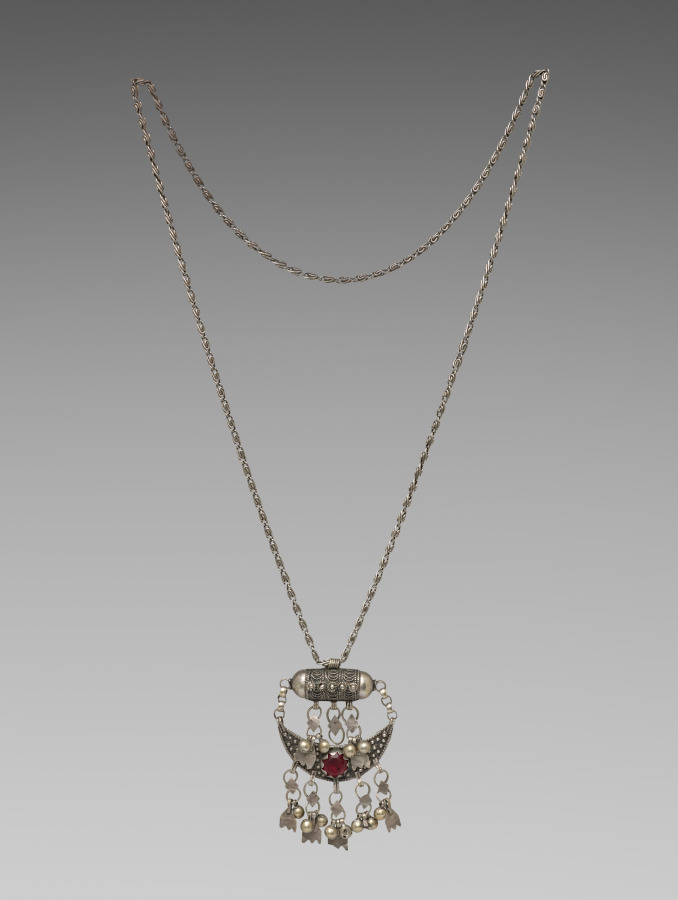
Necklace with pendant (waqari or wakari?)
- Date
- likely early to mid-1900s
- Medium
- silver alloy, glass
- Culture
- East Africa, probably Harar, Ethiopia, unknown silversmith
- Department
- African Art
- Institution
- Cleveland Museum of Art
Ornate filigree jewelry was historically made in Ethiopia for royals and nobility by specialized silversmiths trained through long apprenticeships. This elaborate pendant necklace ( waqari) probably made and worn in the Muslim city of Harar. Muslim women wore such massive jewelry, which holds aesthetic links to nearby Yemen. Its half-moon pendant is a protective crescent shape and its upper filigreed capsule is an amulet. The crescent symbol has existed as a talismanic form in Ethiopia since the Aksumite Empire (1–700s CE). Silversmiths also made objects for religious and royal use, like crowns and crosses.
The authoritative record is held by Cleveland Museum of Art. LinkedCulture surfaces this object and its connections; it does not alter institutional metadata.
Related across collections
Semantically similar works from Cleveland Museum of Art and other institutions.
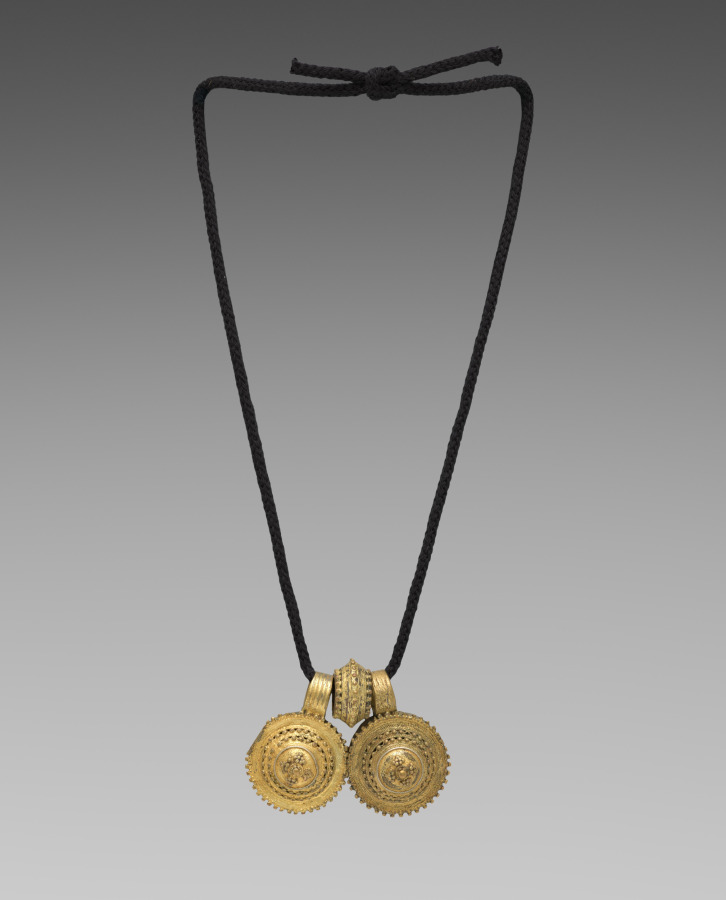
Necklace (ashän ketab) with amulet pendants (tälsäm) and bead
Cleveland Museum of Art
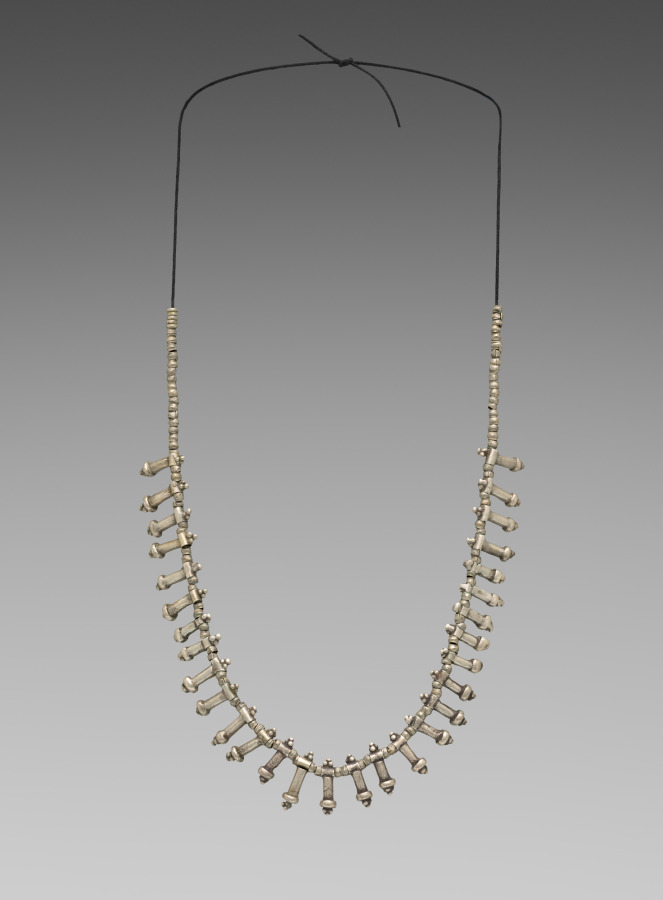
Necklace with beads (sadi?)
Cleveland Museum of Art
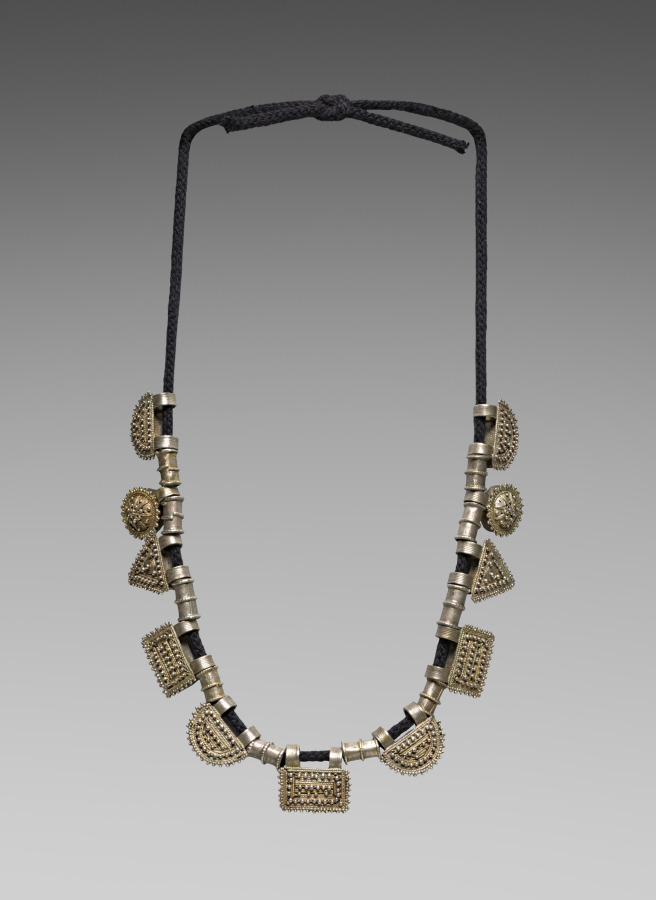
Necklace (ashän ketab) with amulet pendants (tälsäm)
Cleveland Museum of Art
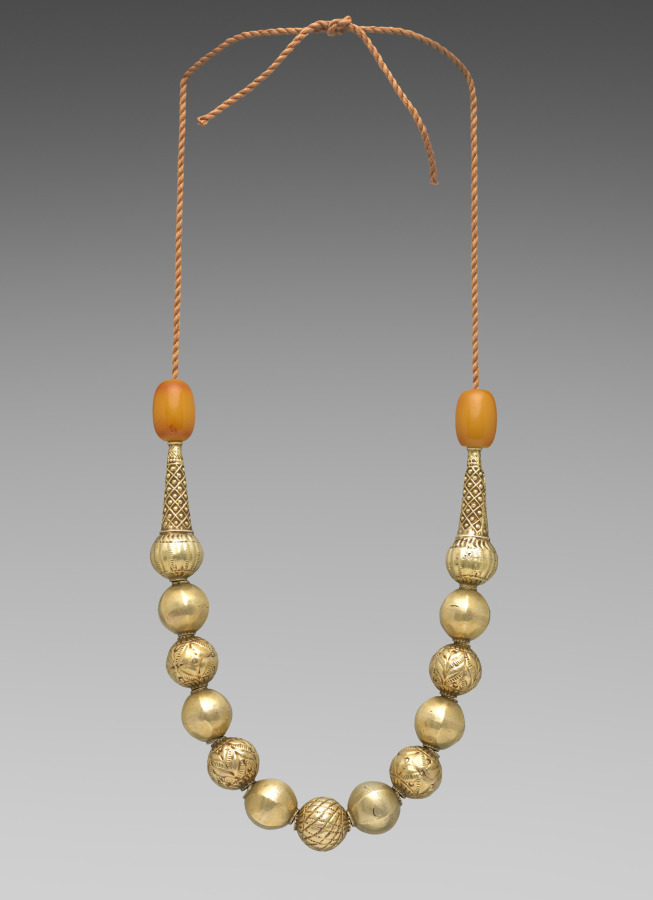
Necklace (muriya or murriyya)
Cleveland Museum of Art
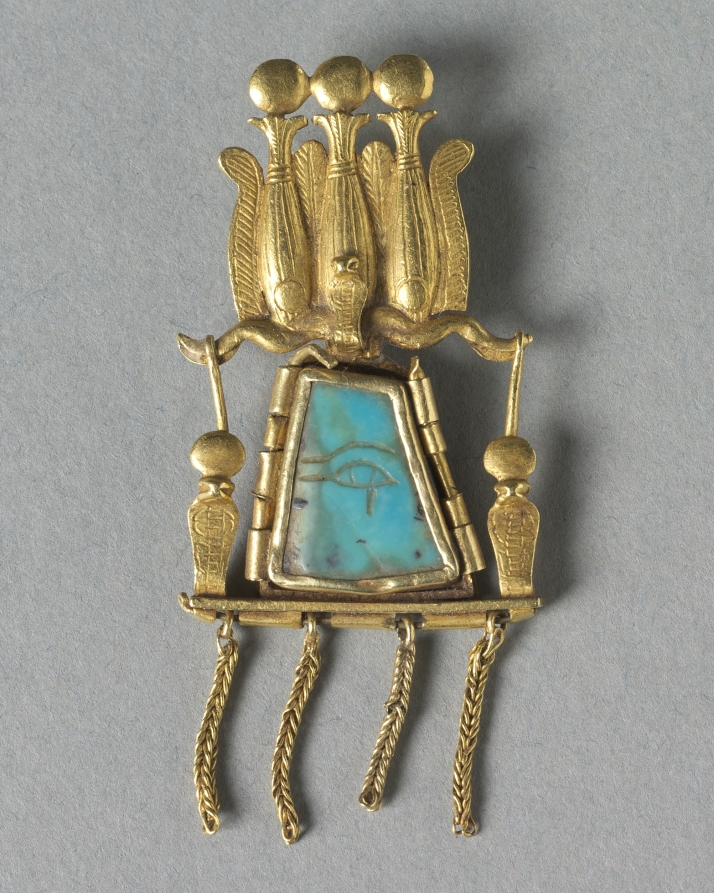
Pendant
Cleveland Museum of Art

Necklace with pendant
Minneapolis Institute of Art

Pendant
Getty Museum

Pendant
Getty Museum

Pendant
Getty Museum

Pendant
Getty Museum

Pendant
Getty Museum

Pendant
Getty Museum