Cleveland Museum of Art
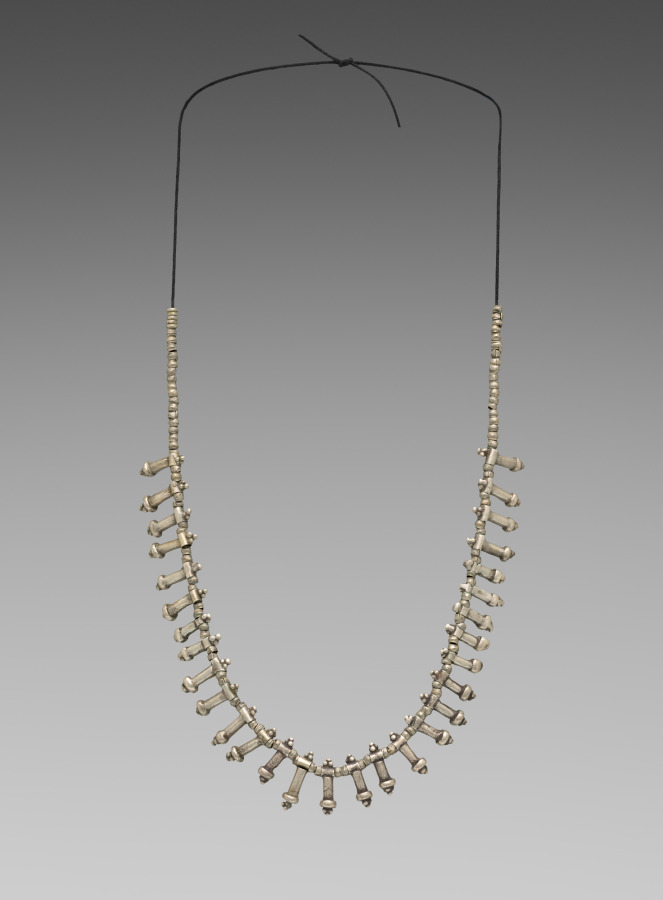
Necklace with beads (sadi?)
- Date
- late 1800s or early 1900s
- Medium
- silver alloy
- Culture
- Africa, East Africa, Ethiopia, unknown silversmith
- Department
- African Art
- Institution
- Cleveland Museum of Art
Ornate filigree jewelry was historically made in Ethiopia for royals and nobility by specialized silversmiths trained through long apprenticeships. This necklace has a single central talismanic amulet framed by phallic beads representing fertility framing it. This northern Ethiopian symbol is especially common in the city of Aksum. Box-shaped amulet pendants ( tälsäm) are meant to ward off the evil eye or other dangers. Linked to Islamic amuletic practices, the boxes are effective whether empty or whether they contain magical or prayerful texts. Their fine filigree and granulation work is characteristic of Harar as well as the Ethiopian Orthodox Christian city of Aksum. There are no local sources of silver in Ethiopia.
The authoritative record is held by Cleveland Museum of Art. LinkedCulture surfaces this object and its connections; it does not alter institutional metadata.
Related across collections
Semantically similar works from Cleveland Museum of Art and other institutions.
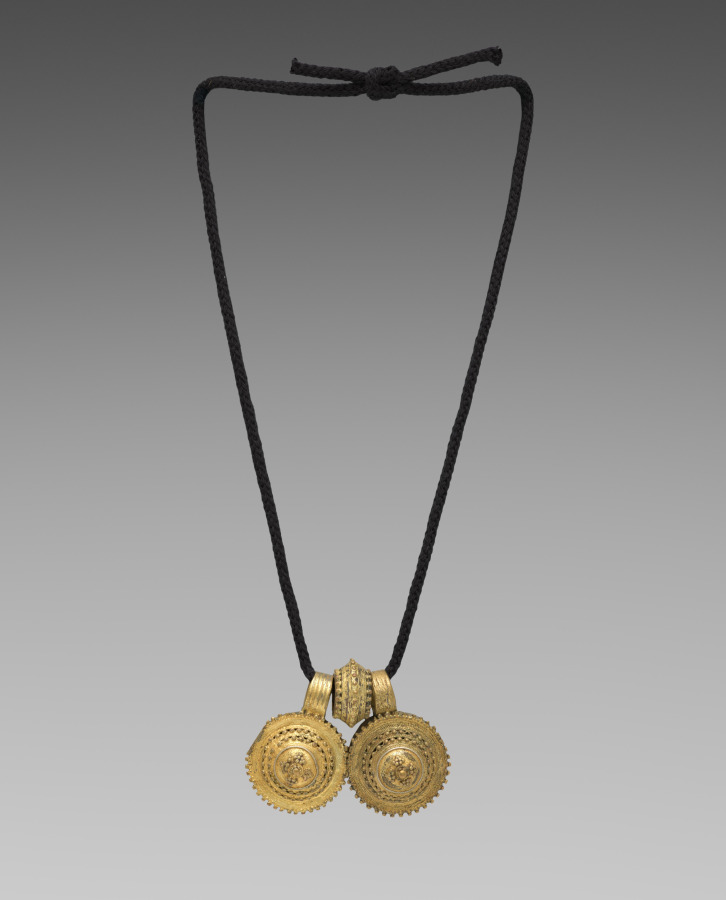
Necklace (ashän ketab) with amulet pendants (tälsäm) and bead
Cleveland Museum of Art
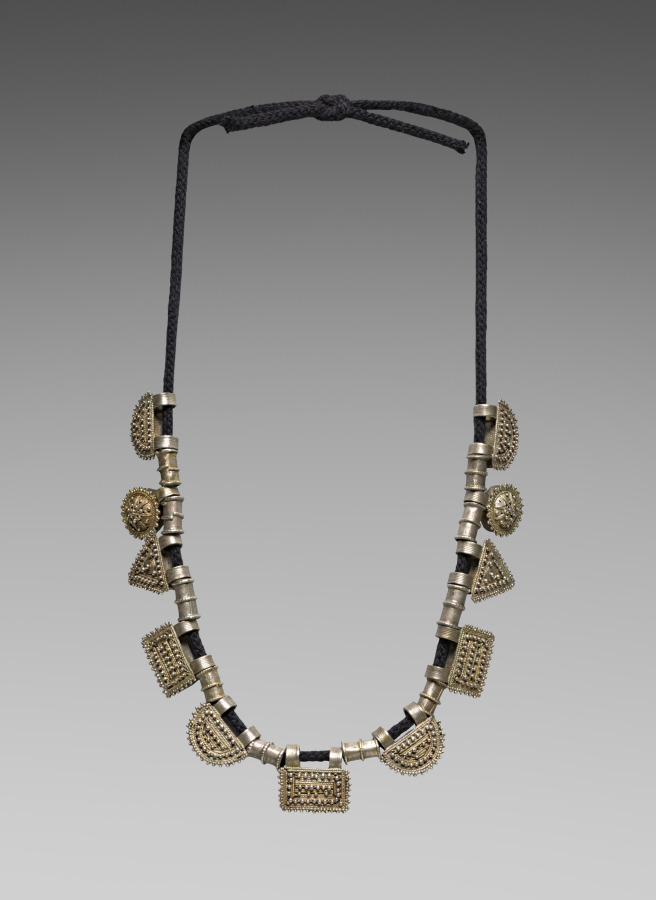
Necklace (ashän ketab) with amulet pendants (tälsäm)
Cleveland Museum of Art
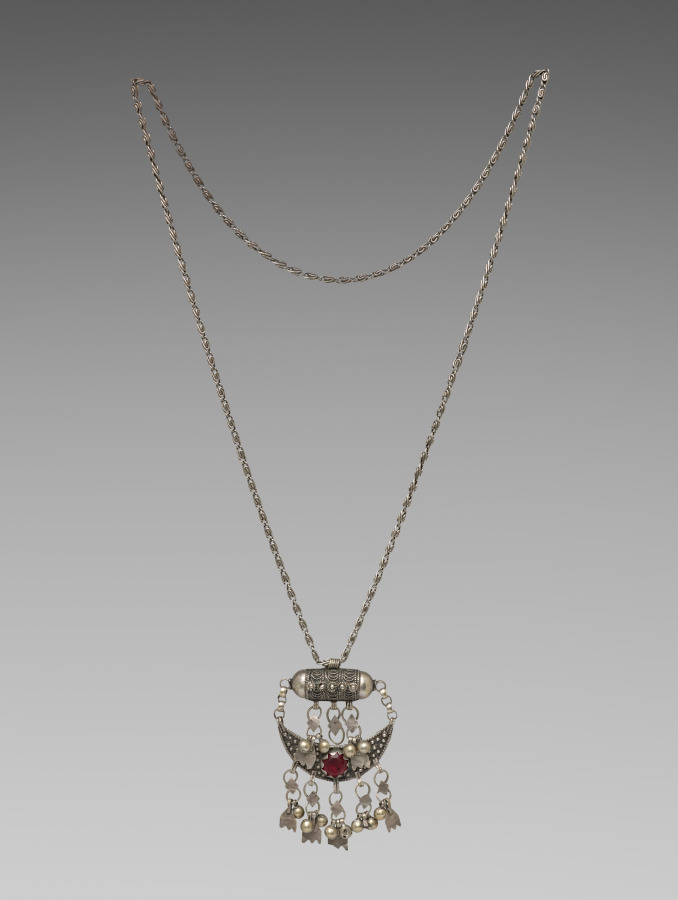
Necklace with pendant (waqari or wakari?)
Cleveland Museum of Art
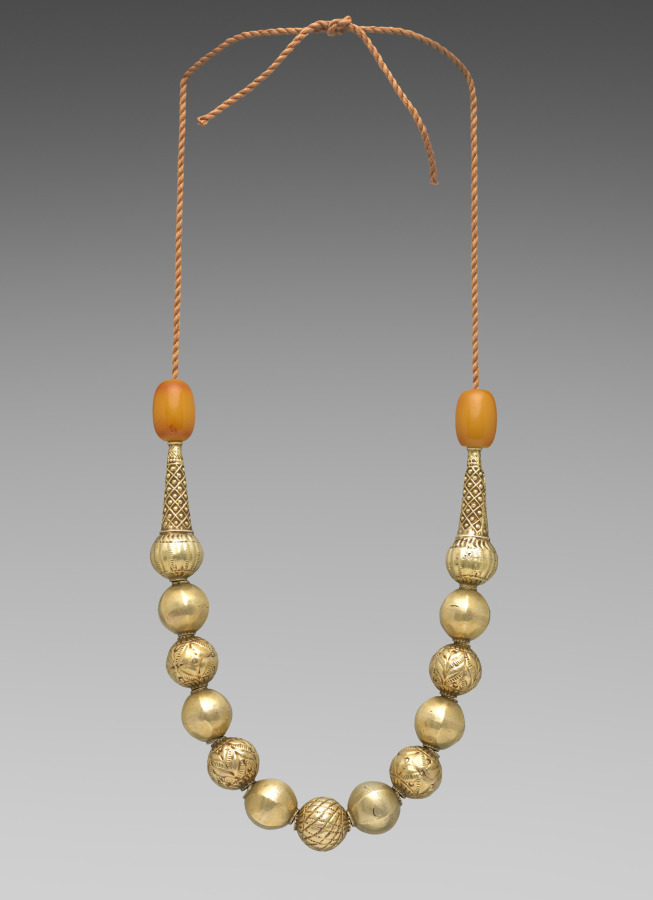
Necklace (muriya or murriyya)
Cleveland Museum of Art
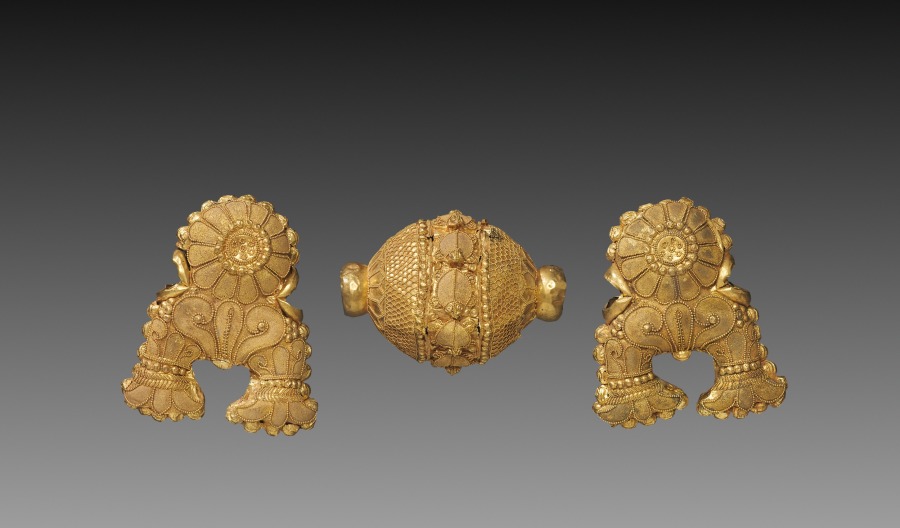
Necklace Bead and Pair of Pendants in the Shape of an Auspicious Symbol
Cleveland Museum of Art

Necklace
Minneapolis Institute of Art

Bead necklace
Minneapolis Institute of Art
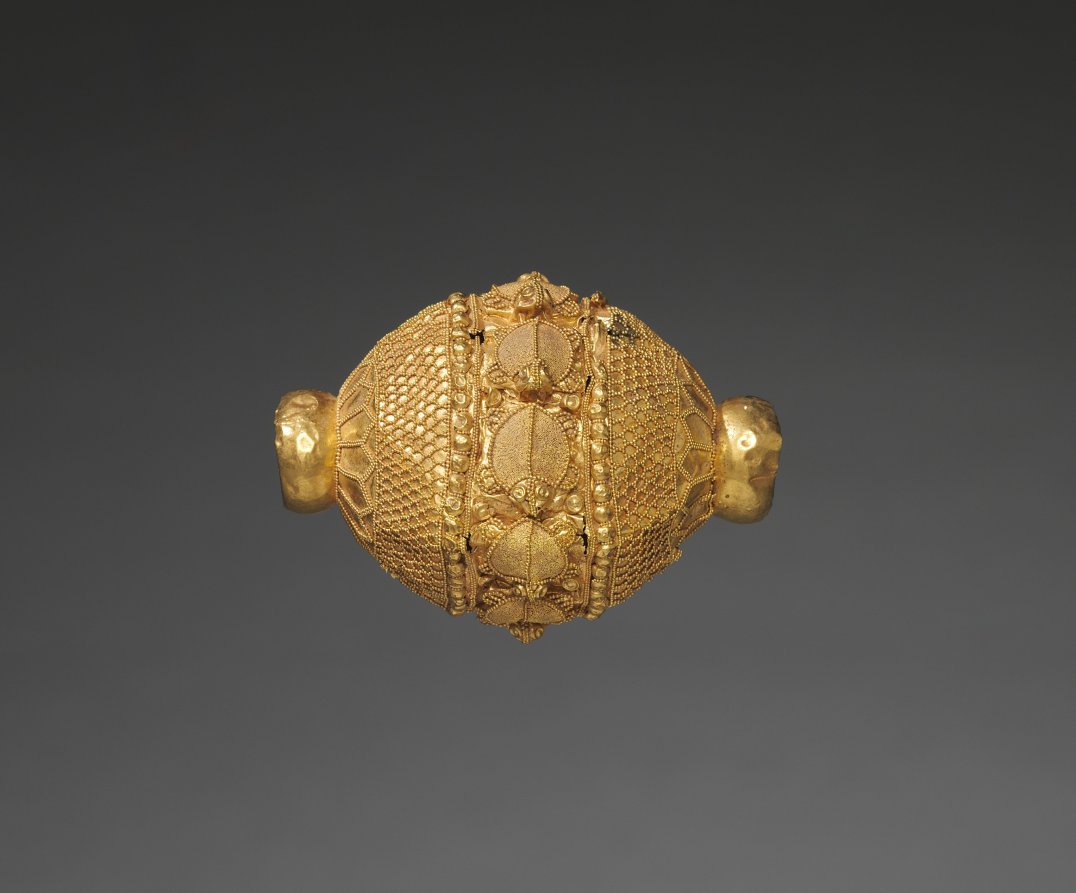
Necklace Bead
Cleveland Museum of Art

Bead necklace
Minneapolis Institute of Art
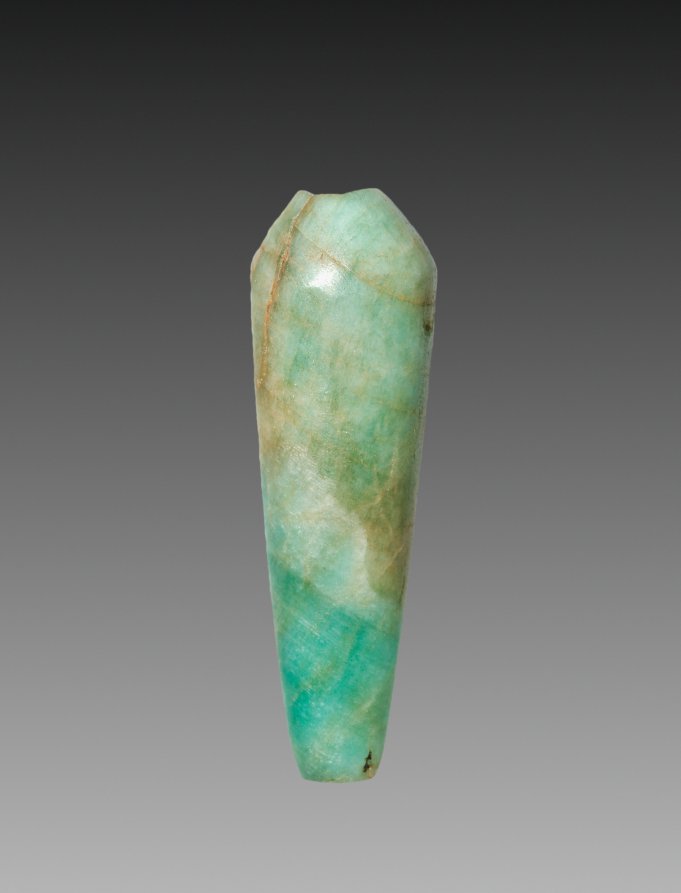
Teardrop-Shaped Bead
Cleveland Museum of Art
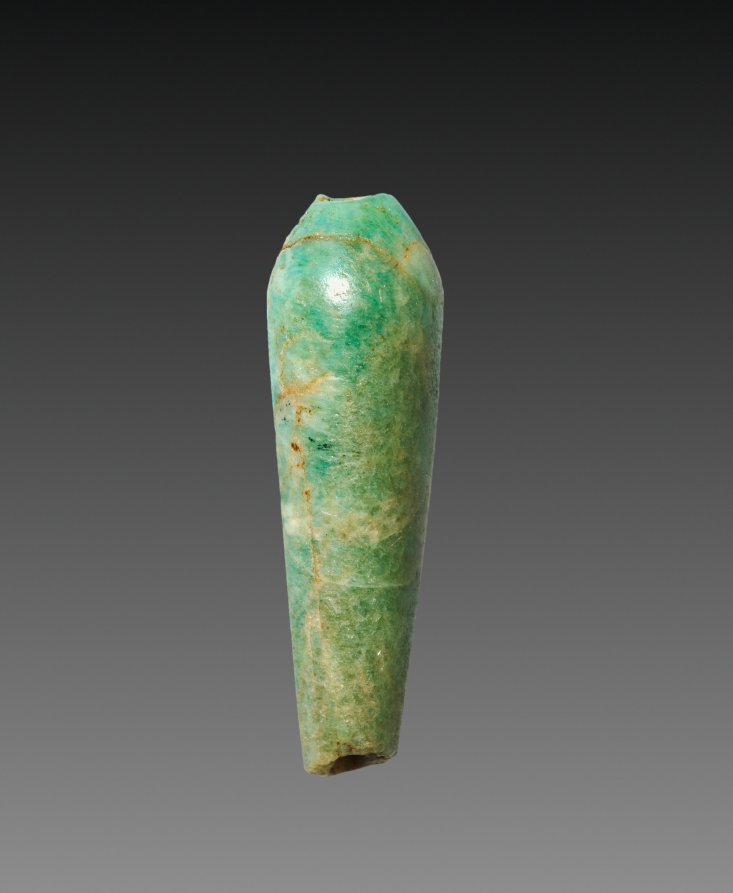
Teardrop-Shaped Bead
Cleveland Museum of Art

Gahu Amulet Box
Minneapolis Institute of Art