Cleveland Museum of Art
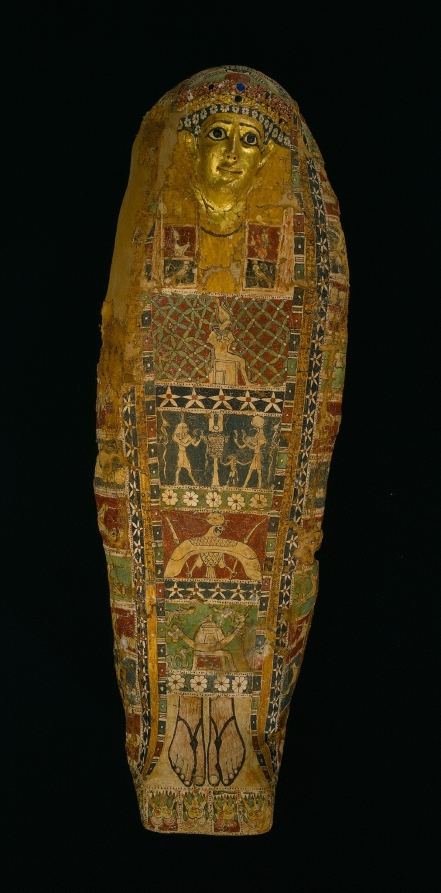
Cartonnage Mummy Case
- Date
- c. 50 BCE–50 CE
- Medium
- cartonnage, painted and gilded, with glass inlays
- Culture
- Egypt, Greco-Roman period (332 BCE–395 CE), Ptolemaic dynasty (305–30 BCE)–Roman empire (30 BCE–395 CE)
- Department
- Egyptian and Ancient Near Eastern Art
- Institution
- Cleveland Museum of Art
This mummy case is made of cartonnage, a material similar to papier-mâché, but using layers of linen rather than paper. Cartonnage mummy cases such as these are contemporary with funerary portraits painted on wood or linen, although they present a very different appearance. The face, modeled in plaster, is bland and idealized, although the effect of the gilding and glass inlays is quite dazzling. The body is painted with traditional, age-old funerary motifs: the god Osiris, seated and mummiform; the fetish of Abydos, holy city of Osiris, flanked by standing deities (Thoth and Shu); a Horus falcon with outspread wings, and the bark of Sokar. Below these are the sandaled feet of the deceased. On the sides are rows of seated deities. On the top of the head are a winged scarab beetle flanked by Anubis jackals. On the foot are painted the soles of the deceased’s sandals, flanked by scorpions for protection. This coffin is smaller and later in date than the other coffins in this gallery. It is made of cartonnage, which used layers of linen to create a material similar to papier-mâché. The painted portrait head displays the influence of Roman portraiture at this time and incorporates both gilding and glass inlays. Despite the fragile materials, this mummy case survived due to the very dry desert climate in which it was found.
The authoritative record is held by Cleveland Museum of Art. LinkedCulture surfaces this object and its connections; it does not alter institutional metadata.
Related across collections
Semantically similar works from Cleveland Museum of Art and other institutions.

Cartonnage of Lady Tashat
Minneapolis Institute of Art

Mummy Mask
Getty Museum
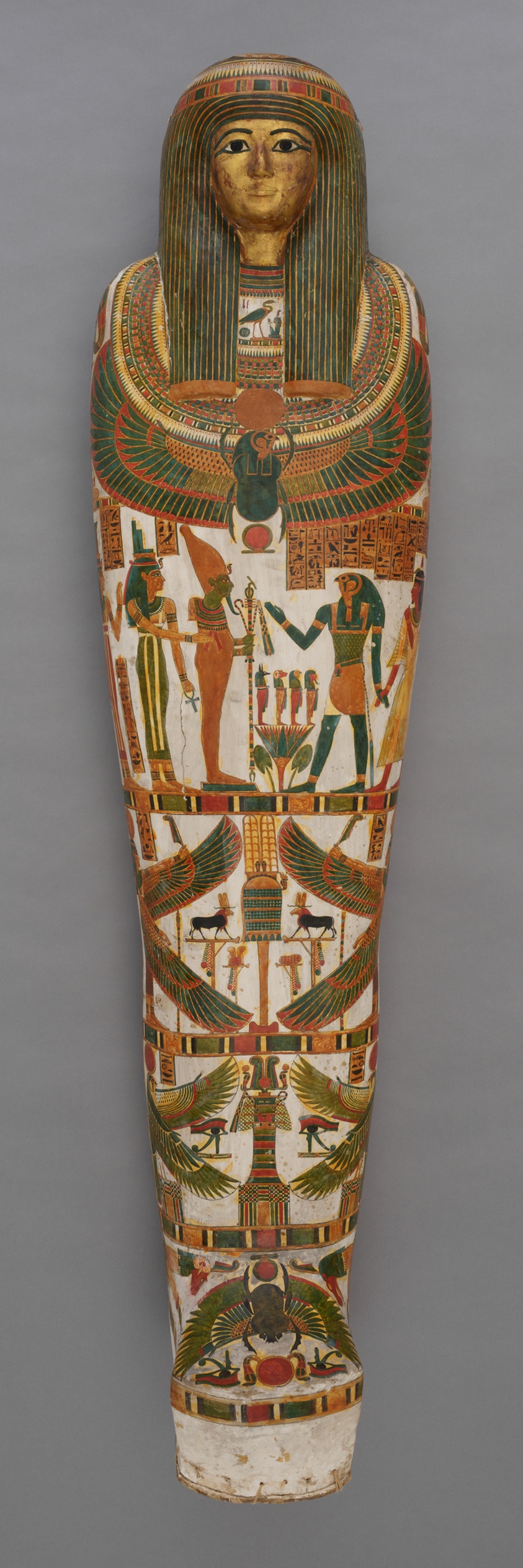
Coffin and Mummy of Paankhaenamun
Art Institute of Chicago
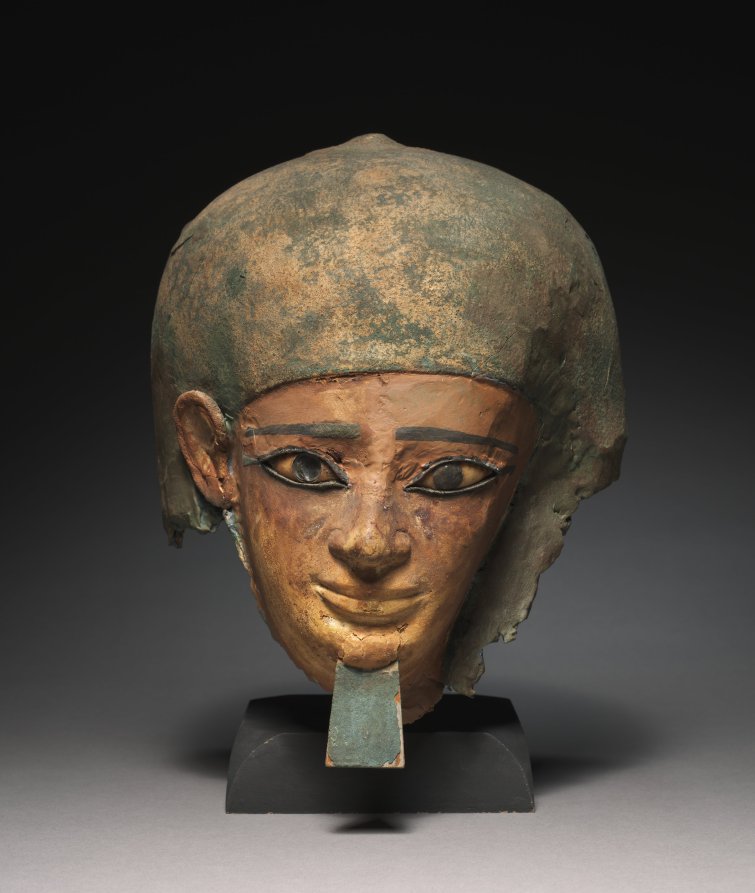
Mummy Mask of Senbi
Cleveland Museum of Art
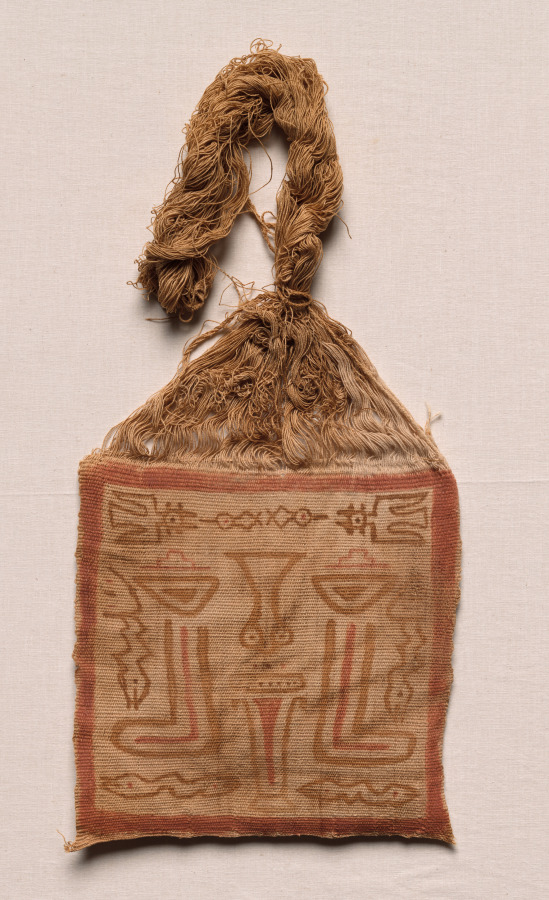
Mummy Bundle "Mask"
Cleveland Museum of Art
Mummy Bundle "Mask"
Cleveland Museum of Art
Mummy Bundle "Mask"
Cleveland Museum of Art
Mummy Bundle "Mask"
Cleveland Museum of Art

Mummy Shroud with Painted Portrait of a Youth
Getty Museum
Funerary Panel of a Man
Cleveland Museum of Art
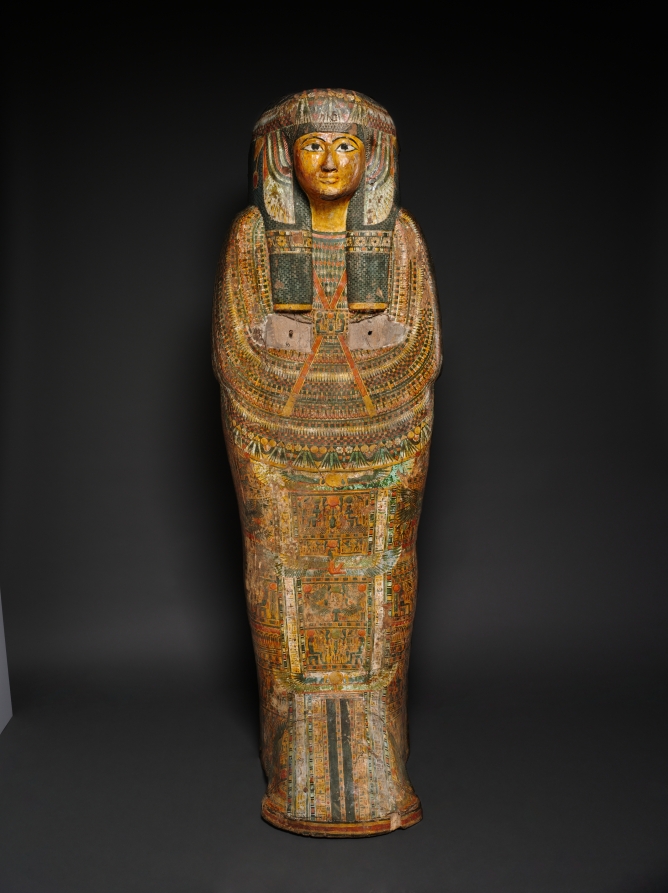
Coffin of Nesykhonsu (lid)
Cleveland Museum of Art
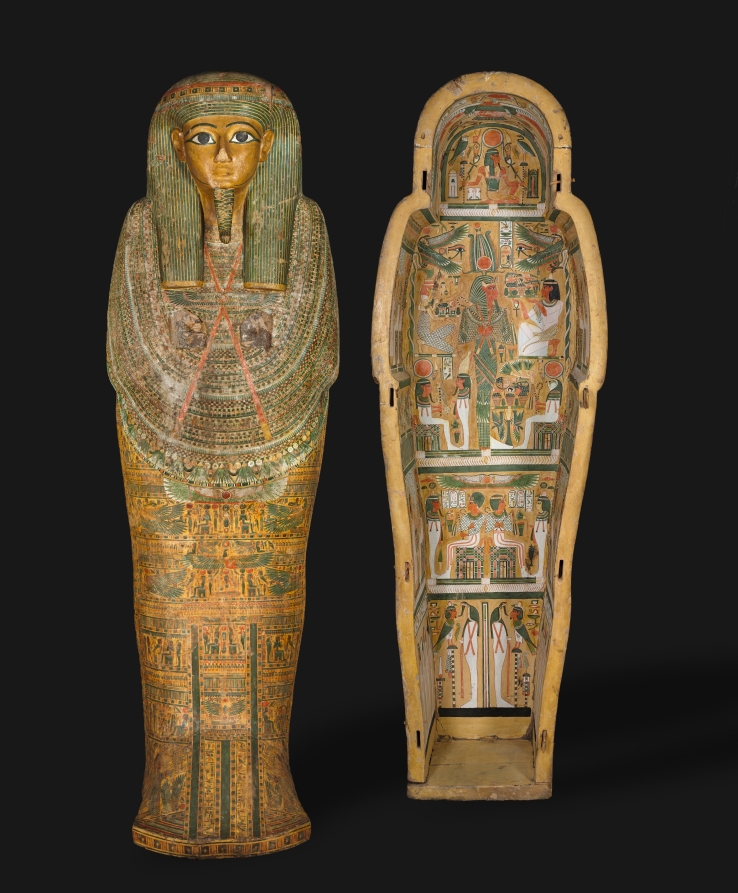
Coffin of Bakenmut
Cleveland Museum of Art