Cleveland Museum of Art
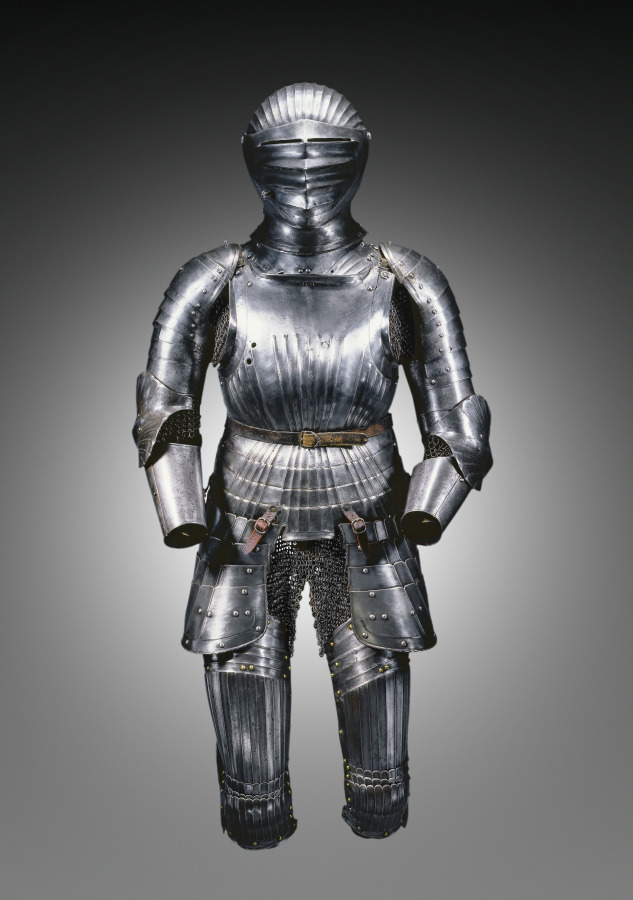
Partial Suit of Armor in Maximilian Style
- Date
- c. 1525
- Medium
- steel
- Culture
- Germany, Nuremberg
- Department
- Medieval Art
- Institution
- Cleveland Museum of Art
- Object ID
- 95969
From the Cleveland Museum of Art record
This fluted armor was visually striking in natural sunlight, which created a dazzling effect as it reflected off the polished, rippling steel. The flutings may have originated as a means of imitating the pleatings of male costume of the day. It became apparent, however, that the flutings were also a strengthening device, similar to corrugated metal. This enabled the armorer to use plates of thinner—and therefore lighter—steel. Such suits of armor demanded time-consuming and highly precise work from the armorer, which in turn quickly drove the production costs high enough that the fashion disappeared by 1540. The style's name is derived from Maximilian I, Holy Roman Emperor, during whose reign this was popular.
The authoritative record is held by Cleveland Museum of Art. LinkedCulture surfaces this object and its connections; it does not alter institutional metadata.
Get printable QR codesHide QR codes
Open QR codes for this object page and the museum record. They stay collapsed until needed.
Provenance & credit
As published by the source institution. Coverage varies — not every institution's open-data feed includes ownership history.
- Credit line
- Gift of Mr. and Mrs. John L. Severance
- Provenance
- Krzysztof Radziwiłł (1543-1603), Niasviž Castle, Belarus (formally Poland) | ?-1916: Charles Alexander, Baron de Cosson (1843-1929), England | Frank Gair Macomber (1849-1941), Boston, MA, sold to the Cleveland Museum of Art | 1916-: The Cleveland Museum of Art, Cleveland, OH
Part of a LinkedCulture topic
 European Renaissance Armor Components
These objects are all pieces of defensive armor and military equipment from 15th-17th century Europe, primarily from major armoring centers like Italy, Germany, and France.
500 objects from 4 institutions
Related across collections
Semantically similar works from Cleveland Museum of Art and other institutions.