
Minneapolis Institute of Art
Olla
Possibly Martina Vigil Montoya; Painter: Possibly Florentino Montoya
- Date
- c. 1900–10
- Medium
- Ceramic, pigment
- Culture
- Po-woh-ge-oweenge (San Ildefonso Pueblo)
- Department
- Arts of the Americas
- Institution
- Minneapolis Institute of Art
Pottery making at Po-woh-ge-oweenge (San Ildefonso Pueblo) was impacted in different ways than at Haaku (Acoma). When the Santa Fe Trail was opened in 1821, enamelware and metal containers became available, causing the production of pottery to decline. Even so, there still remained a few potters who were producing various types of pottery. Two of these potters were a husband and wife team named Martina and Florentino Montoya. Their signature innovation was the extension of the white slip over the entire surface, including the underbody and concave base. The Montoya's had close ties to the Kotyit (Cochiti Pueblo) and are credited with introducing the Cochiti slip to Po-woh-ge-oweenge. This slip can be quickly polished with a rag and was preferred over the native slip, which required tedious stone polishing. United States, Americas
The authoritative record is held by Minneapolis Institute of Art. LinkedCulture surfaces this object and its connections; it does not alter institutional metadata.
Related across collections
Semantically similar works from Minneapolis Institute of Art and other institutions.

Pot (Olla)
Minneapolis Institute of Art

Corn Dance, Cochiti Pueblo
Minneapolis Institute of Art

Olla
Minneapolis Institute of Art
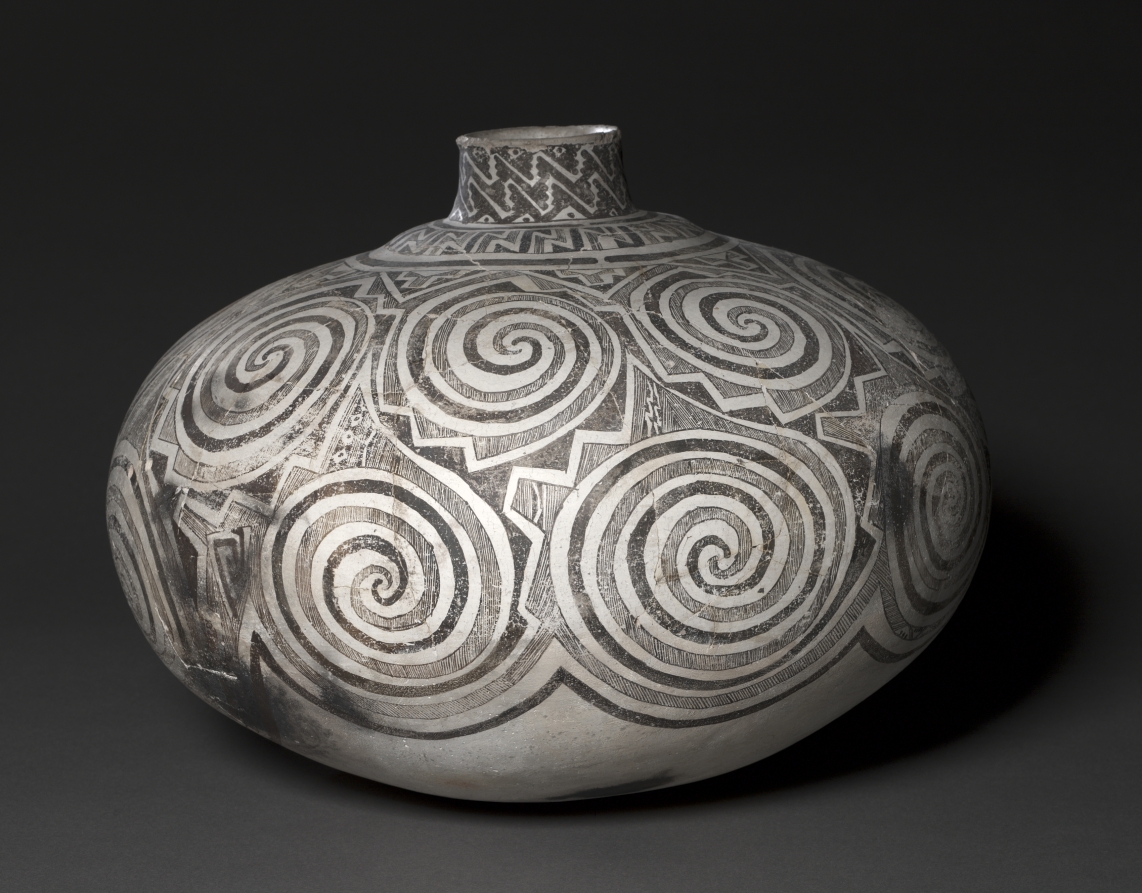
Water Jar (Olla)
Cleveland Museum of Art

Pot (Olla)
Minneapolis Institute of Art

Olla
Minneapolis Institute of Art

Olla
Minneapolis Institute of Art
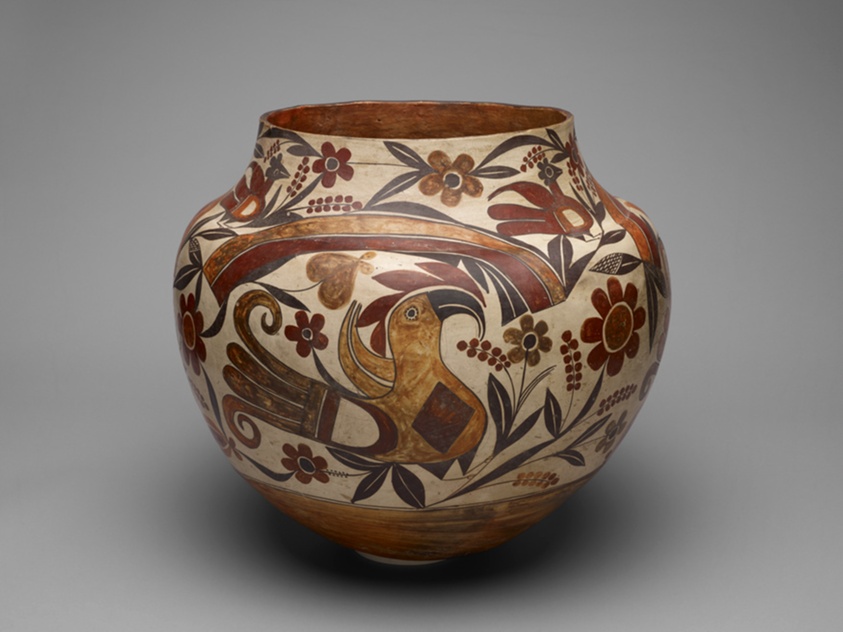
Parrot Olla
Art Institute of Chicago
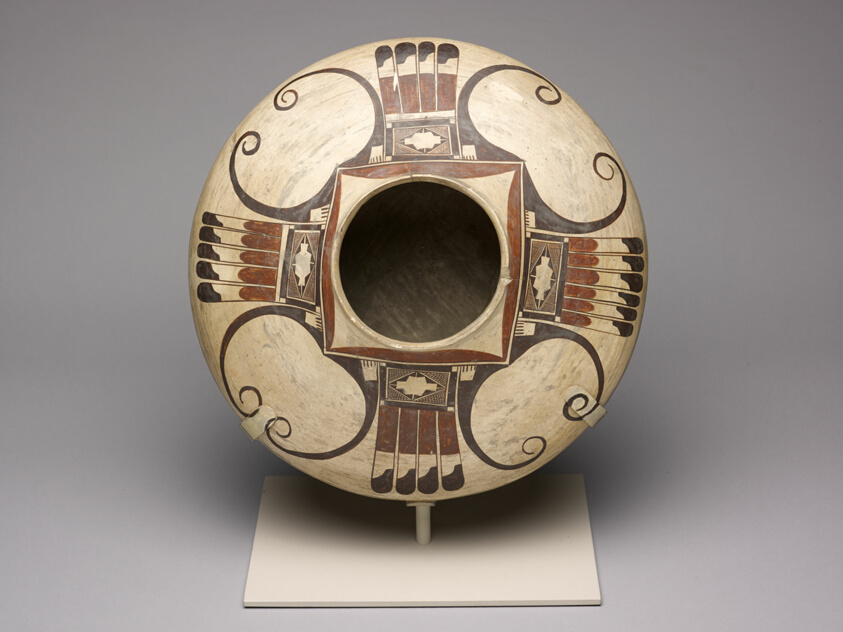
Seed Jar with Sikyátki Motifs
Art Institute of Chicago

Pot (Olla)
Minneapolis Institute of Art

Bowl
Minneapolis Institute of Art
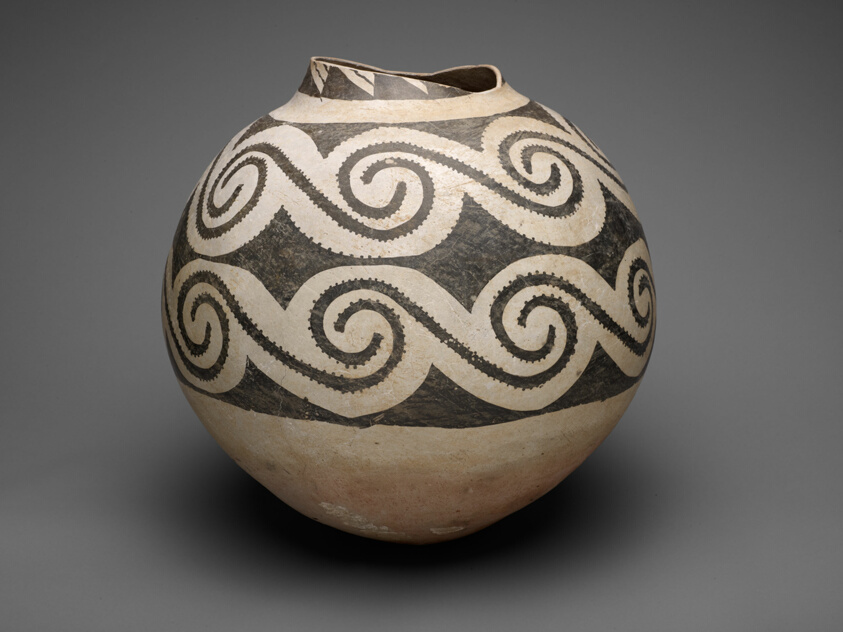
Storage Jar with Horizontal Bands of Interlocking Scrolls
Art Institute of Chicago