
Minneapolis Institute of Art
Portable desk
Japan
- Date
- early 17th century
- Medium
- Black lacquer with gold and silver maki-e and mother-of-pearl inlay, metal fittings
- Department
- Asian Art
- Institution
- Minneapolis Institute of Art
European merchants and missionaries in Japan discovered the beauty of lacquer in 1543 and began commissioning artists to create furnishings for European homes and churches soon thereafter. By 1610, an import company was established in Amsterdam to meet demand. This portable desk has a drop front and small drawers inside for storing writing supplies, making it a bargueño , a style of desk that emerged in Spain during the Renaissance. Its surfaces are richly decorated with traditional Japanese motifs executed in lacquer and inlaid metals and mother-of-pearl. Cartouches on the front and top show deer and a small hut in a grove of trees. Morning glories decorate the rear panel and the inside of the drop front, while the interior drawers feature auspicious motifs also commonly seen in Japanese paintings and textiles: fish among waterweeds, geese and reeds, birds among blossoming trees, and wheels partially submerged in a flowing stream. Asia
The authoritative record is held by Minneapolis Institute of Art. LinkedCulture surfaces this object and its connections; it does not alter institutional metadata.
Related across collections
Semantically similar works from Minneapolis Institute of Art and other institutions.
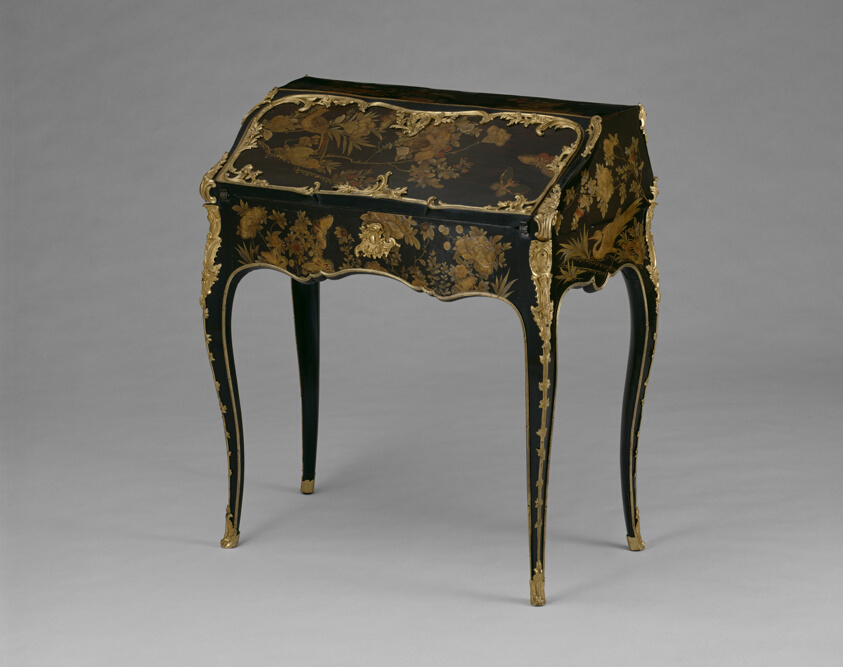
Writing Desk
Art Institute of Chicago
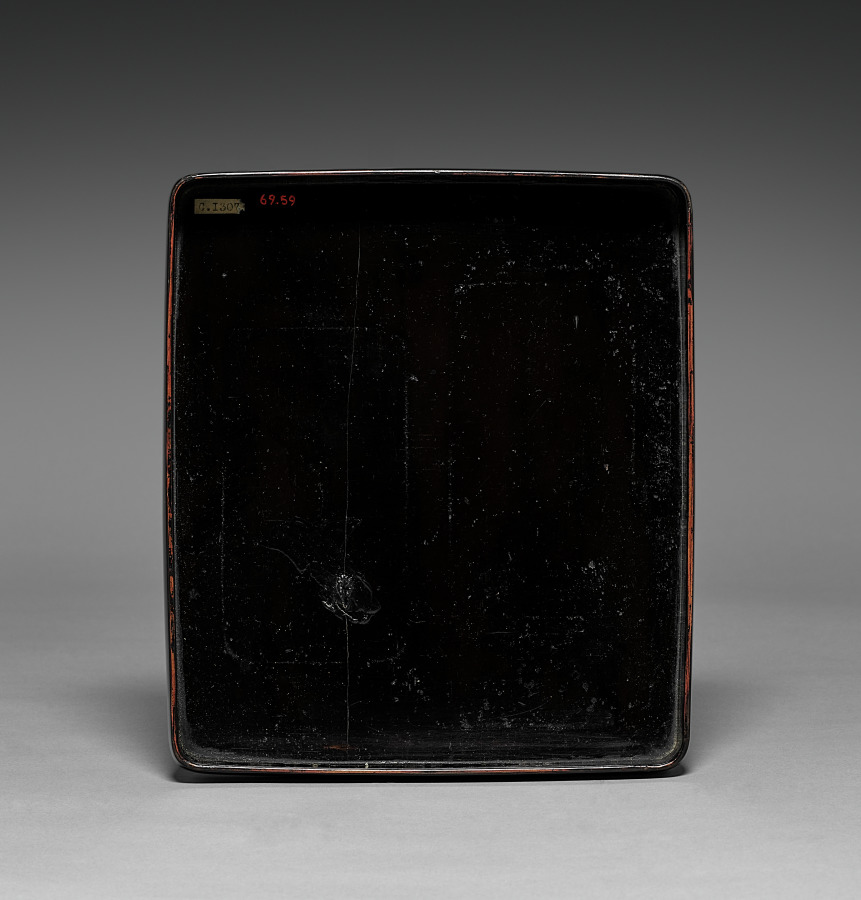
Writing Box (Suzuribako) with Europeans
Cleveland Museum of Art
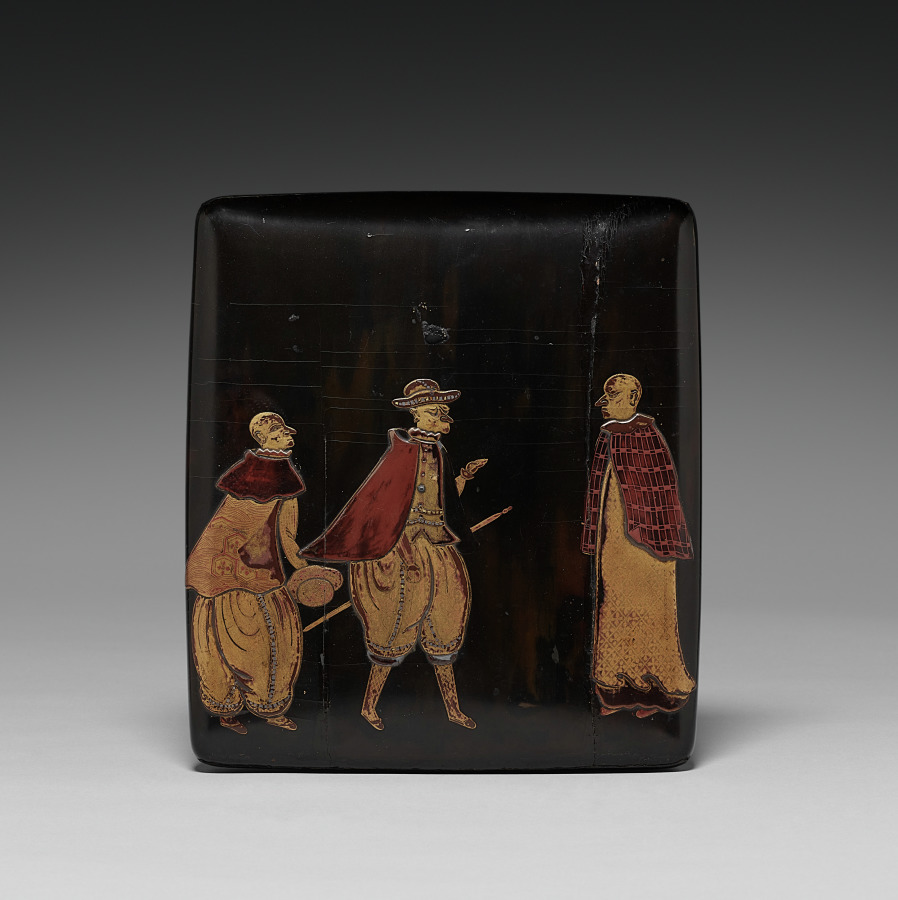
Writing Box (Suzuribako) with Europeans (lid)
Cleveland Museum of Art
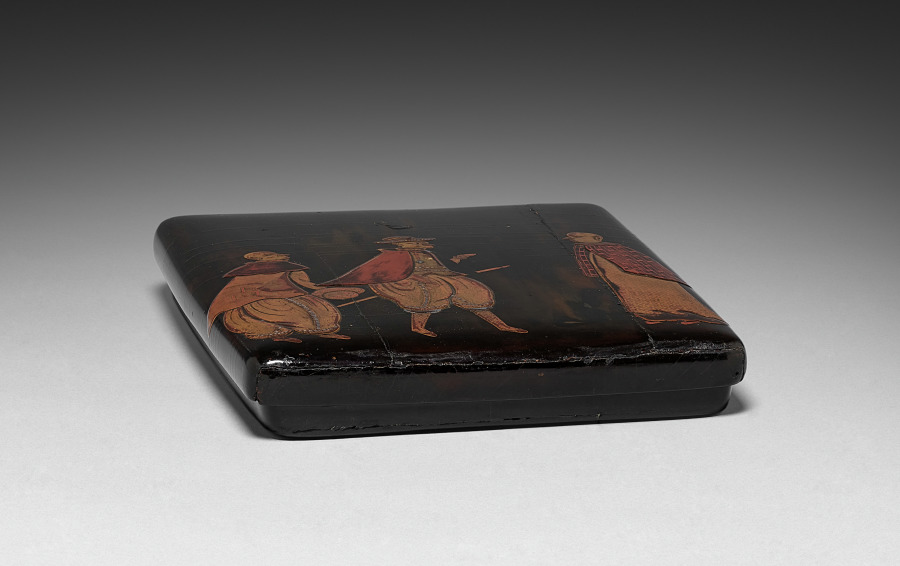
Writing Box (Suzuribako) with Europeans
Cleveland Museum of Art

Pair of Corner Cupboards
Getty Museum

Cabinet
Getty Museum

Cartonnier with Bout de Bureau and Clock
Getty Museum
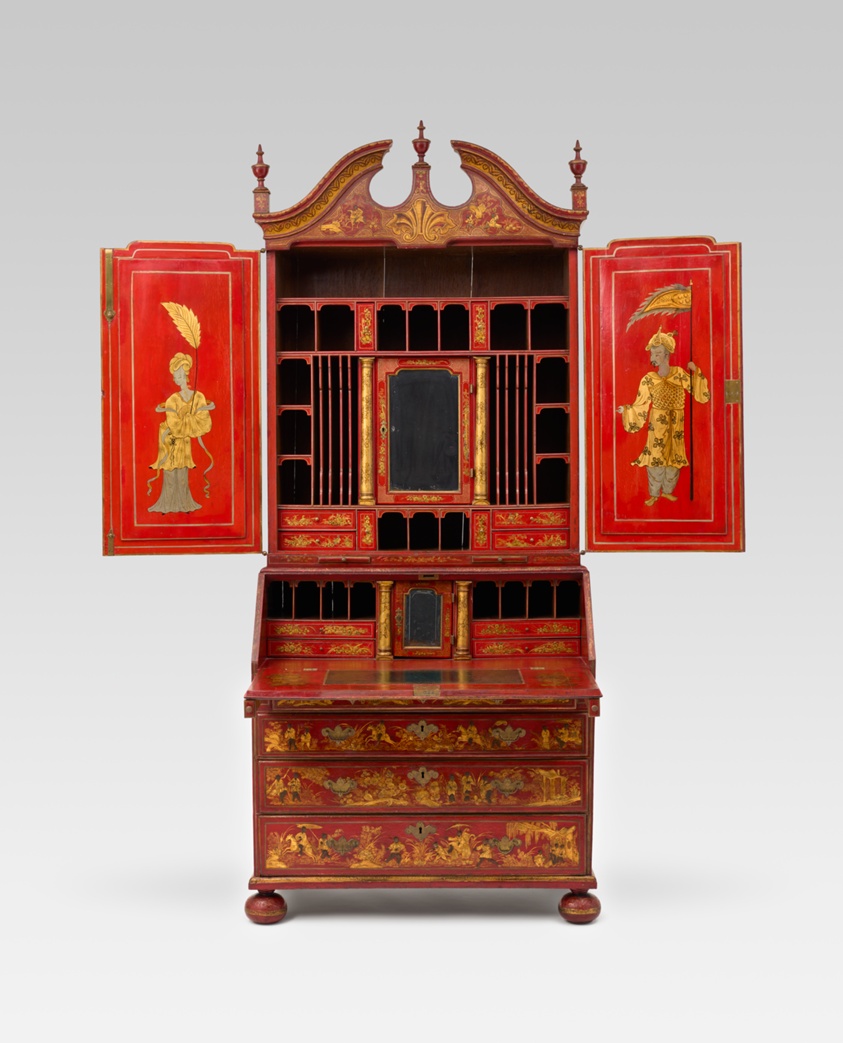
Bureau Secretary
Art Institute of Chicago

Portable chest with wisteria
Minneapolis Institute of Art

Commode
Getty Museum
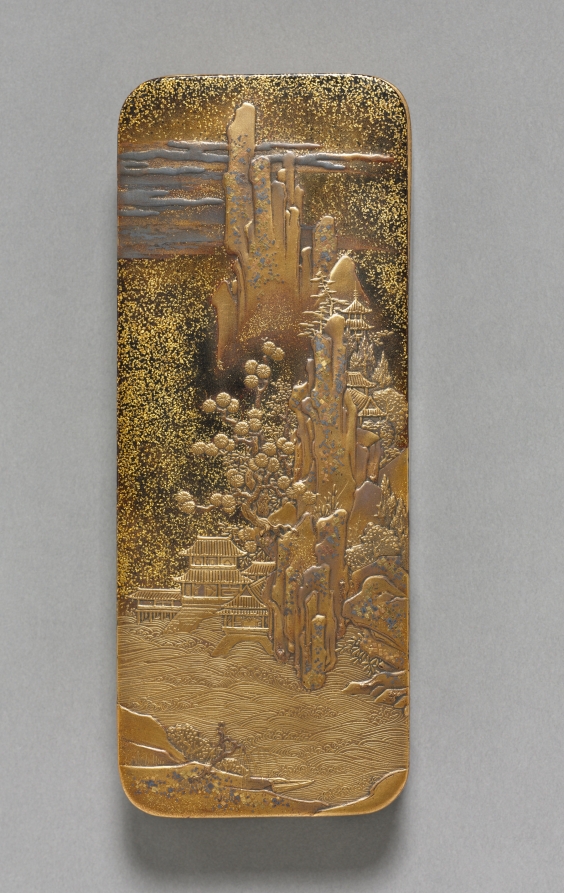
Box
Cleveland Museum of Art

Lady’s writing desk
Minneapolis Institute of Art