
Minneapolis Institute of Art
Tile painting depicting Bahram Gur and Fitna (“Practice Makes Perfect”)
Persia (Iran)
- Date
- c. 1625–50
- Medium
- Earthenware with underglaze painted decor in polychrome colors
- Department
- Asian Art
- Institution
- Minneapolis Institute of Art
This tile painting—which would have once decorated the interior of a great Isfahan palace—illustrates an episode in the love story of King Bahram Gur (r. 420–38 CE) and Fitna, an enslaved girl from western China. While the two are out hunting wild donkeys, Fitna challenges Bahram Gur to pin a donkey’s foot to its ear with an arrow. Upon his success, Fitna attributes his achievement to practice, as opposed to the innate skill befitting a great king. This enrages Bahram Gur, who orders a noble to execute her. Instead, Fitna convinces her would-be executioner to house her at his palace, where she builds her strength by carrying a calf up and down a 60-step garden pavilion every day, for six years. Fitna is depicted here carrying a fully grown bull as Bahram Gur happens upon her and is amazed at her feat. Fitna reiterates the importance of cultivating skill through practice. The King finally admits she is right, and the two live happily ever after. Iran, Asia
The authoritative record is held by Minneapolis Institute of Art. LinkedCulture surfaces this object and its connections; it does not alter institutional metadata.
Related across collections
Semantically similar works from Minneapolis Institute of Art and other institutions.
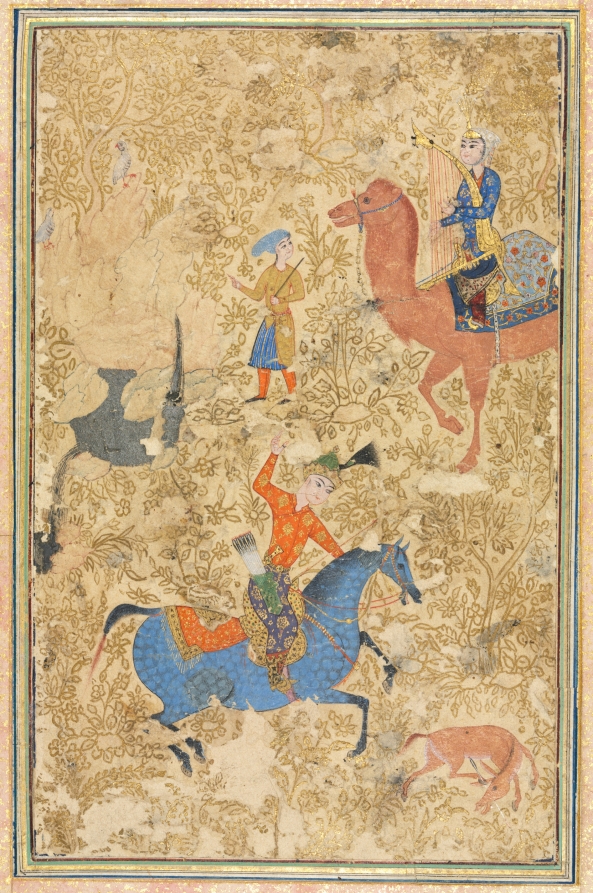
Bahram Gur and Azada, from a Shahnama (Book of Kings) of Firdausi (940–1019 or 1025)
Cleveland Museum of Art
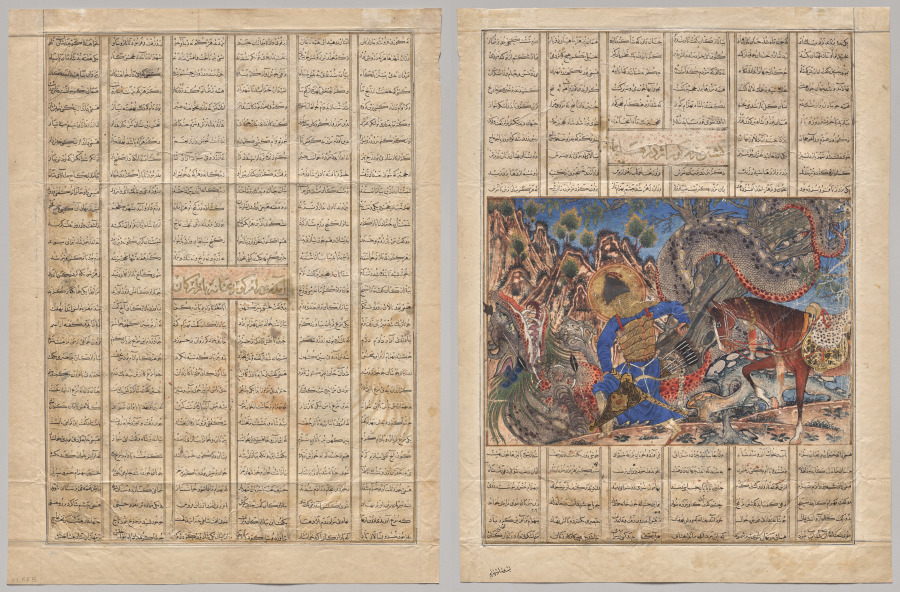
Bahram Gur Arrives at the House of a Merchant, text page (recto); Bahram Gur Slays a Dragon (verso), from a Shahnama (Book of Kings) of Firdausi (940–1019 or 1025), known as the Great Mongol Shahnama
Cleveland Museum of Art
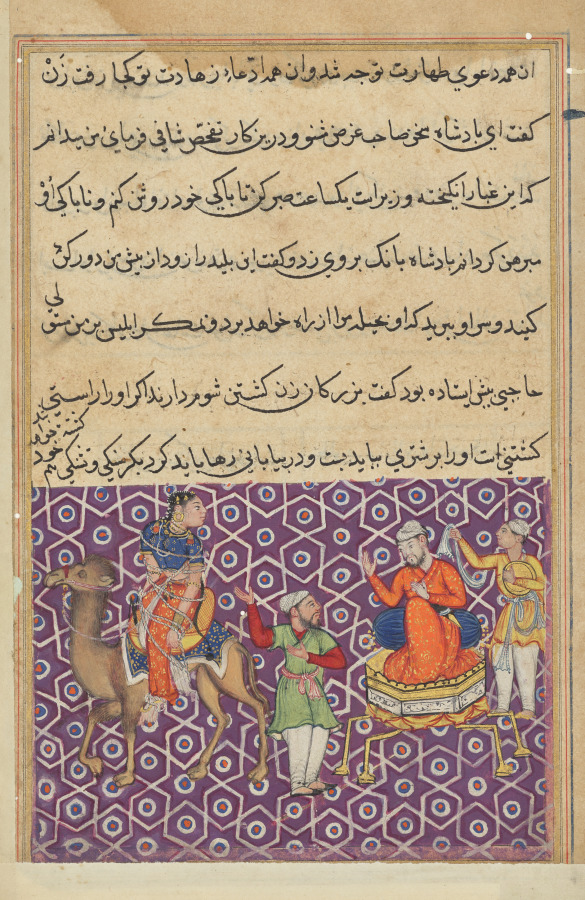
King Bahram, who has married Khassa’s daughter, has her tied to a camel to be abandoned in the desert as a result of false accusations made by Khulasa, from a Tuti-nama (Tales of a Parrot): Fifty-first Night
Cleveland Museum of Art
Bahram Gur Arrives at the House of a Merchant, text page (recto), from a Shahnama (Book of Kings) of Firdausi (940–1019 or 1025), known as the Great Mongol Shahnama
Cleveland Museum of Art
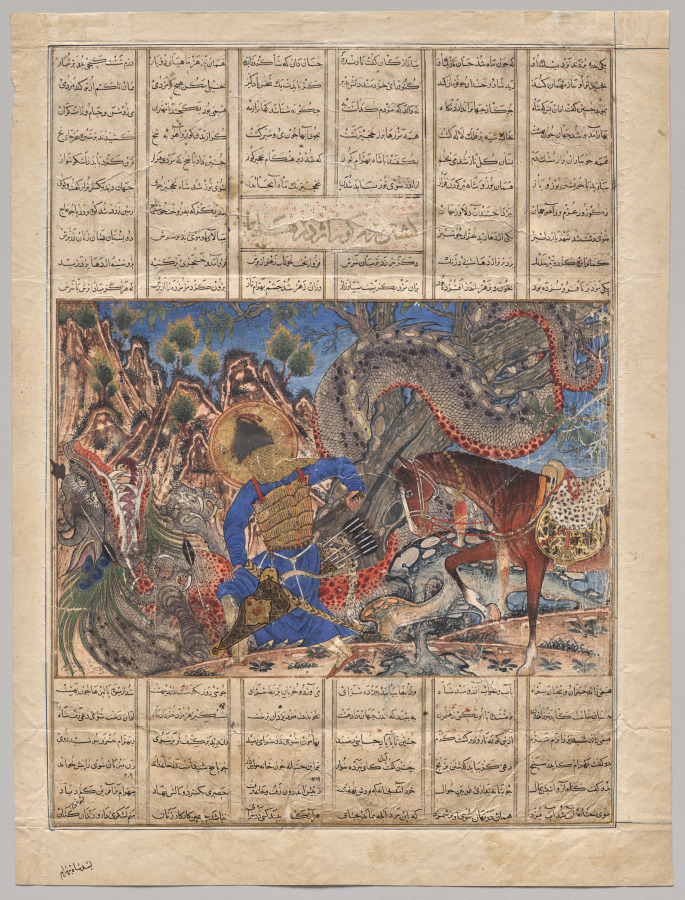
Bahram Gur Slays a Dragon (verso), from a Shahnama (Book of Kings) of Firdausi (940–1019 or 1025), known as the Great Mongol Shahnama
Cleveland Museum of Art
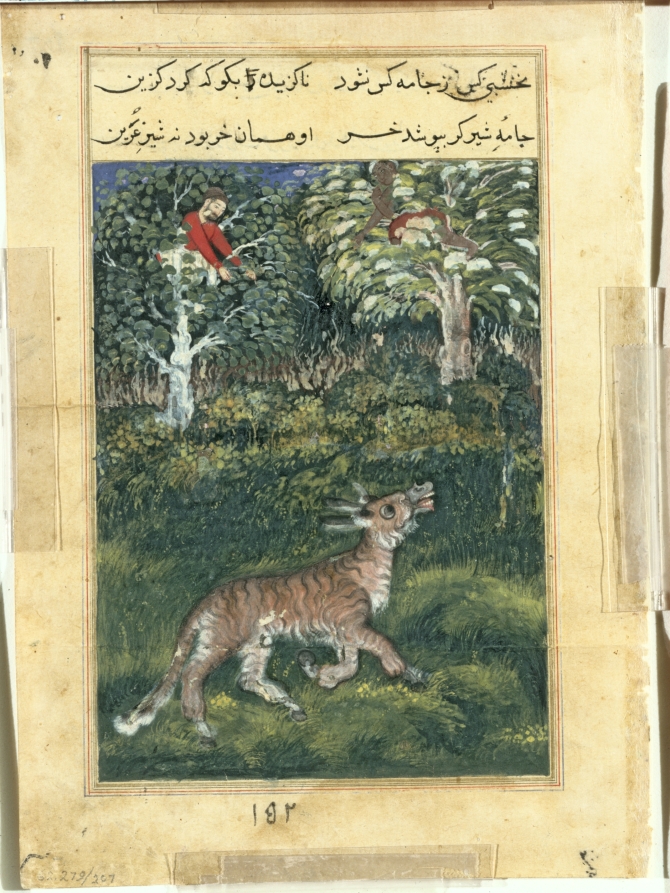
The donkey, in a tiger’s skin, reveals his identity by braying aloud, from a Tuti-nama (Tales of a Parrot): Thirty-first Night
Cleveland Museum of Art
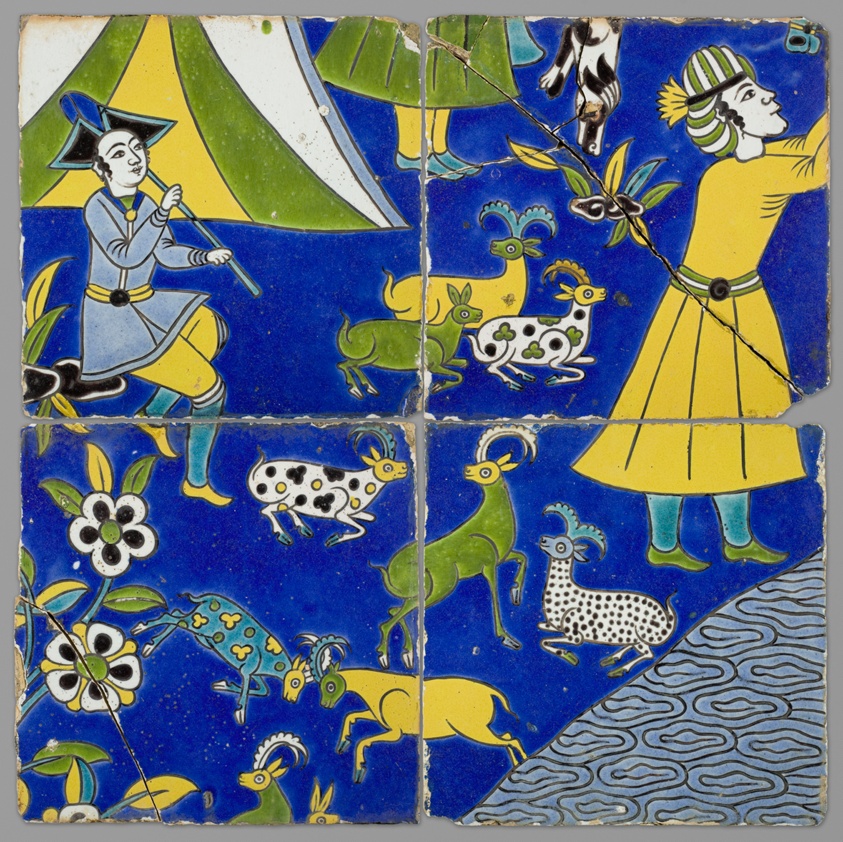
Four Tiles with a Figural Scene
Art Institute of Chicago
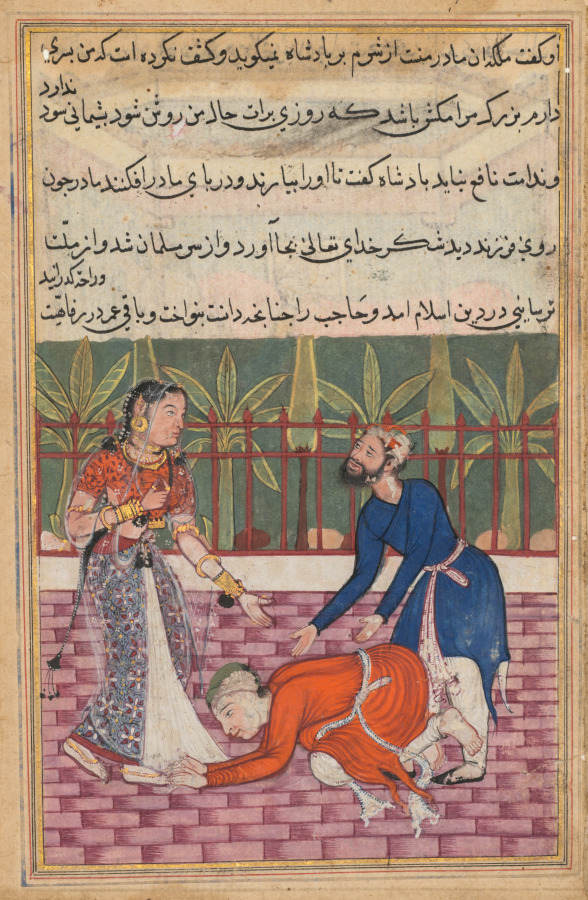
The guard restores the son who falls at his mother’s feet, from a Tuti-nama (Tales of a Parrot): Fiftieth Night
Cleveland Museum of Art
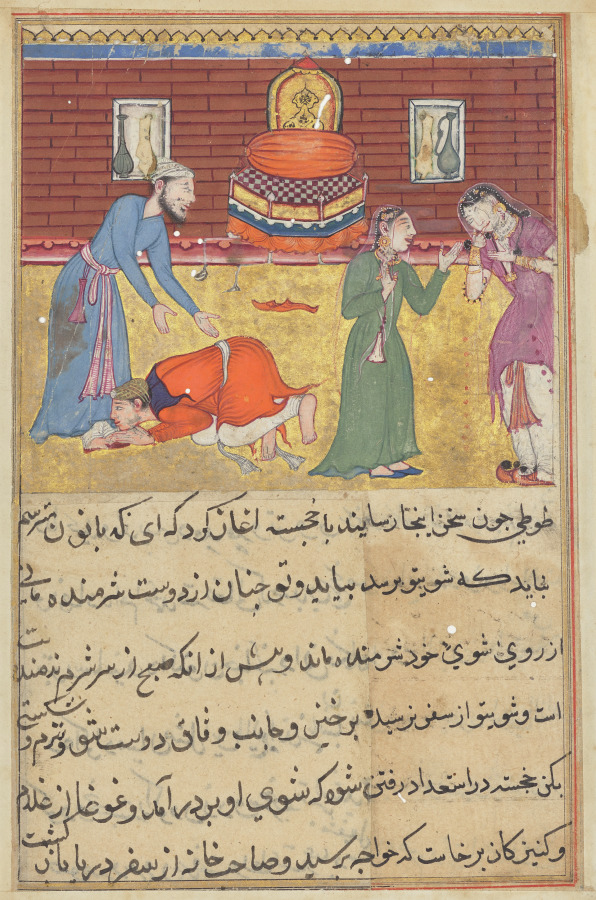
The pious man’s son, now a king, reveals himself to his father; his nurse upbraids his unfaithful mother, from a Tuti-nama (Tales of a Parrot): Fifty-second Night
Cleveland Museum of Art

Bahram Gur in the Black Palace
Minneapolis Institute of Art
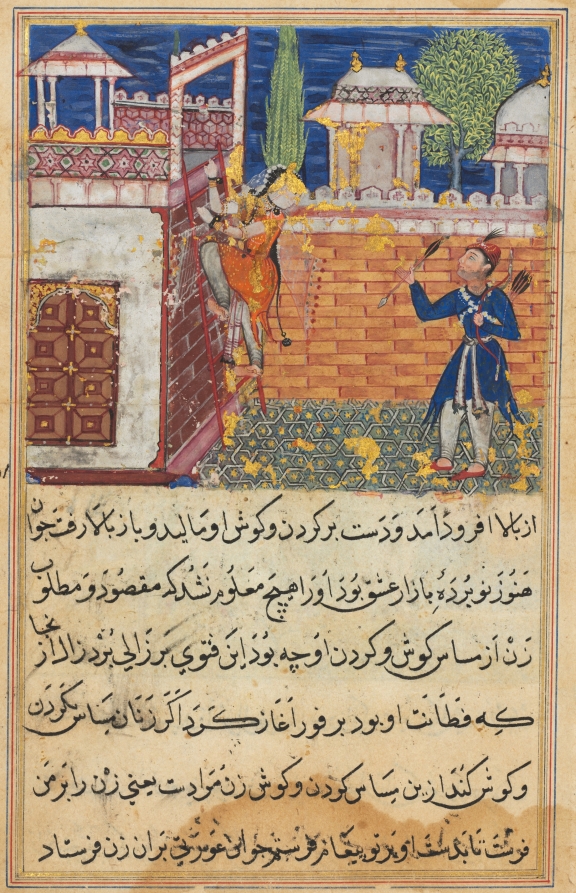
The deceitful wife returns to her terrace after caressing her lover, from a Tuti-nama (Tales of a Parrot): Eighth Night
Cleveland Museum of Art
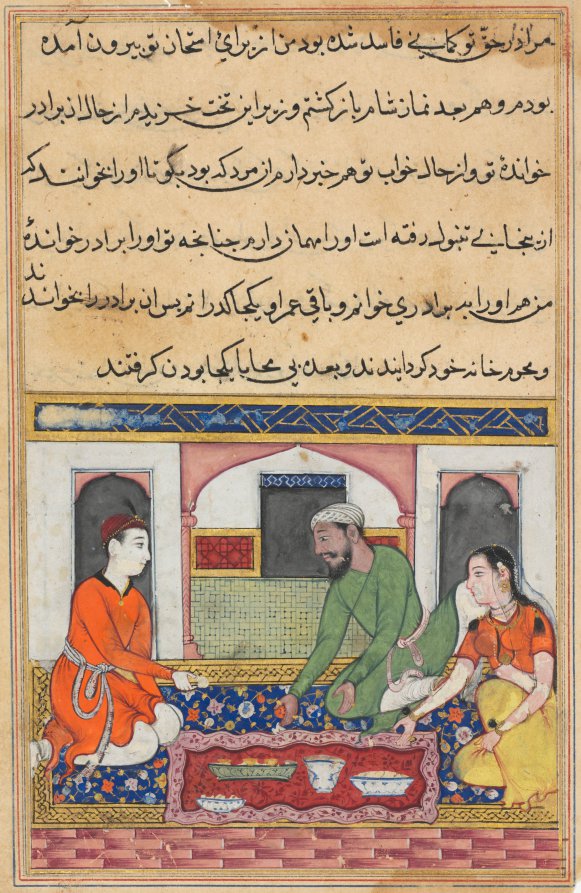
Shahr-Arai and her husband adopt her lover as a brother in the family, from a Tuti-nama (Tales of a Parrot): Fortieth Night
Cleveland Museum of Art