
Minneapolis Institute of Art
The Camel
Designer: Jean-Baptiste Monnoyer and collaborators; Cartoonist: Jean-Baptiste Monnoyer; Weaver: Royal Beauvais Manufactory under Philippe Behagle; Sponsor: Phillipe Behagle
- Date
- designed 1686–1688 (woven 1688–1695)
- Medium
- Wool, silk, tapestry weave
- Department
- European Art
- Institution
- Minneapolis Institute of Art
An Eastern king enjoys musical entertainment while exotic marvels are presented to him—peacocks, leopards, rope-walking acrobats, and a camel. While not an accurate depiction of Eastern culture, this tapestry is a truthful representation of Western fascination with the lands beyond the borders of Europe. This tapestry is an example of a style of composition known in the 1600s as “grotesque.” Grotesque scenes incorporated fanciful combinations of strange characters and imaginary hybrid creatures intended to delight the viewer. The disparate elements were unified by a symmetrical design of slender architectural features and scrolling ribbons and vines that seem illogically suspended in midair or applied to a flat surface. France
The authoritative record is held by Minneapolis Institute of Art. LinkedCulture surfaces this object and its connections; it does not alter institutional metadata.
Related across collections
Semantically similar works from Minneapolis Institute of Art and other institutions.

The Camel
Getty Museum
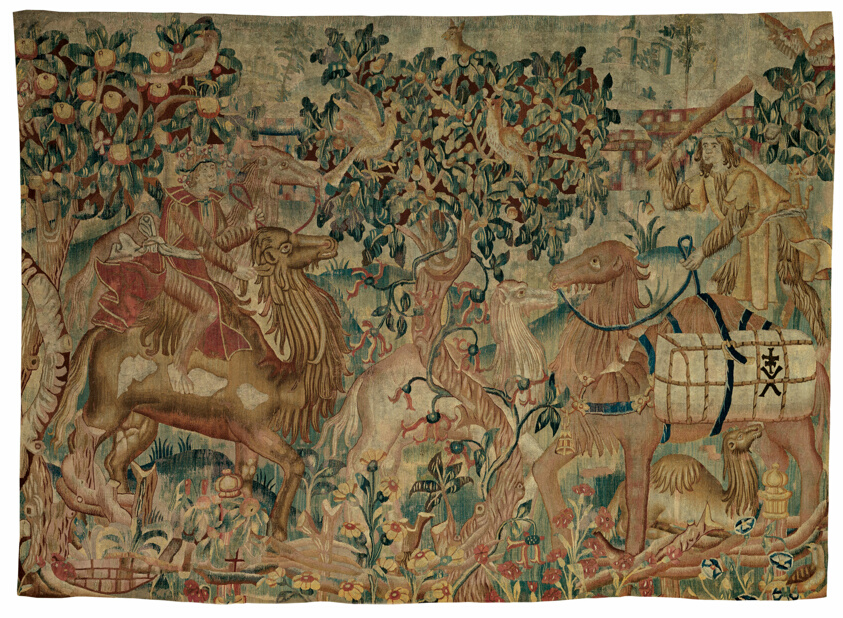
Camel Riders, presumably from a Wild Man series
Art Institute of Chicago
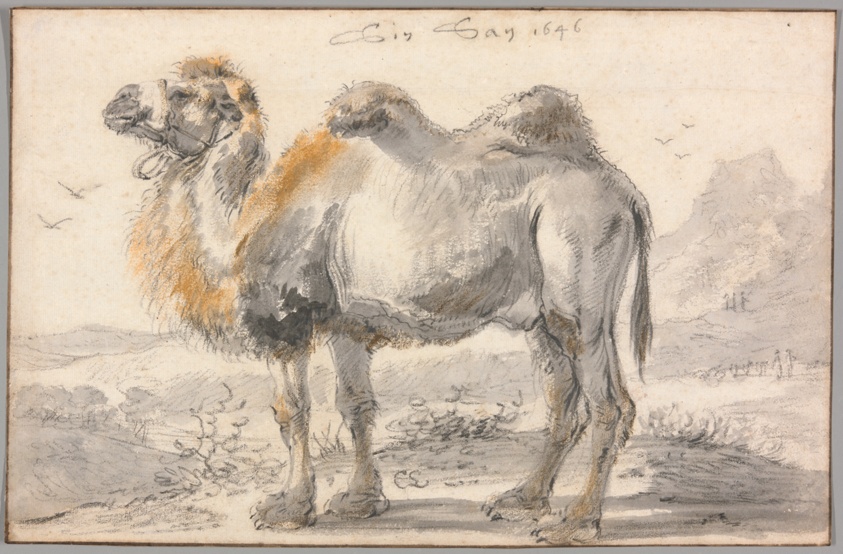
A Camel
Art Institute of Chicago
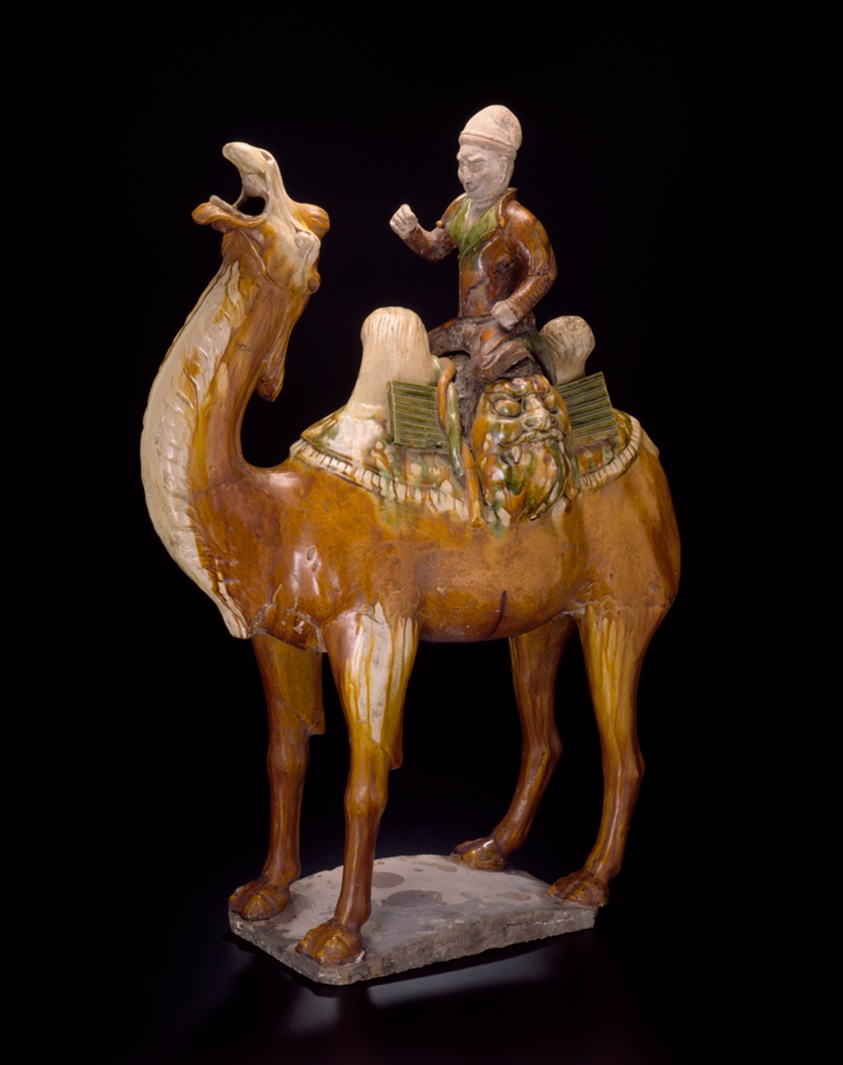
Camel and Rider
Art Institute of Chicago

Tapestry: L'Offrand à Bacchus from Les Grotesques Series
Getty Museum

Camel with riding Maji attendant, from Nativity Scene
Minneapolis Institute of Art

Tapestry: Le Cheval rayé from Les Anciennes Indes Series
Getty Museum

Two camels and a groom (Camel)
Minneapolis Institute of Art

The Falconers
Minneapolis Institute of Art
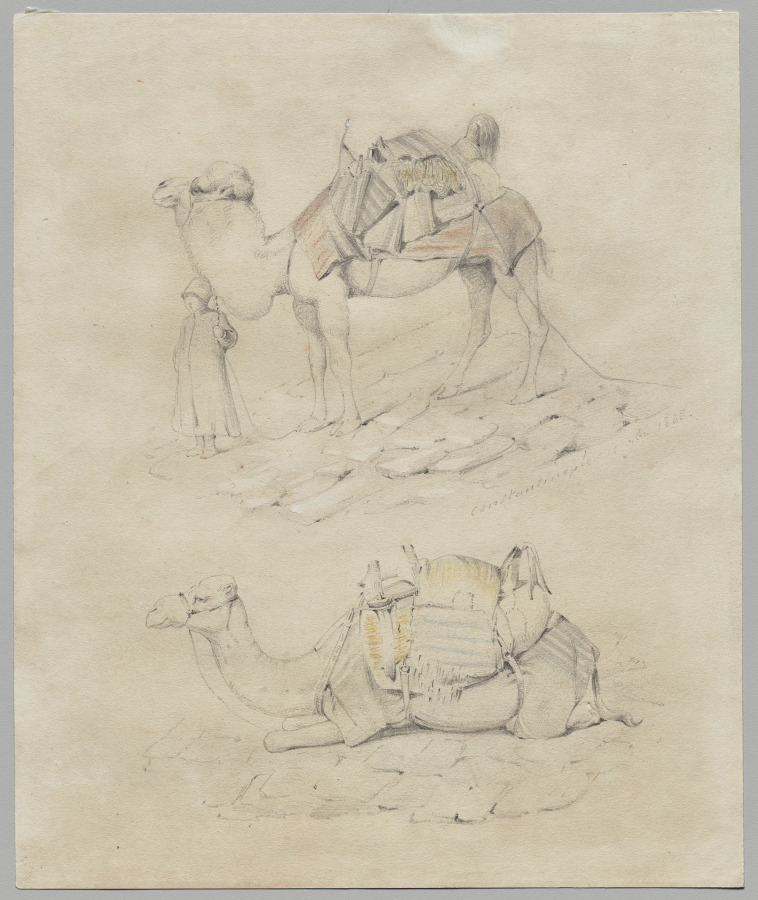
Study of Camels
Cleveland Museum of Art
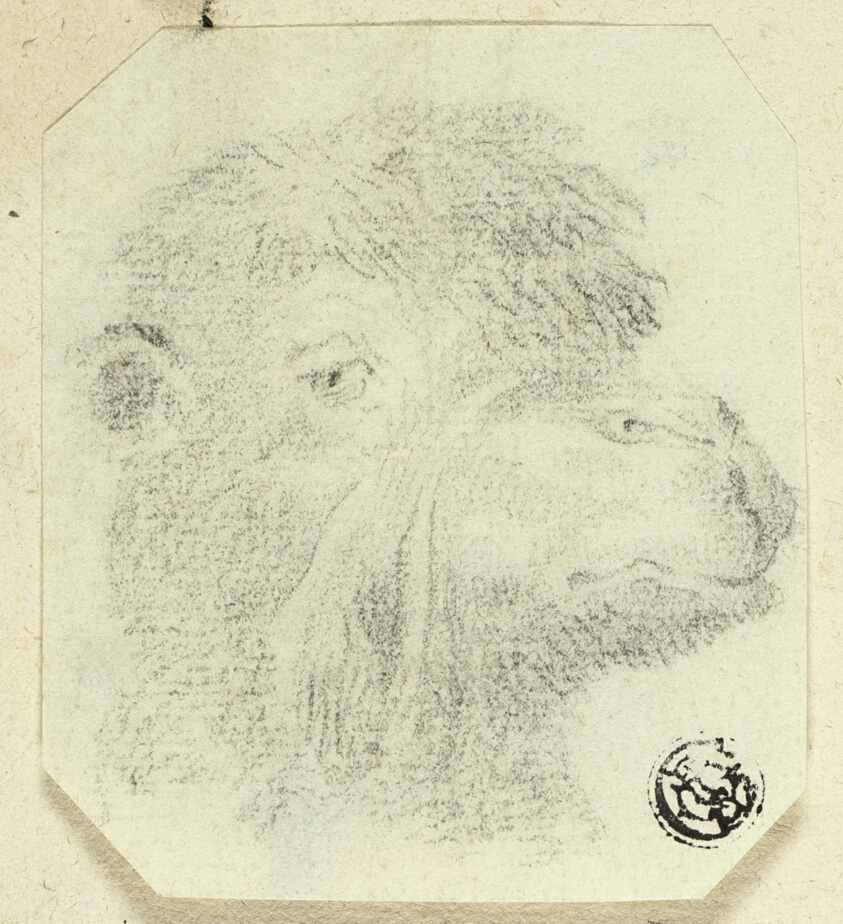
Camel's Head Facing Right
Art Institute of Chicago

Plate
Getty Museum