Art Institute of Chicago
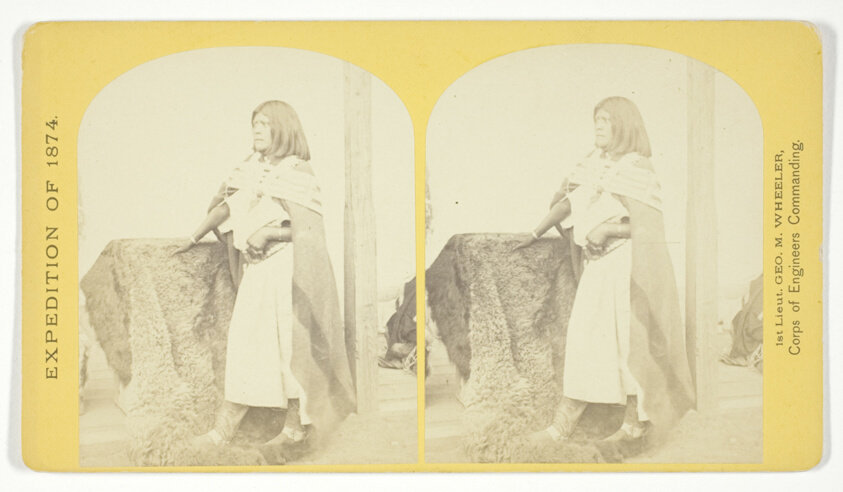
Pah-ge, a Ute Squaw, of the Kah-poh-teh band, Northern New Mexico, No. 39 from the series "Geographical Explorations and Surveys West of the 100th Meridian"
Timothy O'Sullivan (American, born Ireland, 1840–1882)
- Date
- 1874
- Medium
- Albumen print, stereo
- Culture
- United States
- Department
- Photography and Media
- Institution
- Art Institute of Chicago
The authoritative record is held by Art Institute of Chicago. LinkedCulture surfaces this object and its connections; it does not alter institutional metadata.
Related across collections
Semantically similar works from Art Institute of Chicago and other institutions.

Pah-ge, a Ute Squaw, of the Kah-poh-teh band, Northern New Mexico.
Getty Museum
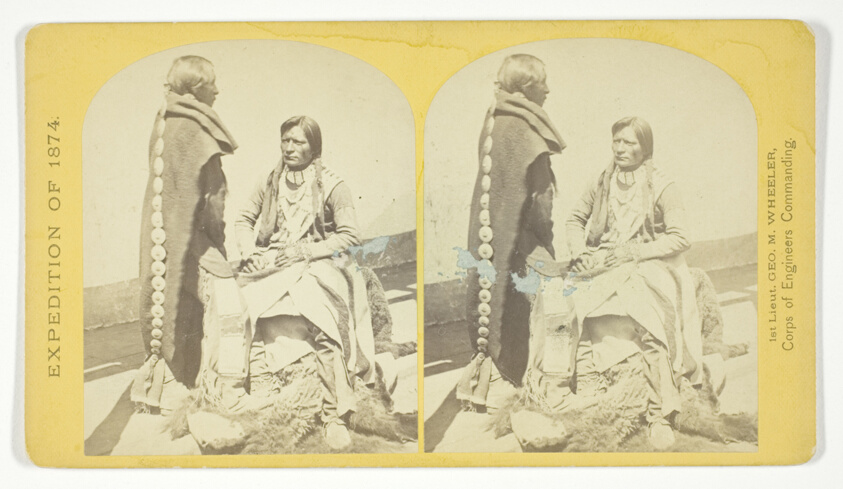
Ute Braves, of the Kah-poh-teh band, Northern New Mexico, in "full dress", No. 40 from the series "Geographical Explorations and Surveys West of the 100th Meridian"
Art Institute of Chicago

Ute Braves, of the Kah-poh-teh band, Northern New Mexico, in "full dress."
Getty Museum
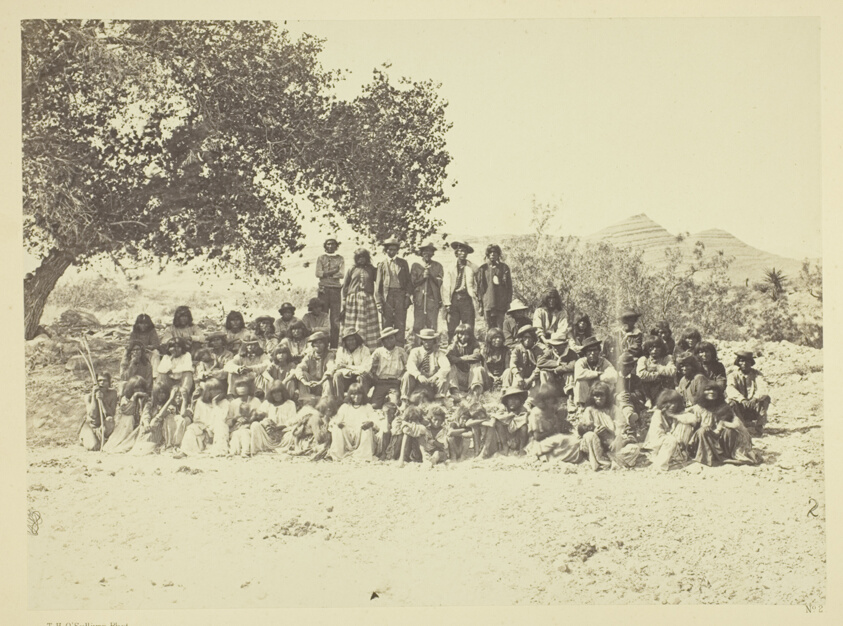
Group of Pah-Ute Indians, Nevada
Art Institute of Chicago
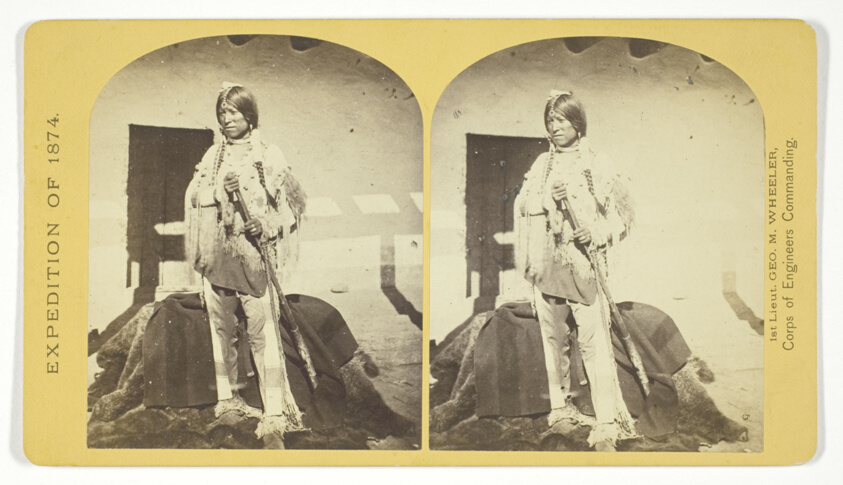
Shee-zah-nan-tan, Jicarilla Apache Brave in characteristic Costume, Northern New Mexico, No. 42 from the series "Geographical Explorations and Surveys West of the 100th Meridian"
Art Institute of Chicago
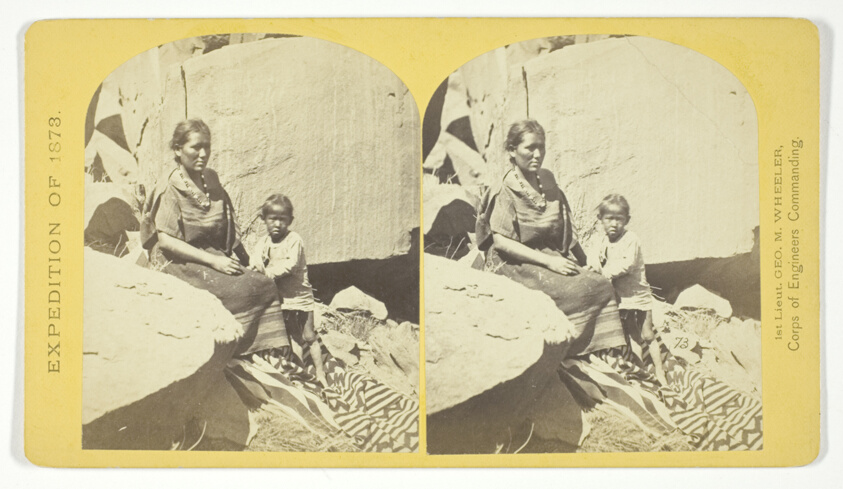
Navajo Indian Squaw, and Child, at their home, in Cañon de Chelle, No. 27 from the series "Geographical Explorations and Surveys West of the 100th Meridian"
Art Institute of Chicago
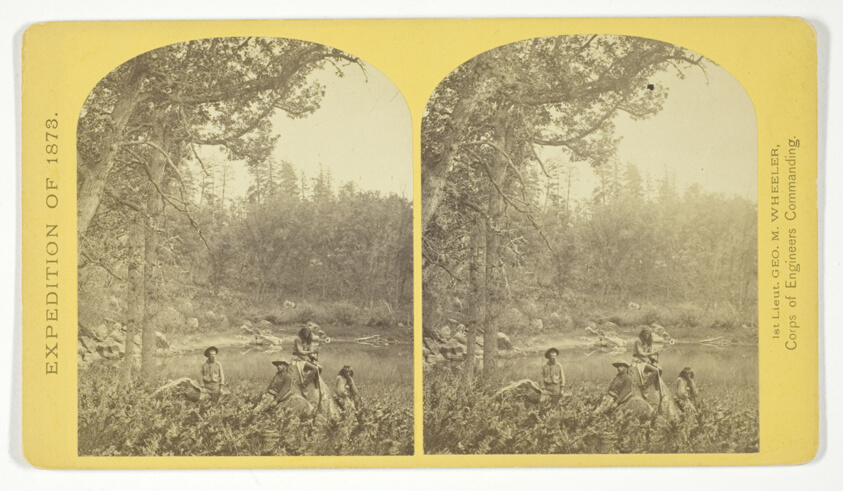
Coyotero Apache Scouts, at Apache Lake, Sierra Blanca Mountains, Arizona. Two members of the Expedition in the back-ground, No. 31 from the series "Geographical Explorations and Surveys West of the 100th Meridian"
Art Institute of Chicago
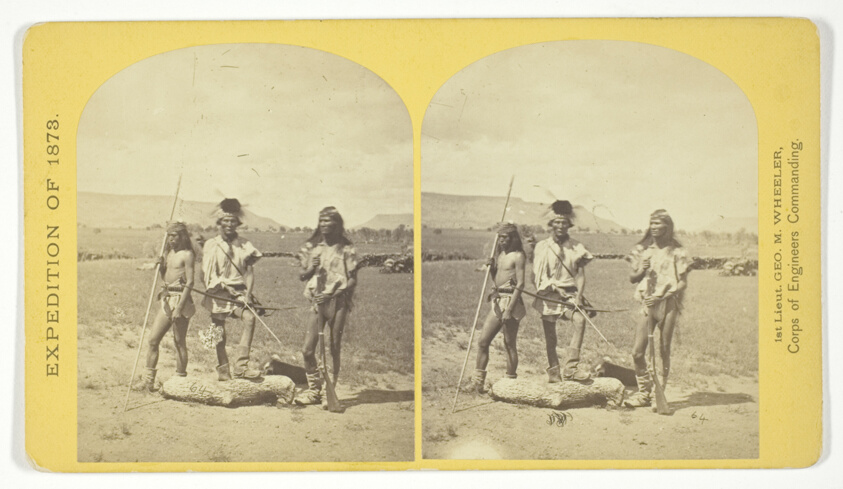
Apache Indians, as they appear ready for the war-path, No. 33 from the series "Geographical Explorations and Surveys West of the 100th Meridian"
Art Institute of Chicago
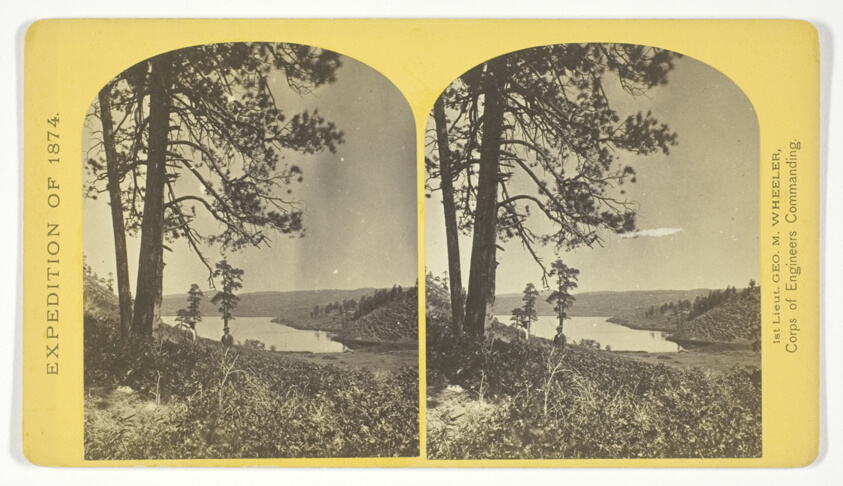
Lagunas Caballo, or Horse Lakes, 14 miles, N. W. from Tierra Amarilla, New Mexico. The water of the lakes is strongly mineral and not fit for men or animals to drink, No. 44 from the series "Geographical Explorations and Surveys West of the 100th Meridian"
Art Institute of Chicago
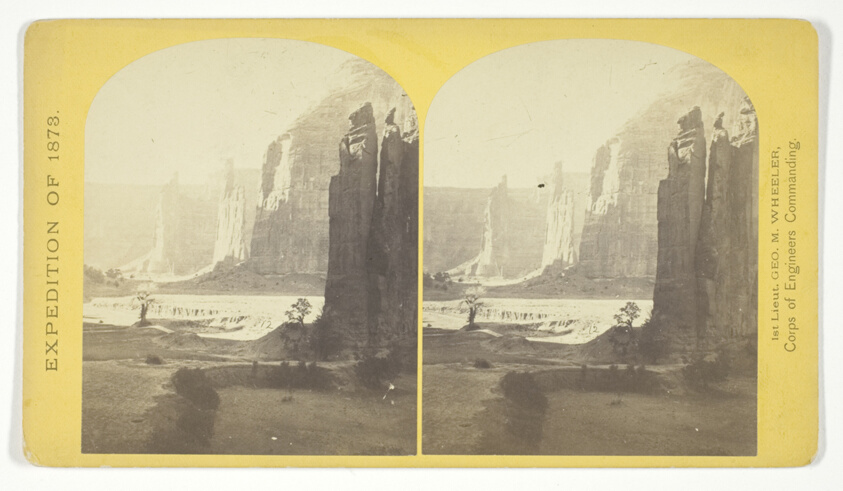
Central portion of Canñon de Chelle, New Mexico. This Canñon is one of the most remarkable in the west, and is noted for its beauty. The walls are of Red Sand-stone, nearly perpendicular, and at this point are 1.200 feet in height, No. 24 from the series "Geographical Explorations and Surveys West of the 100th Meridian"
Art Institute of Chicago
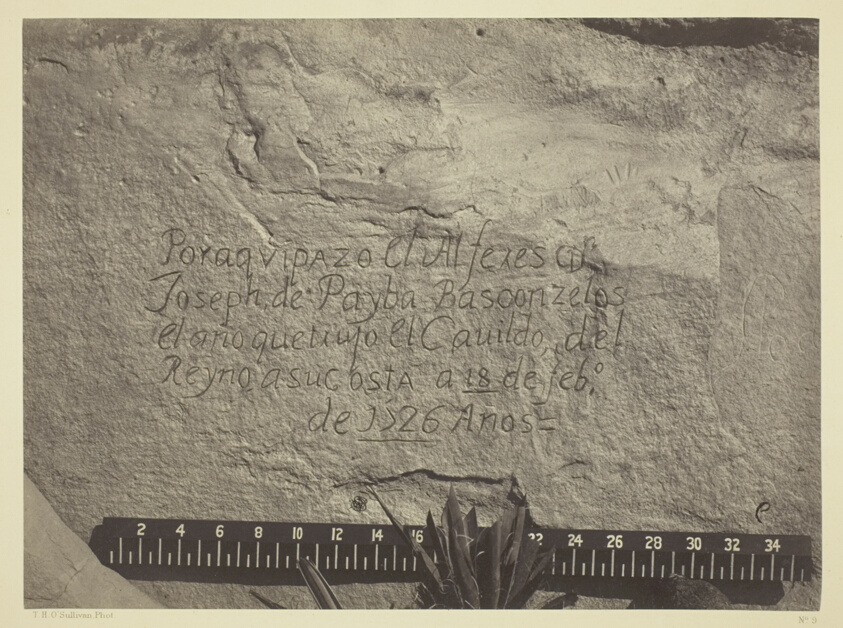
Historic Spanish Record of the Conquest, South Side of Inscription Rock, N.M.
Art Institute of Chicago
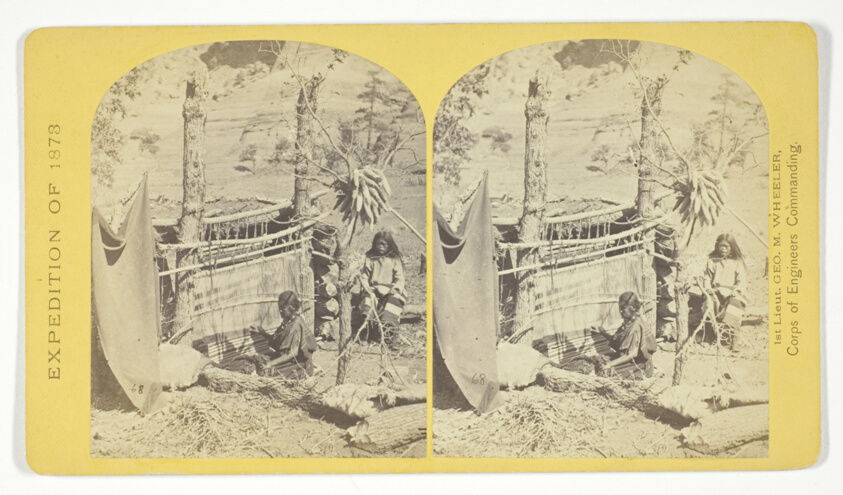
Aboriginal life among the Navajo Indians, Cañon de Chelle, New Mexico. Squaw weaving blankets. The native loom. The blankets made are of the best quality, and impervious to water, No. 26 from the series "Geographical Explorations and Surveys West of the 100th Meridian"
Art Institute of Chicago