Art Institute of Chicago
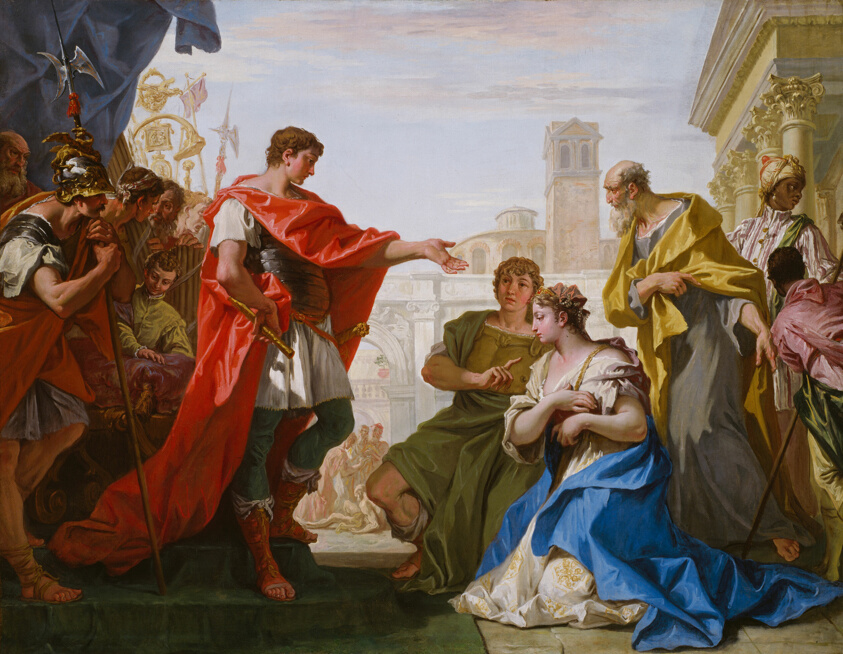
The Continence of Scipio
Sebastiano Ricci (Italian, 1659–1734)
- Date
- c. 1706
- Medium
- Oil on canvas
- Culture
- Italy
- Department
- Painting and Sculpture of Europe
- Institution
- Art Institute of Chicago
This painting depicts a scene from the life of Scipio Africanus, the Roman general who defeated Hannibal in the Battle of Zama (in present-day Tunisia) in 202 BCE. Here Scipio demonstrates his leadership by acting with restraint (“continence”) in refusing to hold a woman as a captive of war. According to the story on which the painting is based, the woman’s fiancé, shown kneeling beside her, was a powerful prince who agreed to a military alliance with Scipio in gratitude for his lenience. The theatrical setting and costumes—the invented military helmets, anachronistically dressed characters, fanciful architecture, and gravity-defying drapery, for example— suggest that the artist’s aims were allegorical rather than historical, intended above all to illustrate for viewers the virtues of compassionate diplomacy.
The authoritative record is held by Art Institute of Chicago. LinkedCulture surfaces this object and its connections; it does not alter institutional metadata.
Related across collections
Semantically similar works from Art Institute of Chicago and other institutions.
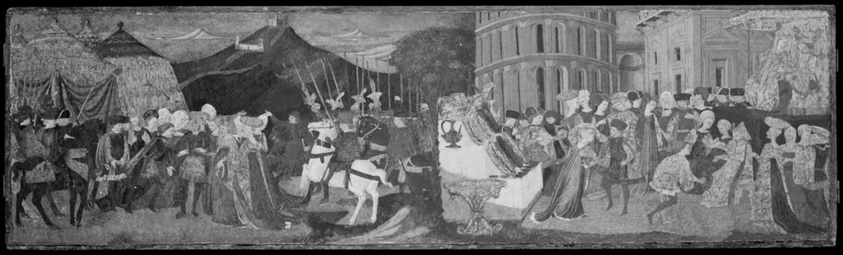
The Continence of Scipio
Art Institute of Chicago
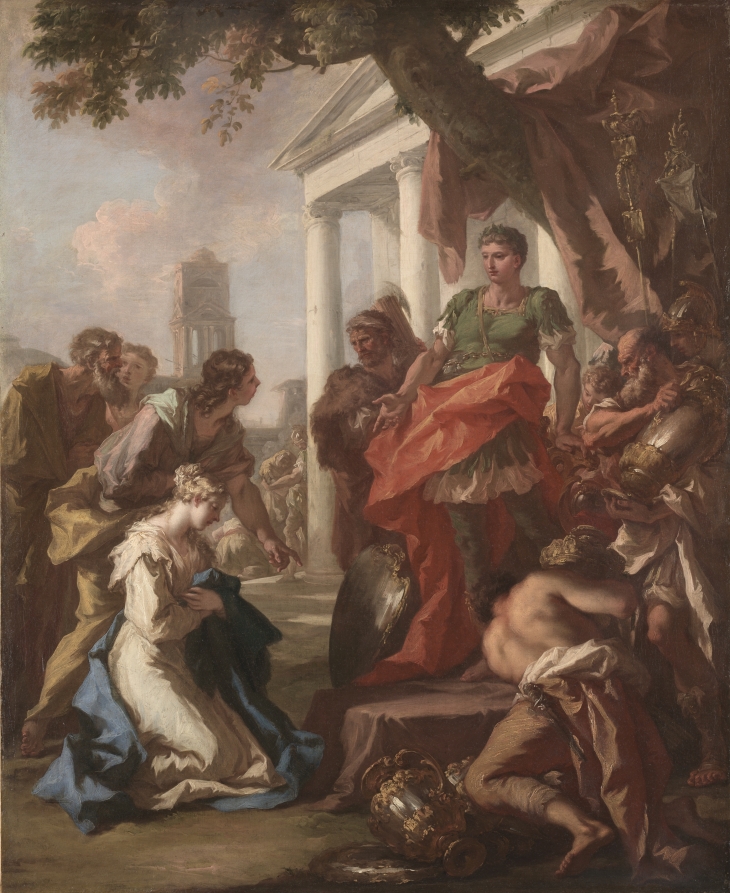
The Continence of Scipio
Cleveland Museum of Art

The Battle of Zama
Minneapolis Institute of Art

The Triumph of Scipio Africanus
Minneapolis Institute of Art
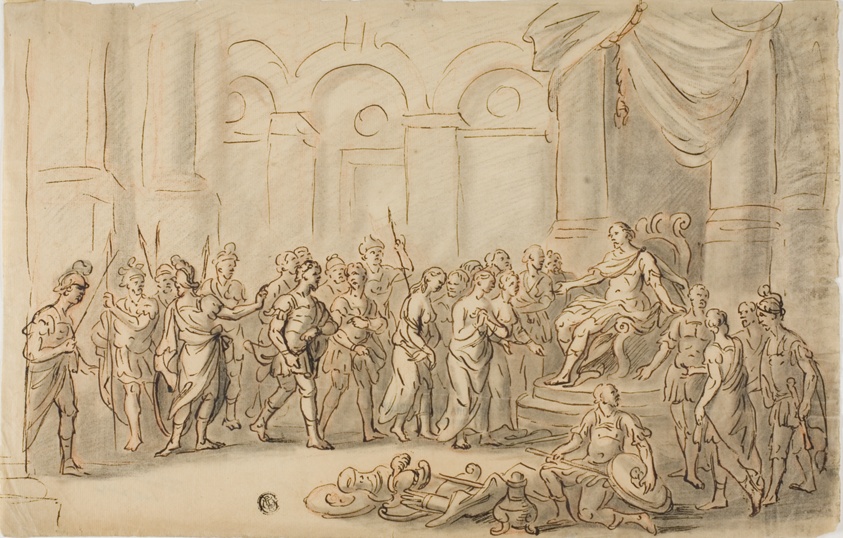
The Continence of Scipio
Art Institute of Chicago
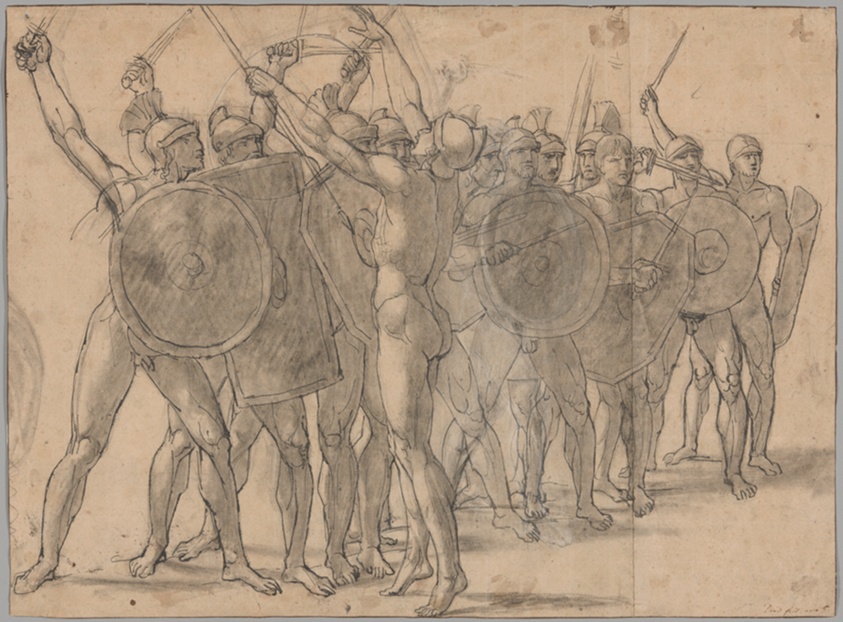
Nude Soldiers Gesticulating with Their Weapons (recto); Two Drapery Studies for the Figure of Tatius (verso)
Art Institute of Chicago
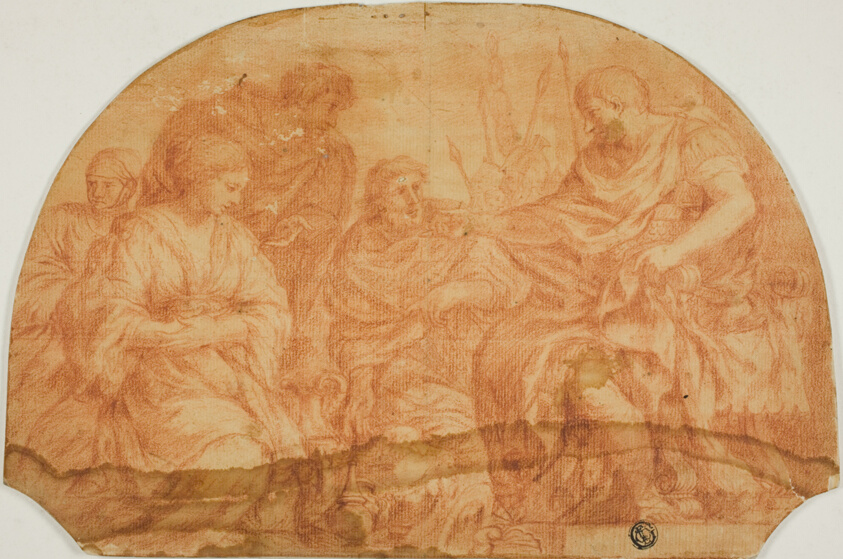
Continence of Scipio
Art Institute of Chicago

Hannibal Swearing Eternal Enmity toward Rome
Cleveland Museum of Art
Cupid Chastised
Art Institute of Chicago

The Roman Fleet Victorious over the Carthaginians at the Battle of Cape Ecnomus
Getty Museum
Poros Assailed by the Macedonian Army (recto)
Cleveland Museum of Art

Medici Venus
Getty Museum