Art Institute of Chicago
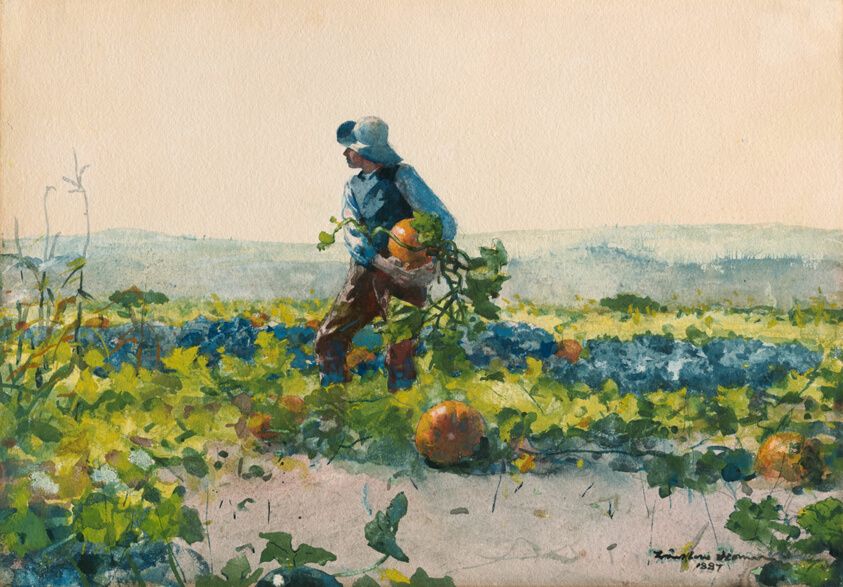
For to Be a Farmer's Boy
Winslow Homer
- Date
- 1887
- Medium
- Transparent and opaque watercolor, with rewetting, blotting, and scraping, heightened with gum glaze, over graphite, on thick, rough-textured ivory wove paper (lower edge trimmed)
- Culture
- United States
- Department
- Prints and Drawings
- Institution
- Art Institute of Chicago
For to Be a Farmer’s Boy was painted at Prout’s Neck, Maine, and is one of several watercolors in which Homer returned to his earlier theme of rural American childhood. Although the sky has faded and appears empty, X-ray fluorescence spectroscopy and FTIR analyses have yielded evidence that the artist originally painted the sky with dilute washes of chrome yellow and pink madder (both fugitive pigments ), with a minute amount of vermilion, to create a glowing orange sunset. Thus, the watercolor originally showed a young boy pausing in his work of harvesting pumpkins to gaze off toward the setting sun, recalling the work of French Barbizon School artists, who influenced Homer in his early career. Their pictures of peasants pausing for a moment of contemplation at the end of their workday resonated with Homer, who showed a lifelong preference for depicting workers. Homer derived the title from an anonymous Old English song: “Though little, I’ll work as hard as a Turk, / If you’ll give me employ /To plow and sow, and reap and mow, / And be a farmer’s boy.” Interestingly, a longer version of the song includes the line “The sun went down behind yon hills,” thereby supporting findings that the watercolor originally depicted an orange sunset.
The authoritative record is held by Art Institute of Chicago. LinkedCulture surfaces this object and its connections; it does not alter institutional metadata.
Linked open data
Authority identifiers that link this record into the wider web of cultural data — stable references you can follow to the source.
- Object type
- AAT300033973
Related across collections
Semantically similar works from Art Institute of Chicago and other institutions.
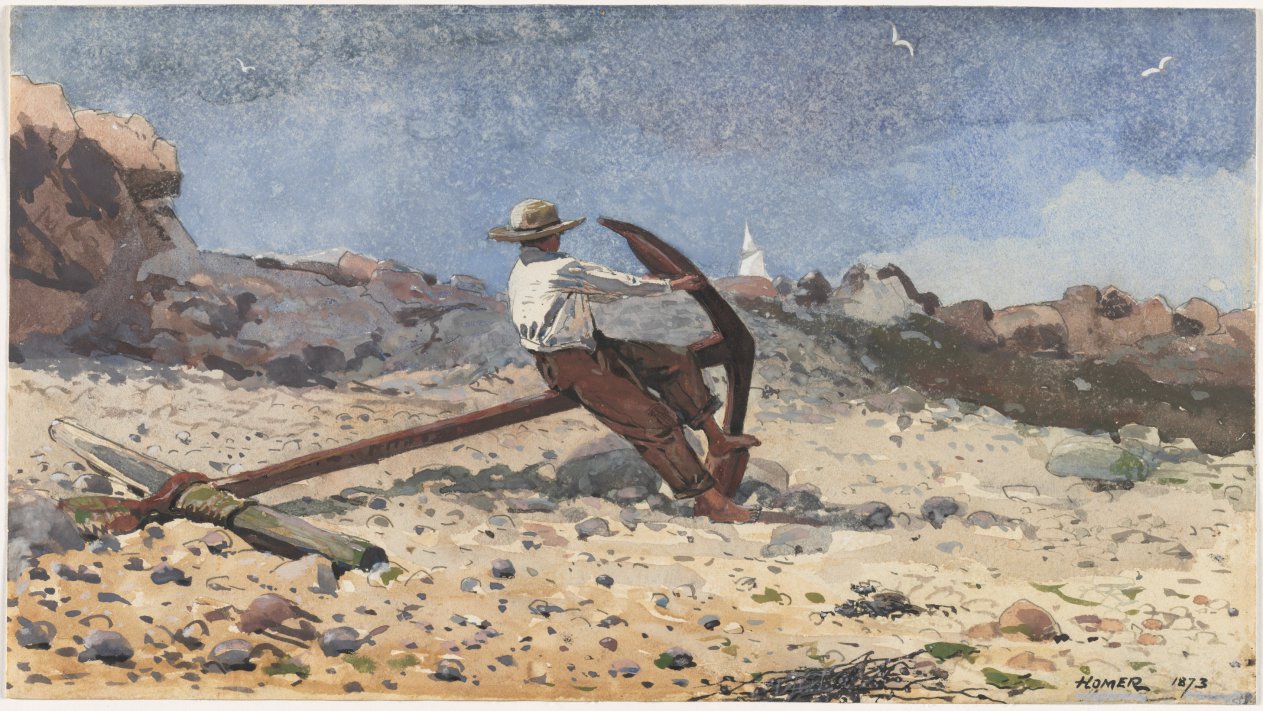
Boy with Anchor
Cleveland Museum of Art
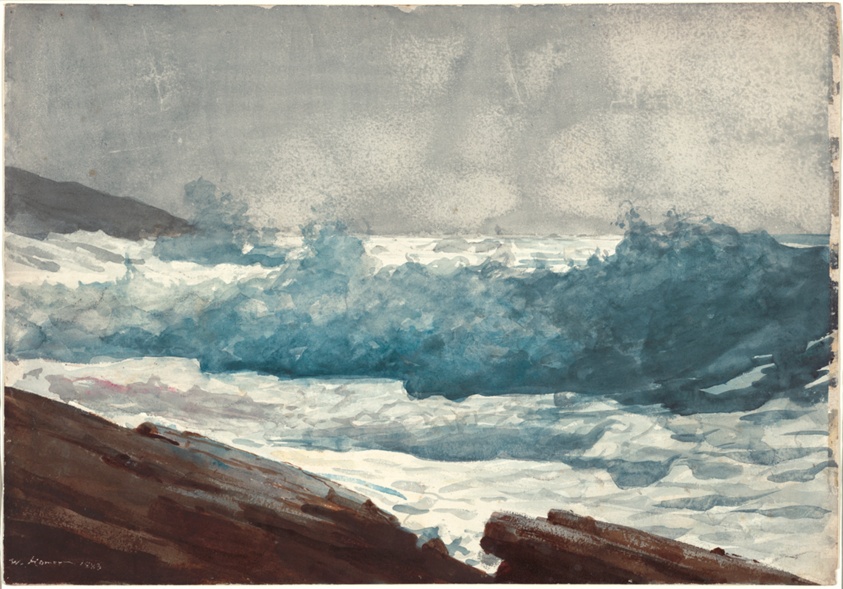
Prout's Neck, Breakers
Art Institute of Chicago
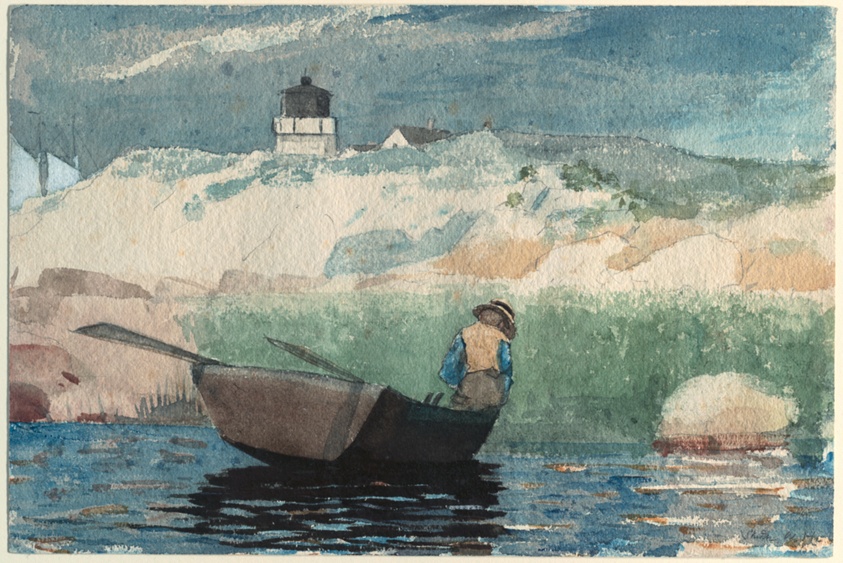
Boy in Boat, Gloucester
Art Institute of Chicago
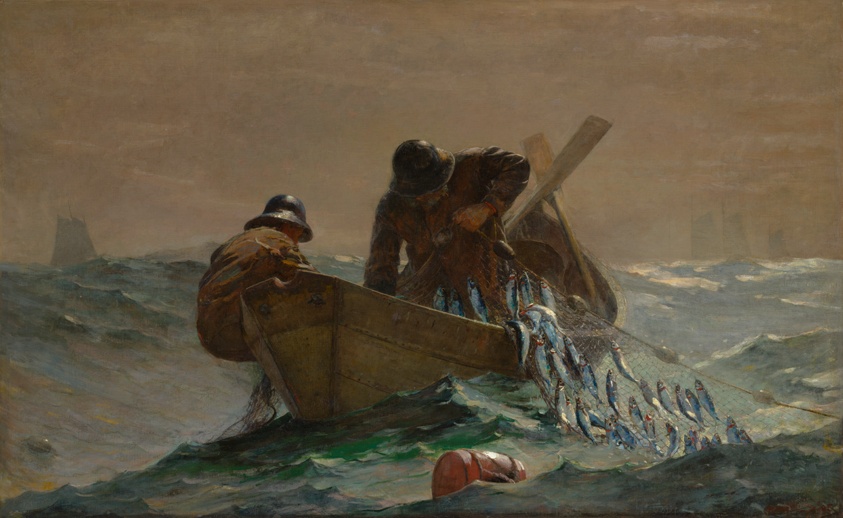
The Herring Net
Art Institute of Chicago
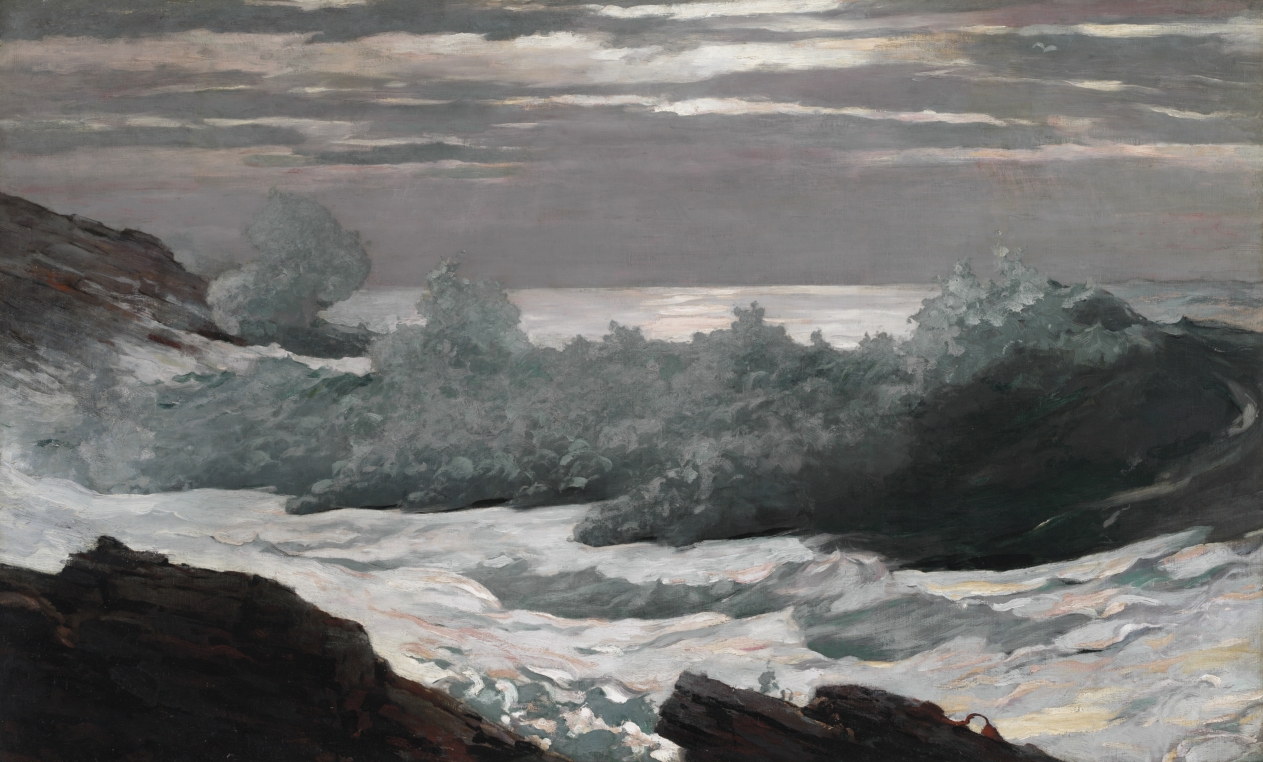
Early Morning After a Storm at Sea
Cleveland Museum of Art
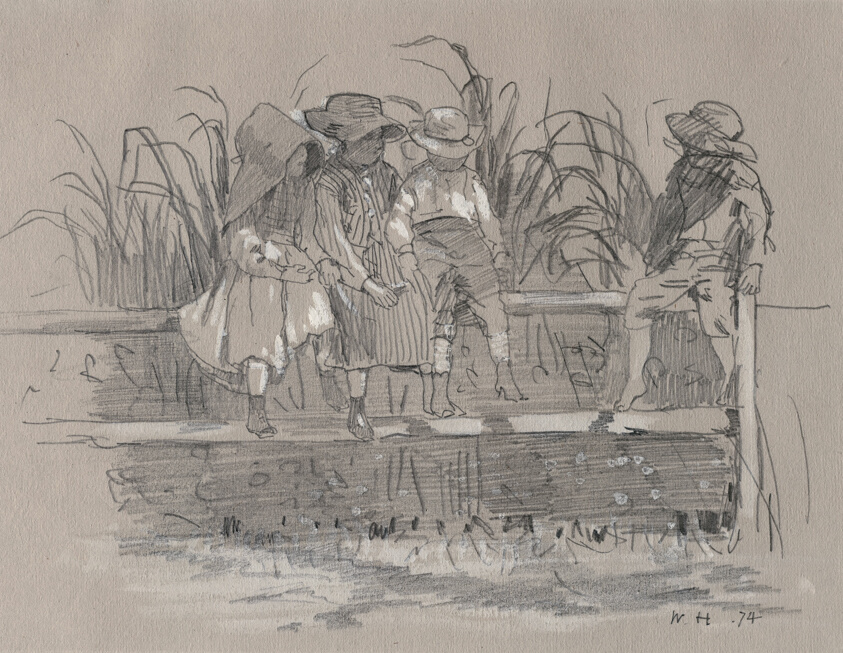
Children Sitting on a Fence
Art Institute of Chicago
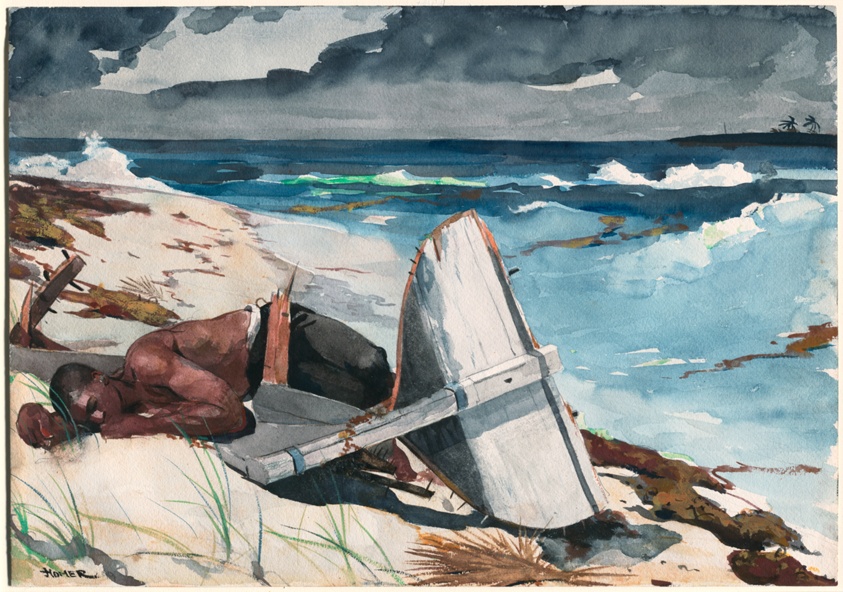
After the Hurricane, Bahamas
Art Institute of Chicago
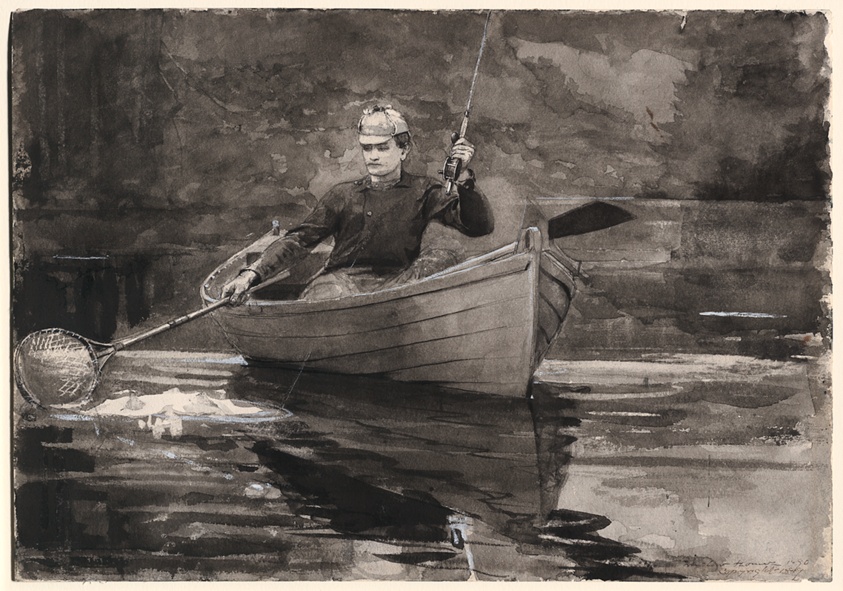
Netting the Fish
Art Institute of Chicago
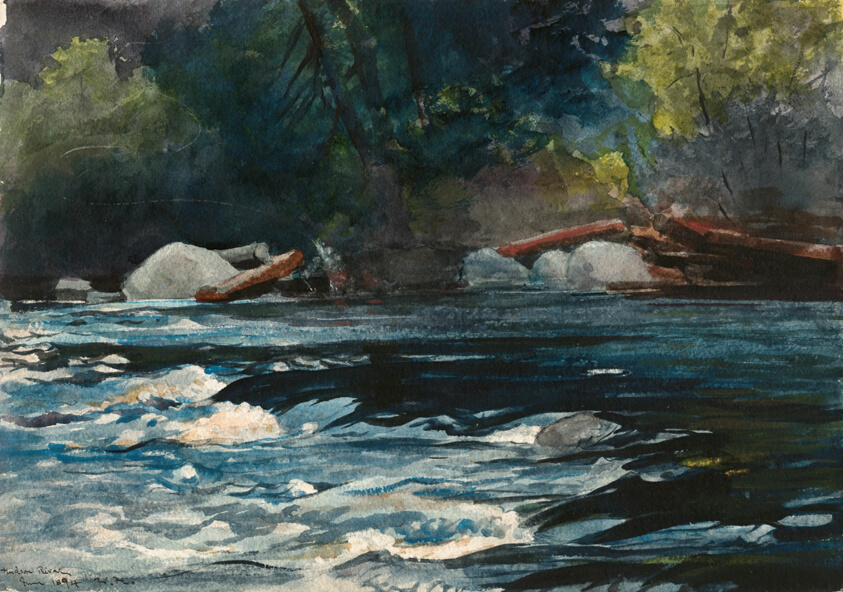
The Rapids, Hudson River, Adirondacks
Art Institute of Chicago
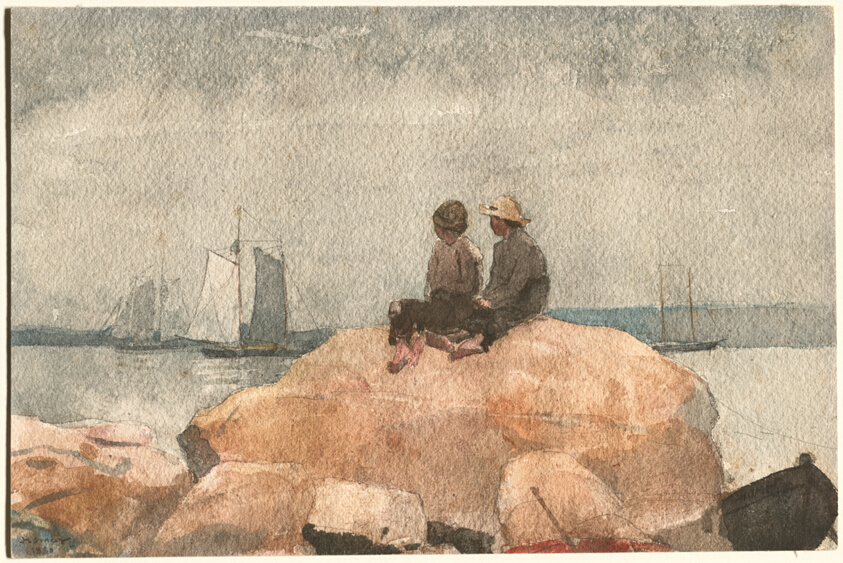
Two Boys Watching Schooners
Art Institute of Chicago
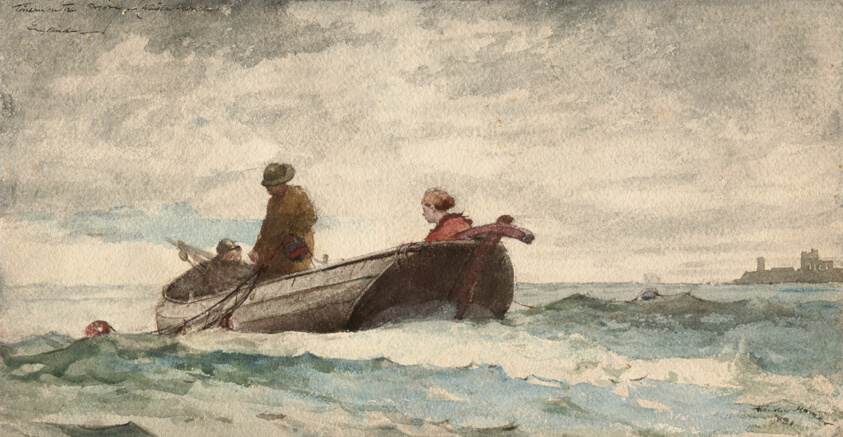
Tynemouth Priory, England
Art Institute of Chicago
A Clam-Bake
Cleveland Museum of Art