Cleveland Museum of Art
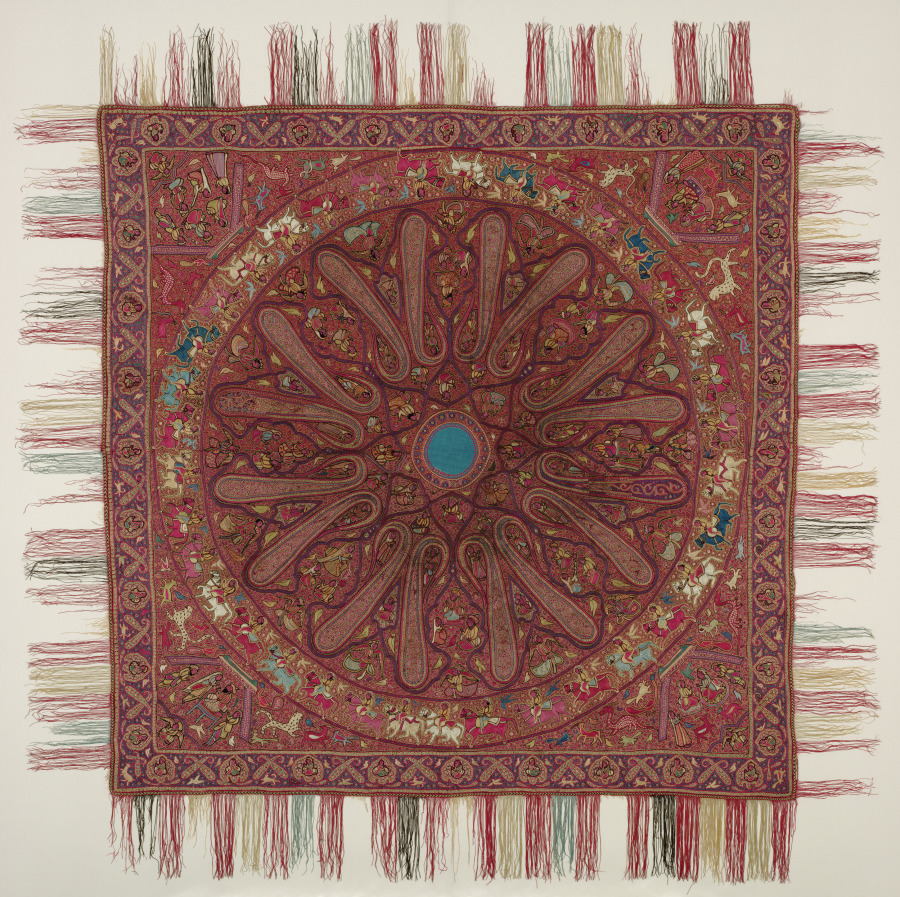
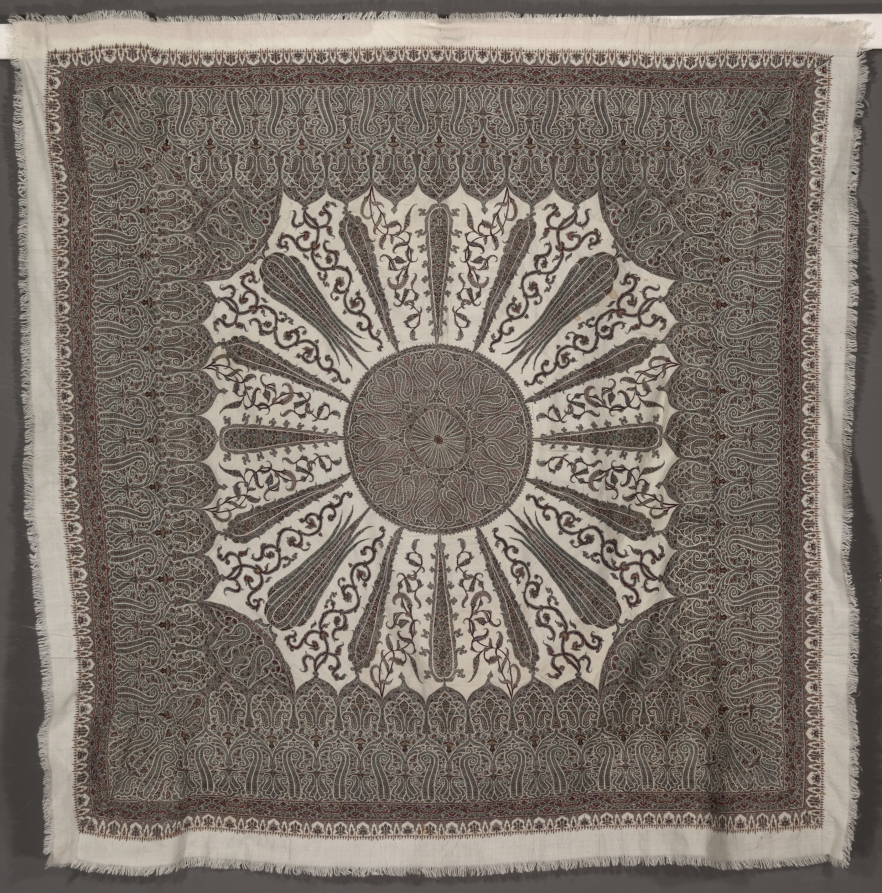
Square Shawl
- Date
- c. 1850–70
- Medium
- Silk and silver filé, wool: chain stitch embroidery
- Culture
- India, Kashmir
- Department
- Textiles
- Institution
- Cleveland Museum of Art
By the 1800s, the Himalayan foothill region of Kashmir was renowned for distinctive embroideries, and Kashmiri shawls were coveted by women throughout the British Empire. The center of this square shawl is in the form of an eight-petaled lotus, a symbol for the sun, and around it are the elongated forms of slender cypress trees, which became the inspiration for paisley. Every space is populated with figures: seated, standing, male, female, or playing musical instruments. Others are winged heavenly figures called peri . Birds are the only animals in these central spaces, suggesting a heavenly realm. In the next concentric ring riders in an equestrian procession alternate with flying birds. In the spandrels, the triangular sections between the circle and the square, are gatherings under a tent with animals. Some local Himalayan animals can be identified, such as the spotted snow leopard and the snake-eating markhor goat.
The authoritative record is held by Cleveland Museum of Art. LinkedCulture surfaces this object and its connections; it does not alter institutional metadata.
Related across collections
Semantically similar works from Cleveland Museum of Art and other institutions.
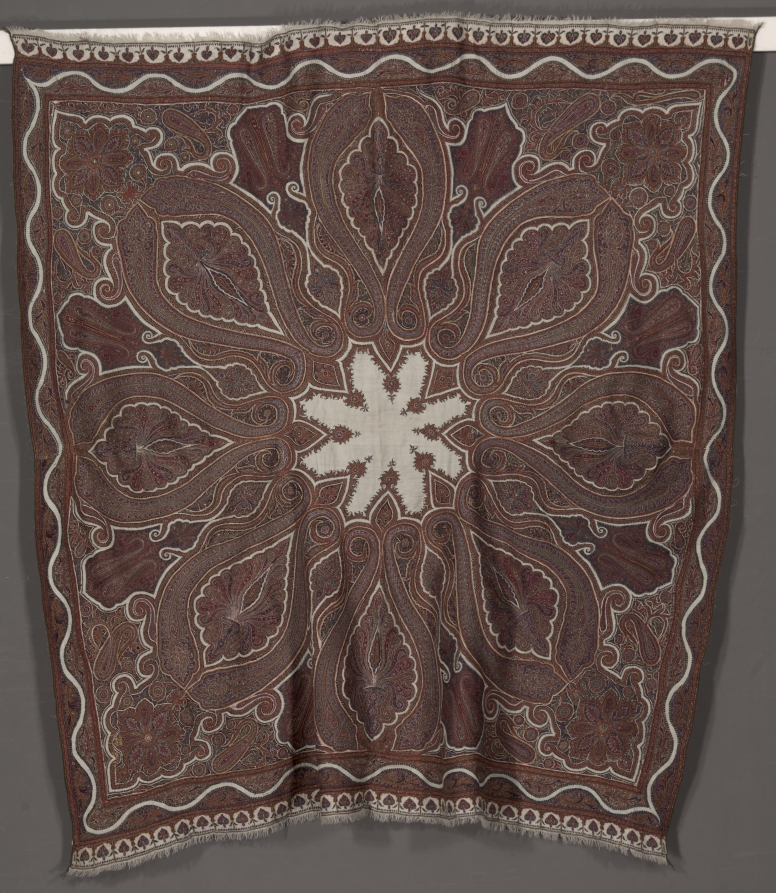
Square Shawl ("amli")
Cleveland Museum of Art
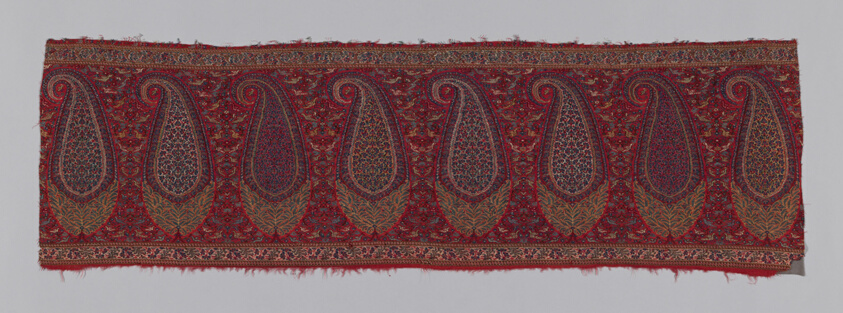
Shawl Border (Pallu)
Art Institute of Chicago
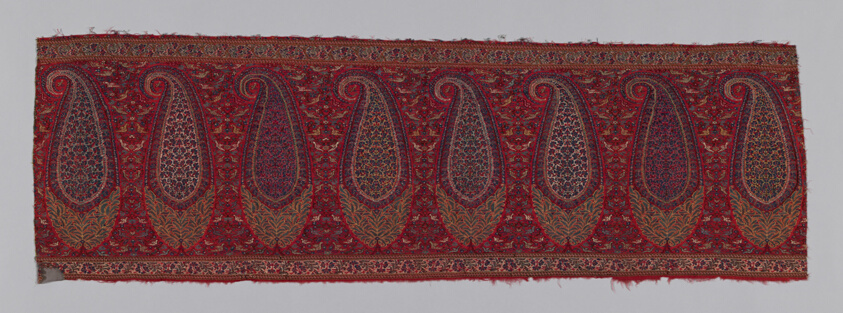
Shawl Border (Pallu)
Art Institute of Chicago
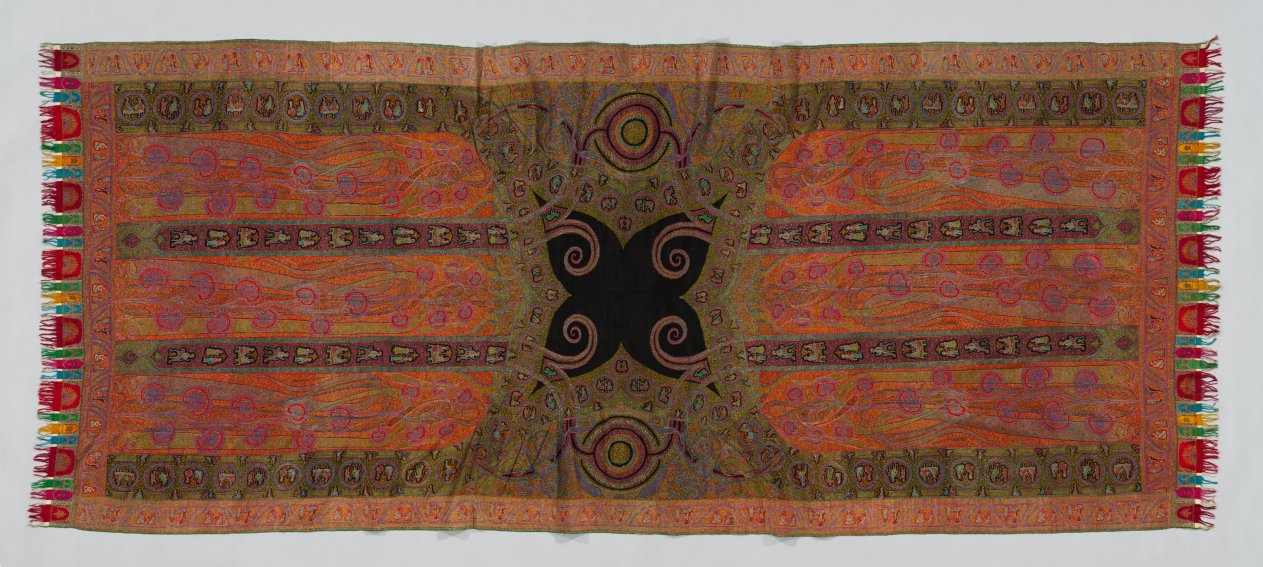
Long shawl with woven figures and animals
Cleveland Museum of Art
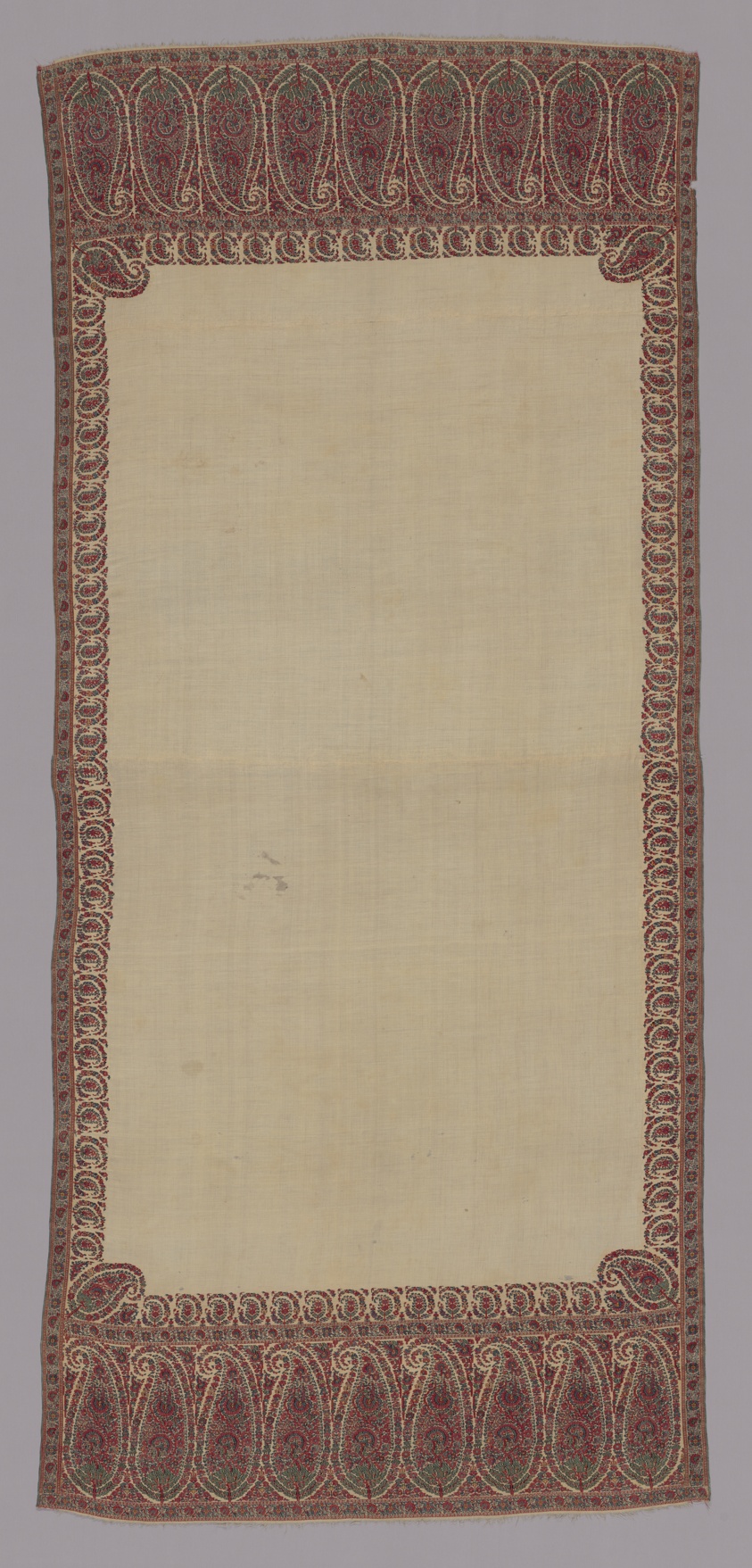
Palledar (Long Shawl)
Art Institute of Chicago
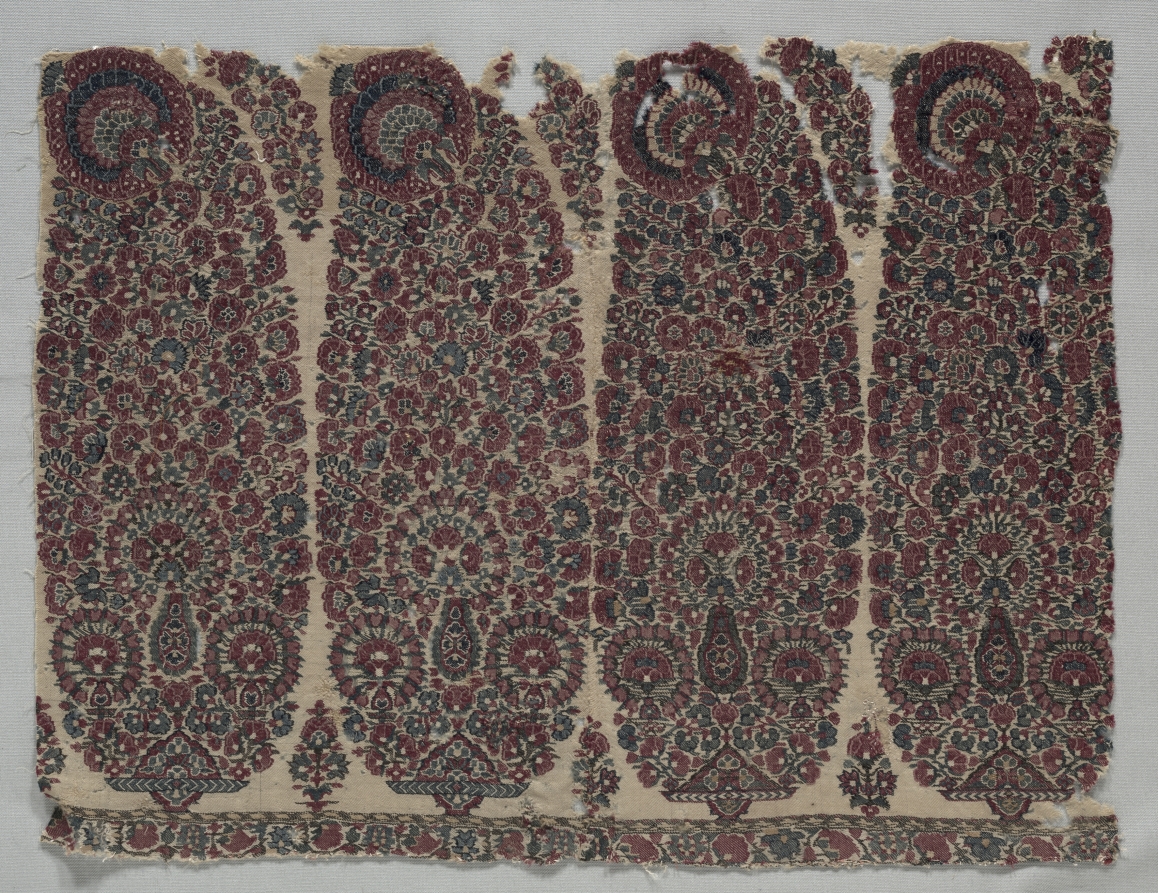
Border of a Shawl
Cleveland Museum of Art

Shawl
Minneapolis Institute of Art
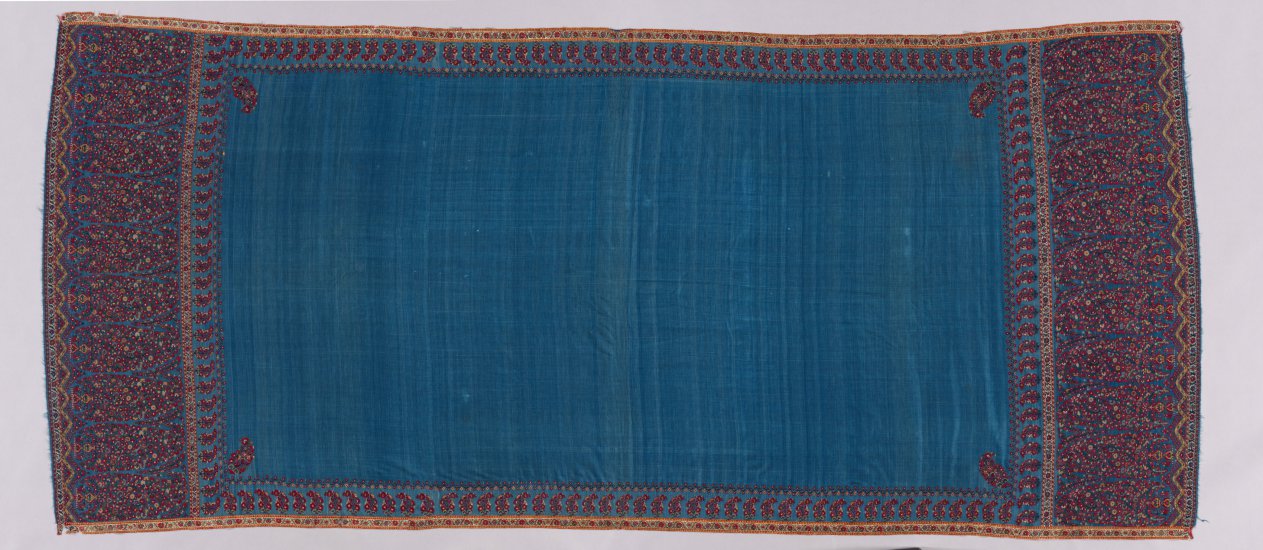
Shawl with boteh
Cleveland Museum of Art
Apricot Long Shawl
Cleveland Museum of Art
Square Shawl
Cleveland Museum of Art
Long Shawl with Black Center and Exotic Four-Sided Gallery in Chinoiserie Style
Cleveland Museum of Art
Square Shawl
Art Institute of Chicago