Cleveland Museum of Art
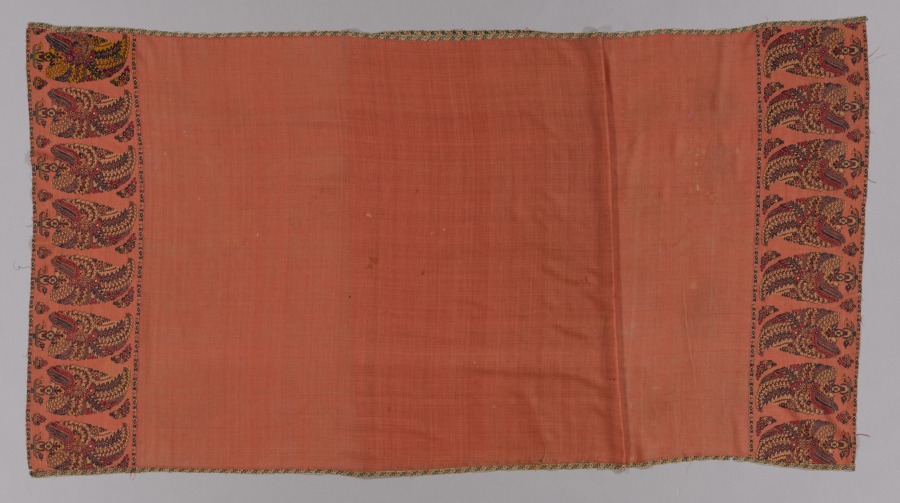
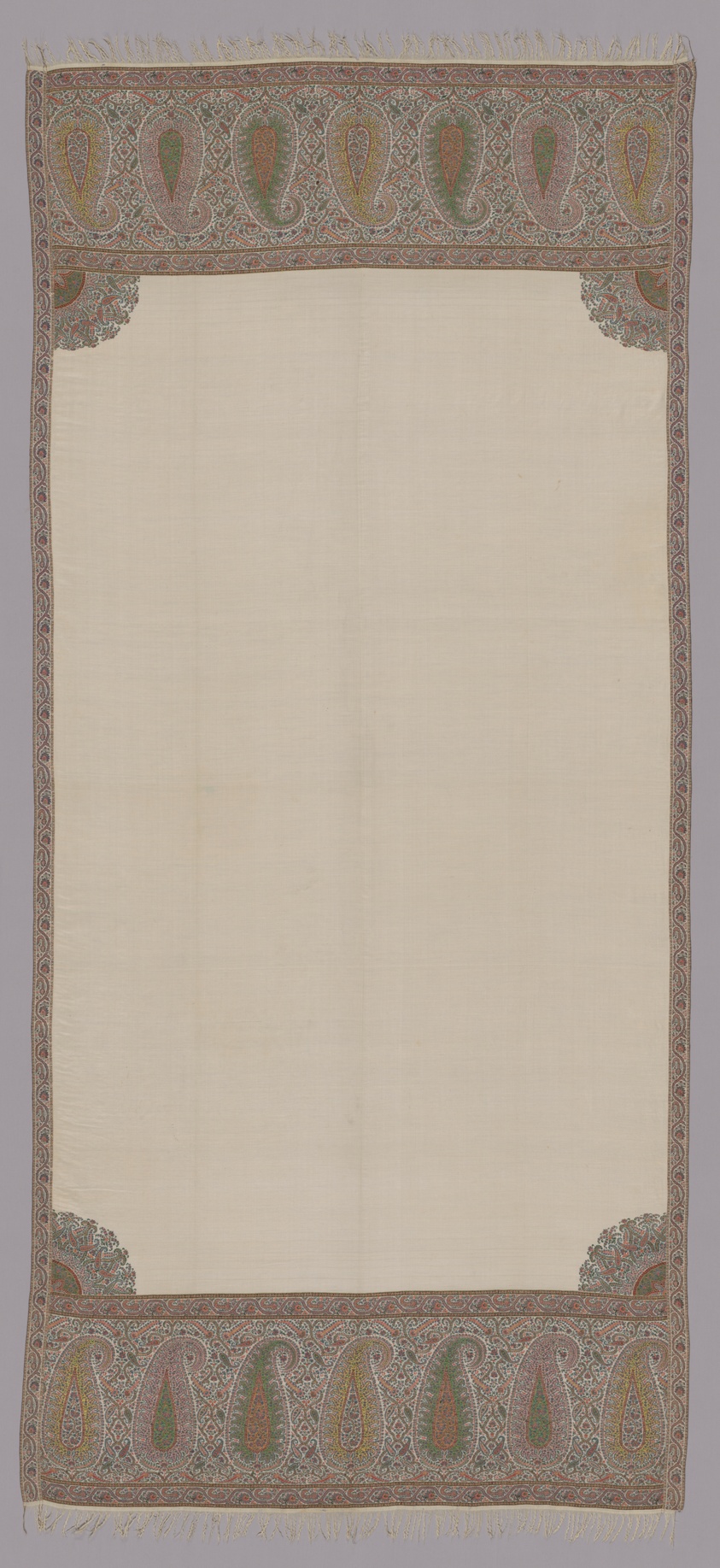
Apricot Long Shawl
- Date
- 1785–1800
- Medium
- 2/2 twill tapestry weave, double interlocked; wool
- Culture
- India, Kashmir, Afghan period
- Department
- Textiles
- Institution
- Cleveland Museum of Art
Artistic styles evolved with increasingly elaborate mosaic-like decoration during the 1800s to meet an insatiable European demand. Early shawls had plain fields with isolated plants in the end panels, which led to decorated side borders and vases of blossoming stems. Such flora was replaced by colorful, dense blossoms forming cone-shaped botehs , or paisleys, on trays. To this was added a gallery of small botehs and angular floral vines around a rich blue field with single botehs in the corners. Lightweight, supple, warm, and colorful, Kashmir shawls had no equal. Fine, soft goat-hair wool was woven in a 2/2 twill tapestry weave—the equivalent of painting with colored weft threads. Imitations woven in Paisley, Scotland, prompted the popular term paisley .
The authoritative record is held by Cleveland Museum of Art. LinkedCulture surfaces this object and its connections; it does not alter institutional metadata.
Related across collections
Semantically similar works from Cleveland Museum of Art and other institutions.
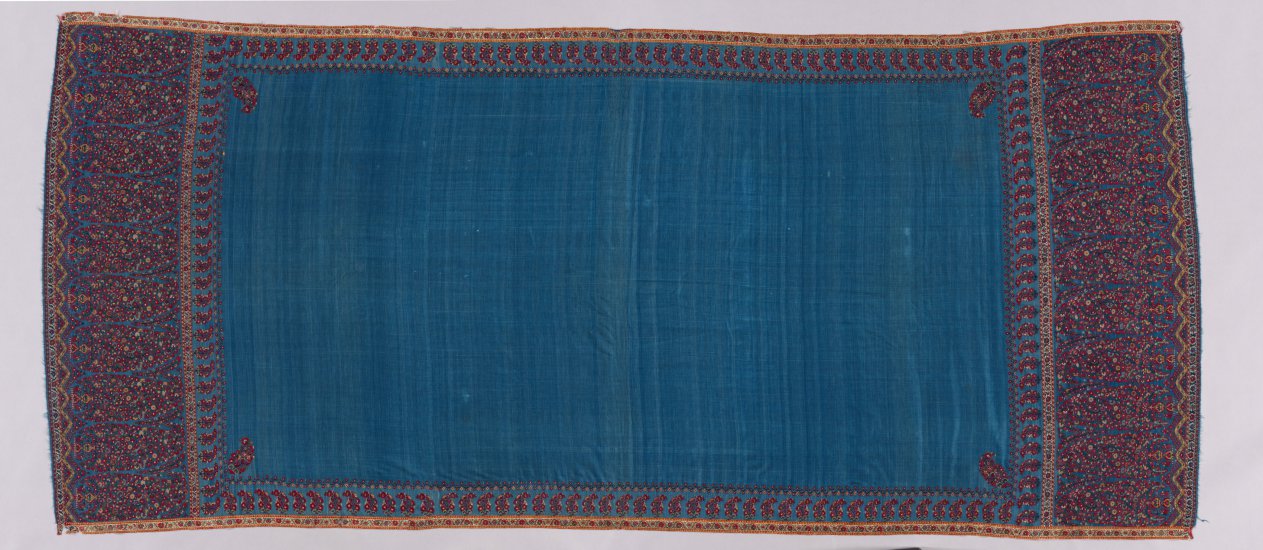
Shawl with boteh
Cleveland Museum of Art
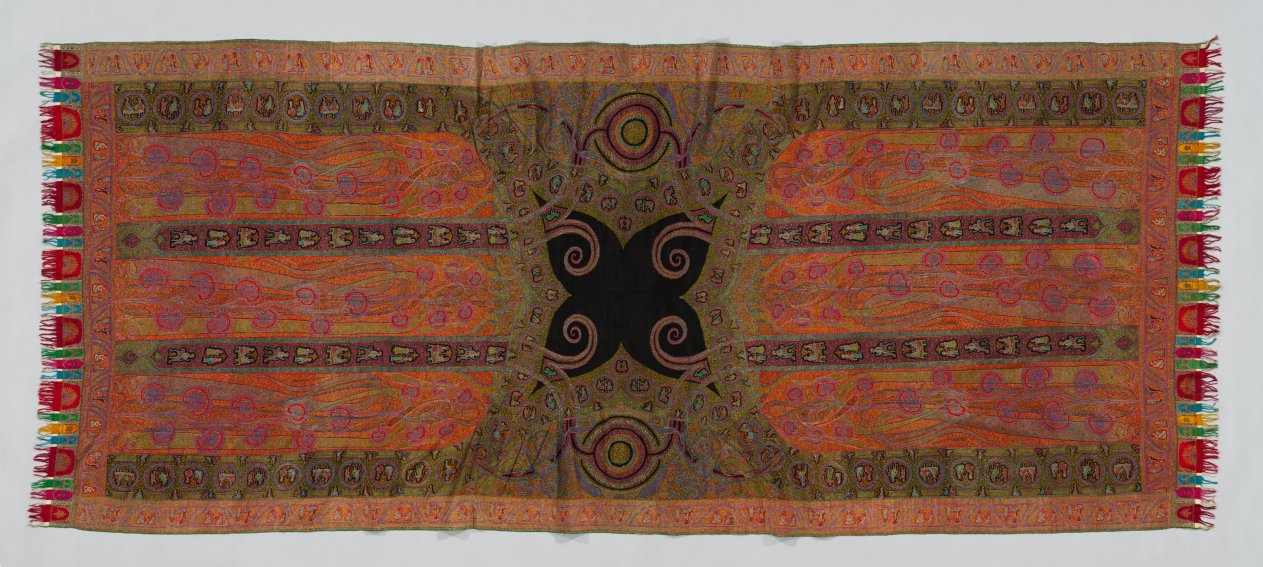
Long shawl with woven figures and animals
Cleveland Museum of Art
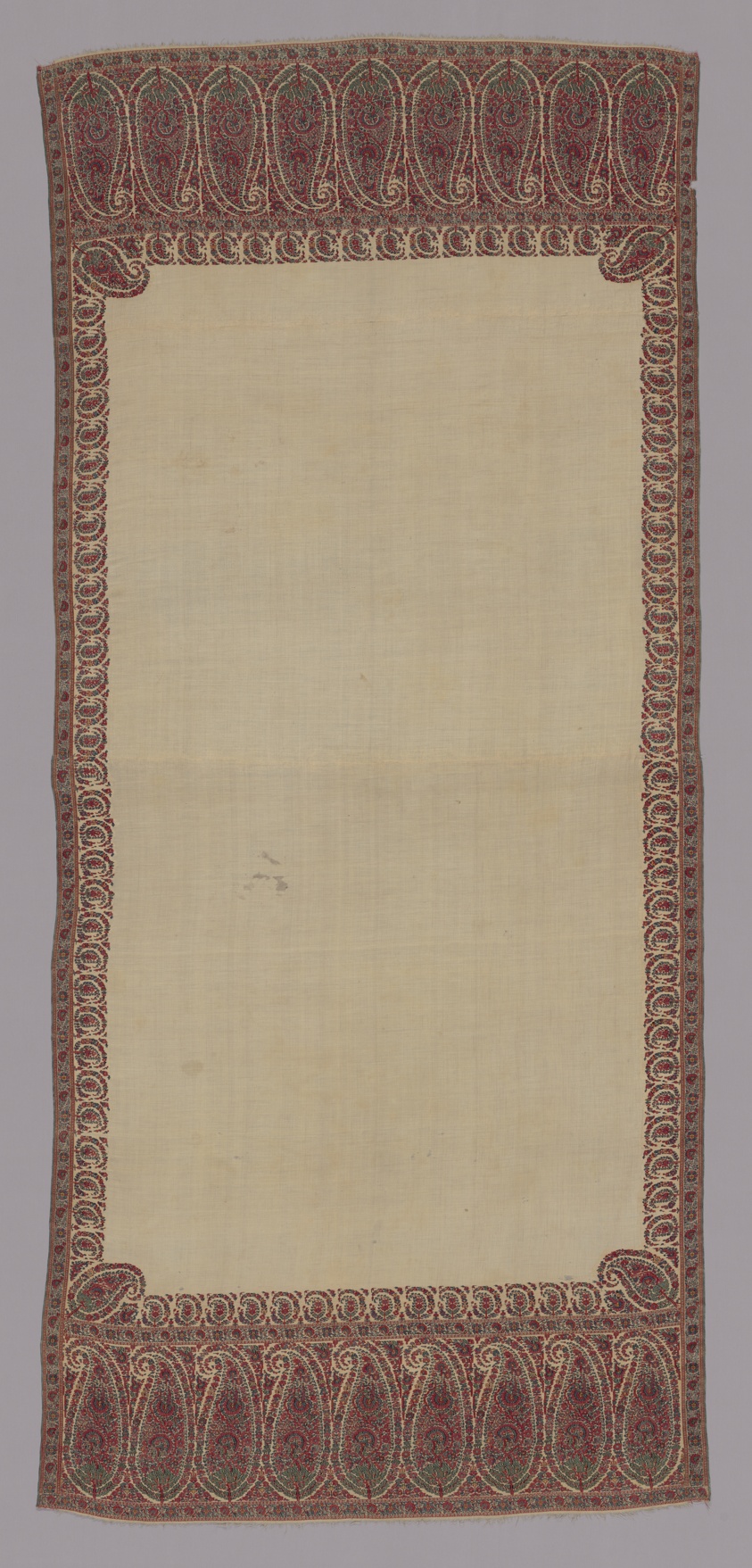
Palledar (Long Shawl)
Art Institute of Chicago
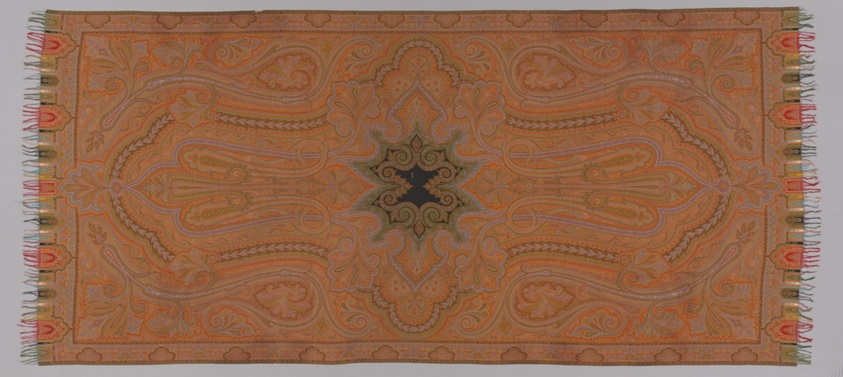
Woman's Long Shawl
Art Institute of Chicago
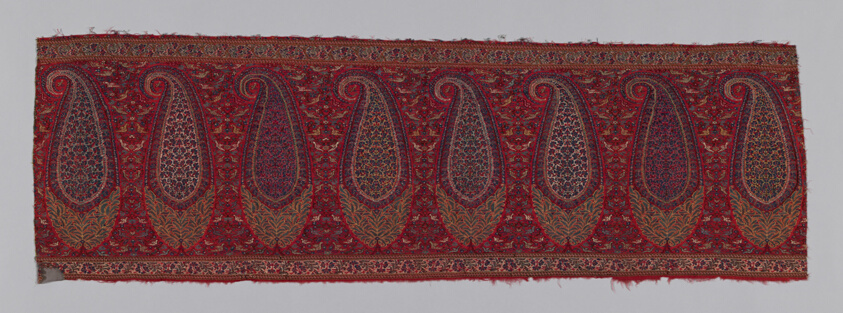
Shawl Border (Pallu)
Art Institute of Chicago
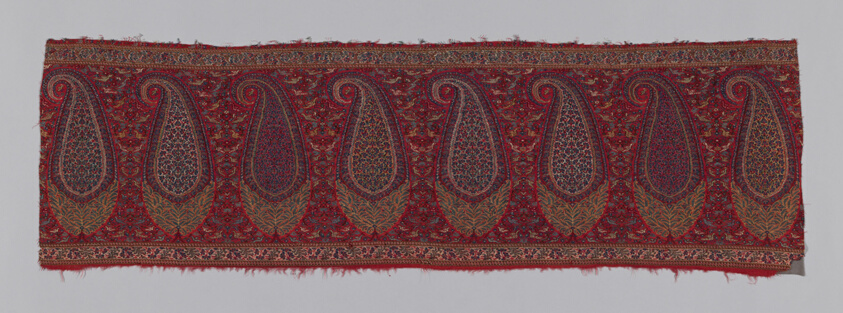
Shawl Border (Pallu)
Art Institute of Chicago
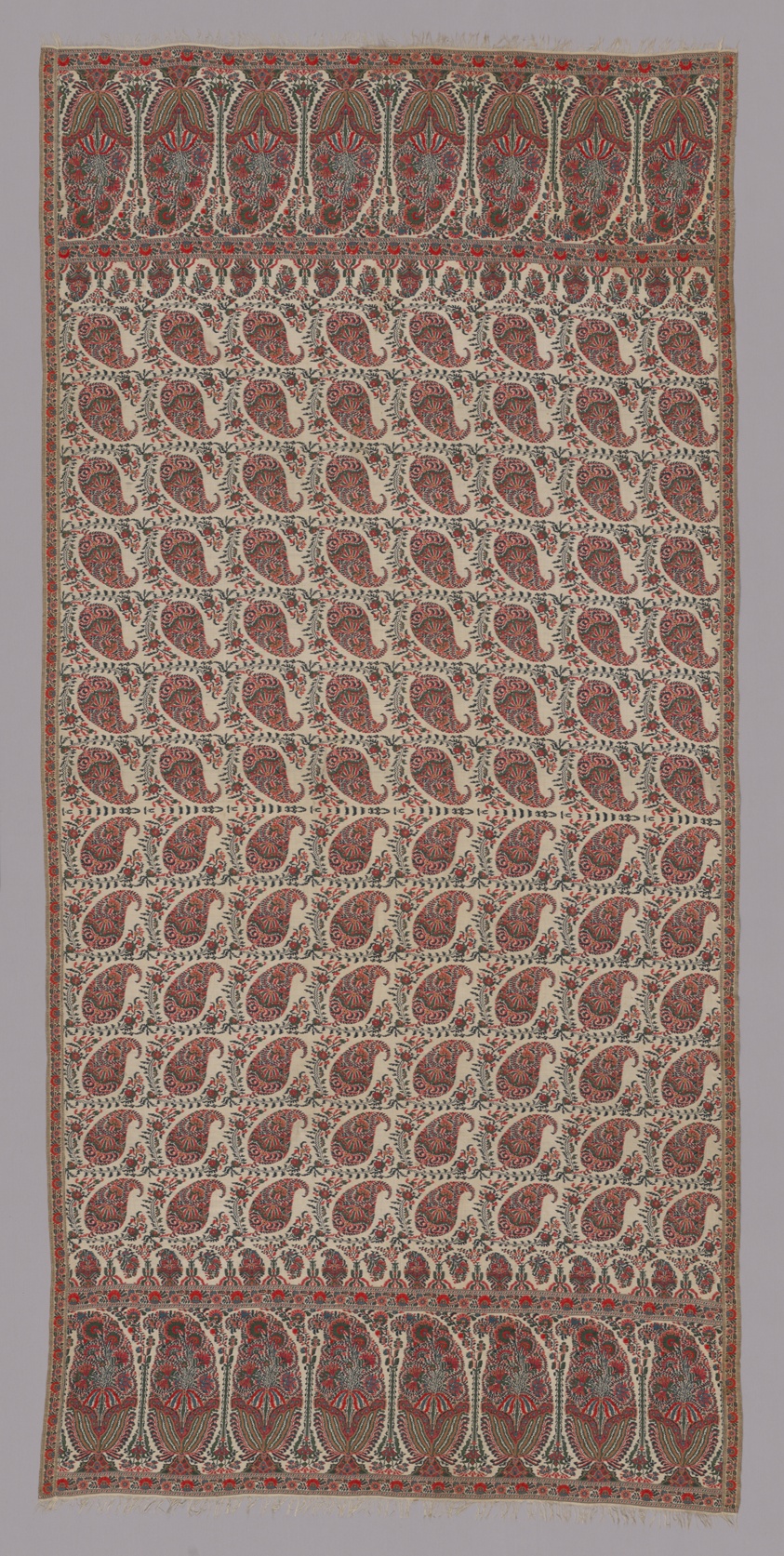
Woman's Long Shawl
Art Institute of Chicago
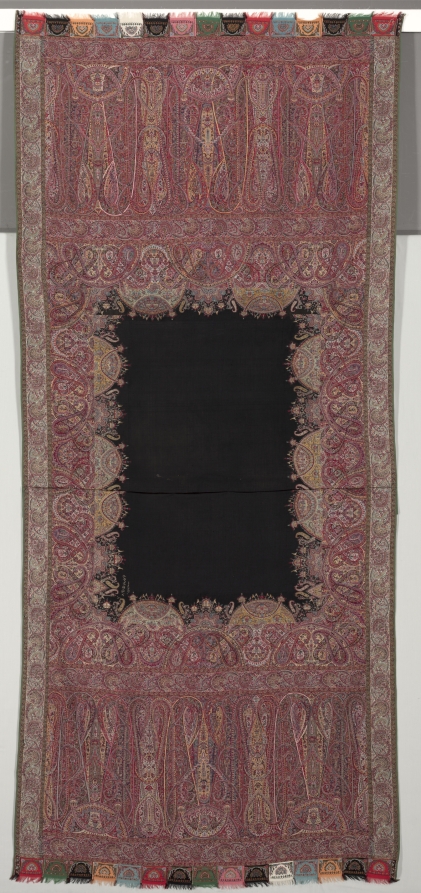
Long Shawl with Black Center and Exotic Four-Sided Gallery in Chinoiserie Style
Cleveland Museum of Art
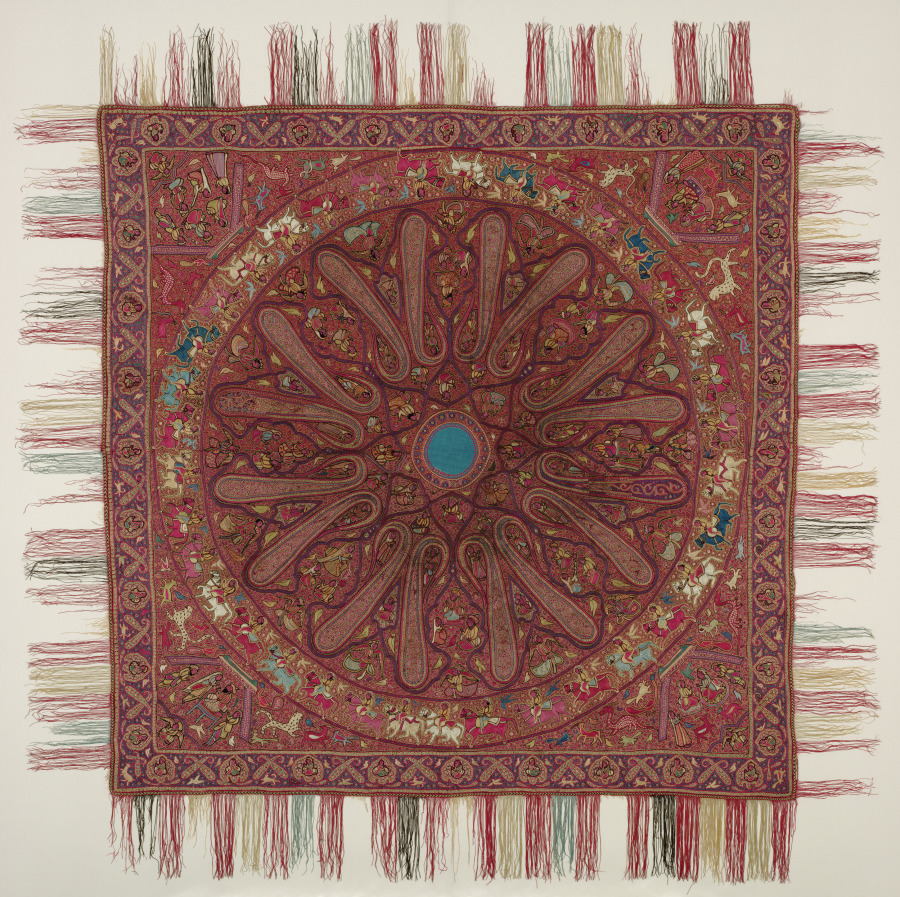
Square Shawl
Cleveland Museum of Art
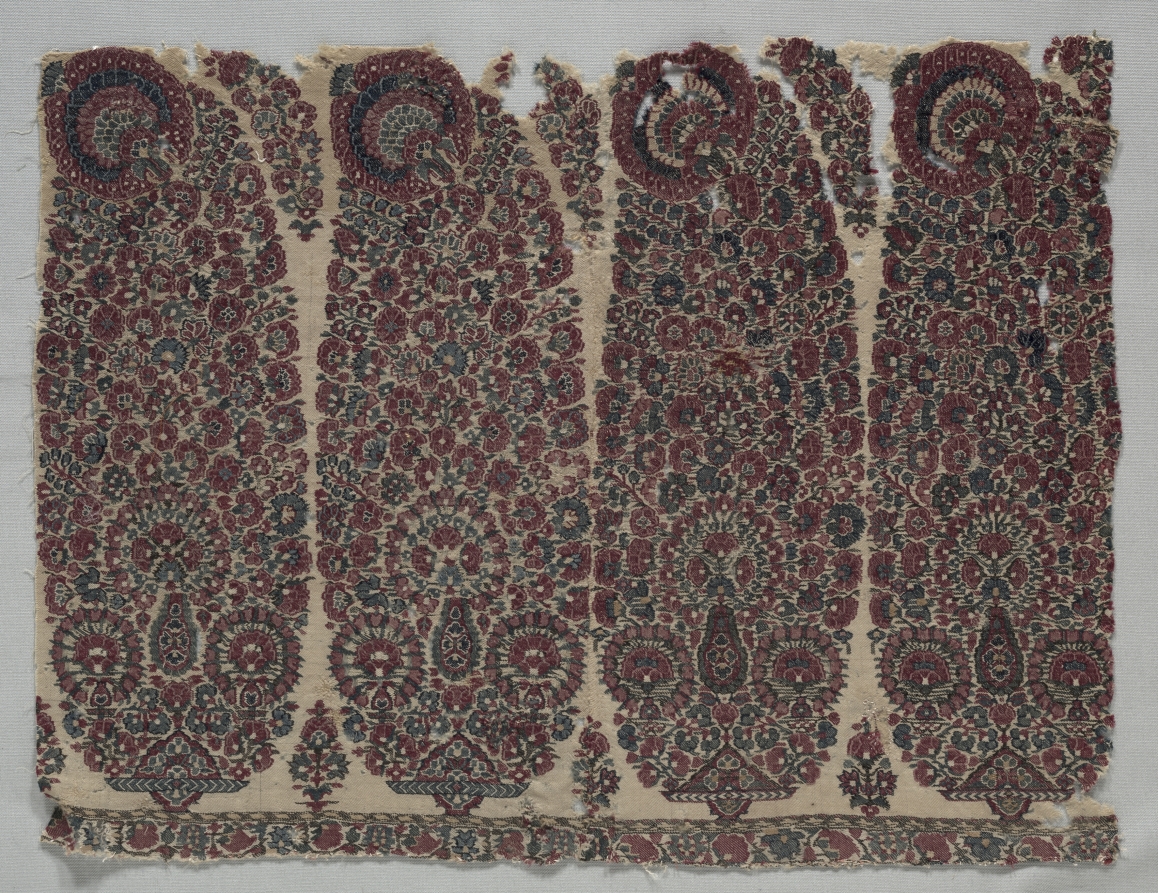
Border of a Shawl
Cleveland Museum of Art
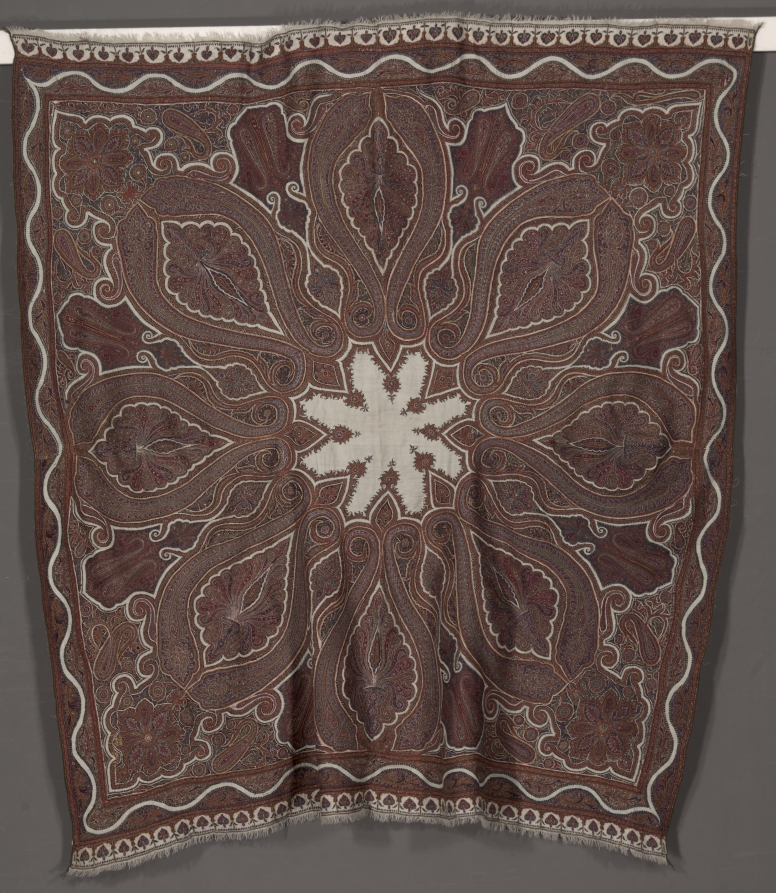
Square Shawl ("amli")
Cleveland Museum of Art
Long Shawl
Art Institute of Chicago