Cleveland Museum of Art
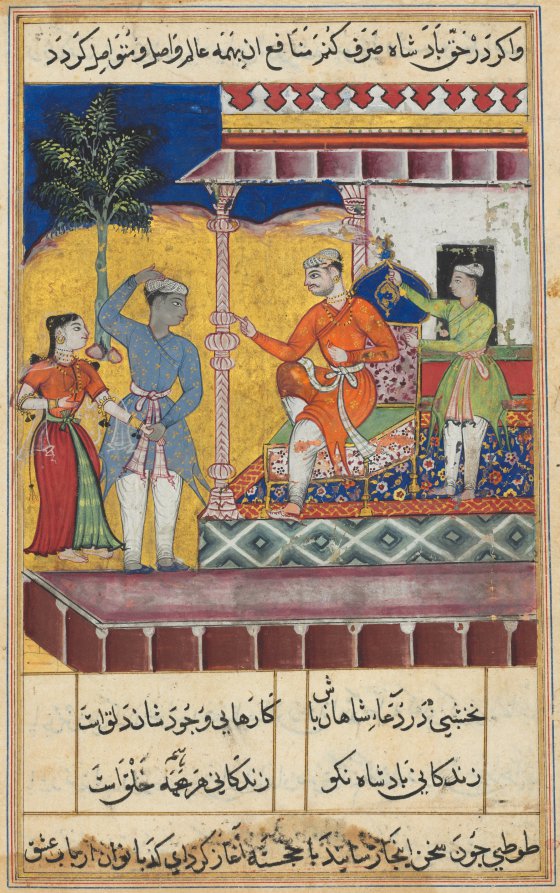
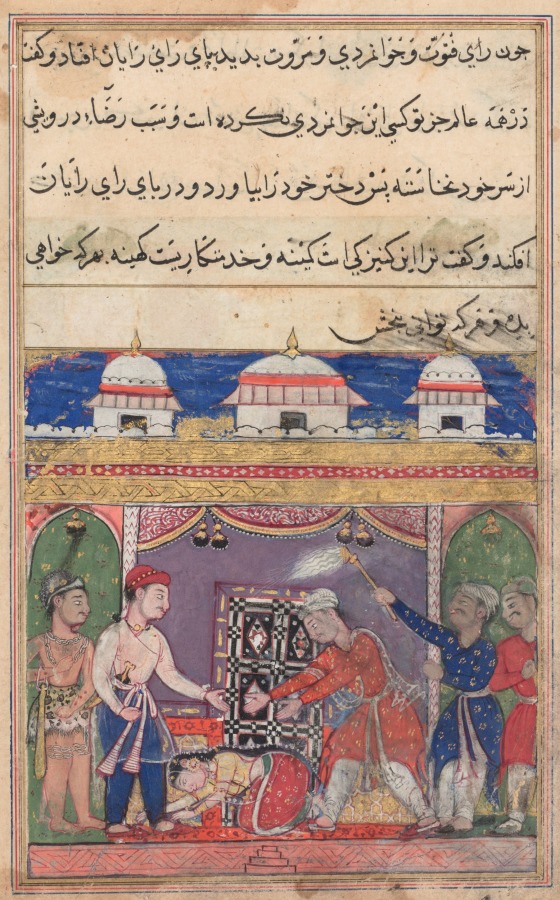
The rejuvenated old man and the daughter of the king of the jinns take leave of the King of Kings, from a Tuti-nama (Tales of a Parrot): Seventh Night
- Date
- c. 1560
- Medium
- gum tempera, ink, and gold on paper
- Culture
- Mughal India, court of Akbar (reigned 1556–1605)
- Department
- Indian and Southeast Asian Art
- Institution
- Cleveland Museum of Art
The artist who painted the first two scenes rendered the pit as a structure made of bricks. Peering over the edge is a Brahmin, a member of the Hindu priest class, wearing white. In the first painting he holds the bracelets given to him by the jinn princess to pay off his gambling debts; in the second he holds a text. In the pit, the jinn princess has been waiting for 70 years for her beloved to find the courage to pass through the cauldron of boiling oil in order to become purified enough to be with her––a jinn, who is a being of light, like a genie. Hearing of this predicament from the Brahmin, the King of Kings, wearing orange, provided a salve that protects the wearer from the harm of the hot oil, so the old man could safely pass through the boiling cauldron, which restored his youth. The artist Banavari, whose name is inscribed on the margin of the third page, went on to become a prominent artist in Akbar’s atelier. This painting may be the earliest surviving example of his work. The old man emerges from the boiling oil eighteen years old and beardless.
The authoritative record is held by Cleveland Museum of Art. LinkedCulture surfaces this object and its connections; it does not alter institutional metadata.
Related across collections
Semantically similar works from Cleveland Museum of Art and other institutions.
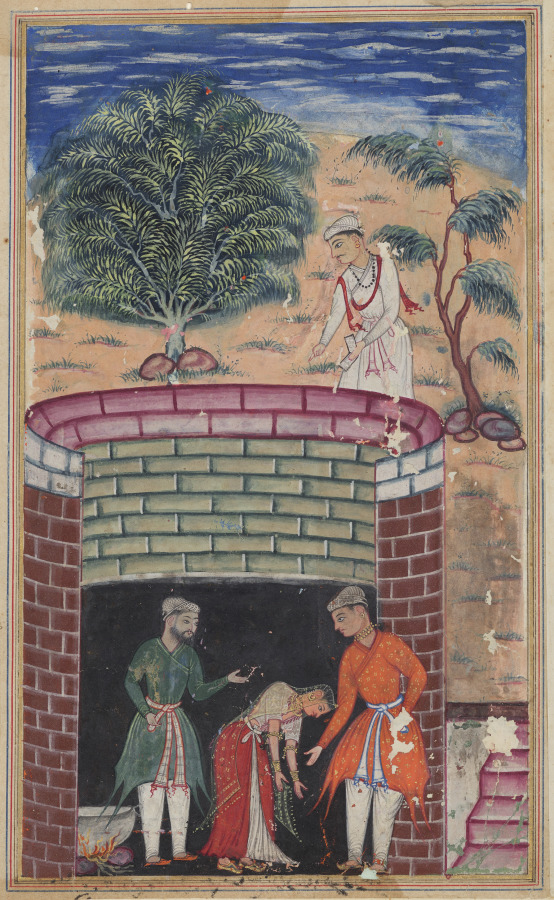
The daughter of the king of the jinns bows before the King of Kings who has just undergone the ordeal of passing through the boiling oil to emerge as a youth, from a Tuti-nama (Tales of a Parrot): Seventh Night
Cleveland Museum of Art
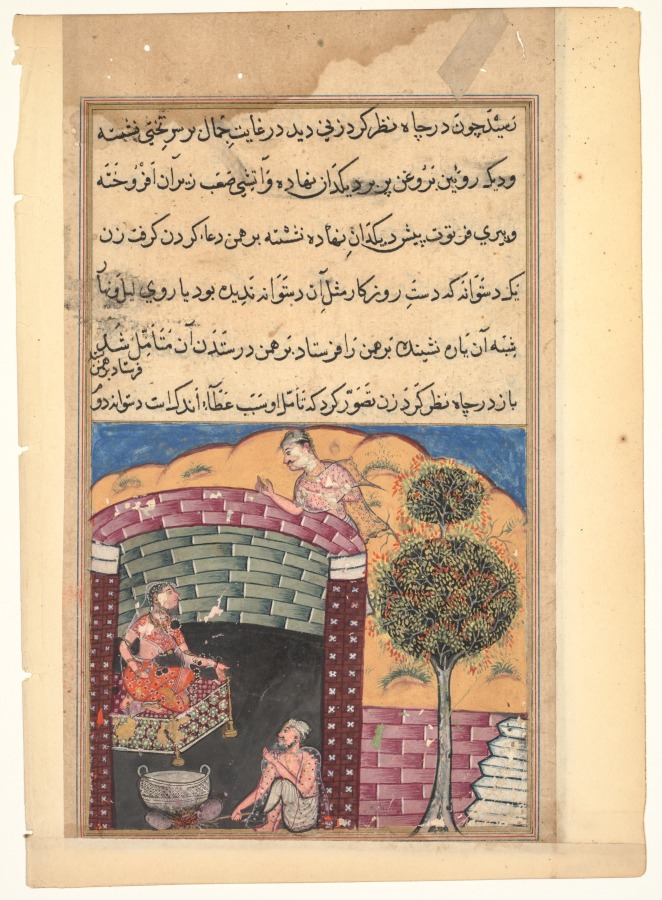
The Brahman gambler sees the daughter of the king of the jinns in a pit together with an old man and a cauldron of boiling oil, from a Tuti-nama (Tales of a Parrot: Seventh Night)
Cleveland Museum of Art
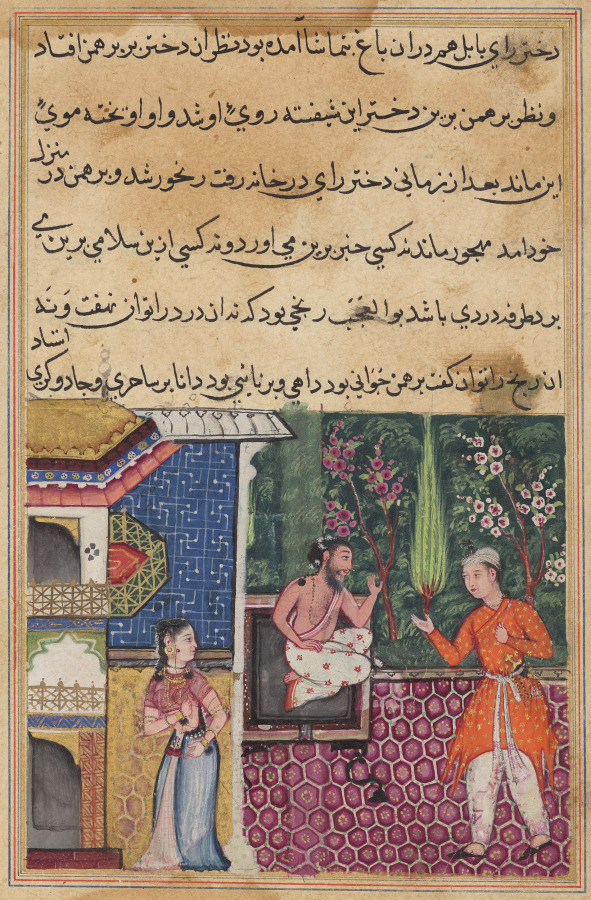
The Brahman gives an account of his falling in love with the king of Babylon’s daughter to his friend, the magician, from a Tuti-nama (Tales of a Parrot): Thirty-fifth Night
Cleveland Museum of Art
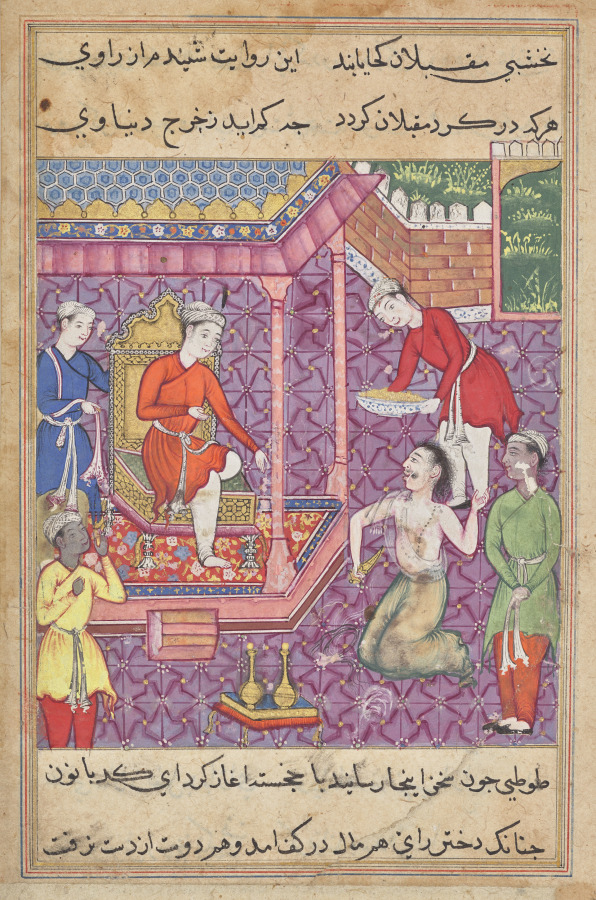
The magician disguised as a Brahman returns to claim his “daughter-in-law,” from a Tuti-nama (Tales of a Parrot): Thirty-fifth Night
Cleveland Museum of Art
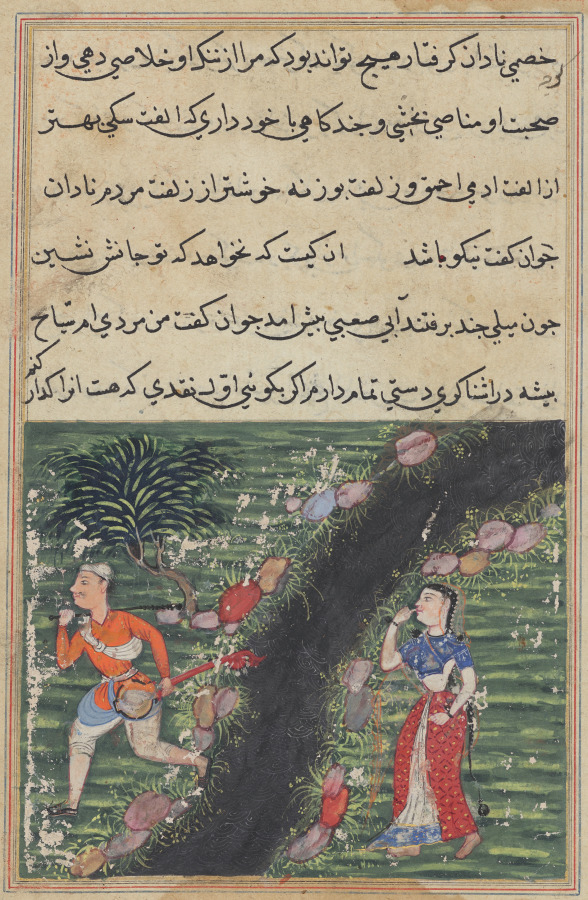
The vagabond crosses a stream with the possessions of the daughter-in-law of the king of Banaras and absconds, from a Tuti-nama (Tales of a Parrot): Sixteenth Night
Cleveland Museum of Art
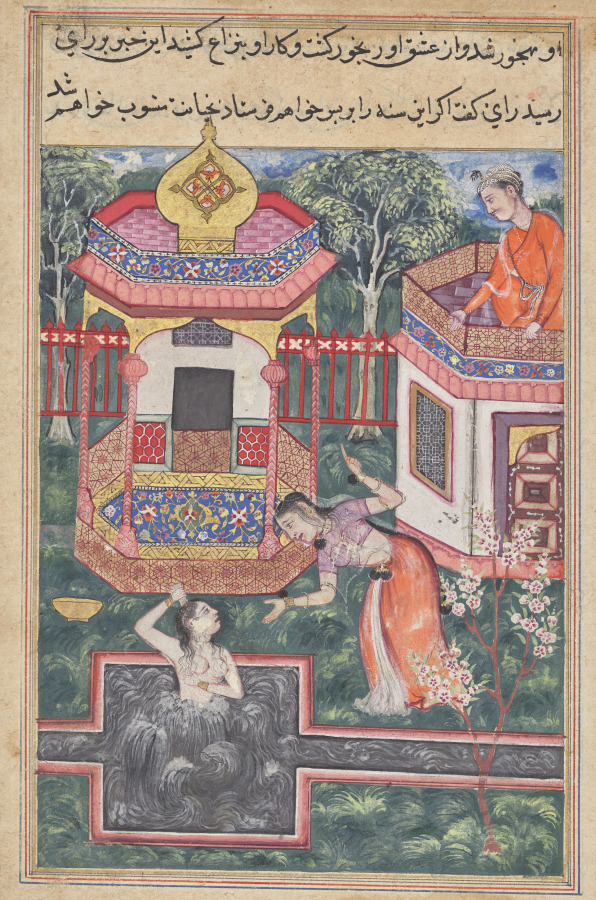
The son of the king of Babylon sees the Brahman transformed into a woman bathing and falls in love with her, from a Tuti-nama (Tales of a Parrot): Thirty-fifth Night
Cleveland Museum of Art
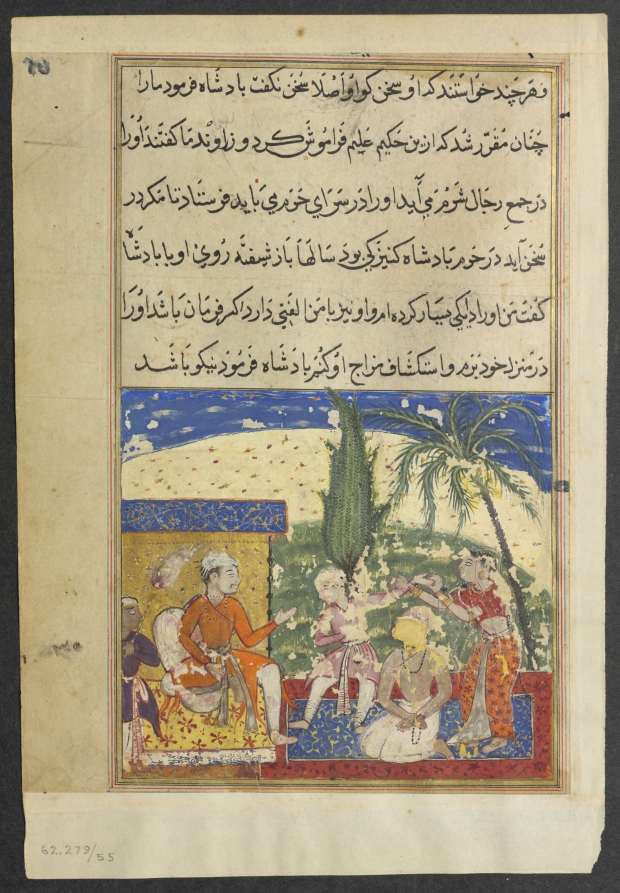
The king’s handmaiden takes the prince away to the harem, from a Tuti-nama (Tales of a Parrot): Eighth Night
Cleveland Museum of Art
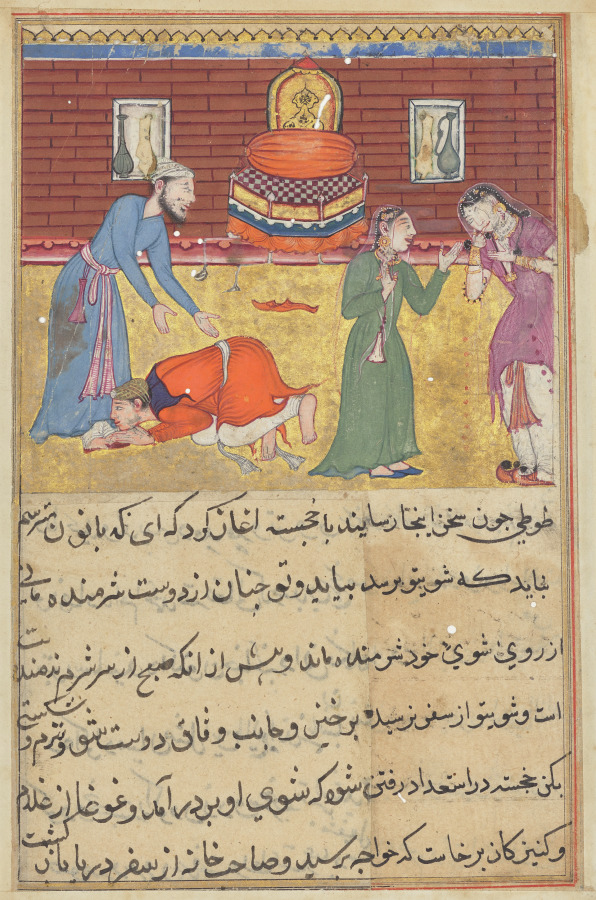
The pious man’s son, now a king, reveals himself to his father; his nurse upbraids his unfaithful mother, from a Tuti-nama (Tales of a Parrot): Fifty-second Night
Cleveland Museum of Art
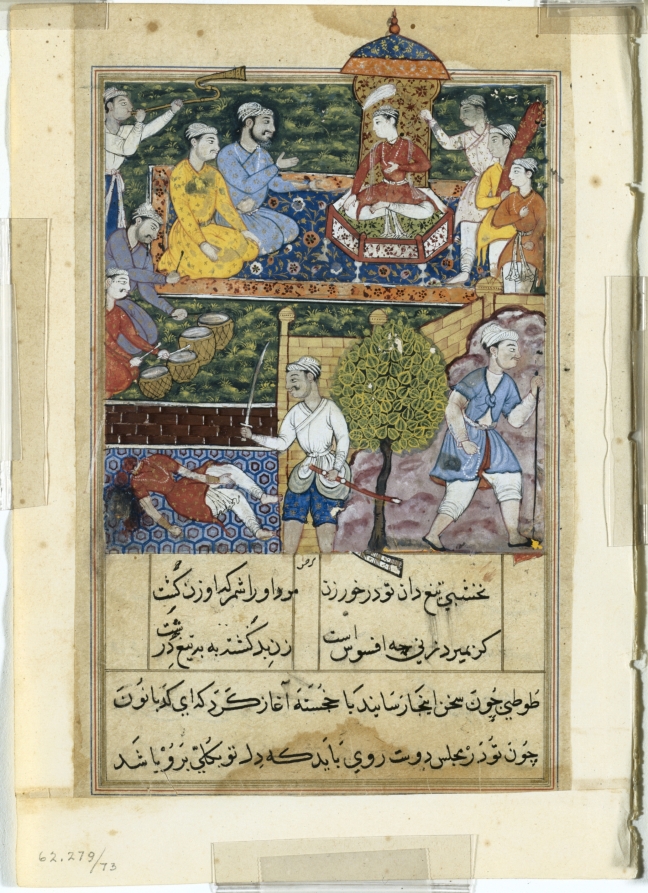
The young prince is crowned and the wicked handmaiden is executed, from a Tuti-nama (Tales of a Parrot): Eighth Night
Cleveland Museum of Art
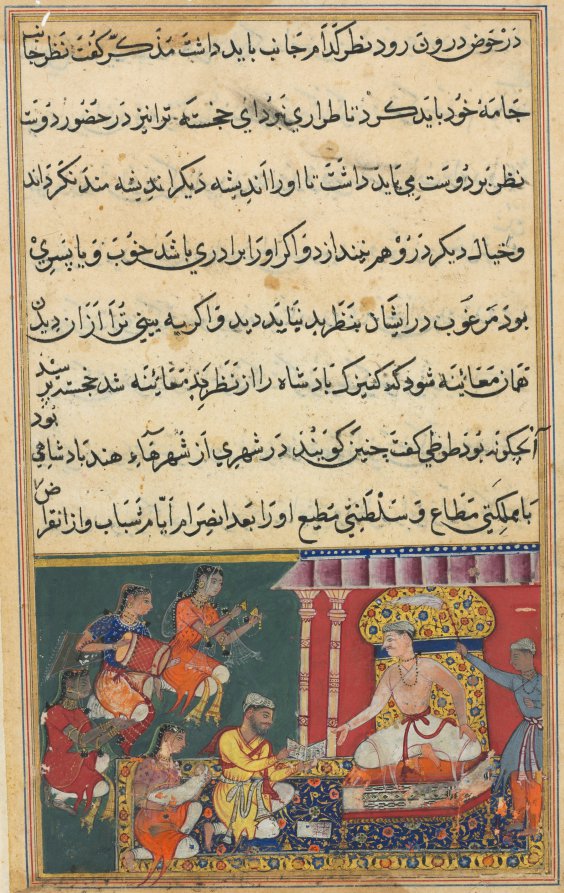
The astrologer predicts a calamity for the newly born prince in his thirteenth year, but one which he would be able to overcome, from a Tuti-nama (Tales of a Parrot): Eighth Night
Cleveland Museum of Art
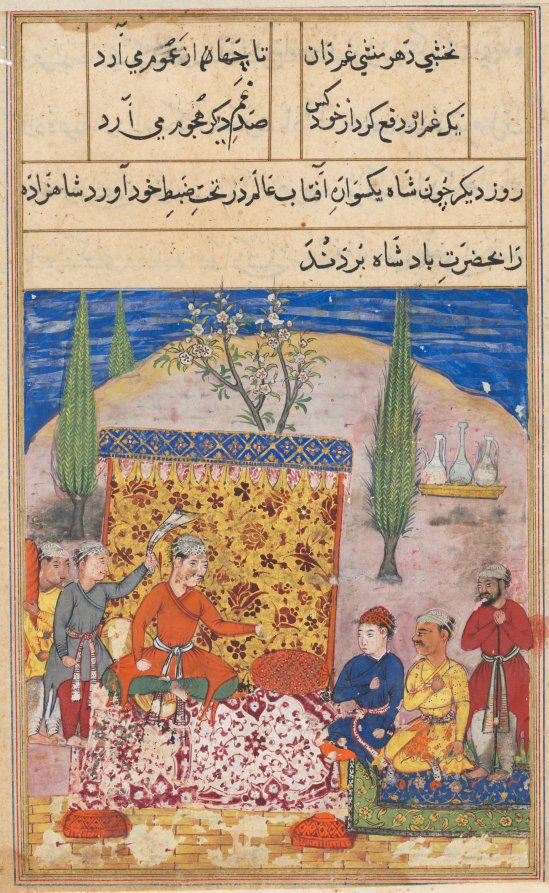
The young prince is presented to the king, his father, by his teacher, but refuses to speak, from a Tuti-nama (Tales of a Parrot): Eighth Night
Cleveland Museum of Art
The king of Bahilistan offers his daughter to the King of Kings, from a Tuti-nama (Tales of a Parrot): Seventh Night
Cleveland Museum of Art