Cleveland Museum of Art
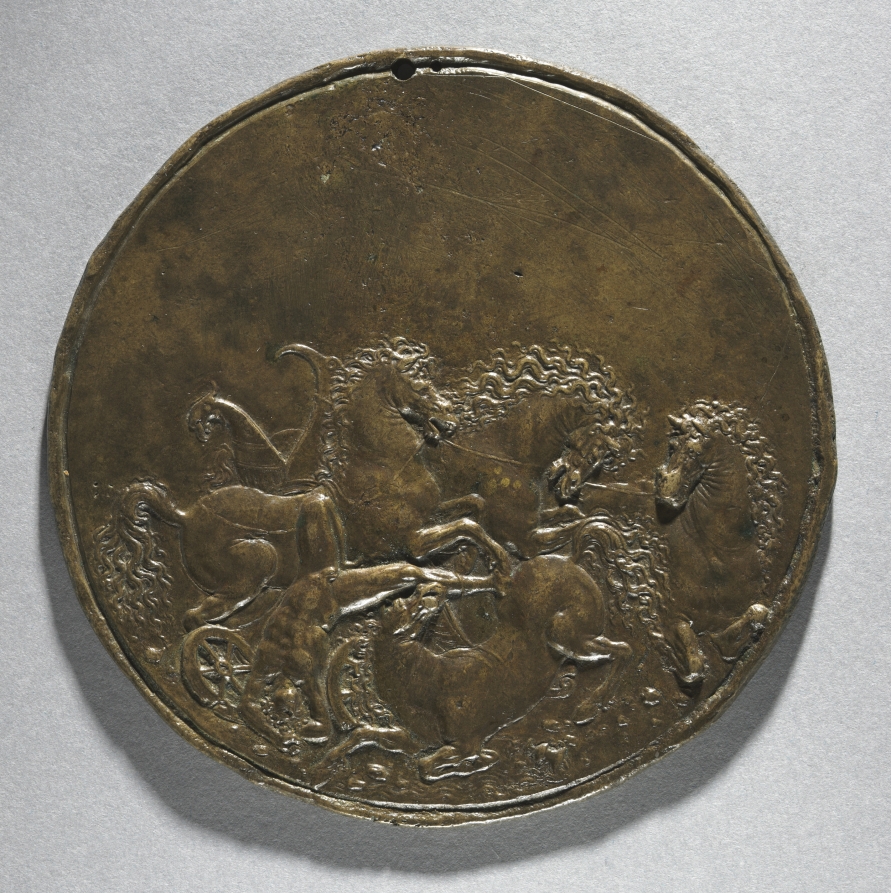
The Death of Hippolytus or Fall of Phaeton
ModernoLinkedCulture matchlcp-83a3852c0909
- Date
- 1500s
- Medium
- bronze
- Culture
- Italy, 16th century
- Department
- European Painting and Sculpture
- Institution
- Cleveland Museum of Art
- Object ID
- 144400
From the Cleveland Museum of Art record
This composition's drama comes from the horses' twisting bodies—rhythmically fitting in the circular frame—as well as their dynamic and individuated expressions. Many copies and variants of this popular design exist, some with architectural or wooded backgrounds. Yet, the subject matter is still being debated. The waves along the bottom edge recall two possible classical narratives that relate to bodies of water. First, Hippolytus, sent into exile for the false accusation that he was responsible for his stepmother's death, was killed when Poseidon sent monsters to drown the young man and his chariot in the sea. However, the plaquette has also been connected to Phaeton, the son of Apollo, who attempted to drive the sun god's chariot. Because Phaeton was unable to control the reins, Zeus struck the youth with a bolt of lightning-saving the earth, but hurtling the young boy and horses into the river Eridanos.
The authoritative record is held by Cleveland Museum of Art. LinkedCulture surfaces this object and its connections; it does not alter institutional metadata.
Get printable QR codesHide QR codes
Open QR codes for this object page and the museum record. They stay collapsed until needed.
Provenance & credit
As published by the source institution. Coverage varies — not every institution's open-data feed includes ownership history.
- Credit line
- Lawrence Hitchcock Fund
- Provenance
- Paul Drey Gallery, sold to the Cleveland Museum of Art, 1969.
Related across collections
Semantically similar works from Cleveland Museum of Art and other institutions.