Cleveland Museum of Art
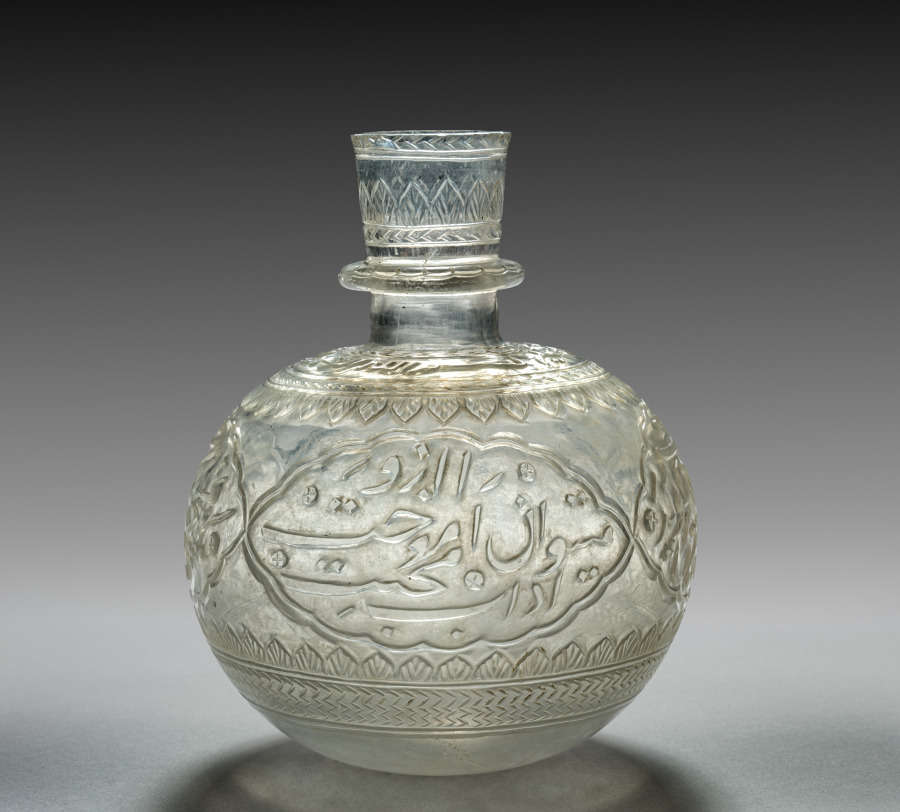
Hookah Bowl
- Date
- 1700s
- Medium
- glass
- Culture
- India, Mughal
- Department
- Indian and Southeast Asian Art
- Institution
- Cleveland Museum of Art
- Object ID
- 144663
From the Cleveland Museum of Art record
The inscription around the body of the base speaks to the use of the hookah in the decadent life of the Mughal court. The hookah is commended for being a proper, refined servant who will not “respond unless drawn upon” or, produce water bubbles when smoke is drawn through the hose. Undoubtedly the witty, poetic allusions would have been appreciated at banquets and other courtly gatherings. The use of wheel-cut glass for this hookah base may have been influenced by English glass and lead crystal that was exported to India Around the top of this hookah bowl are incised the opening two lines from the Khamsa (Quintet) of the celebrated Persian poet Nizami (1141–1209).
The authoritative record is held by Cleveland Museum of Art. LinkedCulture surfaces this object and its connections; it does not alter institutional metadata.
Get printable QR codesHide QR codes
Open QR codes for this object page and the museum record. They stay collapsed until needed.
Provenance & credit
As published by the source institution. Coverage varies — not every institution's open-data feed includes ownership history.
- Credit line
- The Norweb Collection
- Provenance
- ?-1969: Mrs. R. Henry [Emery May Holden] Norweb [1895-1984], Cleveland, OH, given to the Cleveland Museum of Art | 1969-: The Cleveland Museum of Art, Cleveland, OH
Related across collections
Semantically similar works from Cleveland Museum of Art and other institutions.