Cleveland Museum of Art
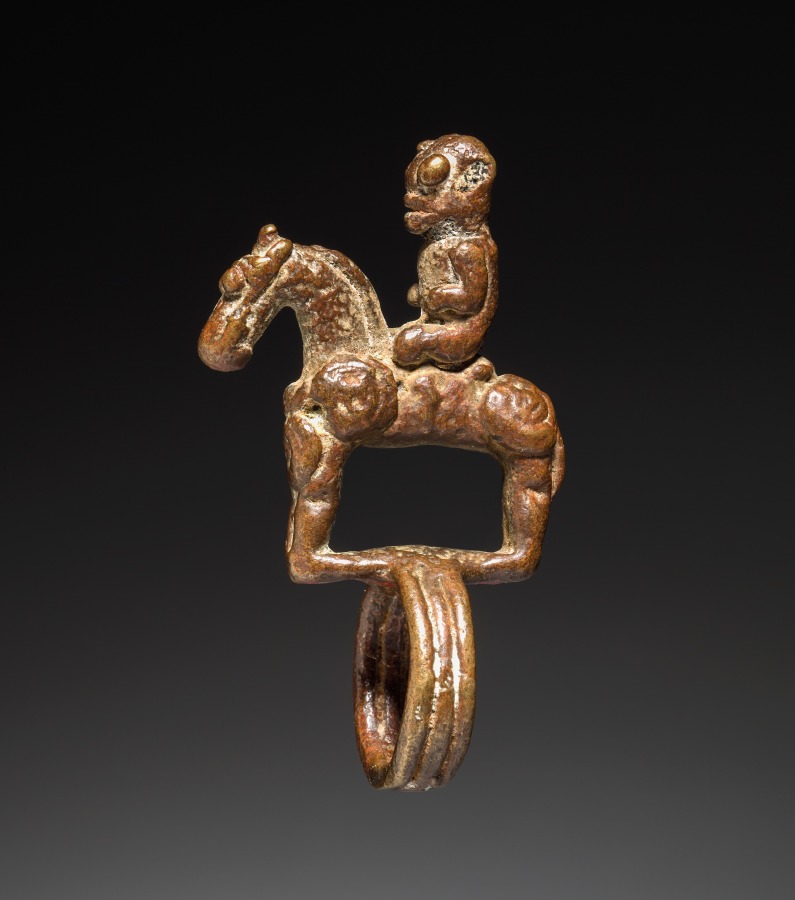
Ring
- Date
- before 1975
- Medium
- Copper alloy
- Culture
- Africa, West Africa, Mali, Dogon-style maker
- Department
- African Art
- Institution
- Cleveland Museum of Art
This ring may have belonged to a Hogon, the highest religious dignitary in a Dogon community, who wore it among the many insignia of his status. The horse is a kind of moving throne, indicating the physical and symbolic power of its rider, who is placed physically in space above others. While it is difficult to make out details on the rider, the horse is well-equipped with a bridle and saddle. The circular shapes at the front and back of the animal's sides may represent shields. To make this ring, a smith first modeled it in wax. The wax was covered in clay and melted out when baked, leaving behind a mold to pour liquid metal into. Horses were known in the region of present-day Mali from early eras, recorded in the accounts of the Arab traveler Ibn Battuta in 1352, and in the Malian epic Soundiata , where riders on horseback masterfully used lances and swords
The authoritative record is held by Cleveland Museum of Art. LinkedCulture surfaces this object and its connections; it does not alter institutional metadata.
Related across collections
Semantically similar works from Cleveland Museum of Art and other institutions.
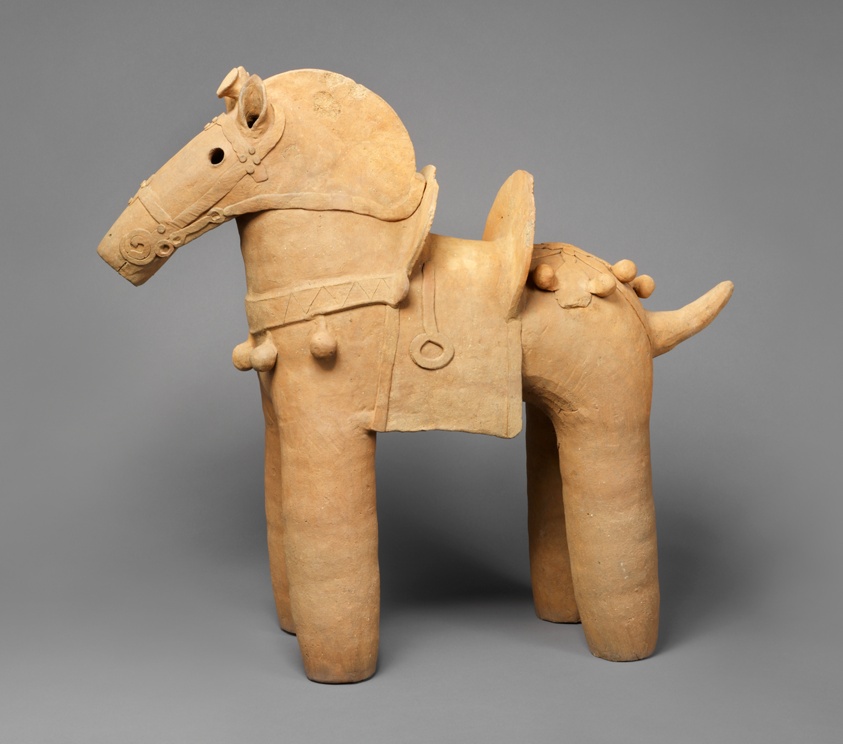
Horse
Art Institute of Chicago
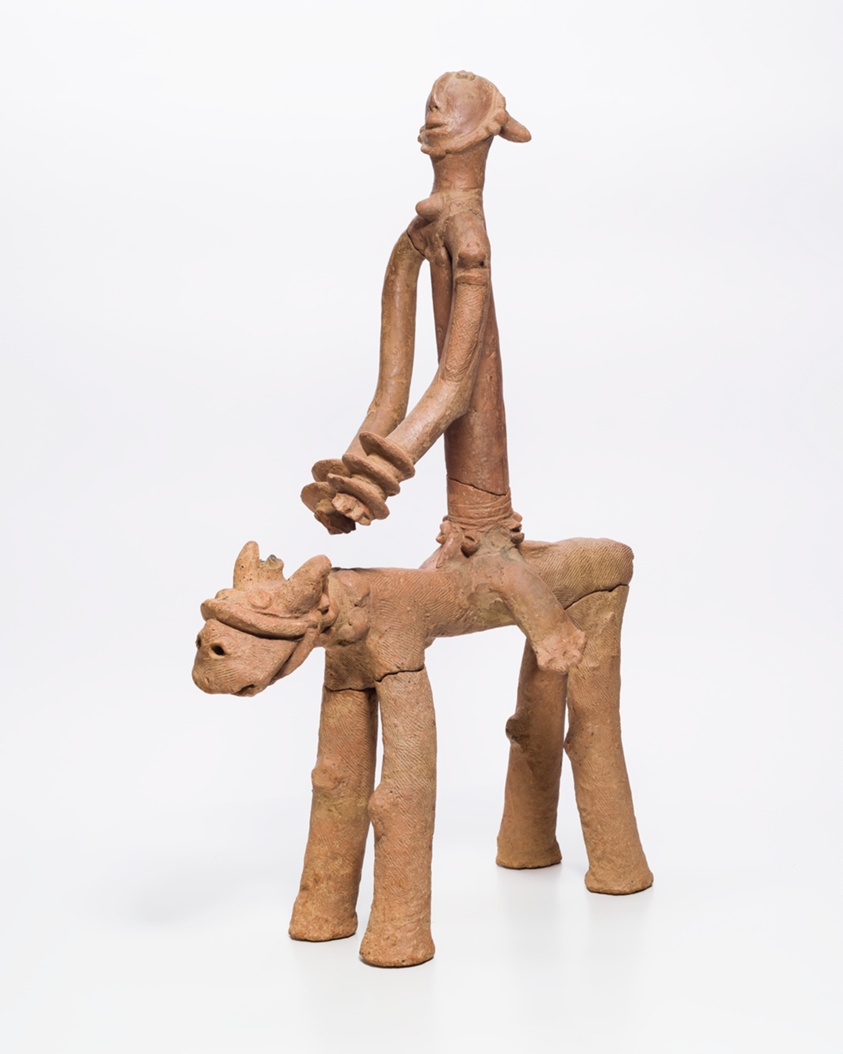
Horse and Rider
Art Institute of Chicago

Horse and Rider
Minneapolis Institute of Art
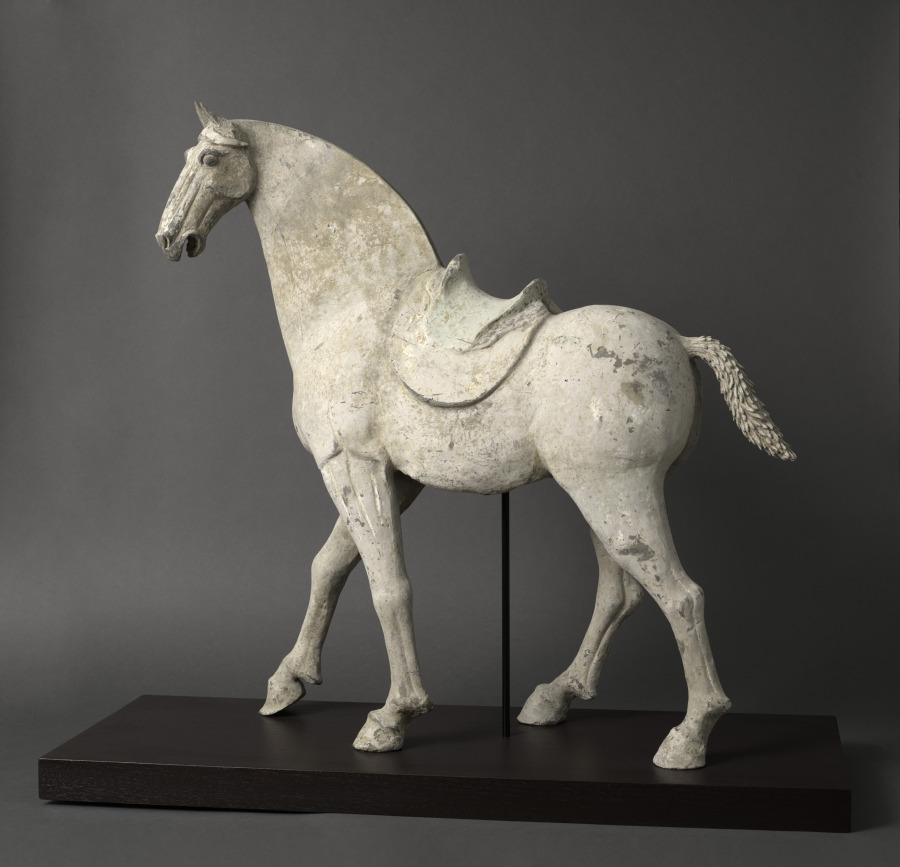
A Large Painted Striding Horse
Cleveland Museum of Art
Ring: Figure of Seated Baboon (Thoth)
Art Institute of Chicago

Ring
Getty Museum

Equestrian figure
Minneapolis Institute of Art
Horse-Shaped Drinking Vessel
Cleveland Museum of Art
Ring
The Metropolitan Museum of Art
Equestrian Figure
Art Institute of Chicago

Ring
Getty Museum

Equestrian figure
Minneapolis Institute of Art