Cleveland Museum of Art
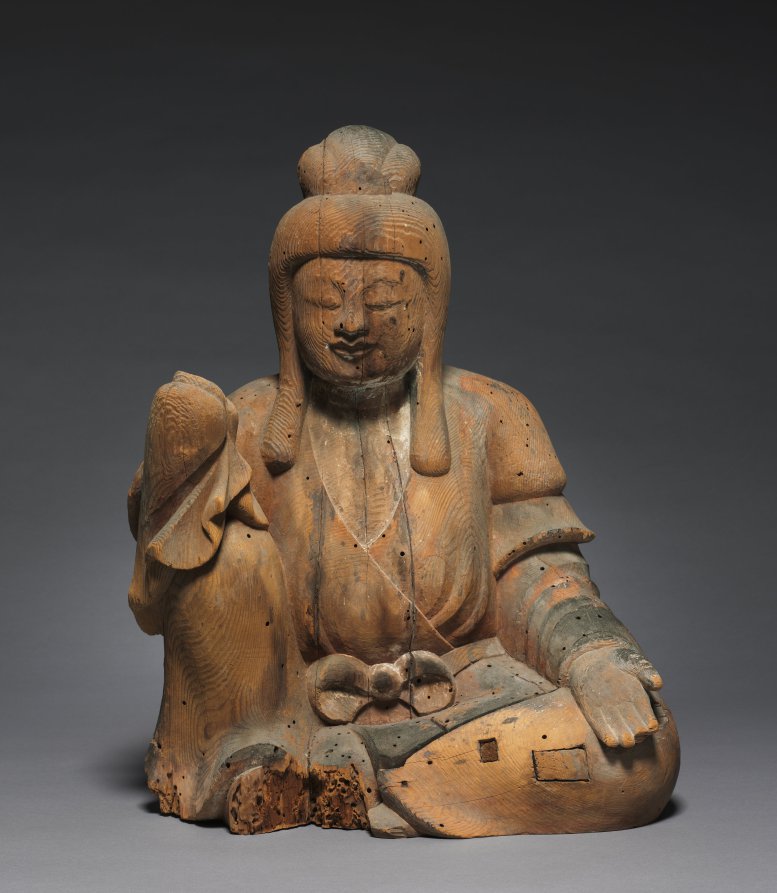
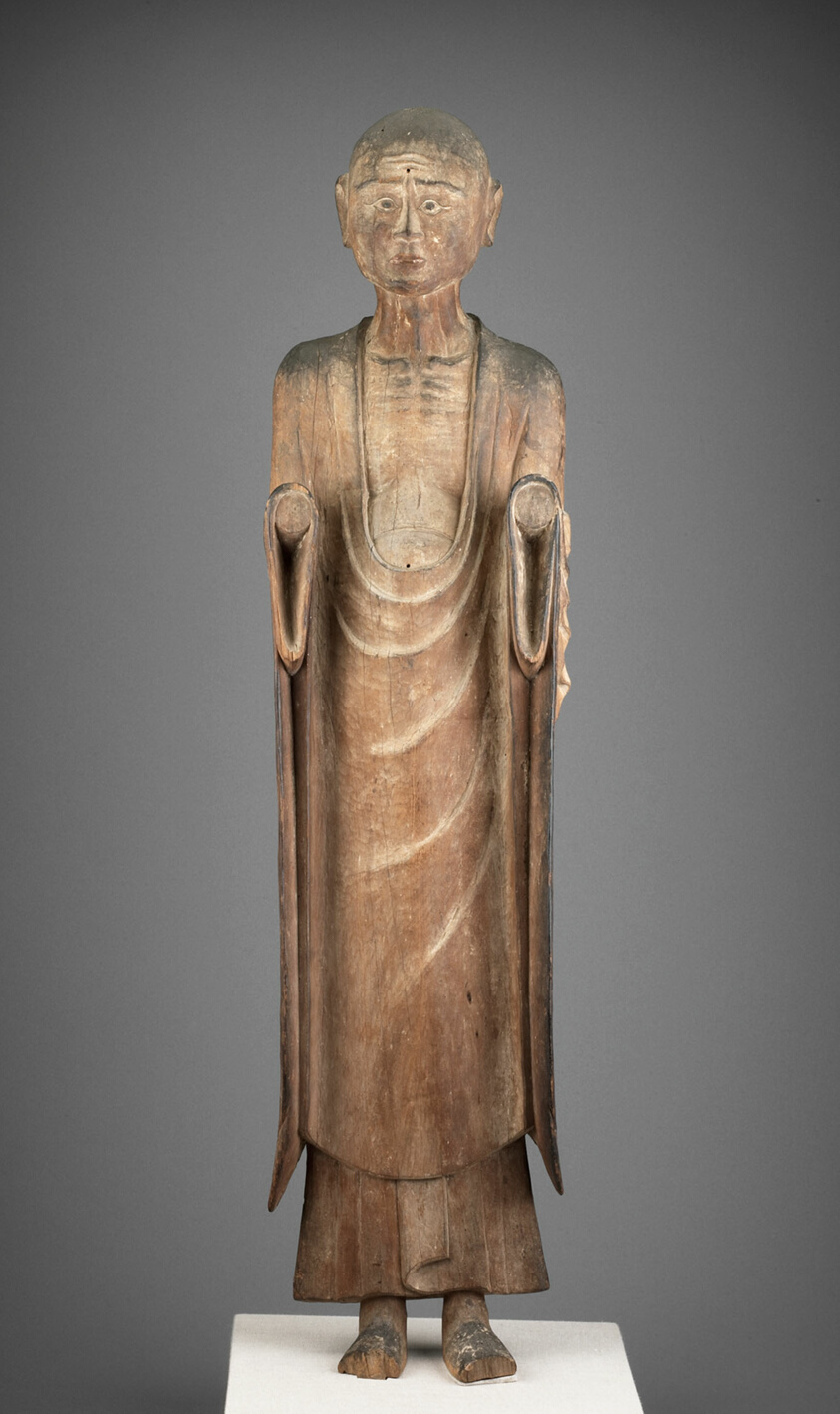
Shinto Deity
- Date
- 900s
- Medium
- wood, with traces of polychromy
- Culture
- Japan, Heian period (794–1185)
- Department
- Japanese Art
- Institution
- Cleveland Museum of Art
This sculpture represents a kami, the name for deities associated with the Japanese religious tradition called Shinto. It is said to have originally been created for the Usa Hachiman Shrine in Oita on the island of Kyushu. The shrine houses four main kami: Hime Okami, who assists those engaged in agriculture andsea travel; the legendary 5th-century emperor Ojin deified as the kami Hachiman; Empress Jingu; and the kami of Mount Kawara, who aids copper miners. The pose of this figure, dressed in robes reminiscent of a Tang dynasty court lady, suggests that she may have been an attending deity. Traces of pigment on the surface of this sculpture indicate it was once painted.
The authoritative record is held by Cleveland Museum of Art. LinkedCulture surfaces this object and its connections; it does not alter institutional metadata.
Related across collections
Semantically similar works from Cleveland Museum of Art and other institutions.
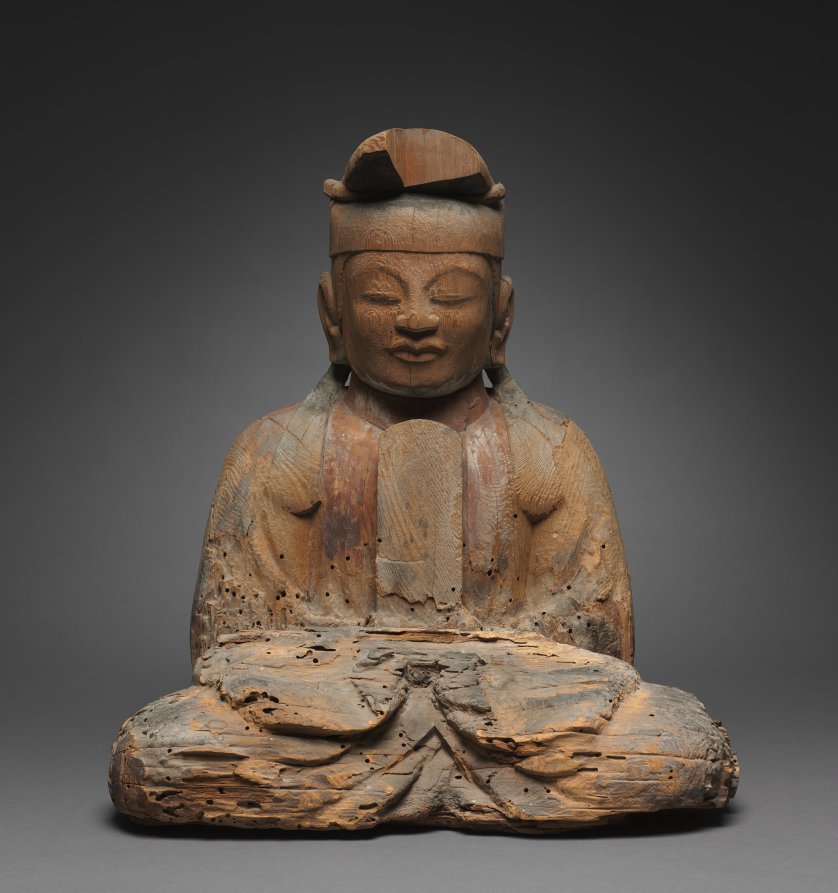
Shinto Deity
Cleveland Museum of Art
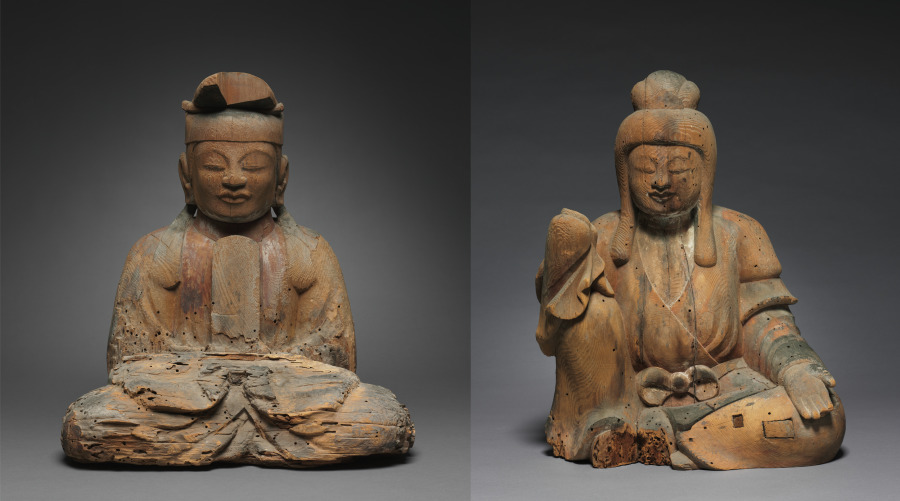
Shinto Deities
Cleveland Museum of Art

Hachiman in the Guise of a Buddhist Monk
Minneapolis Institute of Art
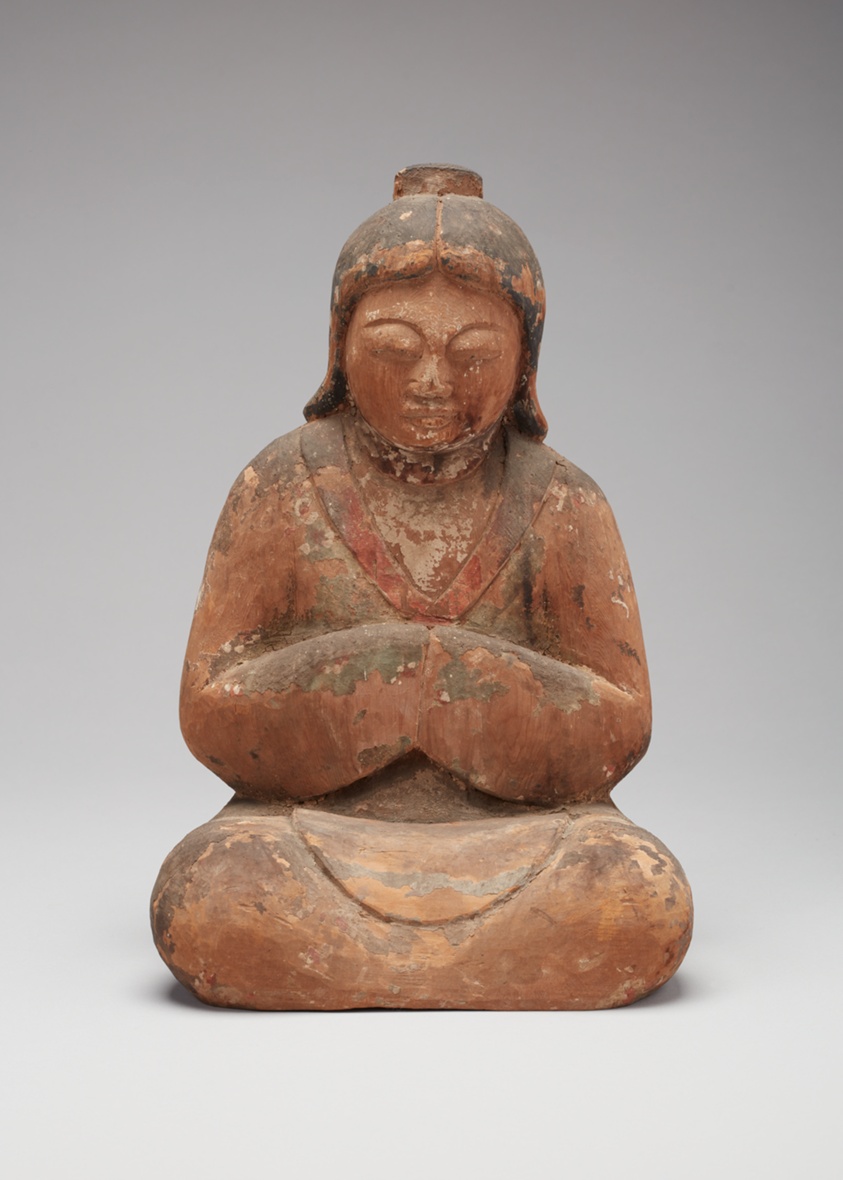
Female Shinto Deity
Art Institute of Chicago
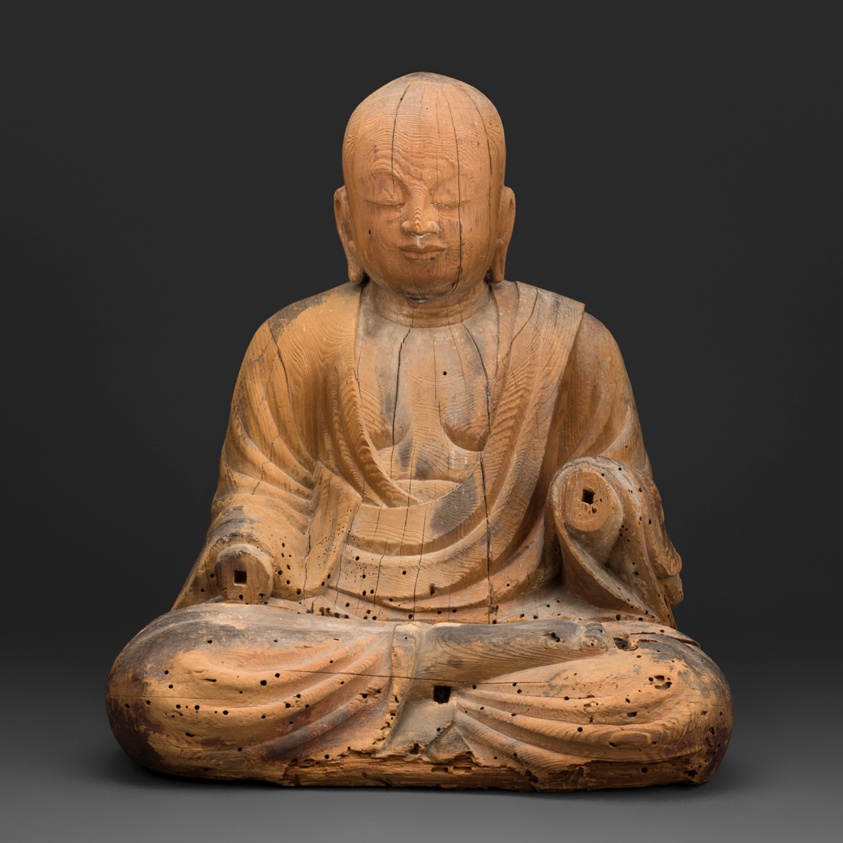
Sōgyō Hachiman
Art Institute of Chicago

Shinto God
Minneapolis Institute of Art

Shinto Goddess
Minneapolis Institute of Art
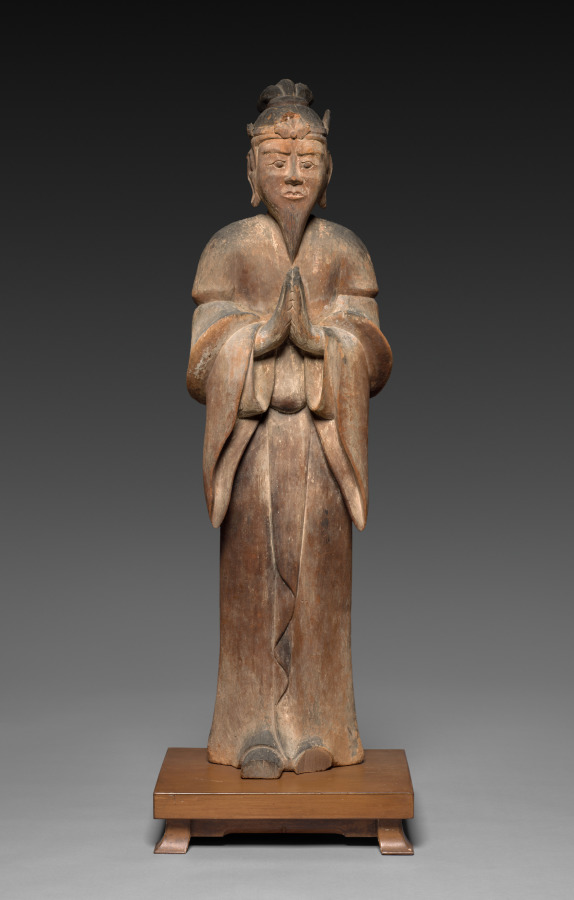
Deity
Cleveland Museum of Art
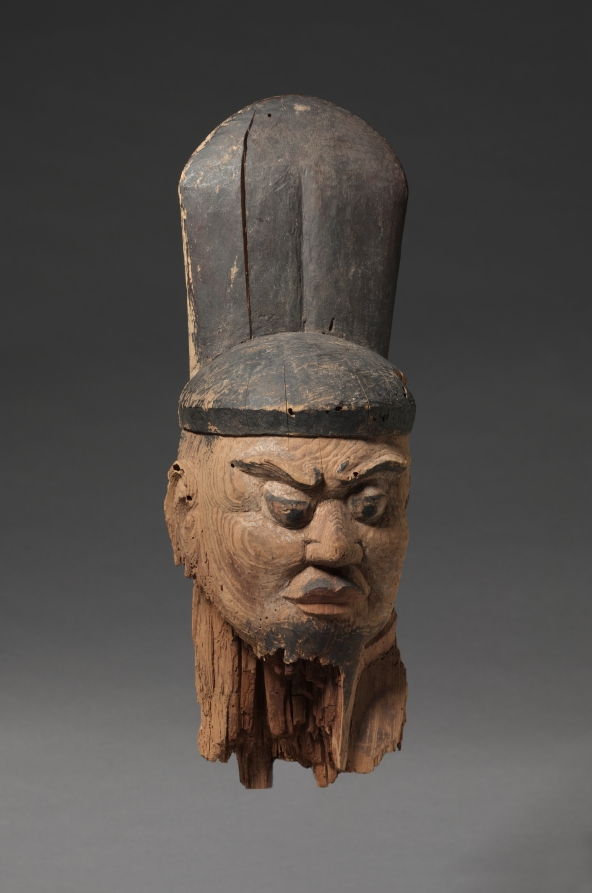
Head of a Male Shinto Deity
Cleveland Museum of Art
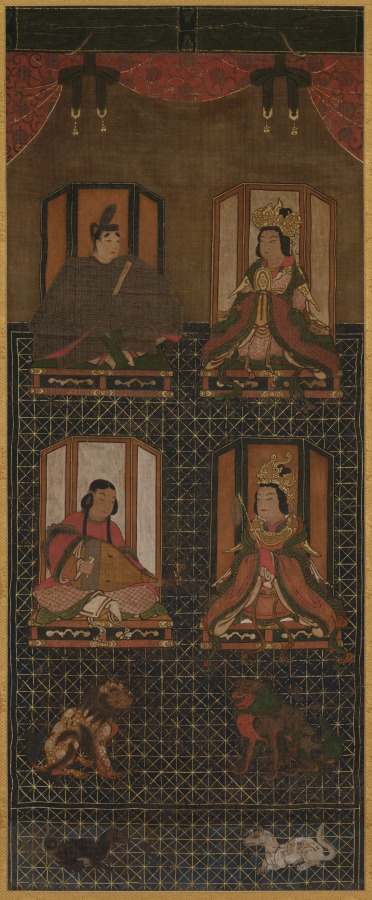
Mandala of the Four Deities of Mt. Kōya
Cleveland Museum of Art
Shinto Deity in the Guise of the Monk Hyeja
Art Institute of Chicago

Deer Mandala of the Kasuga Shrine
Minneapolis Institute of Art