Cleveland Museum of Art
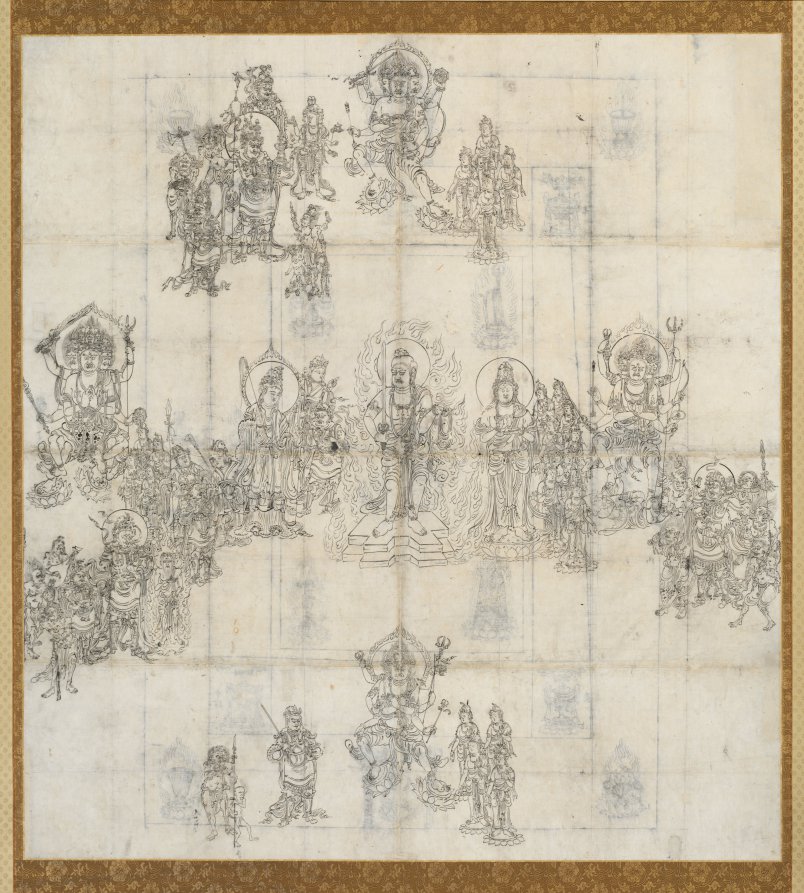
Iconographical Sketch (Zuzō) for the "Benevolent Kings Sutra Mandala"
- Date
- 1100s
- Medium
- Hanging scroll; ink on paper
- Culture
- Japan, Heian period (794–1185)
- Department
- Japanese Art
- Institution
- Cleveland Museum of Art
- Object ID
- 153733
From the Cleveland Museum of Art record
The Benevolent Kings Sutra has been a highly valued Buddhist scripture in Japan since the Nara period (710–794), when it started to be recited in a ceremony to pray for the peace and protection of the country. In the 800s, the monk Kūkai brought back from China a new translation of the text as well as Buddhist iconographic sketches to perform the rituals based on the sutra. Five scroll sets of copies of the original sketches brought by Kūkai are preserved in Daigoji and Tōji temples in Kyoto. This sketch, which has figural depictions of deities on the front and deities symbolized by objects on the back, differs in some ways from each of those sets, and represents an alternate approach to creating a mandala based on the Benevolent Kings Sutra . The deity at the center is Fudō Myōō, the Immovable One.
The authoritative record is held by Cleveland Museum of Art. LinkedCulture surfaces this object and its connections; it does not alter institutional metadata.
Get printable QR codesHide QR codes
Open QR codes for this object page and the museum record. They stay collapsed until needed.
Provenance & credit
As published by the source institution. Coverage varies — not every institution's open-data feed includes ownership history.
- Credit line
- Leonard C. Hanna Jr. Fund
- Provenance
- ?–1987: (Yanagi Fine Art Shop, Kyoto, Japan, sold to the Cleveland Museum of Art) | 1987–: The Cleveland Museum of Art, Cleveland, OH
Related across collections
Semantically similar works from Cleveland Museum of Art and other institutions.