Cleveland Museum of Art
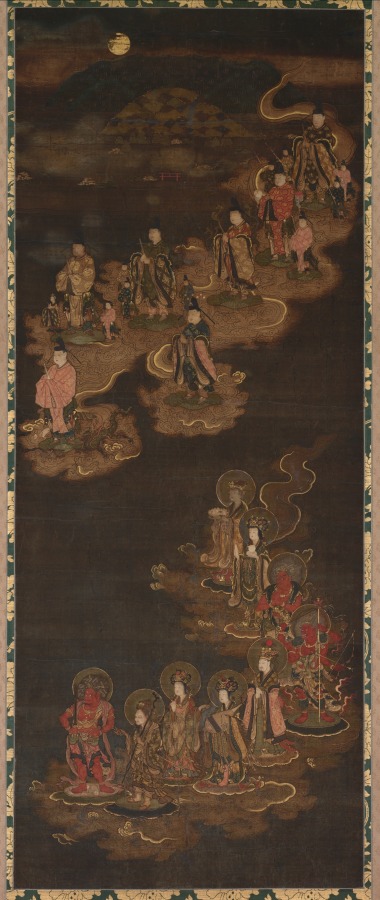
Descent of the Nine Luminaries and the Seven Stars at Kasuga
- Date
- mid- to late 1300s
- Medium
- Hanging scroll; ink, color, gold and cut gold on silk
- Culture
- Japan, Nanbokuchō period (1336–92)
- Department
- Japanese Art
- Institution
- Cleveland Museum of Art
This medieval religious painting shows celestial beings descending from the heavens into the Kasuga Shrine, a major religious site in Japan's ancient capital, Nara. The moon and the Kasuga mountain range appear in the uppermost portion of the painting, as does a red shrine entrance gate, or torii . In the upper part of the painting, figural representations of the stars in the constellation known as the Big Dipper in the West descend from right to left on cloud banks. In the lower part, the Nine Luminaries (Sanskrit: Navagraha ) that emerged from the Vedic tradition—the sun and moon; the planets Jupiter, Mars, Saturn, Venus, and Mercury; and personifications of the fluctuating lunar nodes—descend in similar fashion. The painting uses the "deities in descent" scheme originating in China, as well as the original Buddhist form mandala (Japanese: honjibutsu mandarazu ) format prevalent in medieval Japanese Shinto-Buddhist painting, to generate an image connected to the worship of celestial bodies in Esoteric Buddhism. A 19th-century copy of this painting in ink and light color exists at the Kyoto City University of Arts.
The authoritative record is held by Cleveland Museum of Art. LinkedCulture surfaces this object and its connections; it does not alter institutional metadata.
Related across collections
Semantically similar works from Cleveland Museum of Art and other institutions.
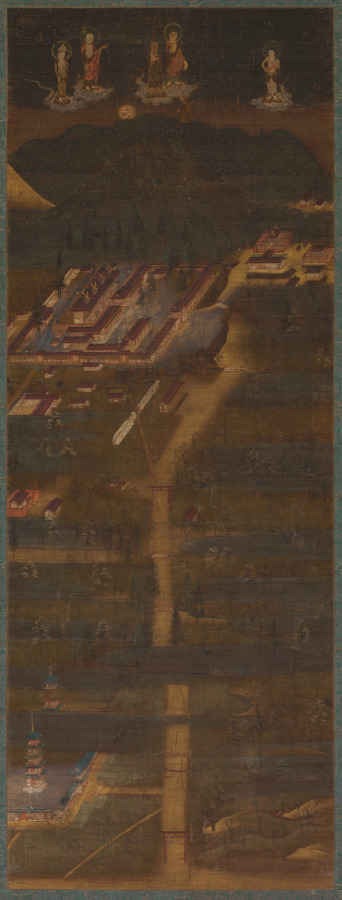
Kasuga Shrine Mandala
Cleveland Museum of Art

Deer Mandala of the Kasuga Shrine
Minneapolis Institute of Art
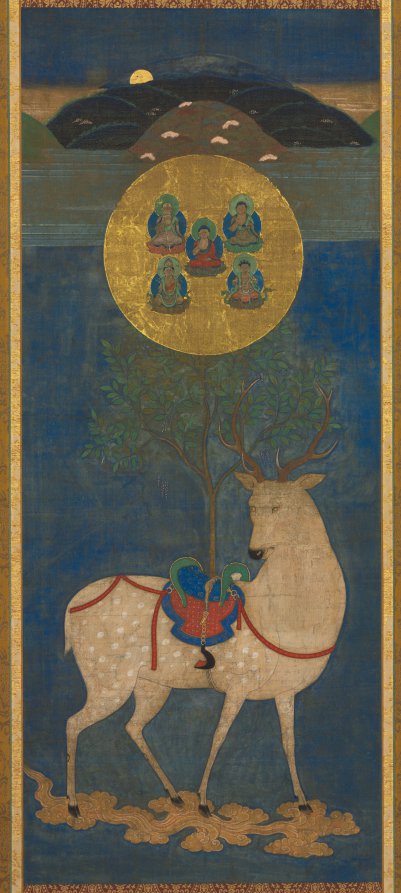
Kasuga Deer Mandala
Cleveland Museum of Art
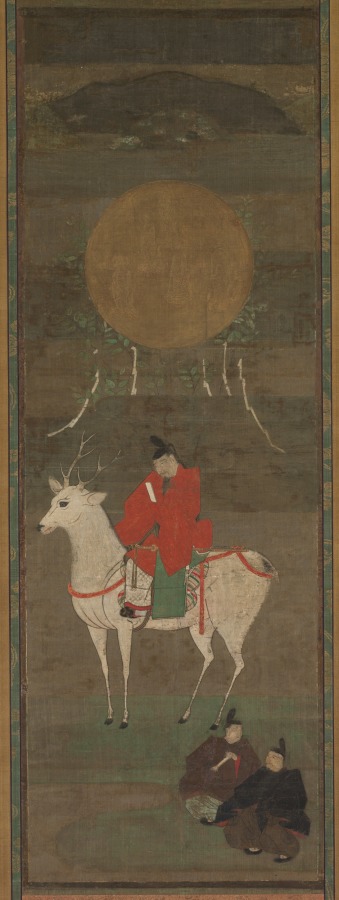
Departure from Kashima
Cleveland Museum of Art

Welcoming Descent of the Amida Buddha Triad
Minneapolis Institute of Art
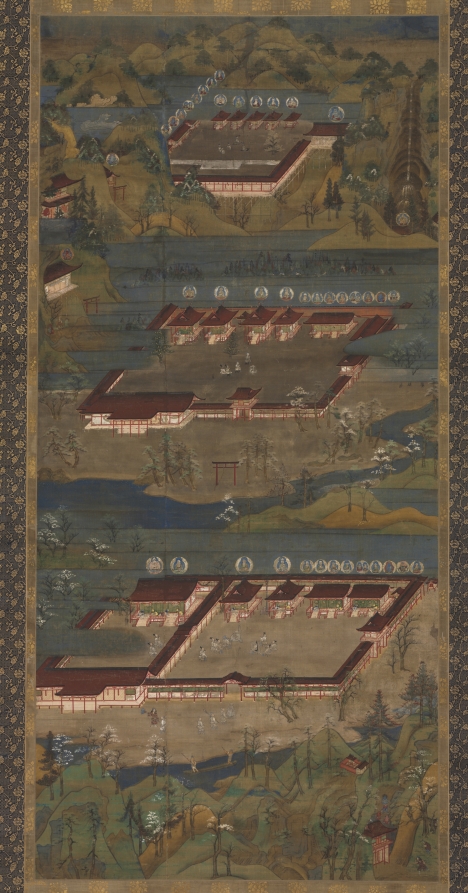
Mandala of the Three Shrines at Kumano
Cleveland Museum of Art

Welcoming Descent of Jizō Bodhisattva
Minneapolis Institute of Art
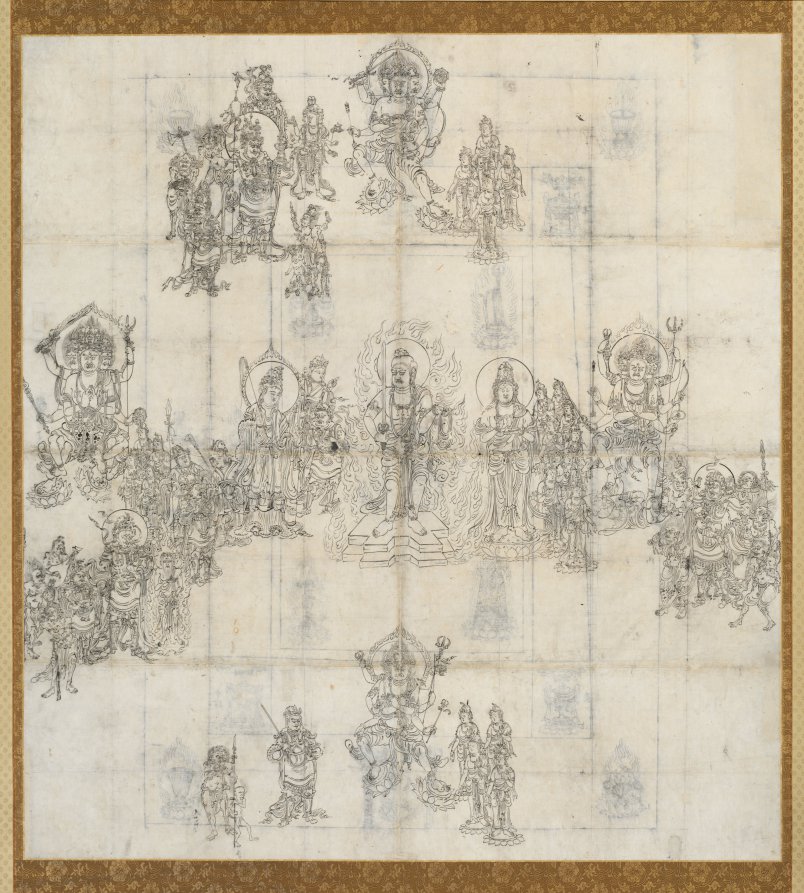
Iconographical Sketch (Zuzō) for the "Benevolent Kings Sutra Mandala"
Cleveland Museum of Art

Welcoming Descent of Jizō, Bodhisattva of the Earth Matrix
Minneapolis Institute of Art

Welcoming Descent of the Amida Buddha Triad
Minneapolis Institute of Art
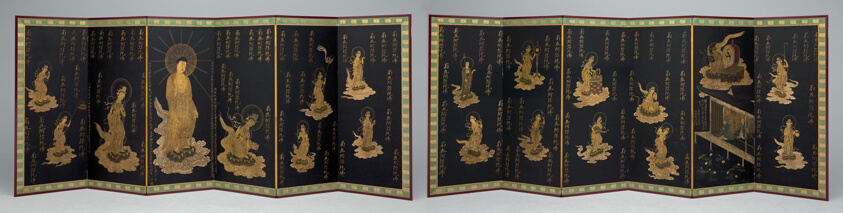
Rebirth of the Nun Anyo
Art Institute of Chicago

Sudden Shower at the Mimeguri Shrine
Minneapolis Institute of Art