Cleveland Museum of Art
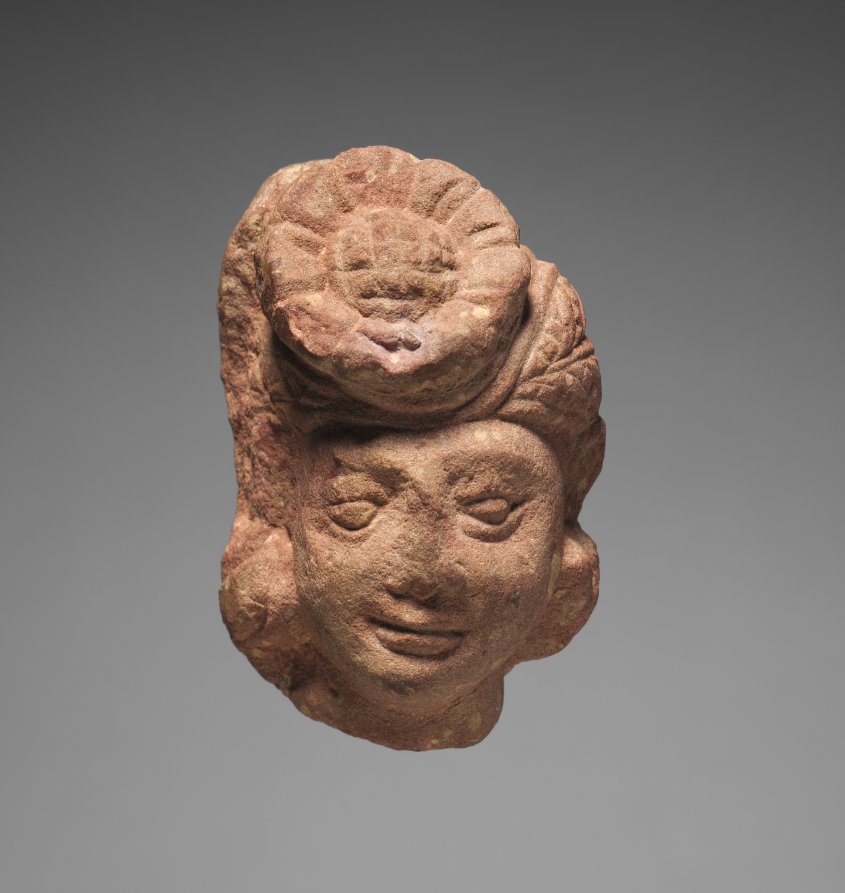
Miniature Head of a Bodhisattva
- Date
- 1–100 CE
- Medium
- red Sikri sandstone
- Culture
- India, Mathura, Kushan period
- Department
- Indian and Southeast Asian Art
- Institution
- Cleveland Museum of Art
Against the backdrop of the large-scale monumental sculpture for which the Mathura school is noted, this miniature head may appear insignificant. However, it exemplifies on a much reduced scale the qualities of style and execution that parallels developments on monumental sculpture. It also reflects a certain freedom of treatment of facial details that clearly denotes that while the artist worked in a minor key, the creation was neither inconsequential nor a sequacious rendering of the major sculptural trends of large-scale sculptures from Mathura. Although this head is small, a sense of volume and mass is conveyed by the bulky earrings, the protruding flowerlike cockade of the turban, and the reduction of linear detail in defining these ornaments and the facial areas. The unridged brows, the generous curves of the jawline and neck, and the soft modulations of the chin and cheeks belie the diminutiveness of the whole. At the same time, the large almond-shaped eyes and the compressed angularity of the upper lip individualize this pensive Bodhisattva head. The modeling and the turban type with the oversized cockade suggest it dates from the pre-Kaniska phase of the first-century sculptures from Mathura.
The authoritative record is held by Cleveland Museum of Art. LinkedCulture surfaces this object and its connections; it does not alter institutional metadata.
Related across collections
Semantically similar works from Cleveland Museum of Art and other institutions.
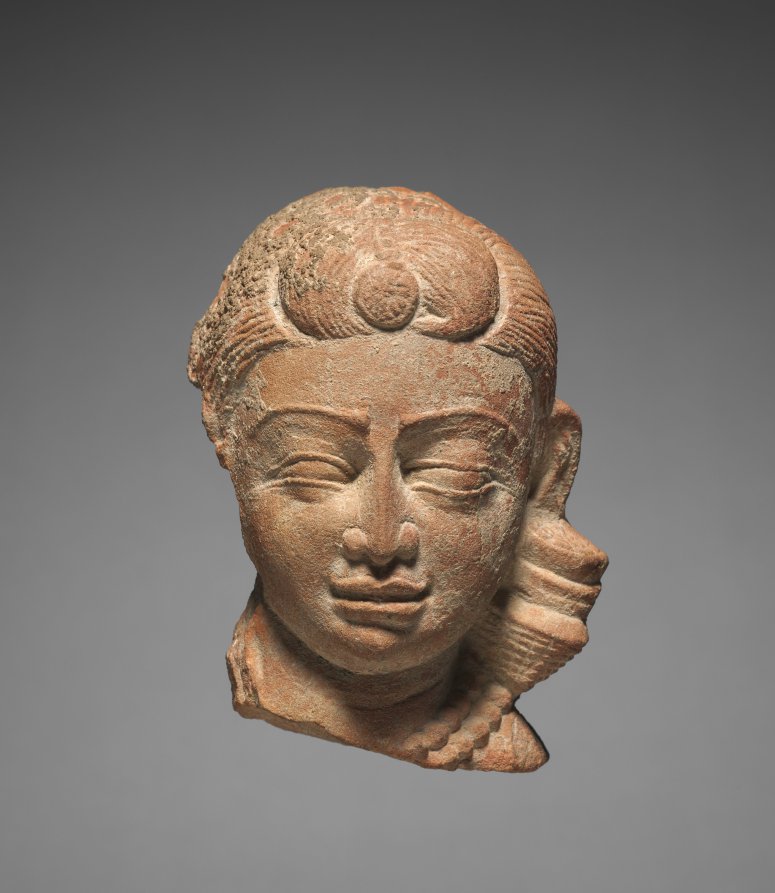
Miniature Female Head
Cleveland Museum of Art
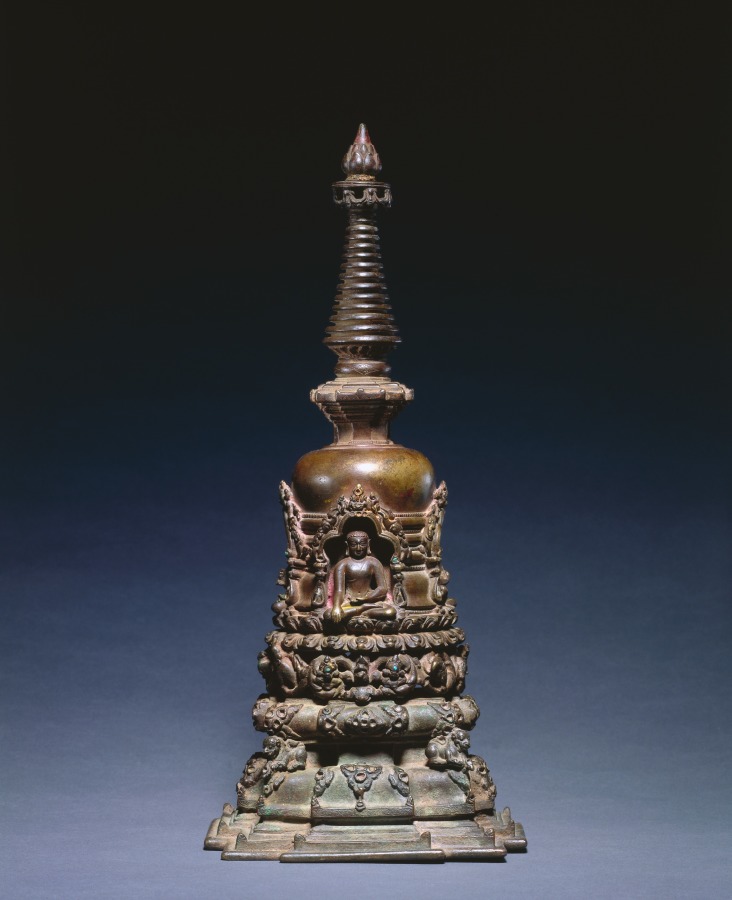
Miniature Votive Stupa
Cleveland Museum of Art
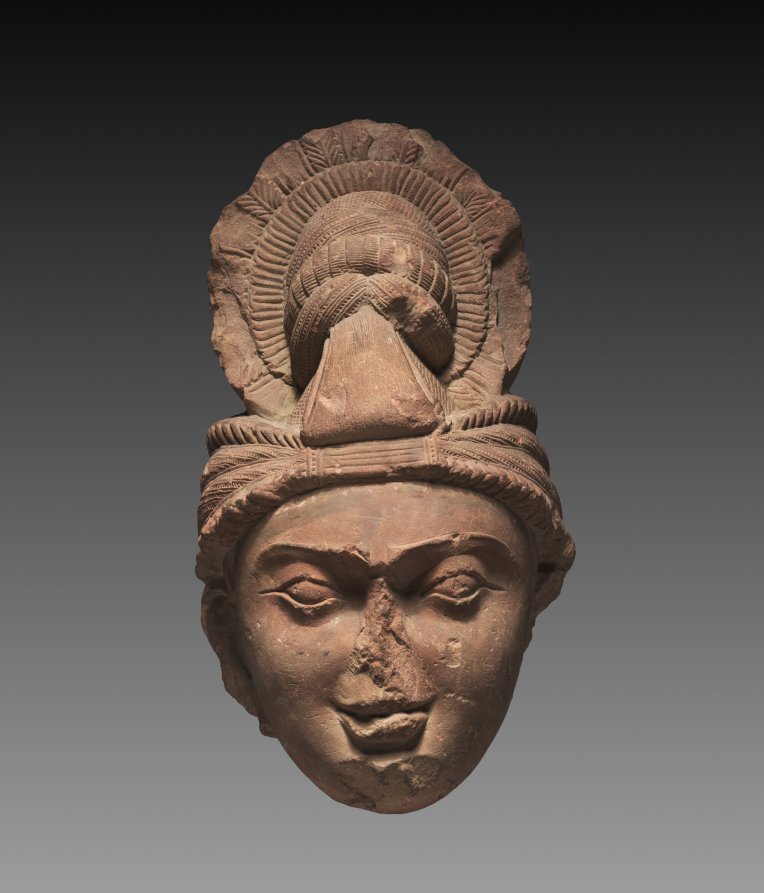
Head of a Bodhisattva
Cleveland Museum of Art
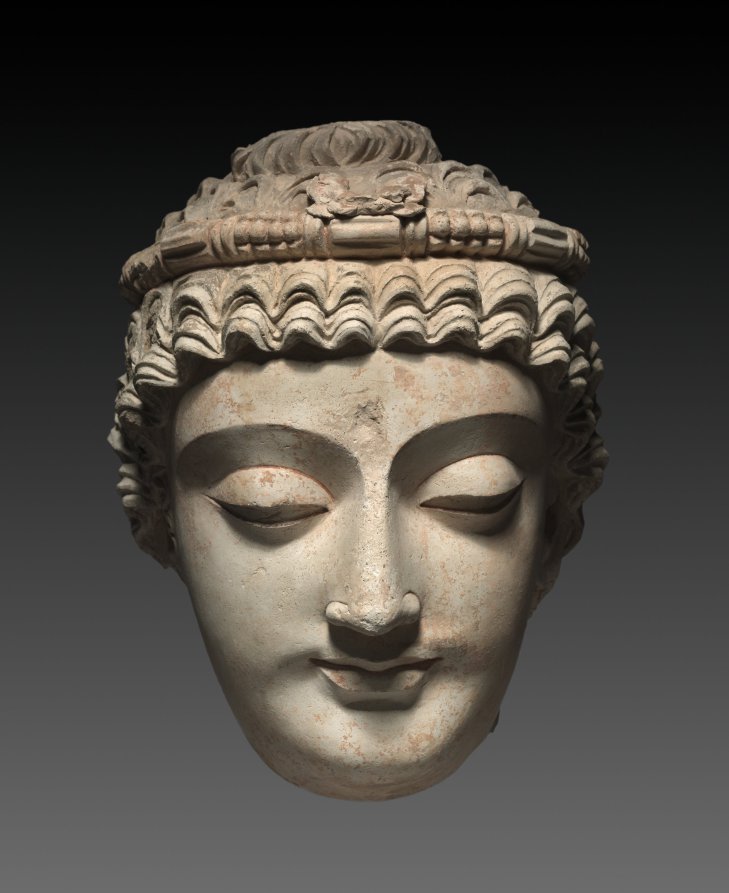
Head of Bodhisattva Avalokiteshvara
Cleveland Museum of Art

Head of a bodhisattva, probably Avalokiteshvara (Guanyin)
Minneapolis Institute of Art

Buddha Head
Minneapolis Institute of Art

Head of a Bodhisattva
Minneapolis Institute of Art
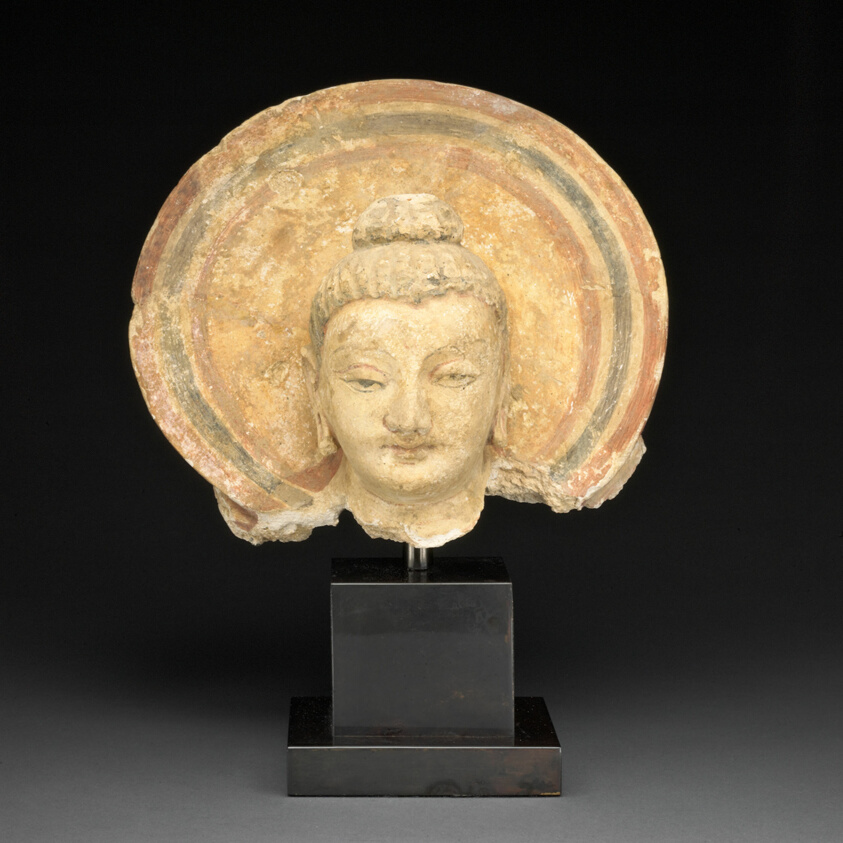
Buddha Head
Art Institute of Chicago
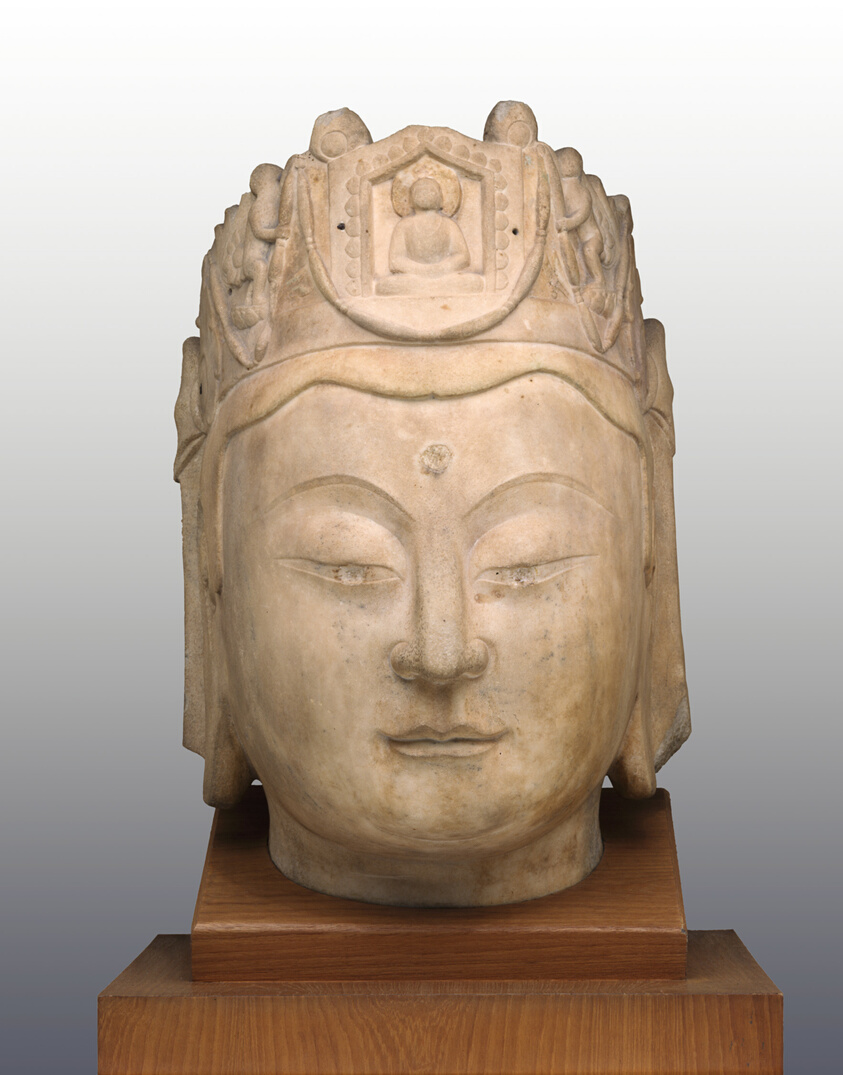
Head of Guanyin
Art Institute of Chicago
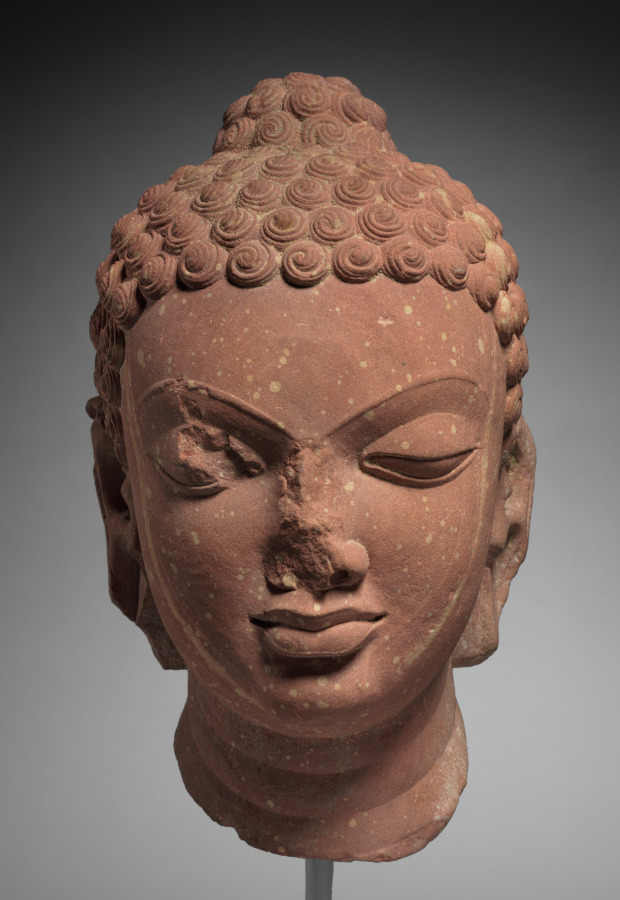
Head of Buddha
Cleveland Museum of Art

Head of Buddha
Art Institute of Chicago

Head of Buddha
Minneapolis Institute of Art