Cleveland Museum of Art
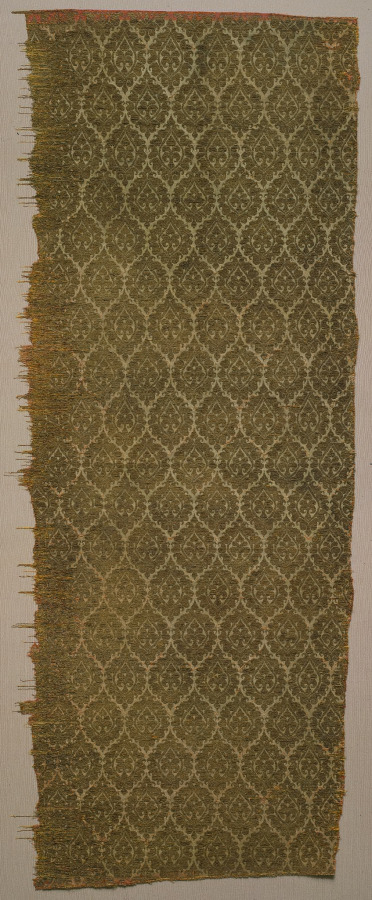
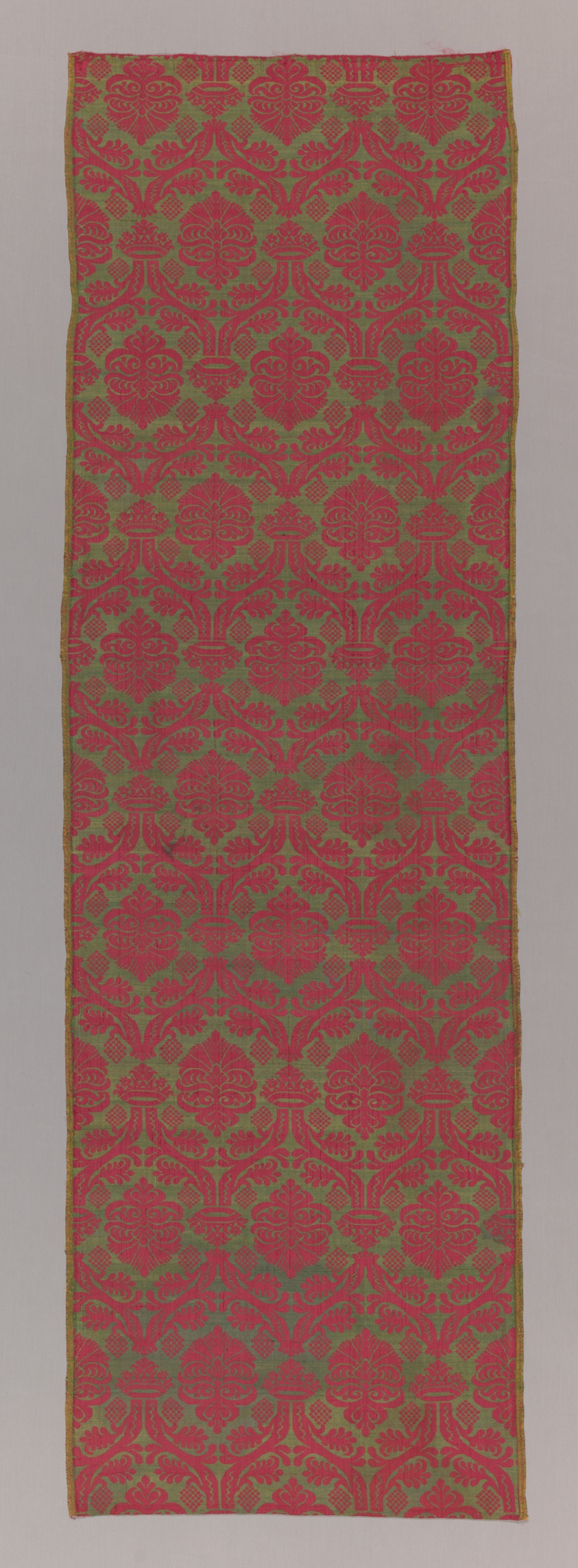
Textile with Palmettes
- Date
- 1200s–1300s
- Medium
- Silk and gold thread; tabby with supplementary weft
- Culture
- Central Asia, Il-khanid (Mongol) period
- Department
- Textiles
- Institution
- Cleveland Museum of Art
Designs of repeated ogives were popular in Central Asia and survive in a number of variations. Usually, the ogival frame encloses a floral motif, as in this example. Sometimes paired animals occur instead. Silks with this type of pattern were exported to Western Asia and to Europe, where they inspired textile designs woven locally. Mongol silks with exotic floral and animal patterns were acquired for use as clothing and furnishings by the clergy and nobility. They were also used by painters as models for hangings or garments. Some of the original coral-red background can be seen along the edges, where it hasn't faded to off-white.
The authoritative record is held by Cleveland Museum of Art. LinkedCulture surfaces this object and its connections; it does not alter institutional metadata.
Related across collections
Semantically similar works from Cleveland Museum of Art and other institutions.
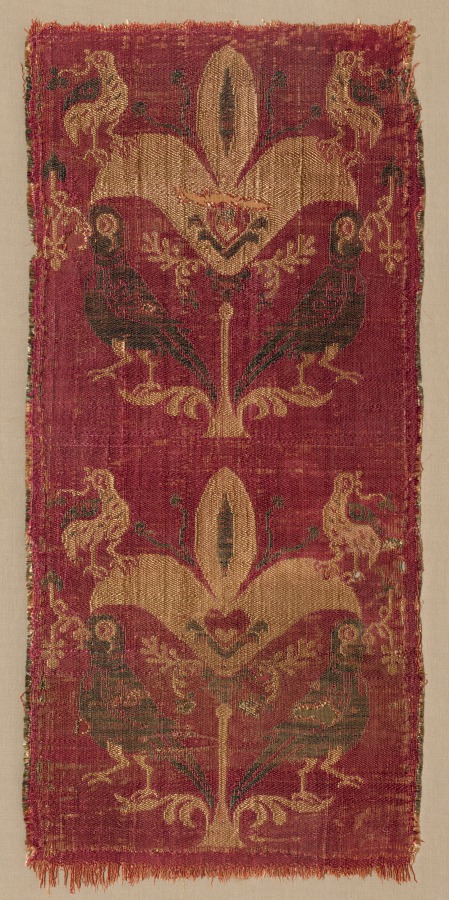
Palmettes and Birds from a Tunic or Curtain
Cleveland Museum of Art
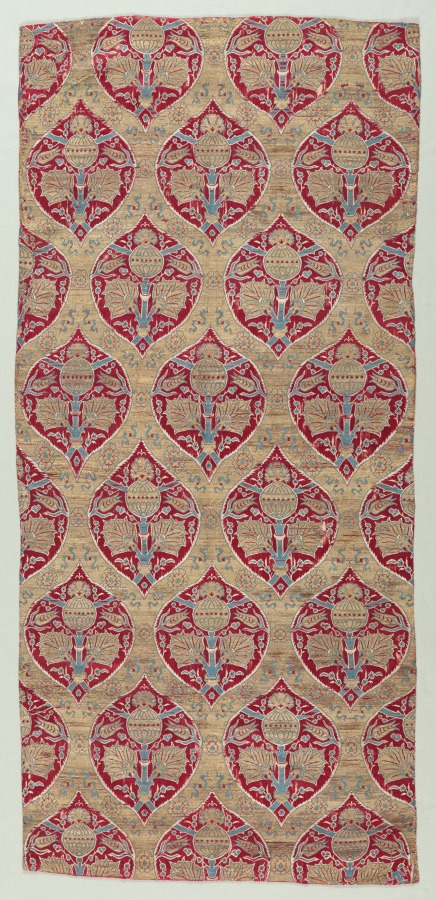
Ogival lattice with horizontal design
Cleveland Museum of Art
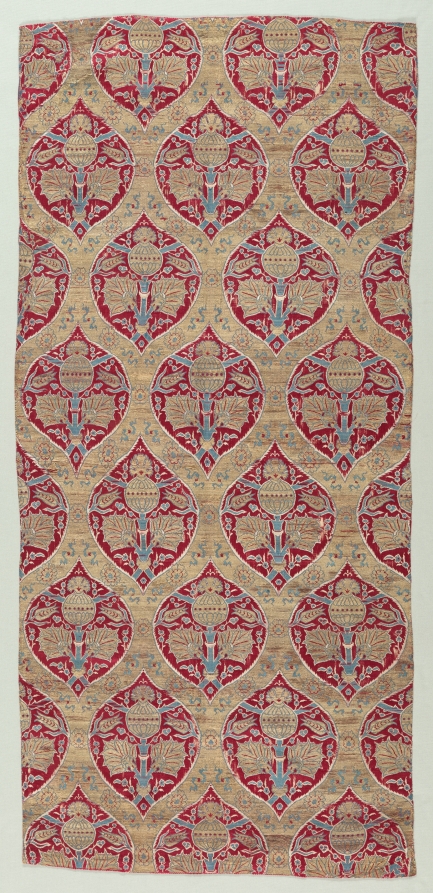
Ogival Lattice with Horizontal Design
Cleveland Museum of Art
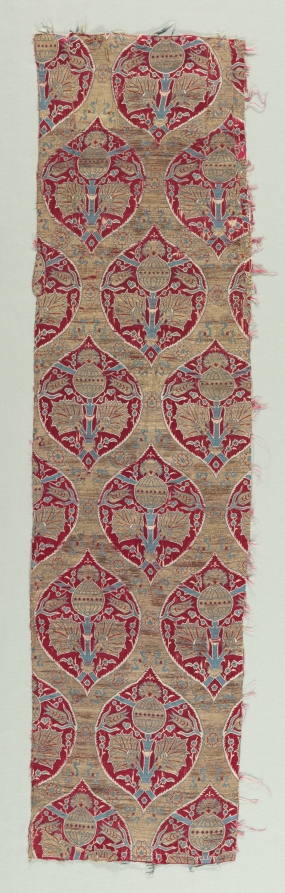
Ogival Lattice with Horizontal Design
Cleveland Museum of Art
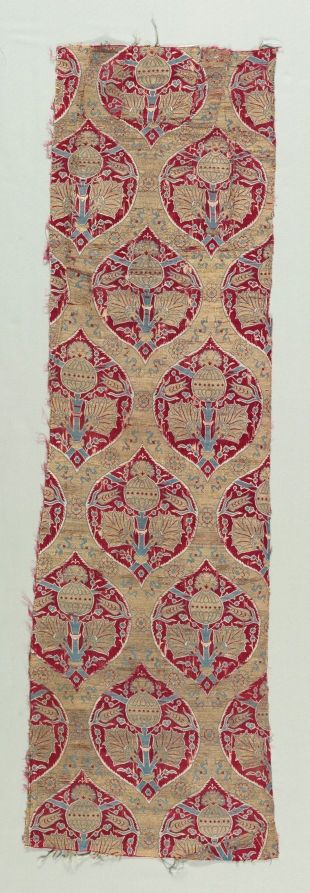
Ogival Lattice with Horizontal Design
Cleveland Museum of Art
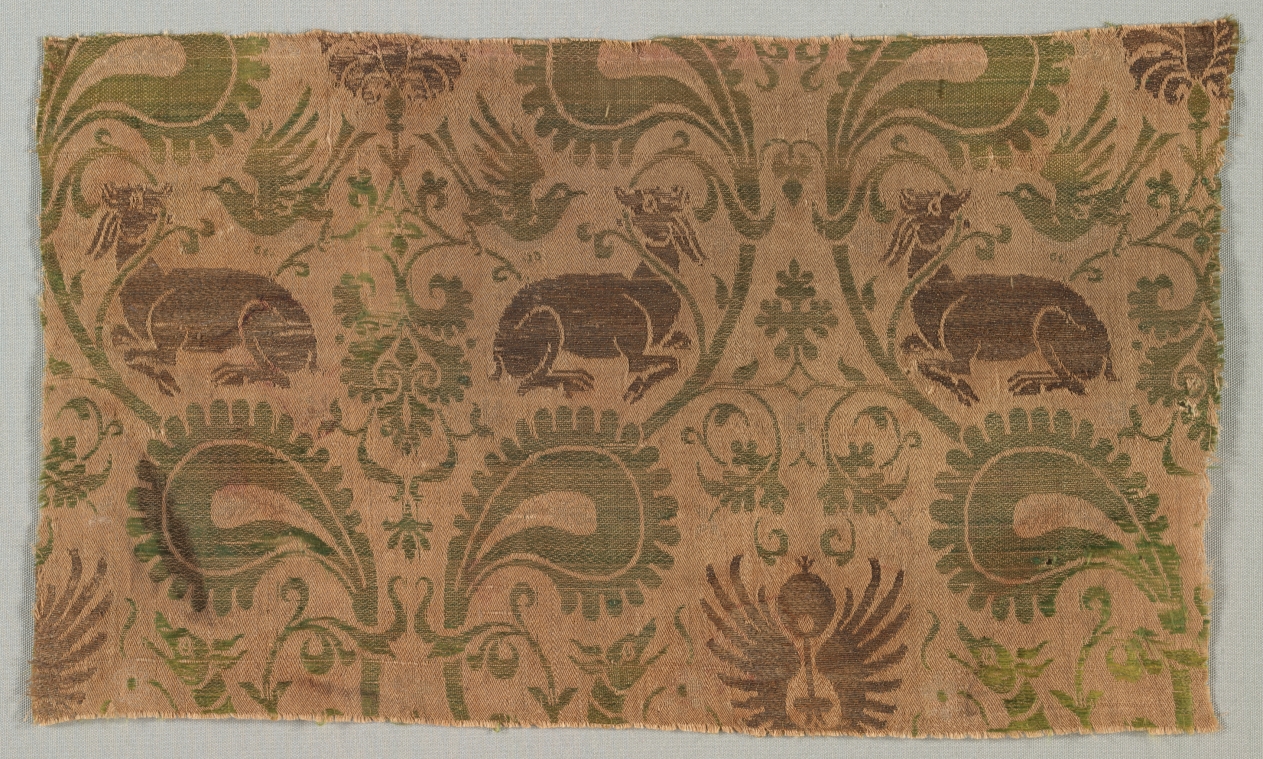
Silk with Dogs and Birds amid Vines
Cleveland Museum of Art
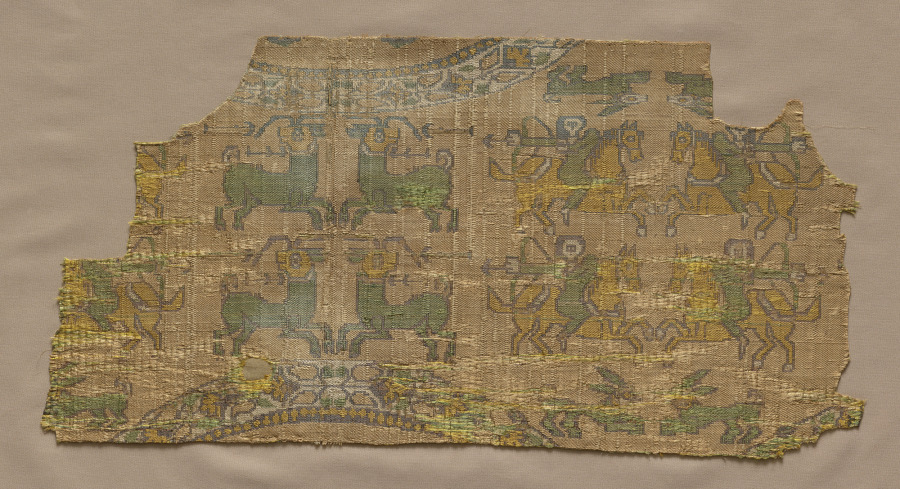
Samite fragment with hunters
Cleveland Museum of Art
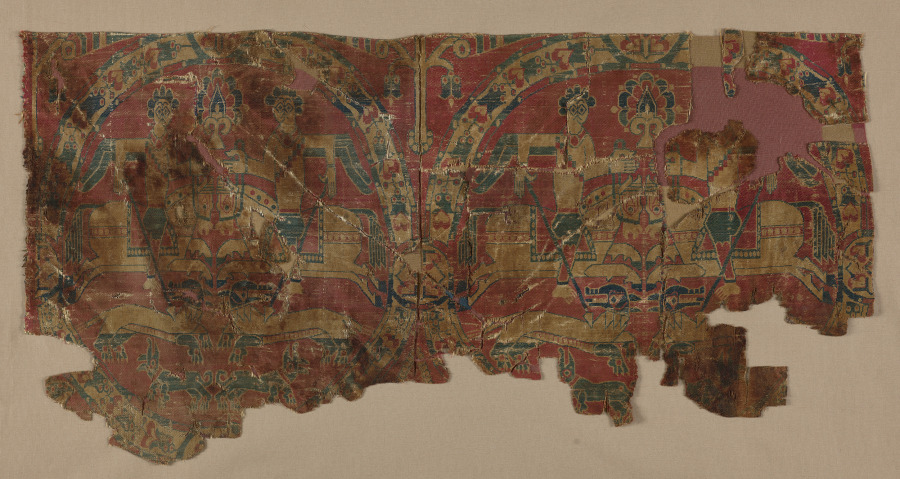
Roundels with Hunters
Cleveland Museum of Art
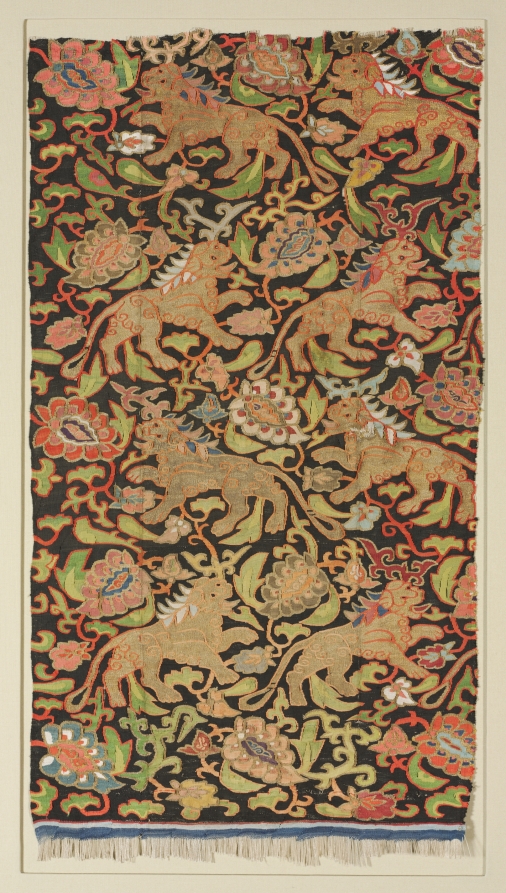
Tapestry with golden lions and palmettes
Cleveland Museum of Art
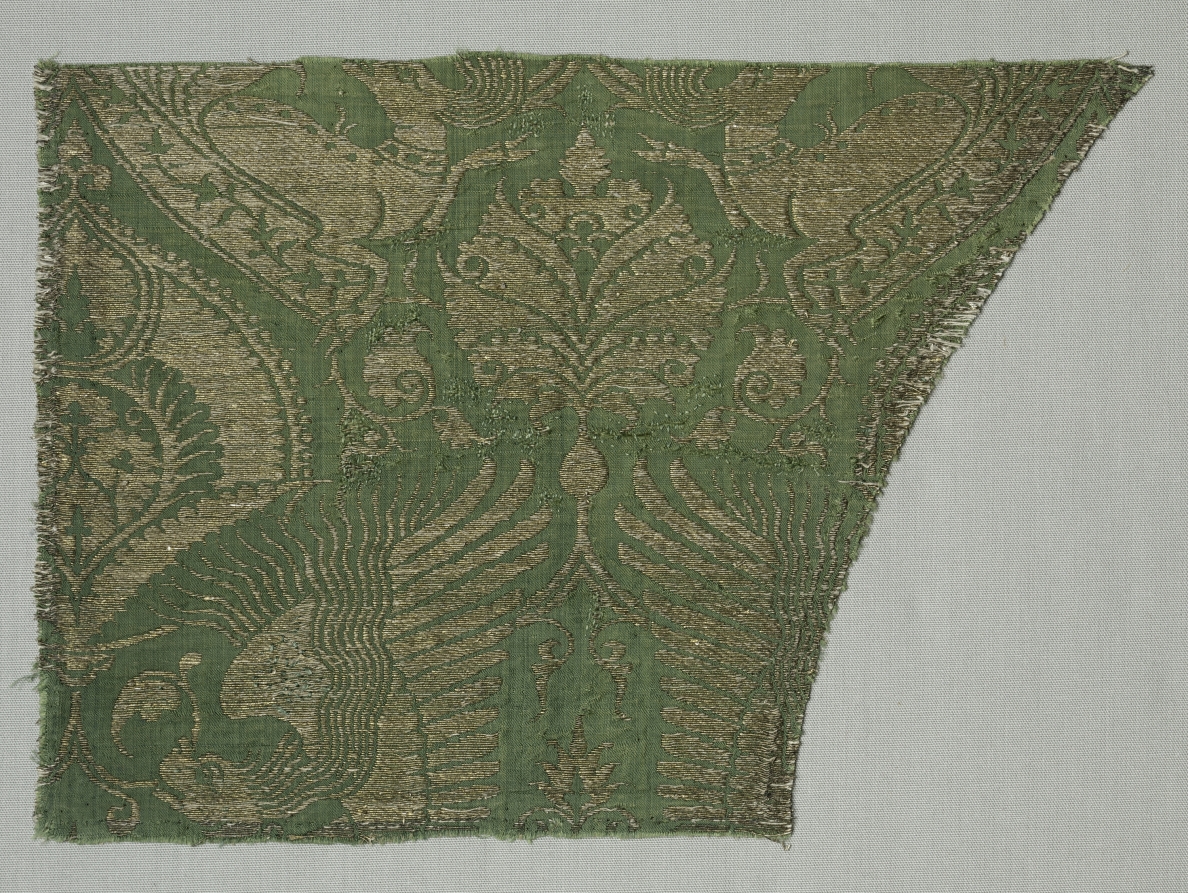
Exotic Gold-patterned Silk
Cleveland Museum of Art
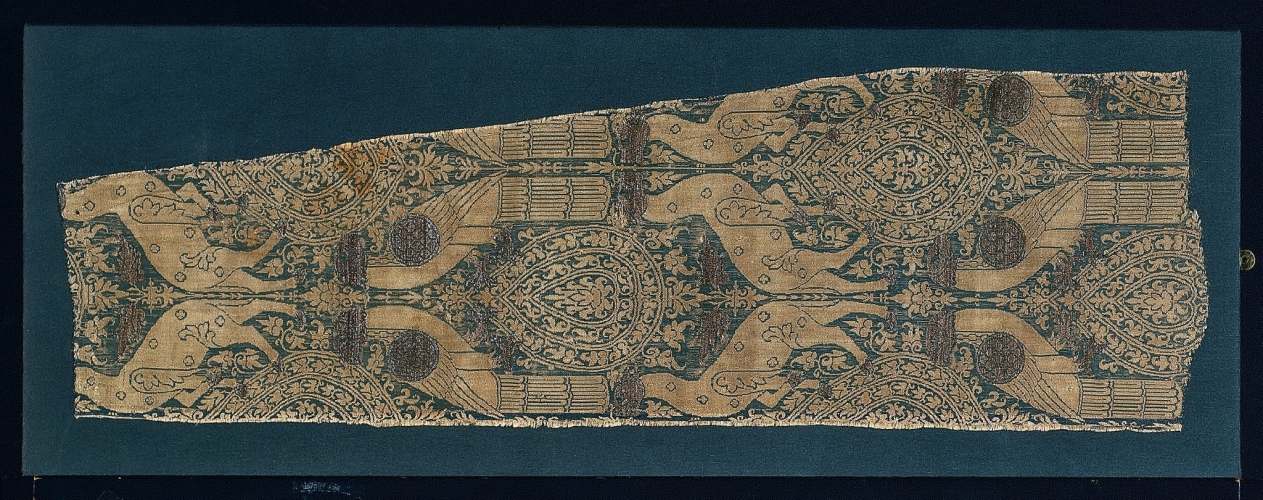
Parrots and Animals
Cleveland Museum of Art
Three Lengths of Woven Silk
Art Institute of Chicago