Cleveland Museum of Art
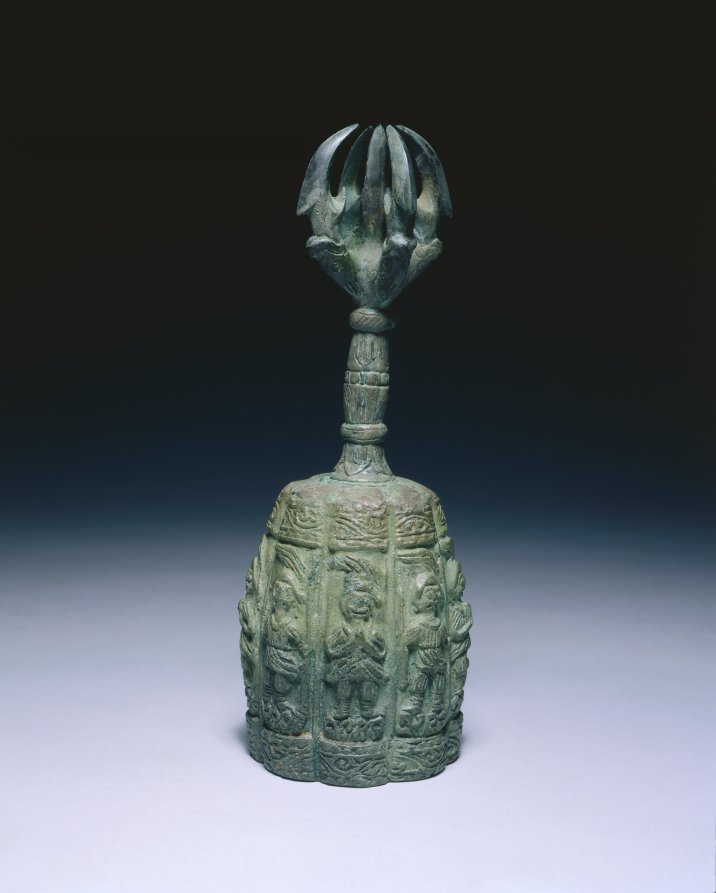
Buddhist Ritual Bell
- Date
- 1300s
- Medium
- bronze; with incised designs
- Culture
- Korea, Goryeo dynasty (918–1392)
- Department
- Korean Art
- Institution
- Cleveland Museum of Art
This Buddhist ritual bell is called the "five-pronged" bell due to the four prongs bending toward a central prong at the end of the handle. This shape is a vajra , or lightning bolt, a powerful and important symbol in esoteric Buddhism, which originated in India, spread across Asia, and was practiced in Korea. Called a vajra in Sanskrit, this implement is used in Buddhist rituals meant to destroy ignorance.
The authoritative record is held by Cleveland Museum of Art. LinkedCulture surfaces this object and its connections; it does not alter institutional metadata.
Related across collections
Semantically similar works from Cleveland Museum of Art and other institutions.

Five-pronged vajra
Minneapolis Institute of Art
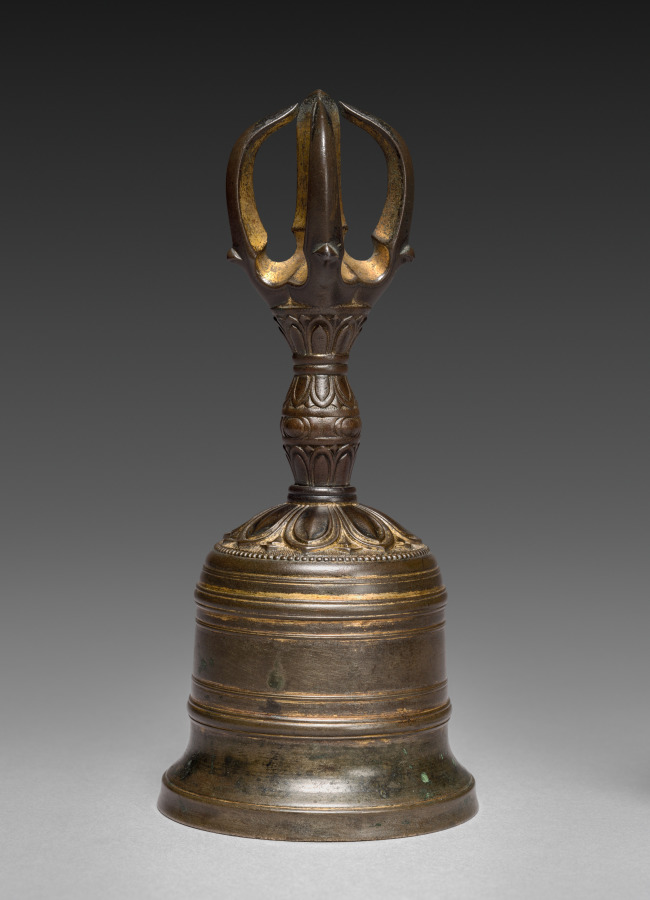
Five-pronged Vajra Bell (Gokorei)
Cleveland Museum of Art

Ritual bell with handle in the shape of the vajra
Minneapolis Institute of Art
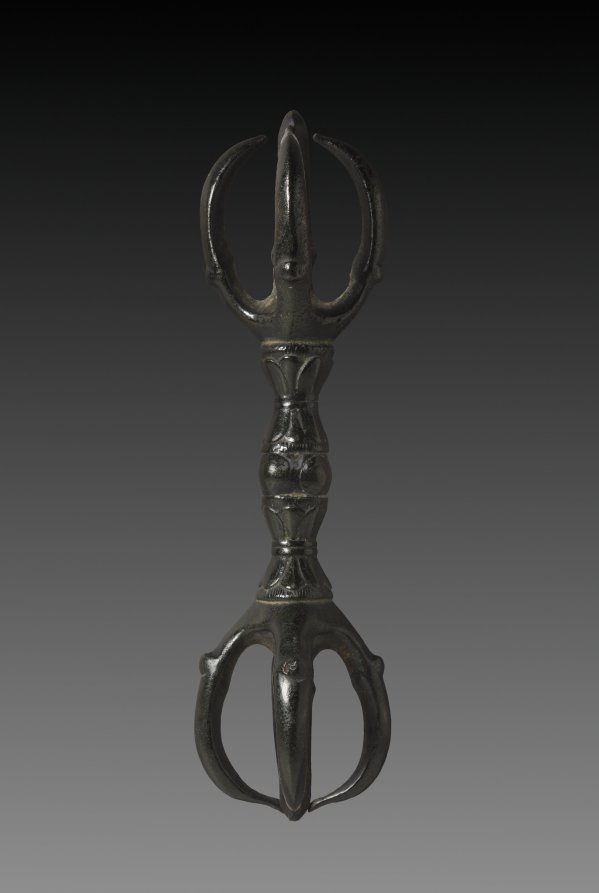
Five-pronged Vajra Pestle (Gokosho)
Cleveland Museum of Art

Dorje drilbu (Bell with vajra handle)
Minneapolis Institute of Art
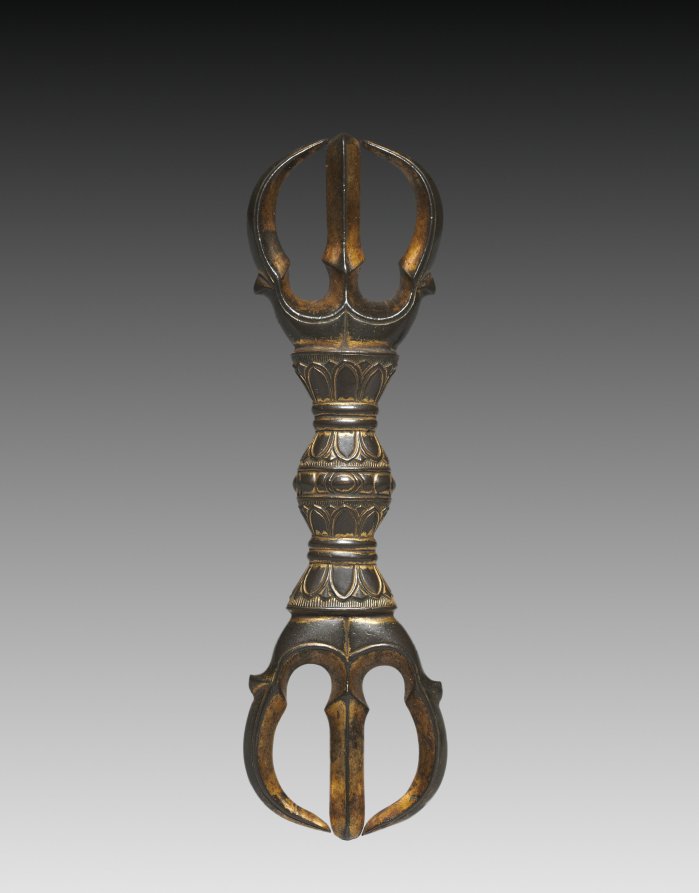
Three-pronged Vajra Pestle (Sankosho)
Cleveland Museum of Art
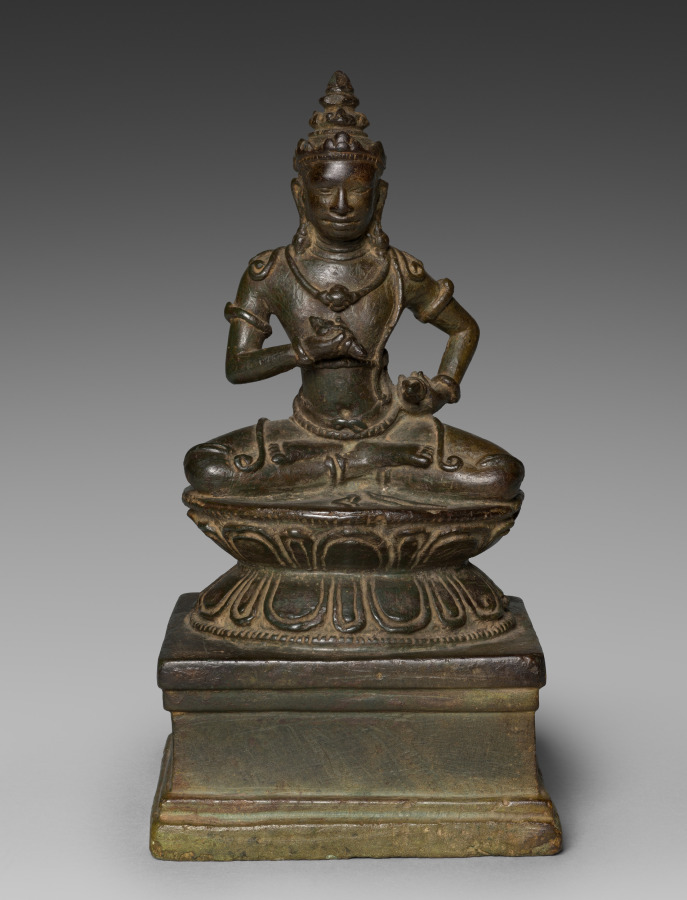
Vajrasattva
Cleveland Museum of Art
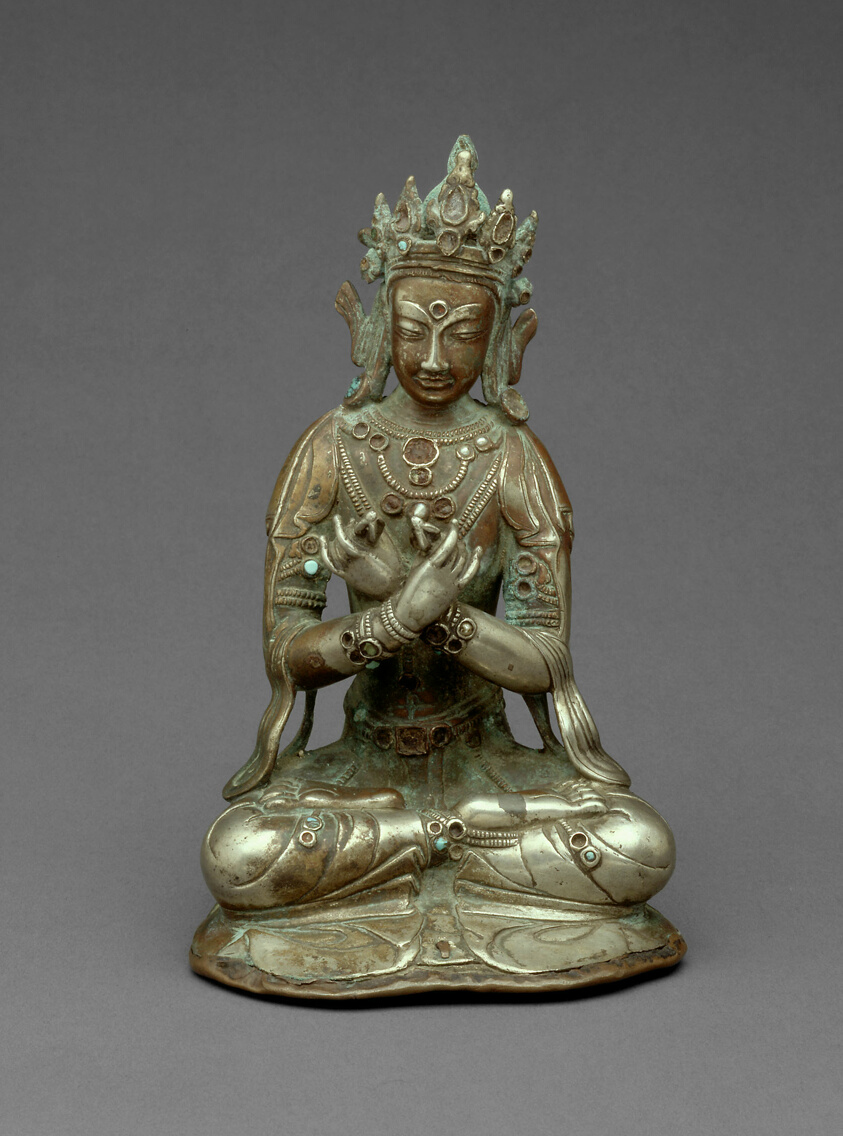
Vajradhara Buddha Seated Holding a Thunderbolt (Vajra) and Bell (Ghanta)
Art Institute of Chicago

Buddhist Deity Vajrasattva with Bell (Ghanta) and Thunderbolt (Vajra)
Art Institute of Chicago

Dorje (Vajra)
Minneapolis Institute of Art
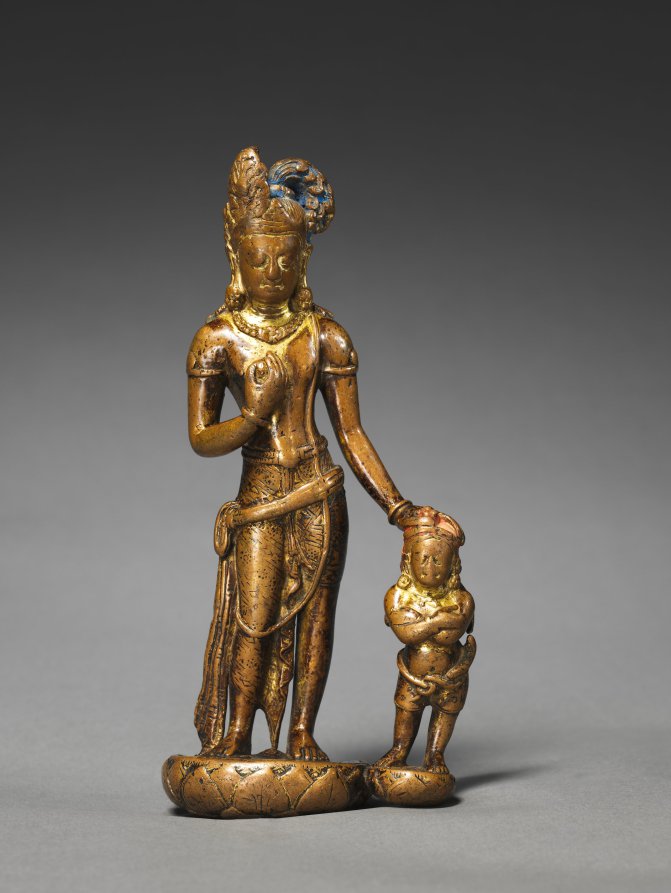
Bodhisattva Vajrapani
Cleveland Museum of Art
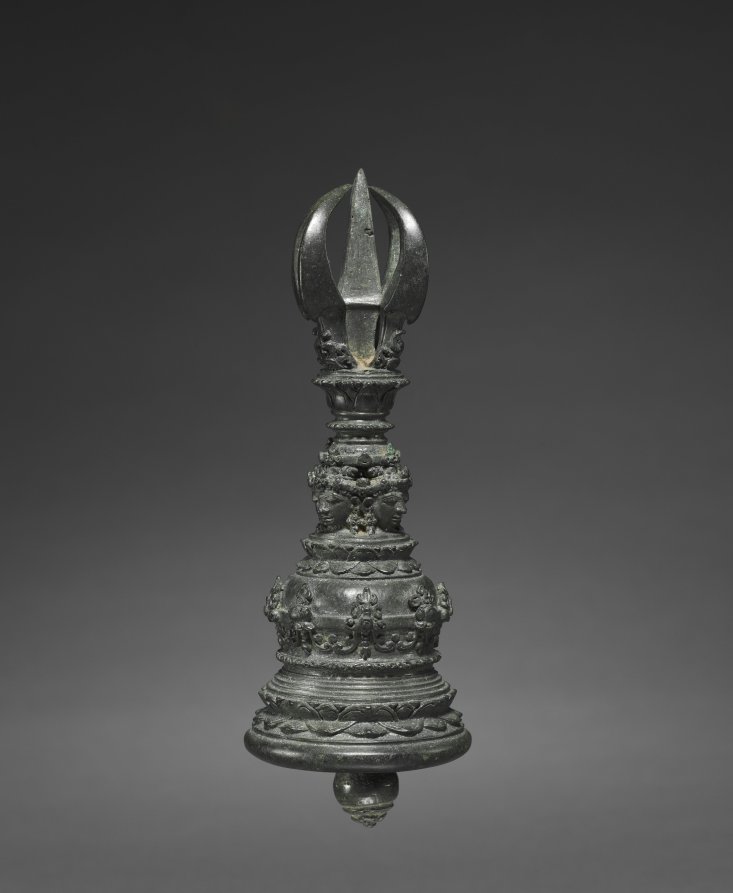
Bell with Vajra Handle
Cleveland Museum of Art