Cleveland Museum of Art
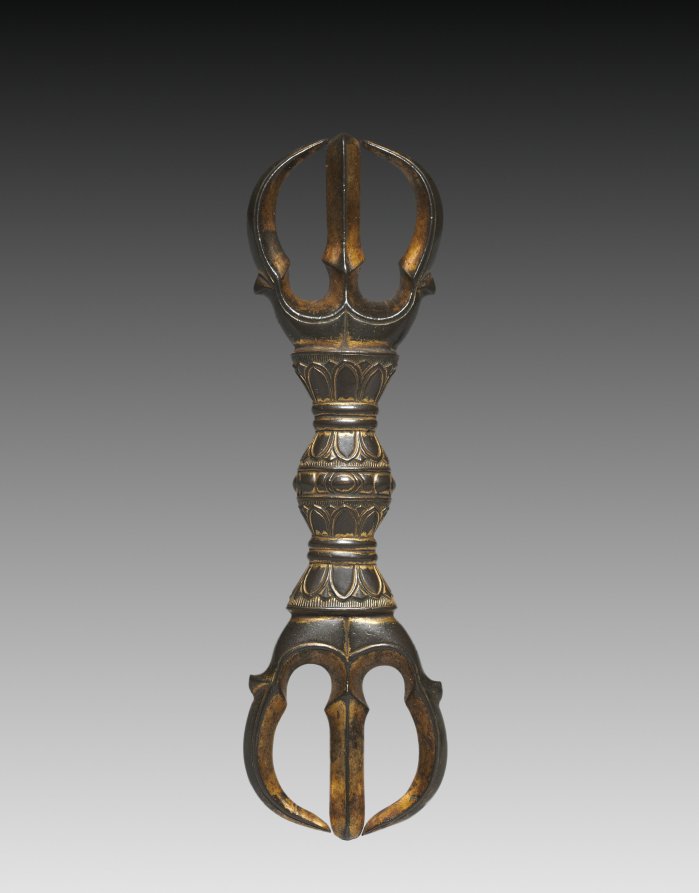
Three-pronged Vajra Pestle (Sankosho)
- Date
- early 1300s
- Medium
- gilt bronze
- Culture
- Japan, Kamakura period (1185–1333)
- Department
- Japanese Art
- Institution
- Cleveland Museum of Art
Called a vajra in Sanskrit, a pestle of this kind is an Esoteric Buddhist ritual implement derived from the thunderbolt held by the Indian Vedic god Indra. The round forms along the center of the handle, known as demon eyes, are rather compressed in this example, and the lotus petal shapes near the prongs are quite sharply delineated. The vajra is said to tear through ignorance like a powerful thunderbolt.
The authoritative record is held by Cleveland Museum of Art. LinkedCulture surfaces this object and its connections; it does not alter institutional metadata.
Related across collections
Semantically similar works from Cleveland Museum of Art and other institutions.
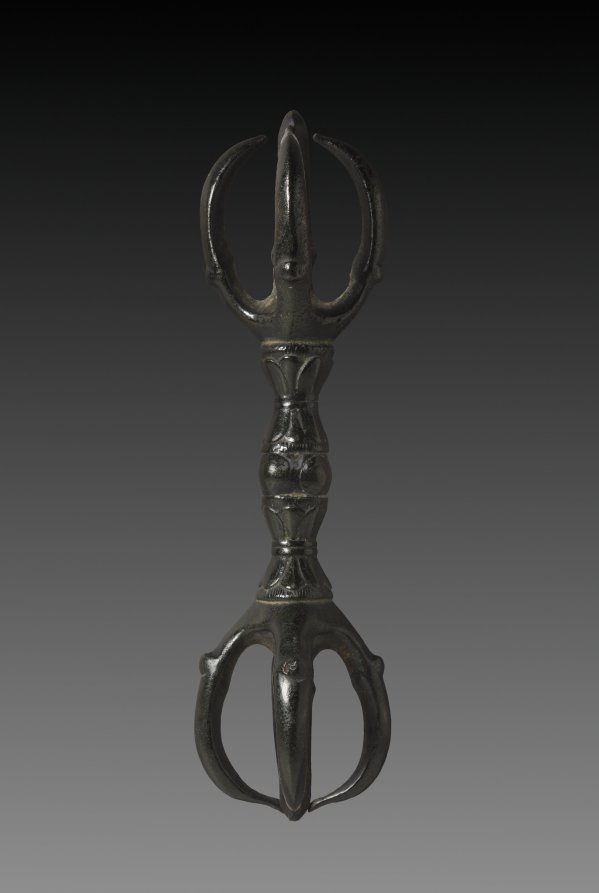
Five-pronged Vajra Pestle (Gokosho)
Cleveland Museum of Art

Five-pronged vajra
Minneapolis Institute of Art

Dorje drilbu (Bell with vajra handle)
Minneapolis Institute of Art
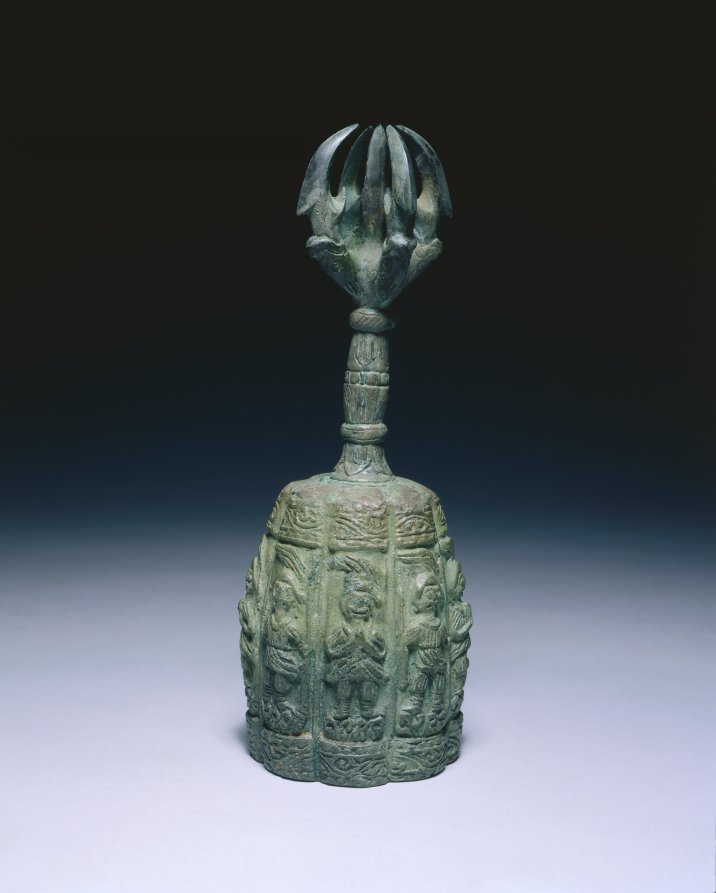
Buddhist Ritual Bell
Cleveland Museum of Art
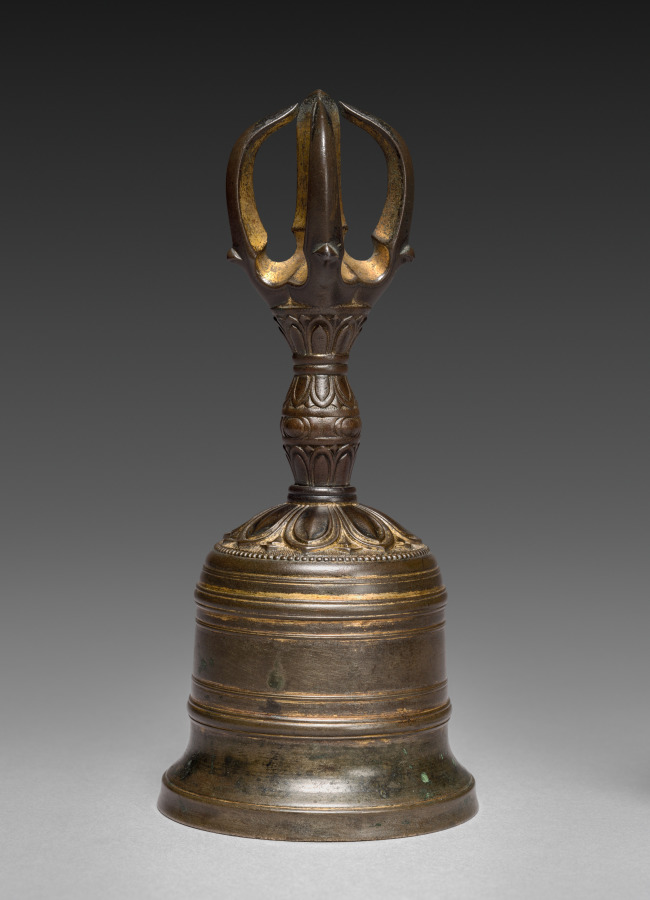
Five-pronged Vajra Bell (Gokorei)
Cleveland Museum of Art
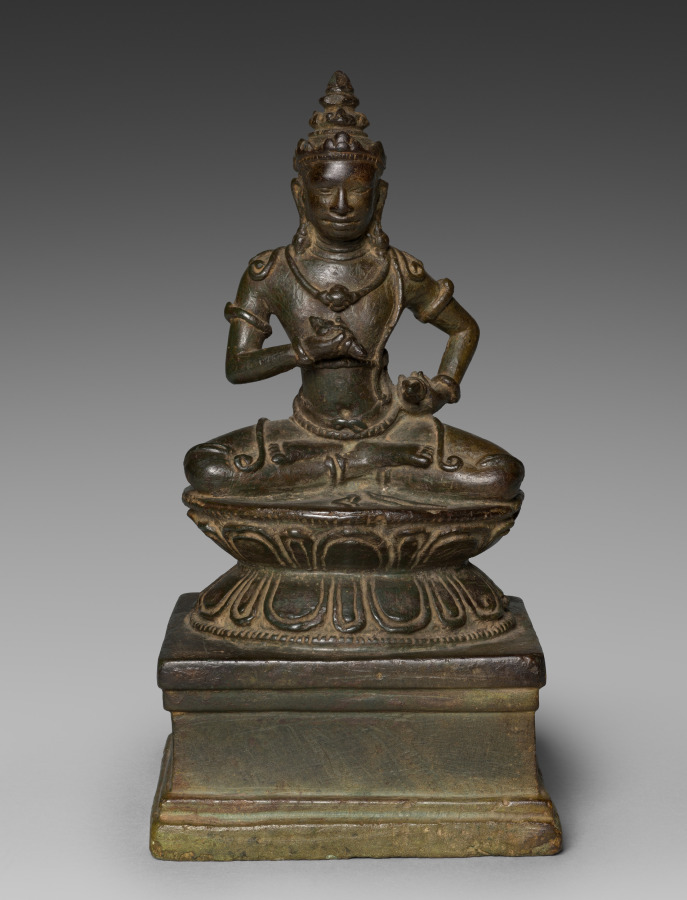
Vajrasattva
Cleveland Museum of Art
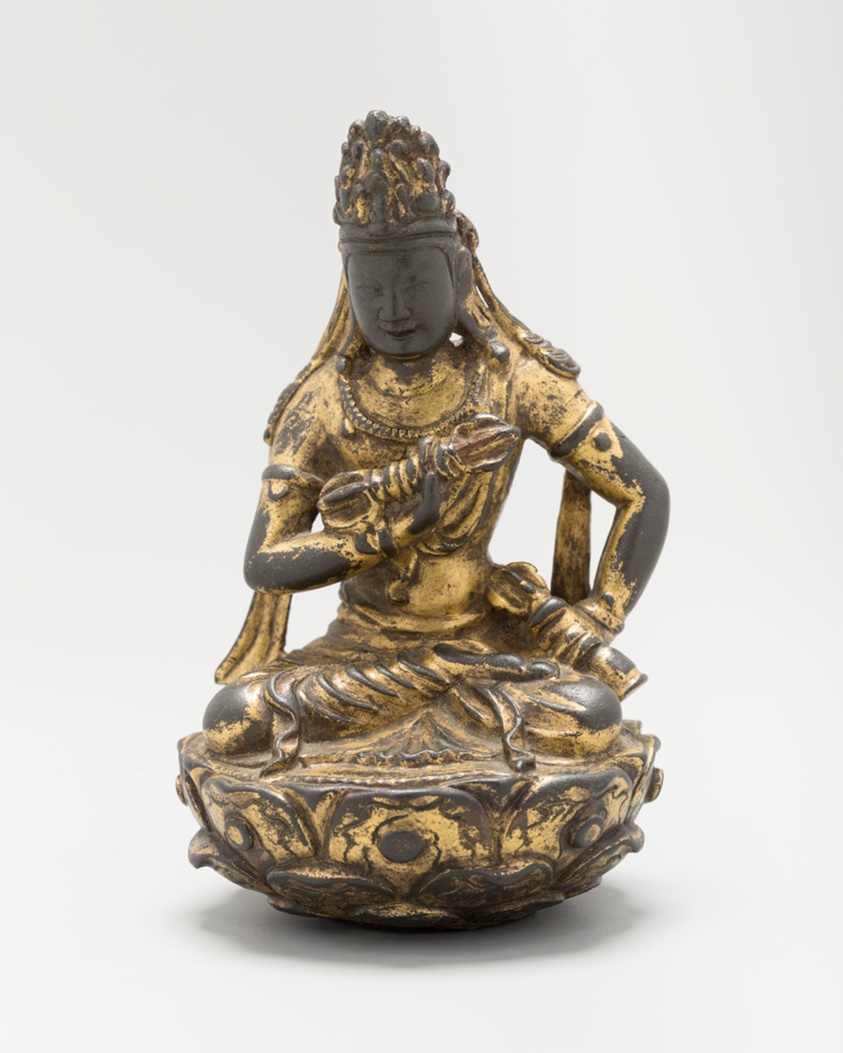
Vajrasattva Seated on Lotus Flower with Hands Grasping a Thunderbolt (Vajra) and Bell (Ghanta) with Thunderbolt Handle
Art Institute of Chicago

Dorje (Vajra)
Minneapolis Institute of Art
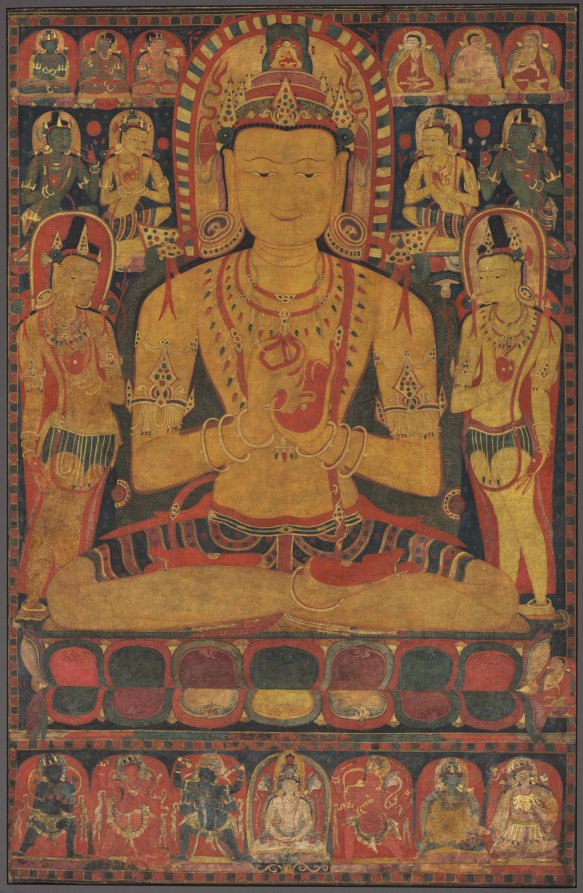
Tantric Buddha Vairochana as Vajrasattva
Cleveland Museum of Art
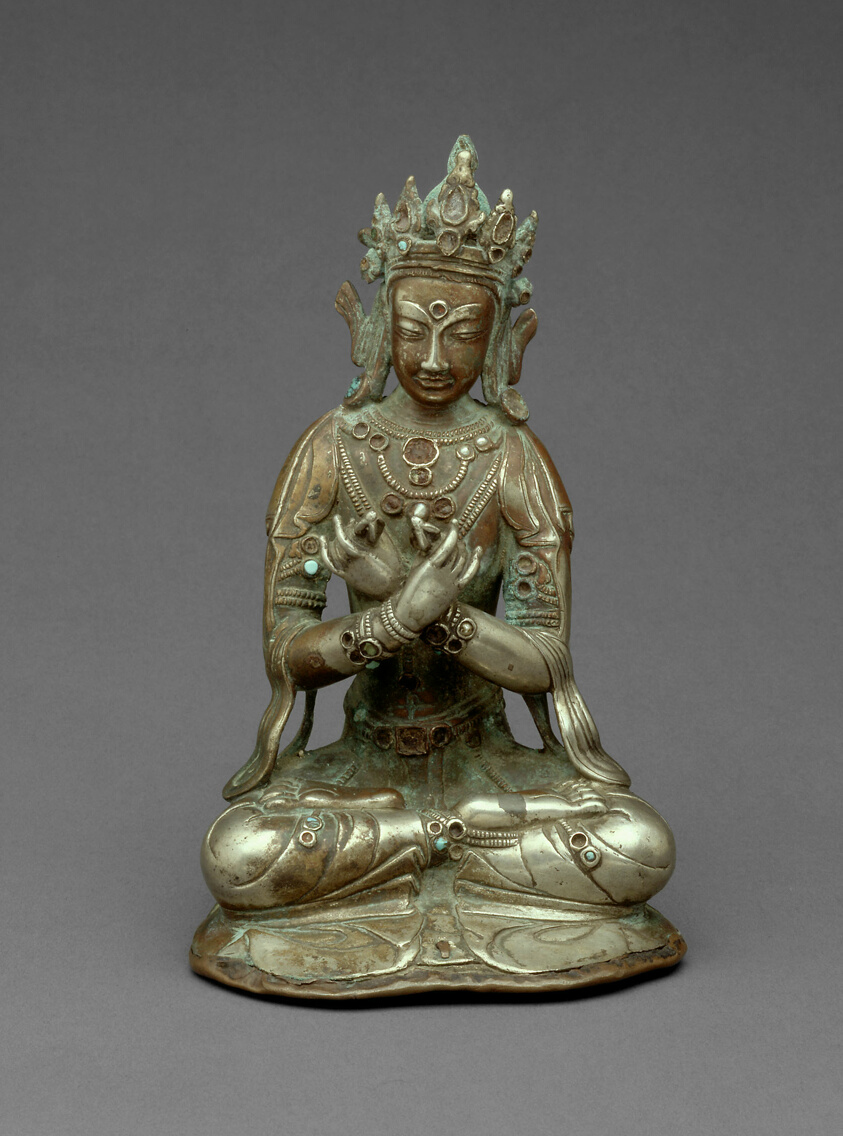
Vajradhara Buddha Seated Holding a Thunderbolt (Vajra) and Bell (Ghanta)
Art Institute of Chicago

Buddhist Deity Vajrasattva with Bell (Ghanta) and Thunderbolt (Vajra)
Art Institute of Chicago
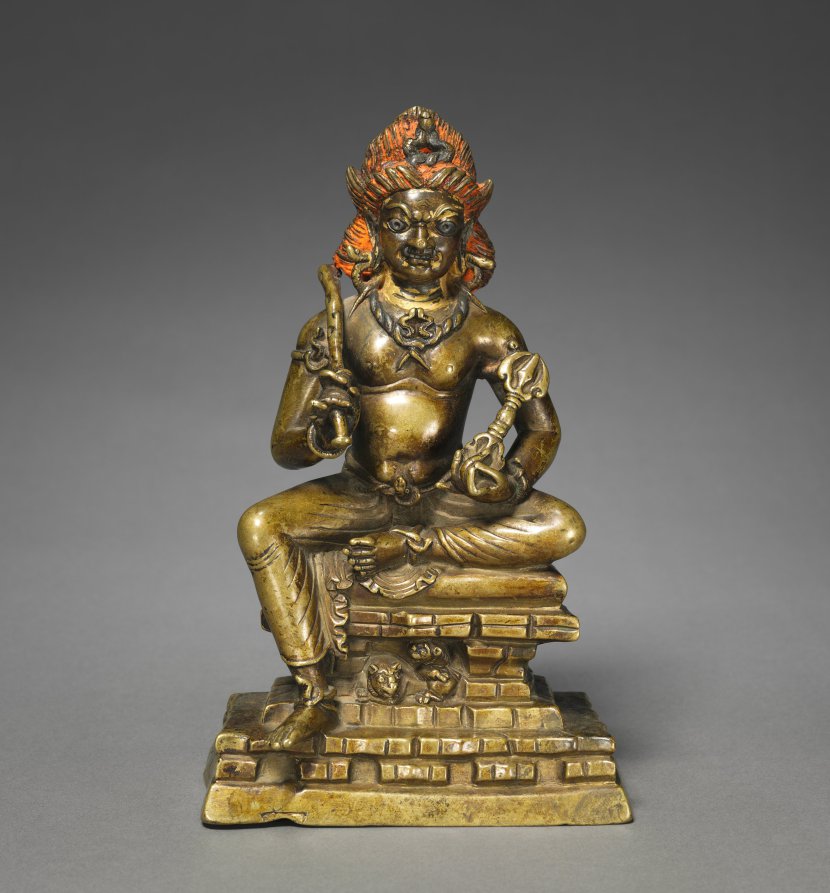
Vajrapani
Cleveland Museum of Art