Cleveland Museum of Art
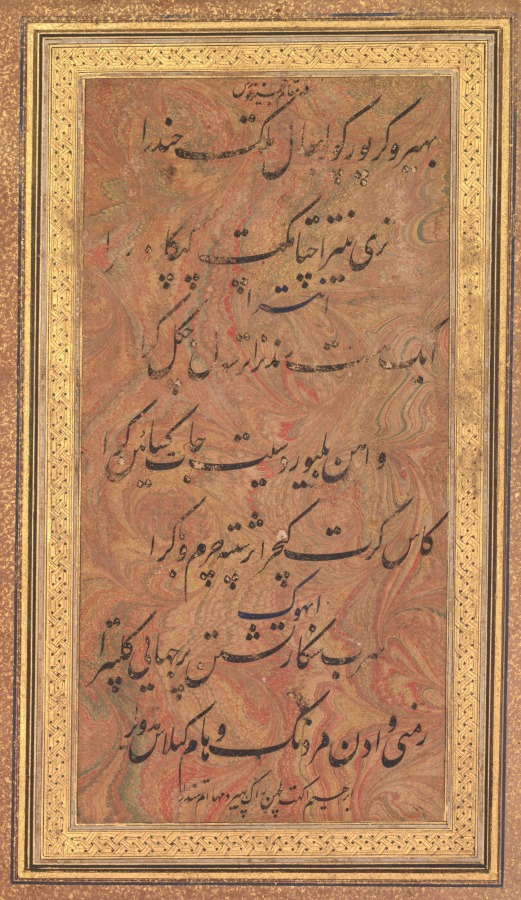
Eight Lines of Musical Poetry of the Jajner Nauras (Rag Bhairav) of Ibrahim Adil Shah of Bijapur (verso)
- Date
- late 1600s
- Medium
- Gum tempera, ink, and gold on paper
- Culture
- Southwestern India, Karnataka, Bijapur, 17th century
- Department
- Indian and Southeast Asian Art
- Institution
- Cleveland Museum of Art
Ibrahim Adil Shah II was a visionary ruler in the southern territories of the Deccan between 1580 and 1627 with his court based in the city of Bijapur. He maintained independence from Mughal encroachments from the north and fostered a distinctive culture infused with mystical Sufi ideals and a distinctive blending of Hindu and Islamic elements. This work of calligraphy is a verse composed by Ibrahim Adil Shah II that exemplifies his love of music and poetry. Normally a Hindu court tradition, ragamalas, or musical modes, were recast by Ibrahim Adil Shah in the local Dakhini language and incorporated into his Islamic milieu. The spectacular marbling on which the verse is written in Arabic script is a characteristic of the Deccan, where marbling was prized for its mysterious and random beauty. Mounted on an imperial Mughal album page with an image of the Hindu ruler Ram Singh on the verso, the placement of this Deccani calligraphy may have functioned as a tribute to Ram Singh’s father, who served the Mughal emperor in the Deccan from 1659 until 1666.
The authoritative record is held by Cleveland Museum of Art. LinkedCulture surfaces this object and its connections; it does not alter institutional metadata.
Related across collections
Semantically similar works from Cleveland Museum of Art and other institutions.
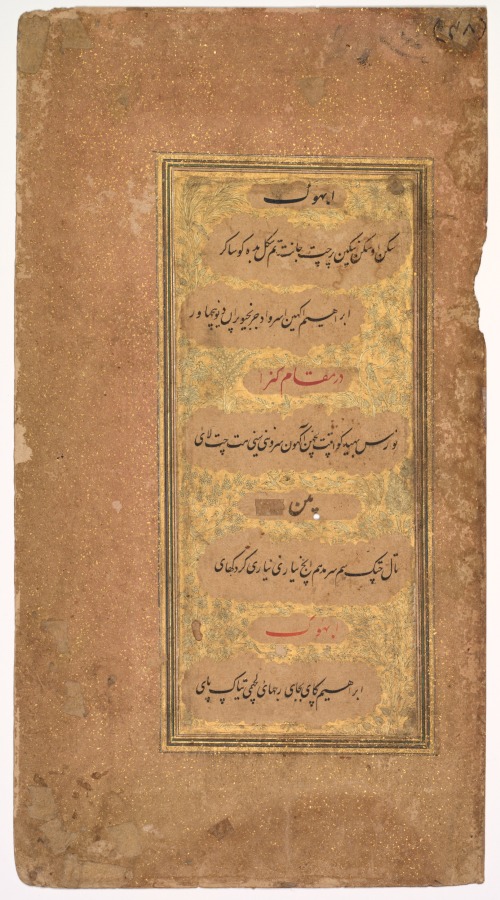
From Dohras (Songs) 40 and 42 from the Kitab-i Nauras (Book of Nine Essences) of Sultan Ibrahim Adil Shah II of Bijapur (r. 1580–1627) (recto)
Cleveland Museum of Art
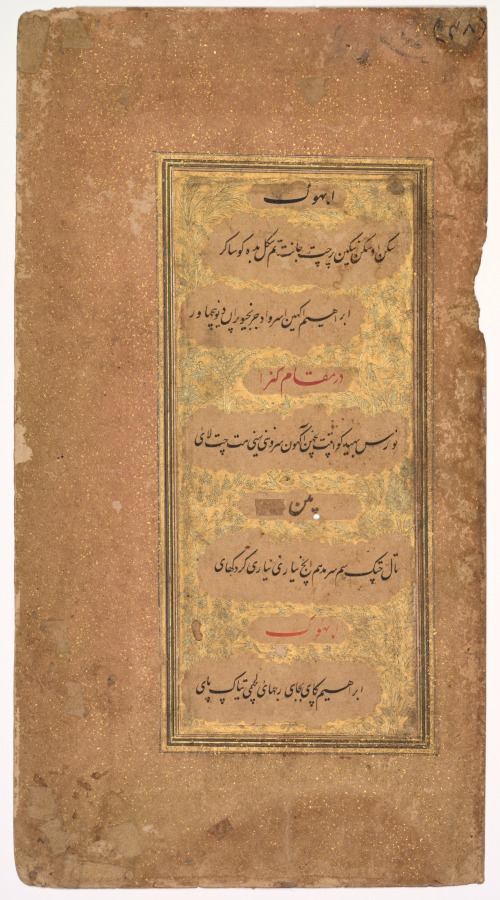
From Dohras (Songs) 40 and 42 from the Kitab-i Nauras (Book of Nine Essences) of Sultan Ibrahim Adil Shah II of Bijapur (r. 1580–1627); verso: From Dohras (Songs) 40 and 36 from the Kitab-i Nauras of Sultan Ibrahim Adil Shah II
Cleveland Museum of Art
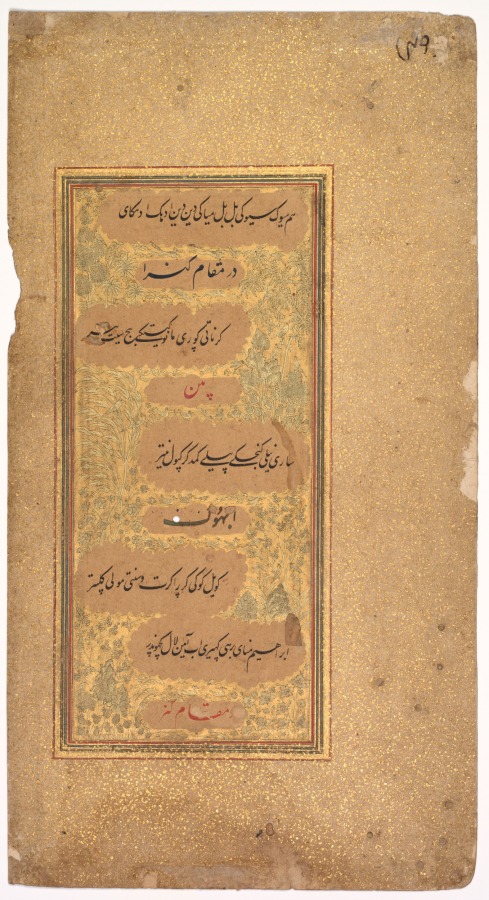
From Dohras (Songs) 40 and 36 from the Kitab-i Nauras of Sultan Ibrahim Adil Shah II (verso)
Cleveland Museum of Art

Raja Bikram Collecting the Clothes of the Bathing Fairies
Minneapolis Institute of Art
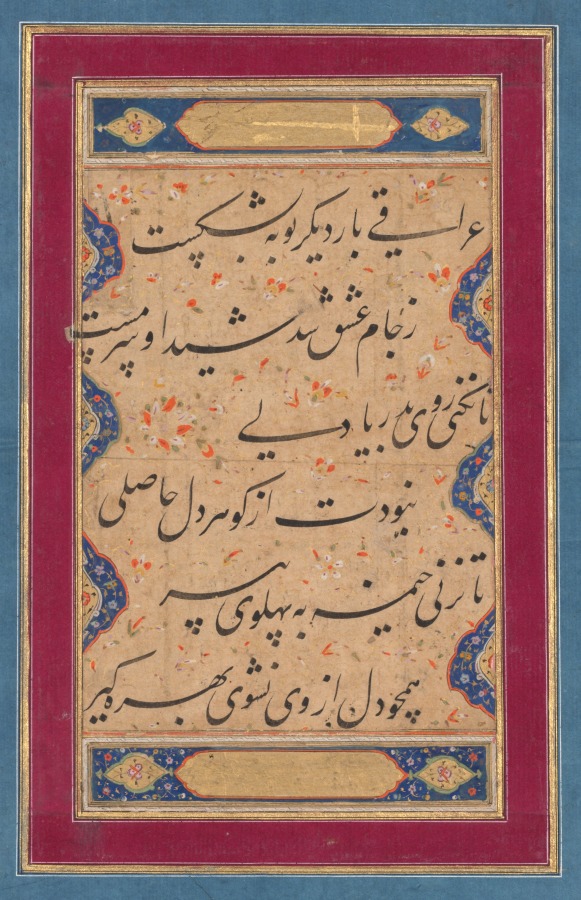
Calligraphy from a ghazal of Fakhr al-Din Iraqi (Persian, 1213–1289) and a verse from the Tuhfat al-ahrar (The Gift of the Free) of Abd al-Rahman Jami (verso)
Cleveland Museum of Art
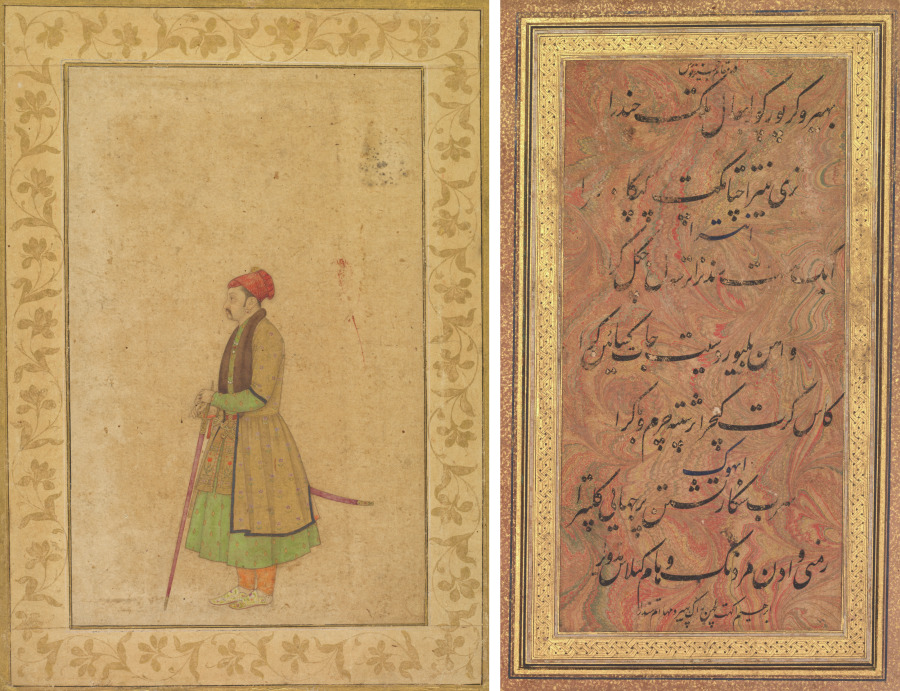
Portrait of Raja Ram Singh of Amber (r. 1667-1688) with a Deccan Sword (recto); Calligraphy (verso)
Cleveland Museum of Art
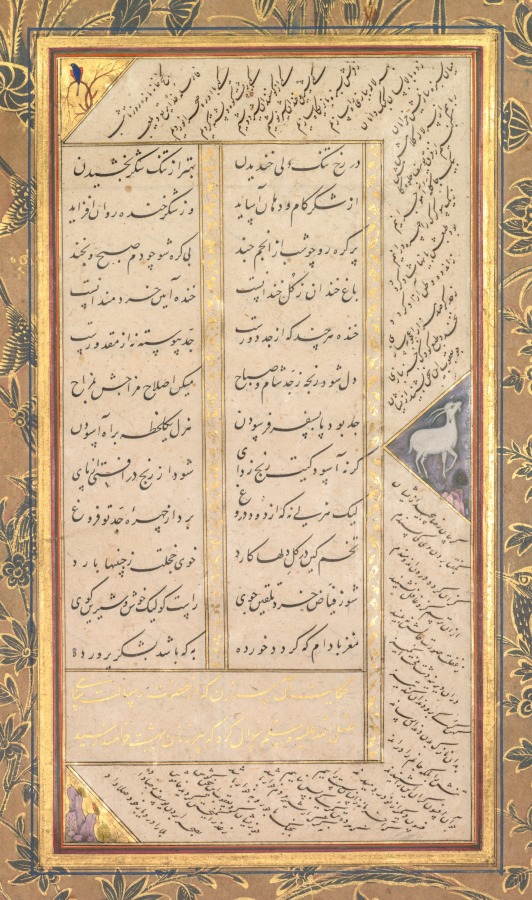
Page from a Panj Ganj (Five Treasures) of Abd al-Rahman Jami (Persian, 1414–1492), with two Persian masnavis: Yusuf va Zulaykha (Joseph and Zulaykha) and Subhat al-abrar (Rosary of the Righteous) (verso)
Cleveland Museum of Art
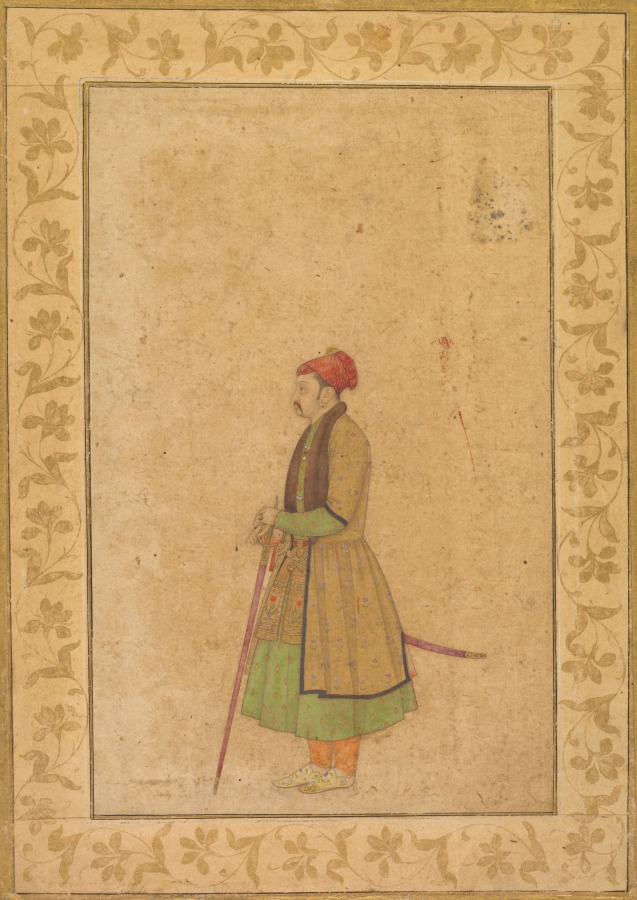
Portrait of Raja Ram Singh of Amber (r. 1667-1688) with a Deccan Sword (recto)
Cleveland Museum of Art
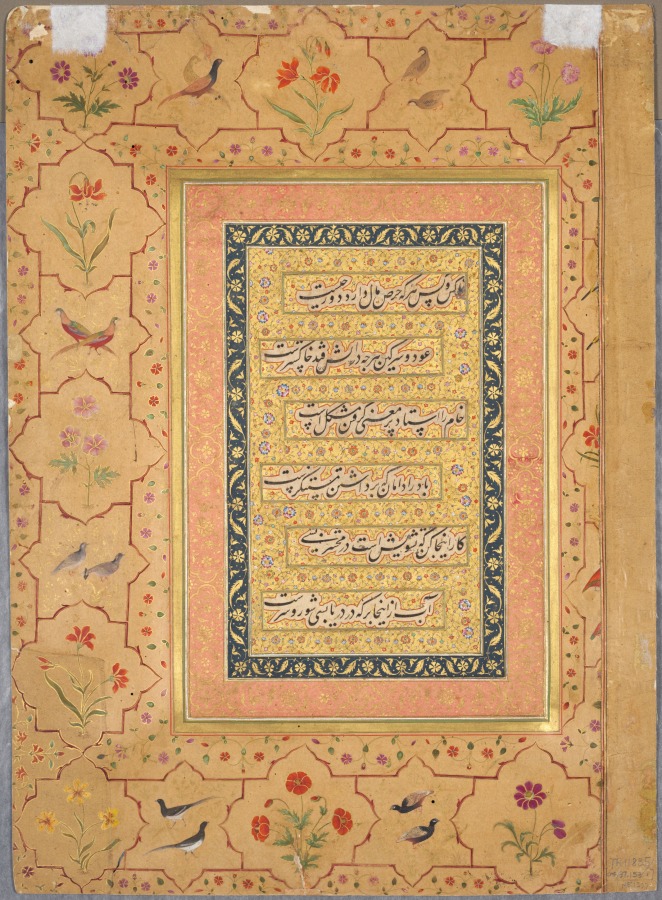
Calligraphy framed by an ornamental border with poppies and pairs of birds, from the Late Shah Jahan Album (verso)
Cleveland Museum of Art
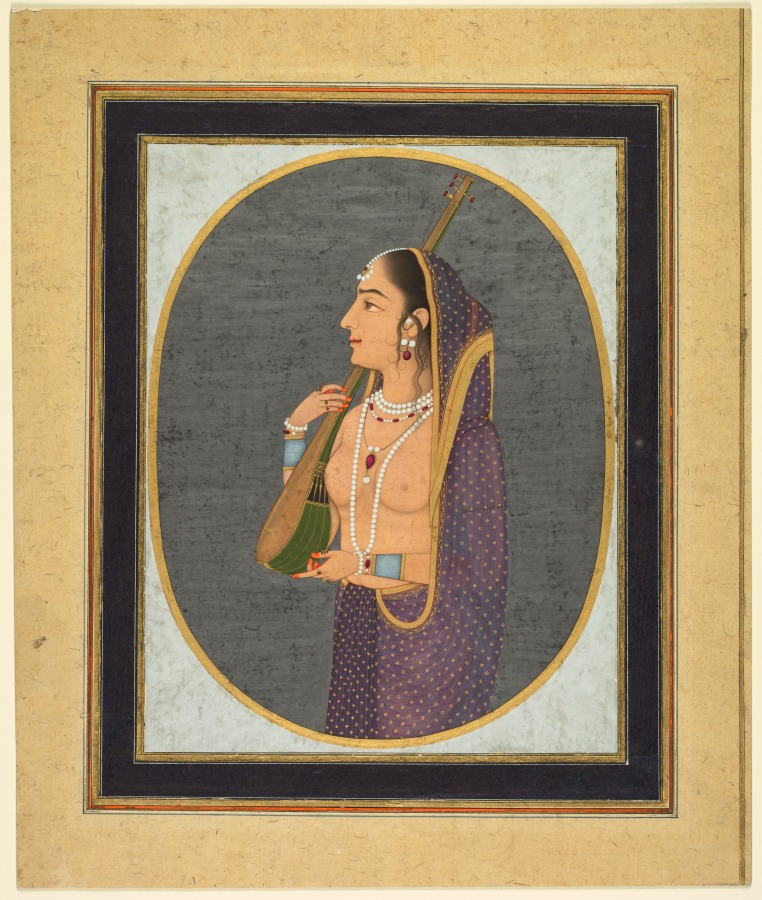
Court lady singing and playing the vina
Cleveland Museum of Art
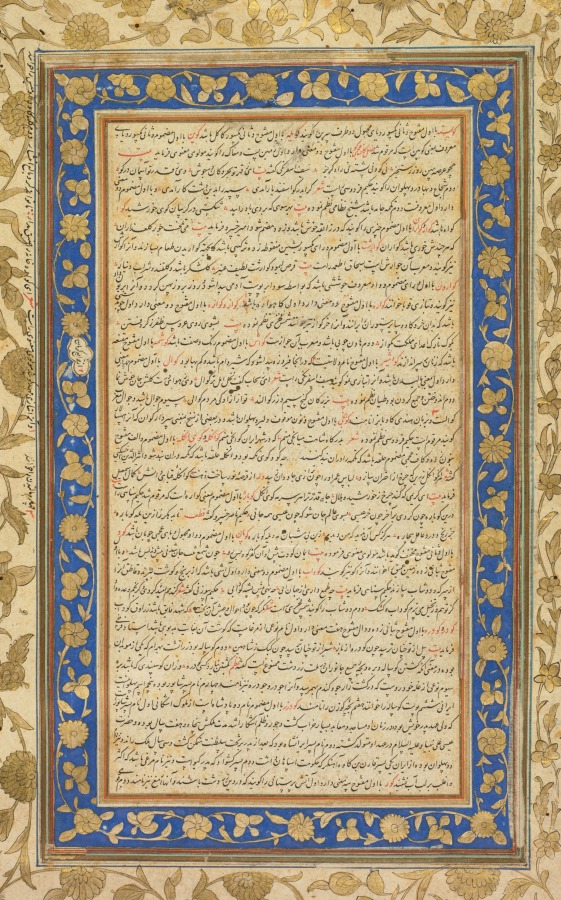
From the Farhang-i Jahangiri (Persian-language Dictionary) compiled by Mir Jamal al-Din Husayn Inju of Shiraz (Persian, d. 1626)
Cleveland Museum of Art
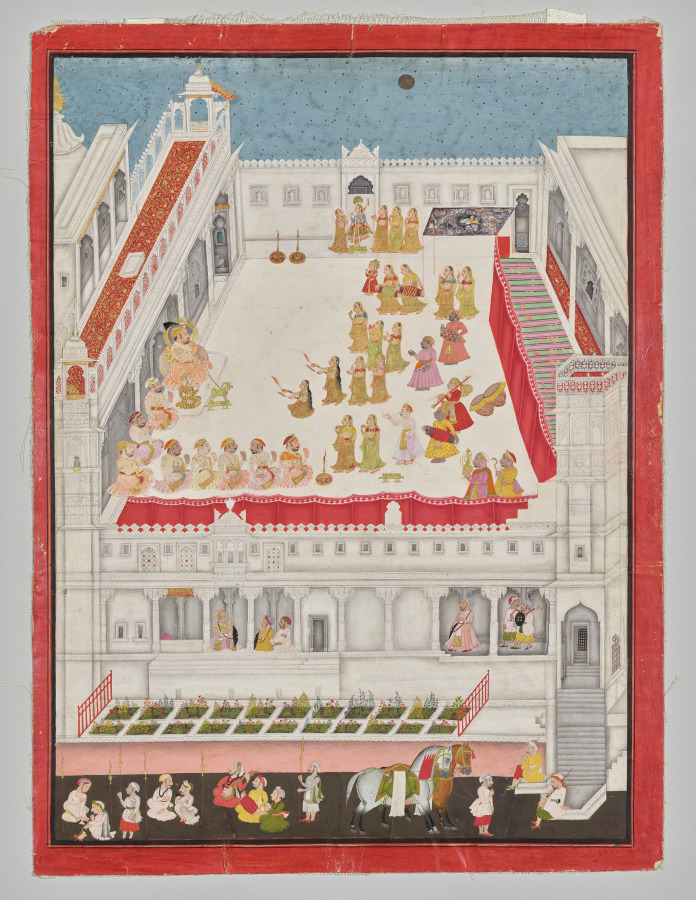
Maharana Jagat Singh Attending the Raslila
Cleveland Museum of Art