Cleveland Museum of Art
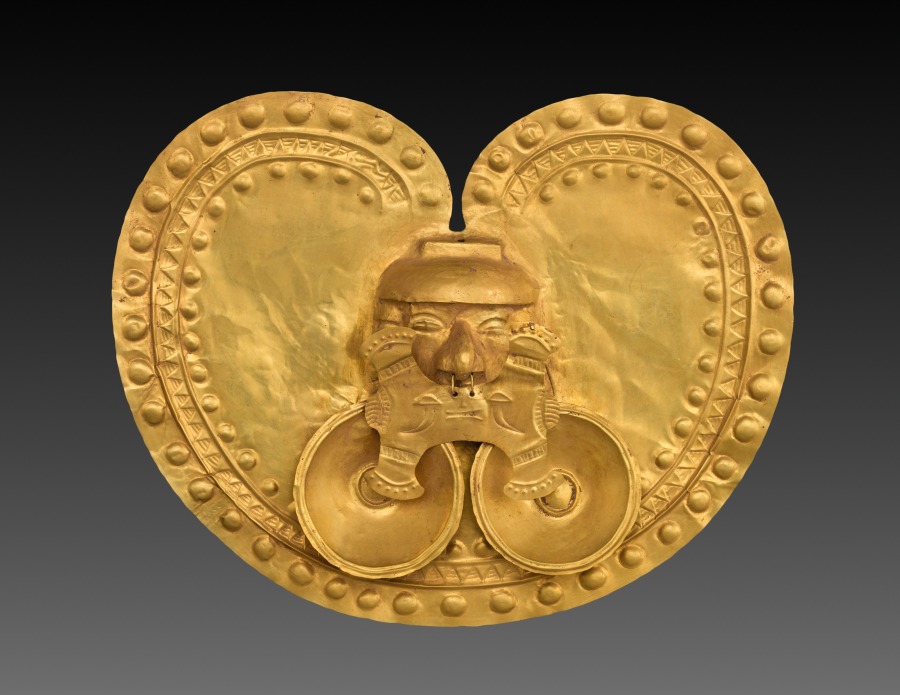
Pectoral (Chest Ornament)
- Date
- 1–800 CE
- Medium
- gold, hammered
- Culture
- Isthmian Region (Colombia), Calima, Yotoco period
- Department
- Art of the Americas
- Institution
- Cleveland Museum of Art
- Object ID
- 172512
From the Cleveland Museum of Art record
Bilobed pectorals are some of the most flamboyant objects created by artists in Colombia’s Calima region. Chiefs apparently wore such pectorals—among the largest torso adornments ever created in the ancient Americas—with other gold objects, including bracelets, dramatic headdress adornments, and ear and nose ornaments like those shown on the pectoral itself. Thus, they armored themselves in gold, which likely had complex symbolism; for instance, it may have been associated with the sun and thereby with nourishing cosmic energies and positive moral behavior. Calima bilobed pectorals are among the largest torso ornaments ever made in the ancient Americas.
The authoritative record is held by Cleveland Museum of Art. LinkedCulture surfaces this object and its connections; it does not alter institutional metadata.
Get printable QR codesHide QR codes
Open QR codes for this object page and the museum record. They stay collapsed until needed.
Provenance & credit
As published by the source institution. Coverage varies — not every institution's open-data feed includes ownership history.
- Credit line
- Severance and Greta Millikin Purchase Fund
Part of a LinkedCulture topic
 Pre-Columbian Body Adornment
These objects are personal ornaments and jewelry worn by ancient Mesoamerican and Andean cultures, including ear ornaments, nose ornaments, plaques, and costume decorations made from precious metals, stone, shell, and ce
359 objects from 4 institutions
Related across collections
Semantically similar works from Cleveland Museum of Art and other institutions.