Cleveland Museum of Art
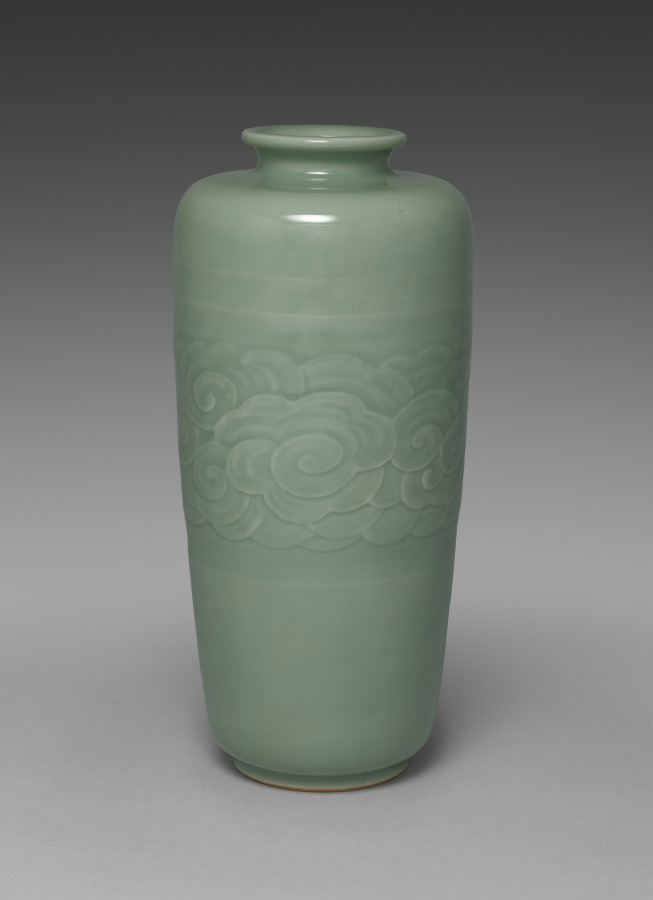
Tong-shaped Vase with Band of Cloud
Seifū Yohei III
- Date
- 1893–1914
- Medium
- Porcelain with molded and carved design and green glaze
- Culture
- Japan, Meiji period (1868–1912)
- Department
- Japanese Art
- Institution
- Cleveland Museum of Art
Many of the vases created by Yohei III and IV were made with reference to and in emulation of Chinese ceramics in both form and glazing. The vessel type called tongping , pronounced tōbin in Japanese, is tall and cylindrical, like the thick length of bamboo referenced in the shape of the ideograph tong 筒. Unlike the ancient gu , hu , and guan , this form did not emerge in China until the Ming dynasty, and many such vases date to the early Qing dynasty. Two green-glazed vases, this one by Yohei III and the other by Yohei IV CMA 2022.228 , are interpretations of this form. Yohei III’s version has slightly hunched shoulders and is somewhat wider at the top below the small neck and lip. Yohei IV’s vase is more angular. The wide rack of molded cloud encircling the Yohei III vase rises subtly from very low relief banding above and below it, accentuating the vessel’s rounded edges and complementing the form. In contrast, the allover flower vine pattern on the body and “seven treasures” pattern at the collar of the vase by Yohei IV evokes a garment’s cuffed sleeve, like the common English appellation for this type of vessel—“sleeve vase.” Seifū Yohei III mined the repertoire of Chinese vessel types, from ceramics modeled after ancient ritual bronzes to shapes developed in the Yuan (1279–1368) and Ming (1368–1644) dynasties.
The authoritative record is held by Cleveland Museum of Art. LinkedCulture surfaces this object and its connections; it does not alter institutional metadata.
Related across collections
Semantically similar works from Cleveland Museum of Art and other institutions.
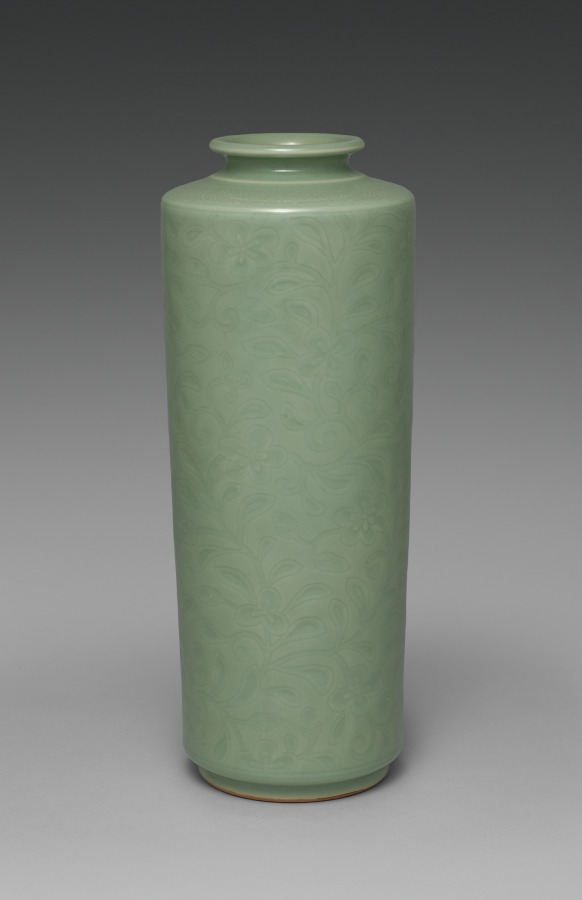
Tong-Shaped Vase with Flowers and Grasses
Cleveland Museum of Art
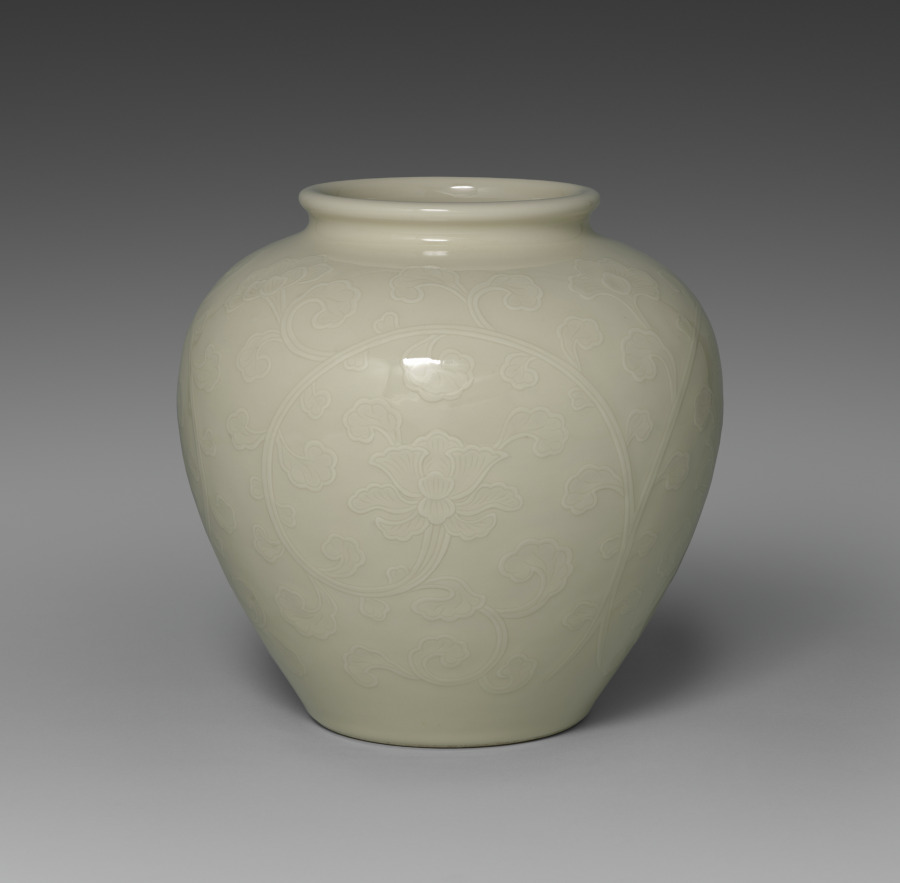
Guan-Shaped Vessel with Floral Scroll
Cleveland Museum of Art
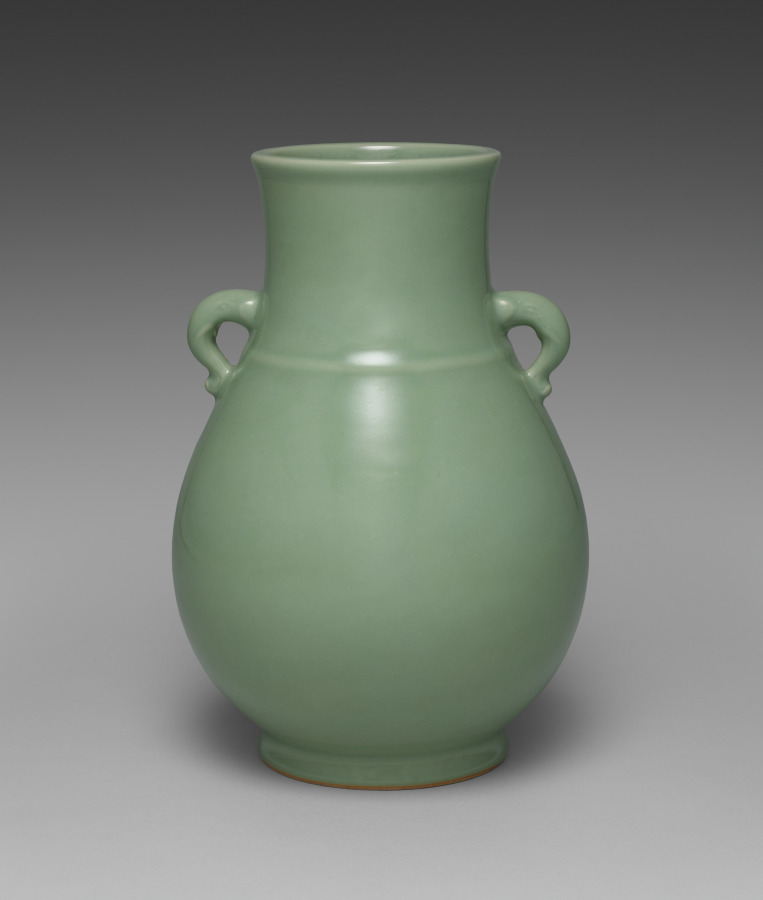
Hu-Shaped Vase with Handles
Cleveland Museum of Art
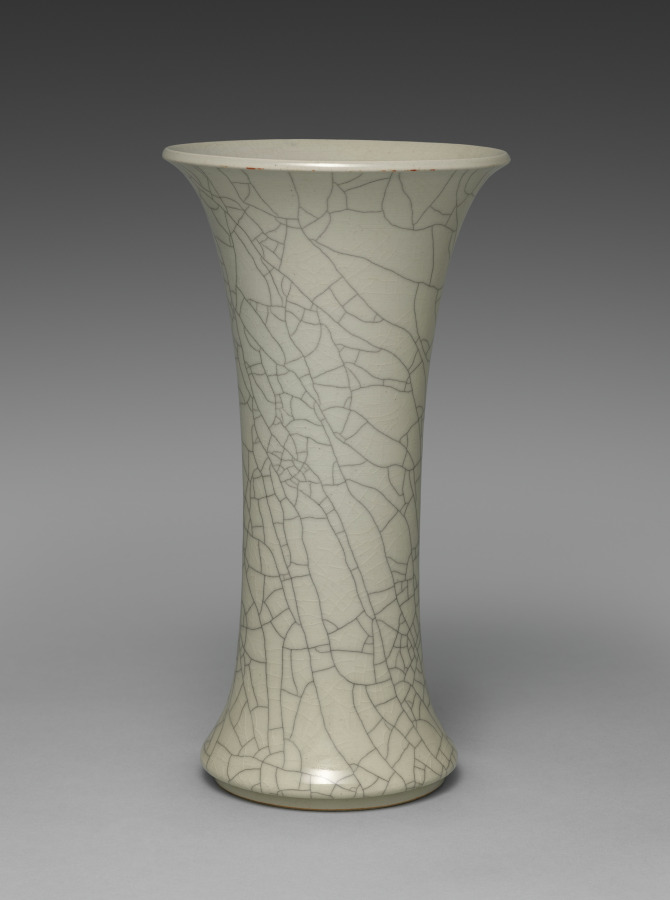
Gu-shaped Vase
Cleveland Museum of Art
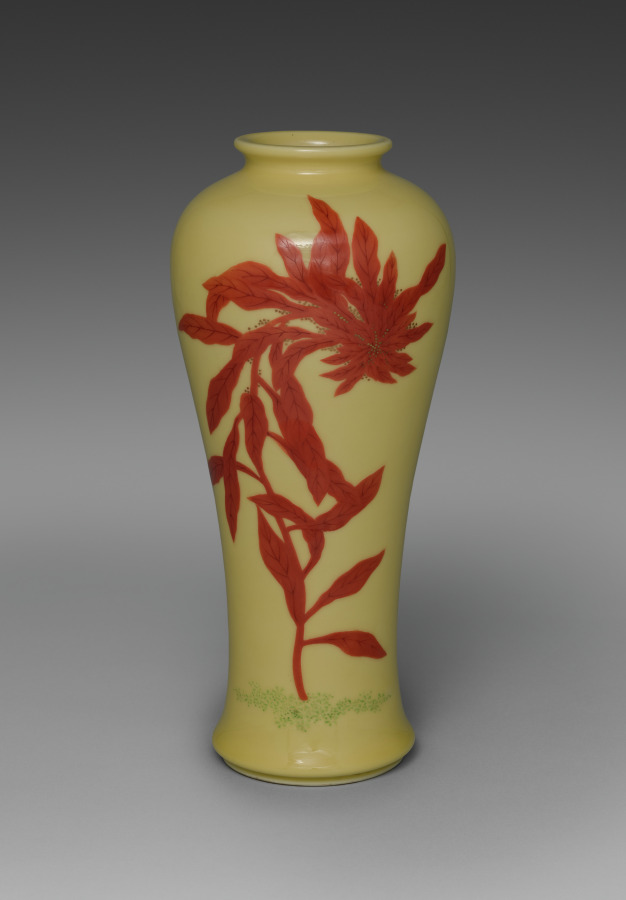
Prunus Vase with Amaranth
Cleveland Museum of Art
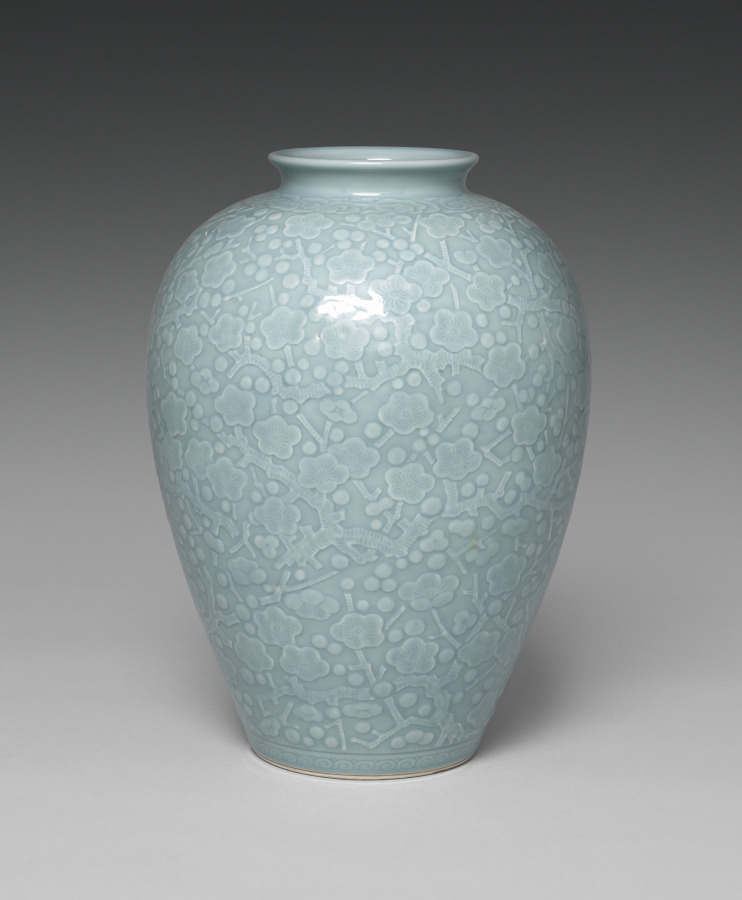
Vase with Plum Blossoms
Cleveland Museum of Art
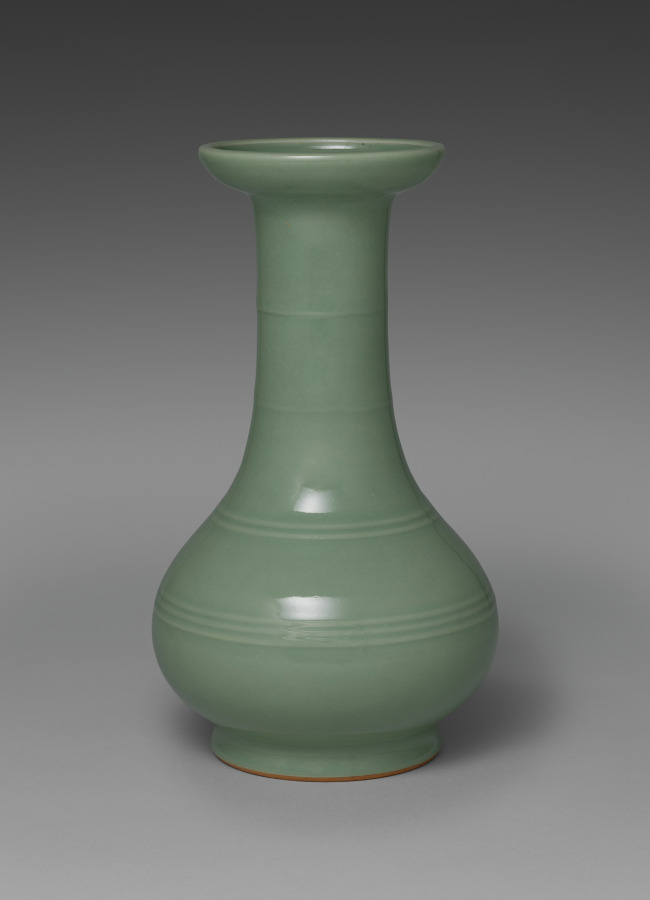
Vase with Bamboo Joints
Cleveland Museum of Art
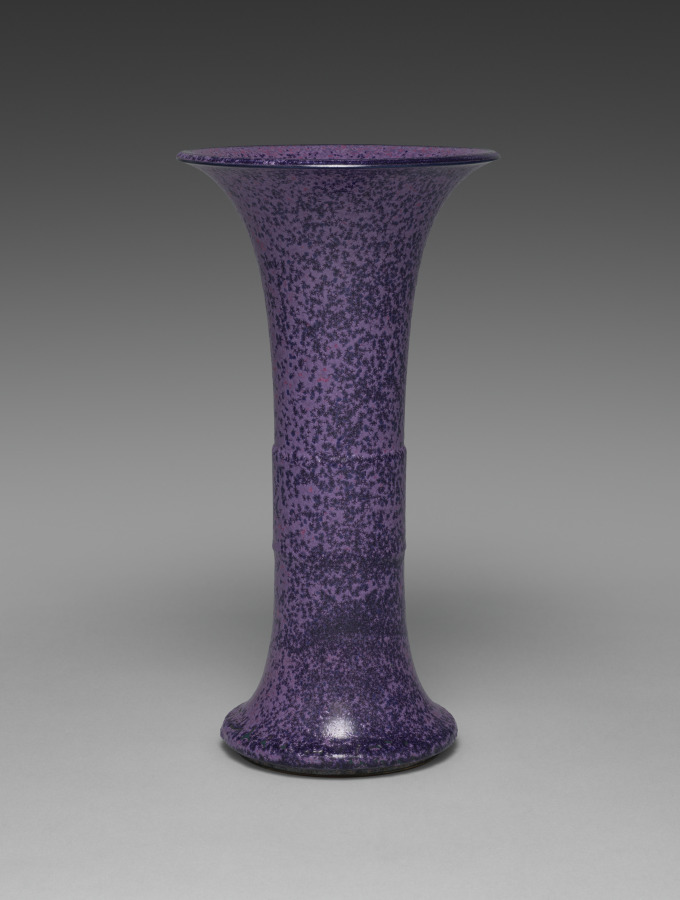
Gu-Shaped Vase with Patina
Cleveland Museum of Art

Vase
Minneapolis Institute of Art
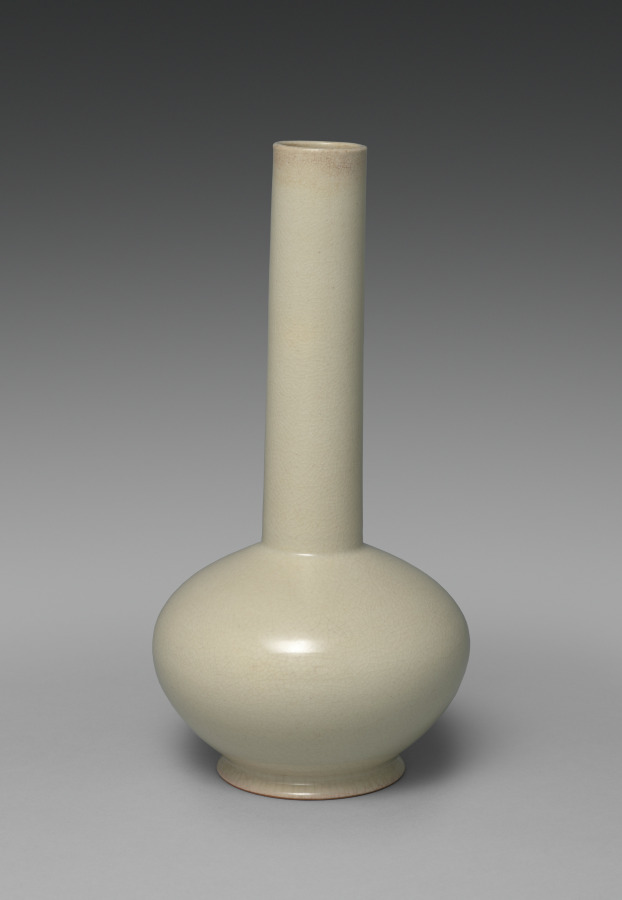
Long-Necked Vase
Cleveland Museum of Art

Bottle vase
Minneapolis Institute of Art
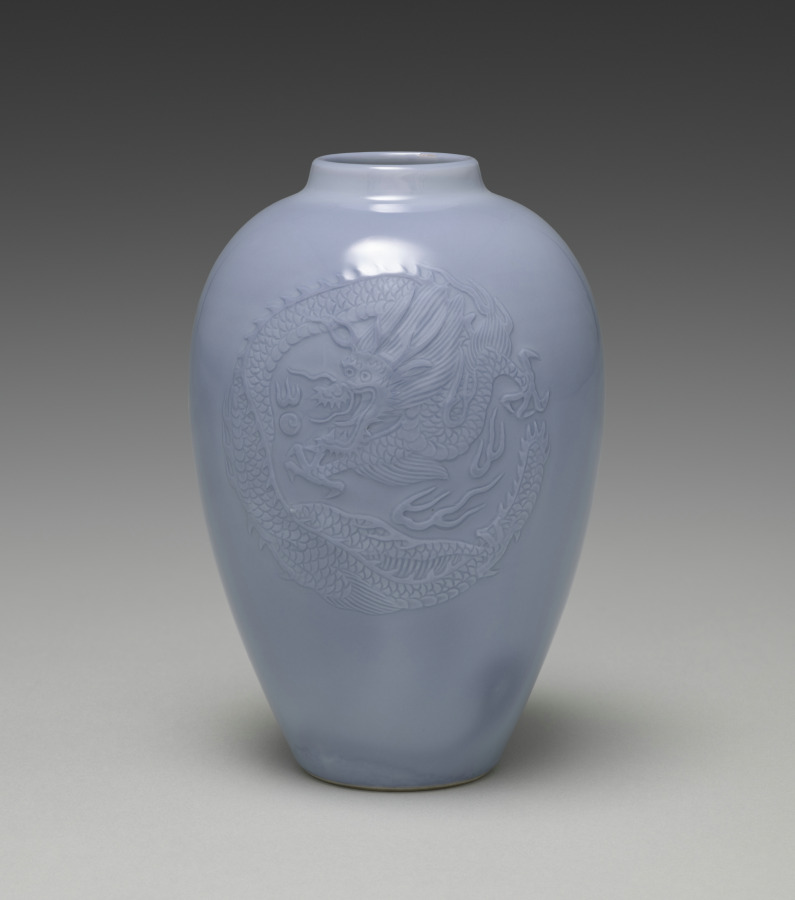
Vase with Dragon Roundels
Cleveland Museum of Art