Cleveland Museum of Art
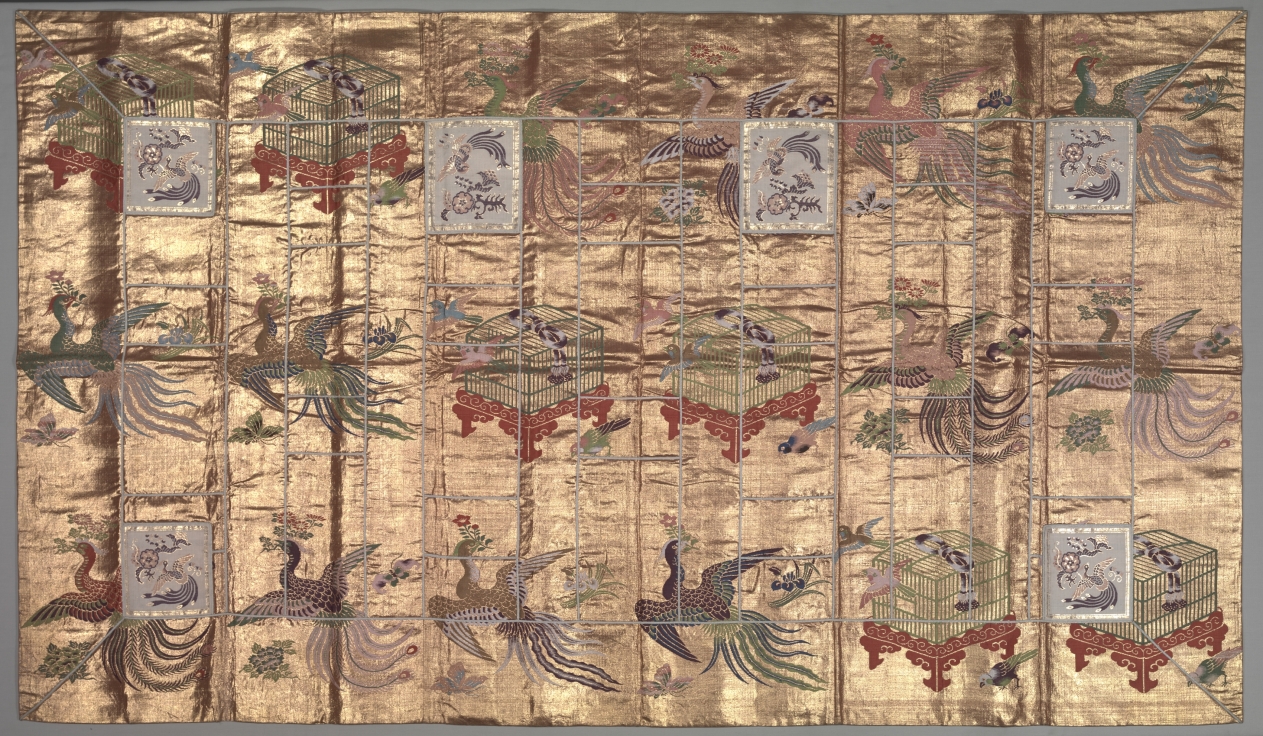
Buddhist Vestment (Kesa)
- Date
- early 1900s
- Medium
- silk with supplementary weft, brocaded; metal thread
- Culture
- Japan, Meiji period (1868–1912)
- Department
- Textiles
- Institution
- Cleveland Museum of Art
Kesa are Buddhist monastic robes that originated in India. The robes are named after the brown or saffron dye originally used in their production. The primary motif on this seven-paneled kesa is a long-tailed bird with a flower in its mouth. This motif was imported from Persia (present-day Iran) through China during the Nara period (710–794)and is interpreted as a positive symbol. The bird delivers happiness in its mouth. This kesa depicts bird cages, but all the birds portrayed fly free.
The authoritative record is held by Cleveland Museum of Art. LinkedCulture surfaces this object and its connections; it does not alter institutional metadata.
Related across collections
Semantically similar works from Cleveland Museum of Art and other institutions.

Buddhist priest's robe (kesa)
Minneapolis Institute of Art
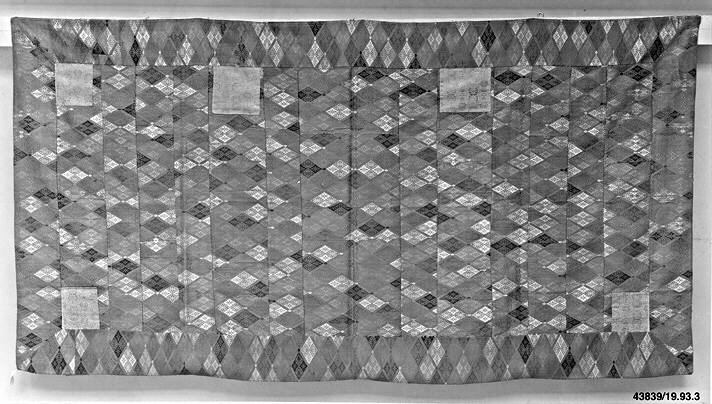
Seven-Panel Buddhist Monk’s Vestment (Shichijō kesa) with Floral-Lozenge Pattern
The Metropolitan Museum of Art
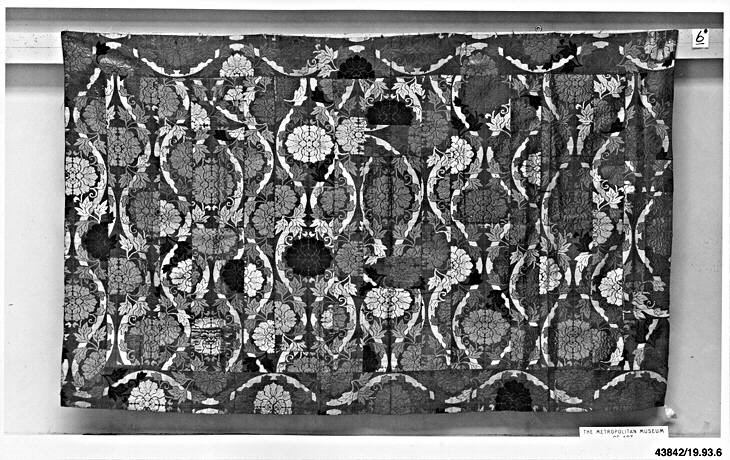
Seven-Panel Buddhist Monk’s Vestment (Shichijō kesa) with Peony Patterns in Undulating Columns
The Metropolitan Museum of Art
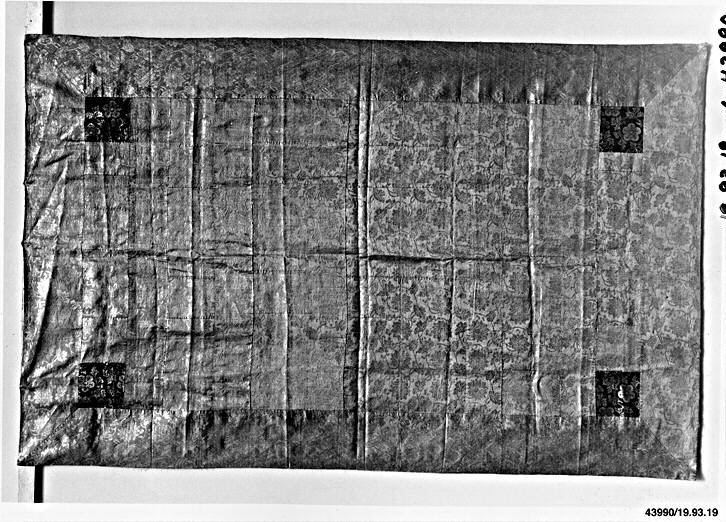
Seven-Panel Buddhist Monk’s Vestment (Shichijō kesa) with Lotus Arabesque
The Metropolitan Museum of Art
Kesa
Art Institute of Chicago

Buddhist priest's robe (kashaya)
Minneapolis Institute of Art

Buddhist priest's robe (kashaya)
Minneapolis Institute of Art

Buddhist priest's robe (kesa)
Minneapolis Institute of Art
Buddhist Surplice (Kesa)
Cleveland Museum of Art
Buddhist Surplice (Kesa)
Cleveland Museum of Art

Buddhist priest’s robe with design of chrysanthemums and peonies
Minneapolis Institute of Art
Buddhist Vestment (Kesa)
Cleveland Museum of Art