
Minneapolis Institute of Art
Story of Haftvad
Persia (Iran); or Mesopotamia (Iraq)
- Date
- c. 1300
- Medium
- Ink and color on paper
- Department
- Asian Art
- Institution
- Minneapolis Institute of Art
A group of women spin cotton outside the village of Kerman. The setting, with gold sky and fantastical landscape, shows the influence of Chinese painting, brought to Persia with Mongolian rule. This scene, identified in the text at the top of the page, foreshadows the story of Haftvad, a modest man whose daughter, seen at the far right, discovers a worm while biting into an apple. Considering it a lucky charm, she keeps the worm in her spindle case and soon begins spinning miraculous quantities of cotton. Recognizing this good fortune, Haftvad takes the worm and nurtures it until it grows to the size of an elephant. As the worm grows, so does Haftvad’s wealth and power. Eventually, King Ardeshir grows envious and comes to Kerman, where he defeats Haftvad and kills the worm. Iran, Iraq, Asia
The authoritative record is held by Minneapolis Institute of Art. LinkedCulture surfaces this object and its connections; it does not alter institutional metadata.
Related across collections
Semantically similar works from Minneapolis Institute of Art and other institutions.
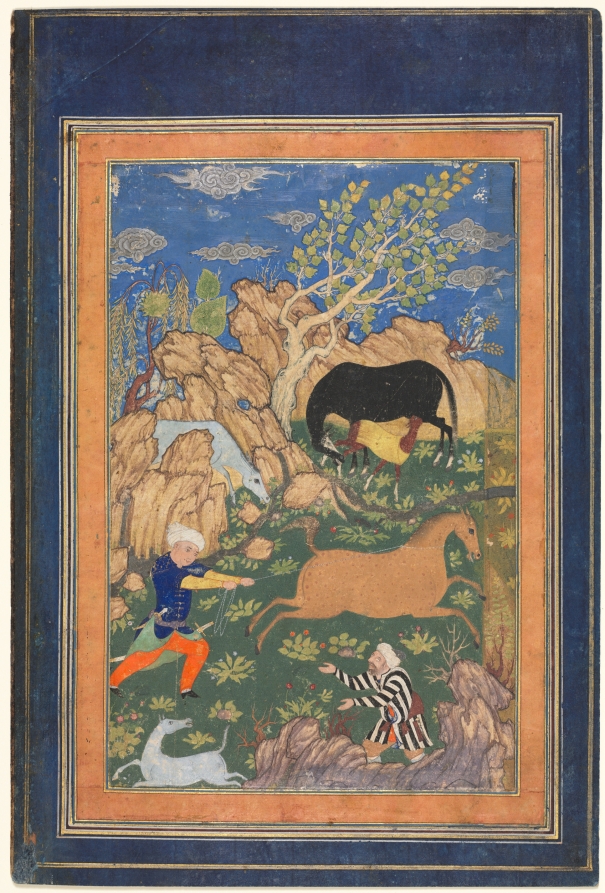
Rustam Lassoing his Horse, Rakhsh, in a Landscape (recto)
Cleveland Museum of Art
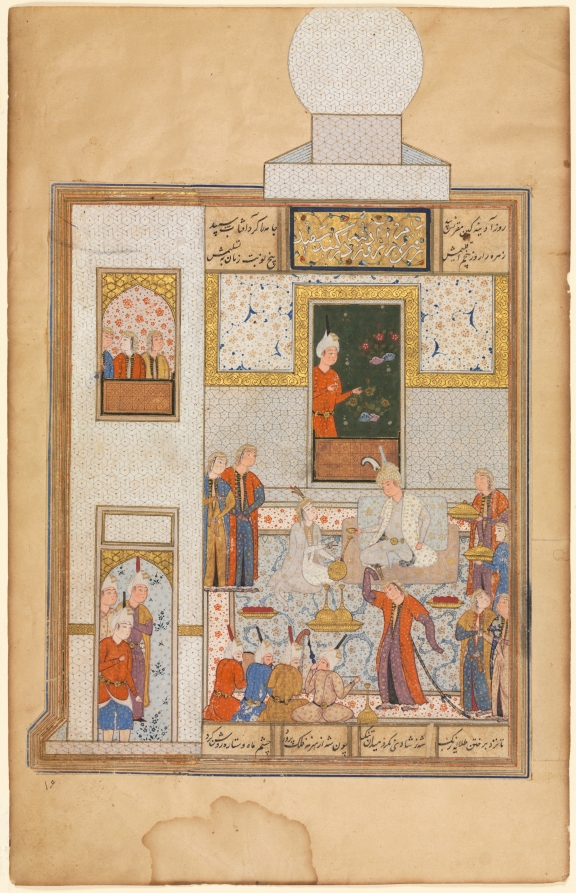
Bahram Visits the White Domed Pavilion on Friday (recto)
Cleveland Museum of Art

Shirin Visiting Farhad
Minneapolis Institute of Art

Rakhsh, Rustam's Horse, Kills a Lion While His Master Sleeps
Minneapolis Institute of Art
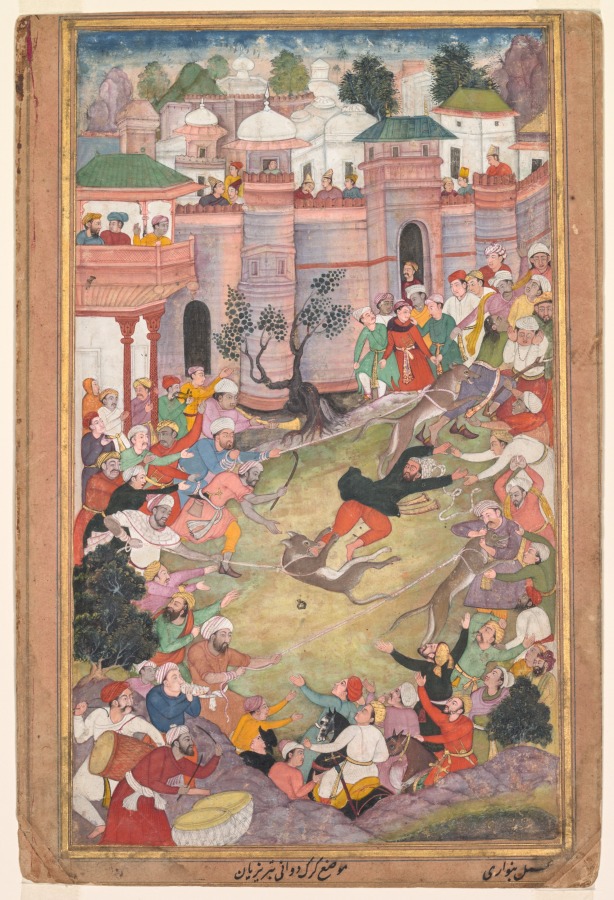
The game of wolf-running in Tabriz, from an Akbar-nama (Book of Akbar)
Cleveland Museum of Art
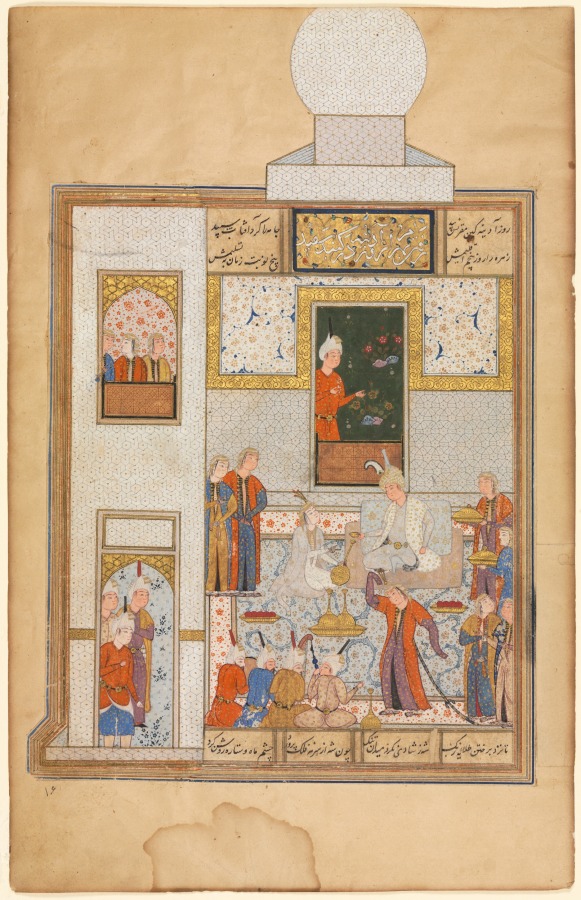
Bahram Visits the White Domed Pavilion on Friday, illustrated with text in Khamsa of Nizami (verso), from a Haft Paykar (Seven Portraits) of Nizami
Cleveland Museum of Art
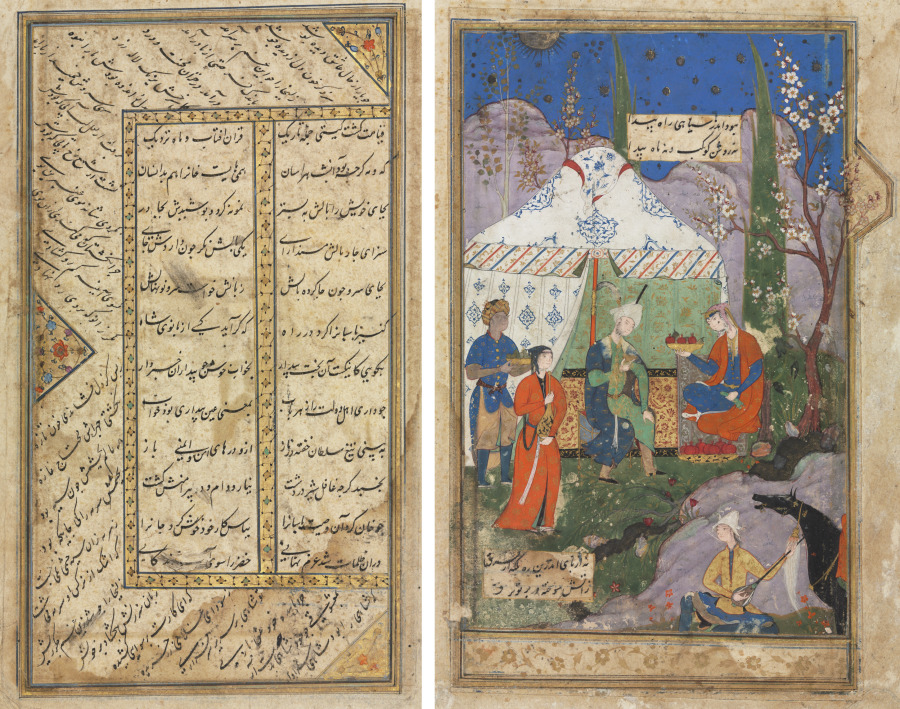
An Episode from the Story of the Sasanian King Khusrau and His Beloved Shirin, from a Khamsa (Quintet) of Nizami (1141–1209) (verso); Persian verses from a Haft Awrang (Seven Thrones) of Jami (d. 1492) (recto)
Cleveland Museum of Art
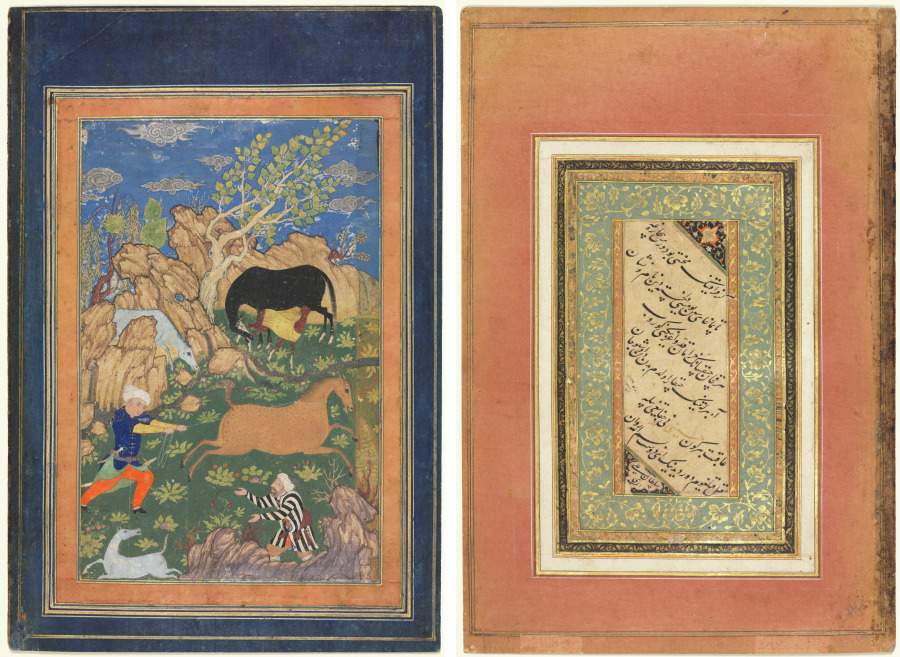
Rustam Lassoing his Horse, Rakhsh, in a Landscape (recto); Calligraphy, Persian Verses (verso)
Cleveland Museum of Art
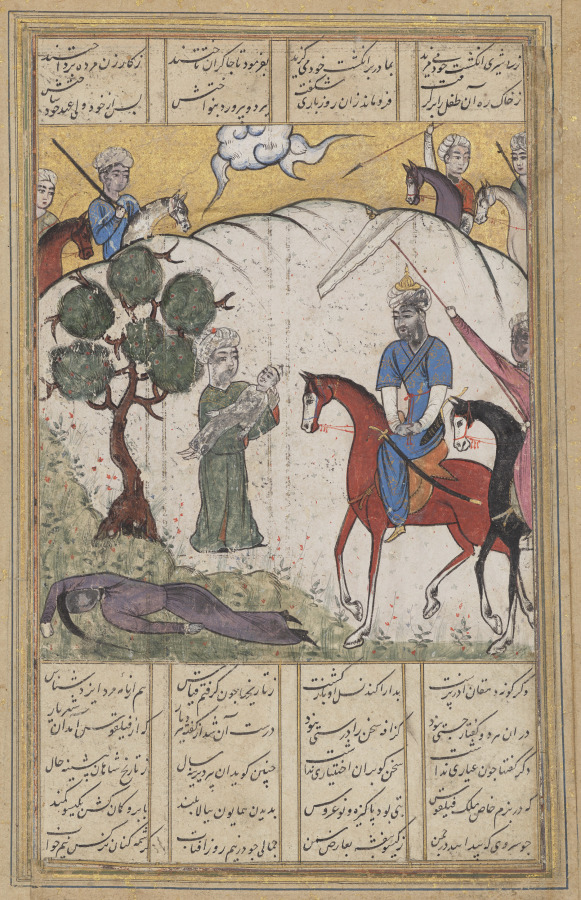
A scene of the life of Alexander from the Sharaf-nameh
Cleveland Museum of Art

Tahmineh Visits Rustam
Minneapolis Institute of Art
Page from a Shah-nama (Book of Kings) of Firdausi (Persian, about 934–1020)
Cleveland Museum of Art
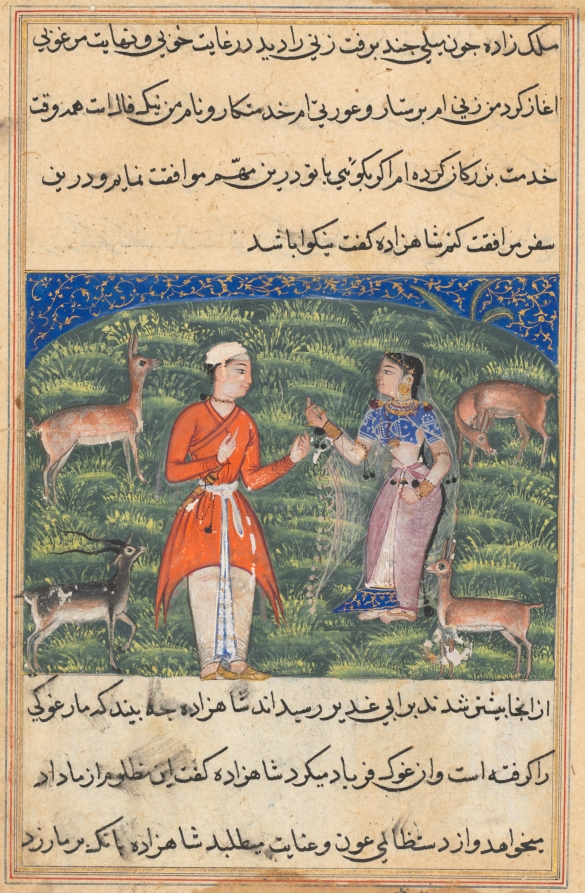
Nikfal, the fortune of the prince in the form of a woman, offers to accompany him, from a Tuti-nama (Tales of a Parrot): Eighteenth Night
Cleveland Museum of Art