Minneapolis Institute of Art
Hexagonal Wall Tile
SyriaLinkedCulture matchlcp-c6d3323a6948
- Date
- 16th century
- Medium
- Earthenware with underglaze blue and turquoise
- Department
- Asian Art
- Institution
- Minneapolis Institute of Art
- Object ID
- 124
What the image shows
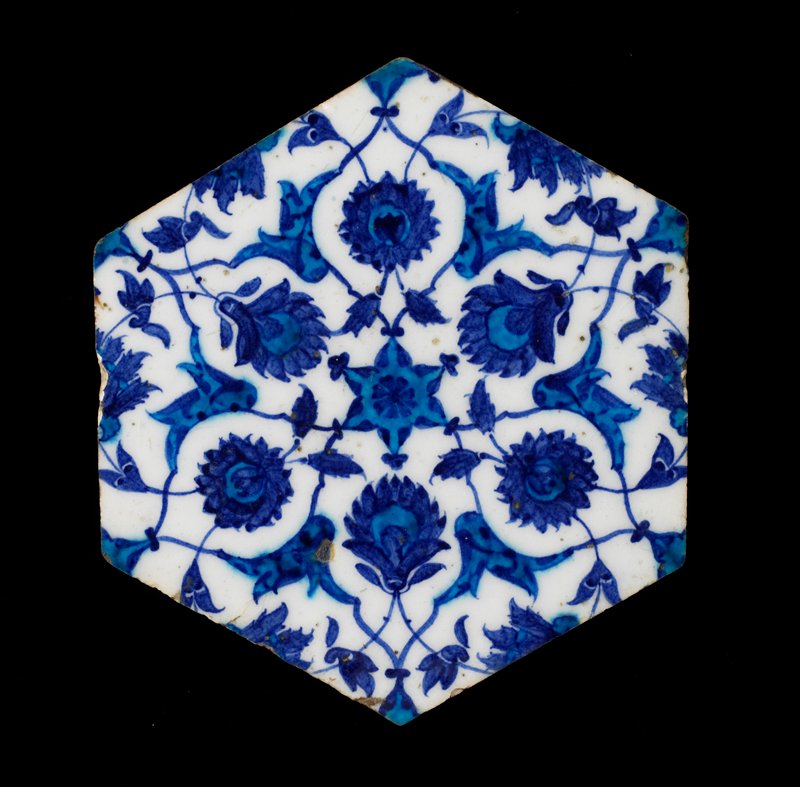
A hexagonal tile with intricate blue floral patterns on a white background.
Generated by LinkedCulture from the photograph alone, without the museum’s catalogue text (Qwen/Qwen2.5-VL-7B-Instruct), and not yet reviewed by a person. It describes the picture, not the object’s history, and it is not part of the museum’s record.
From the Minneapolis Institute of Art record
Architectural tile work reached its greatest artistic expression in the Islamic countries. Glazed tile used as wall decoration became popular throughout the Middle East during the Seljuk dynasty (1038-1157). Animal figures and purely geometric motifs were applied to tiles glazed in both luster and polychrome techniques into the fifteenth century. Blue-and-white decor became universally popular with the Ottomans, however, and tile work in two shades of blue, such as the example shown here, was produced at Damascus in Syria beginning around 1500. Several Turkish mosques and palaces of the sixteenth and seventeenth centuries incorporated similar tiles in their decor. Removed from its original setting, the tile loses much of its decorative impact, but thousands of such pieces adjacent to each other created a brilliant interior. Asia
The authoritative record is held by Minneapolis Institute of Art. LinkedCulture surfaces this object and its connections; it does not alter institutional metadata.
Get printable QR codesHide QR codes
Open QR codes for this object page and the museum record. They stay collapsed until needed.
Provenance & credit
As published by the source institution. Coverage varies — not every institution's open-data feed includes ownership history.
- Credit line
- The William Hood Dunwoody Fund
Related across collections
Semantically similar works from Minneapolis Institute of Art and other institutions.