Minneapolis Institute of Art
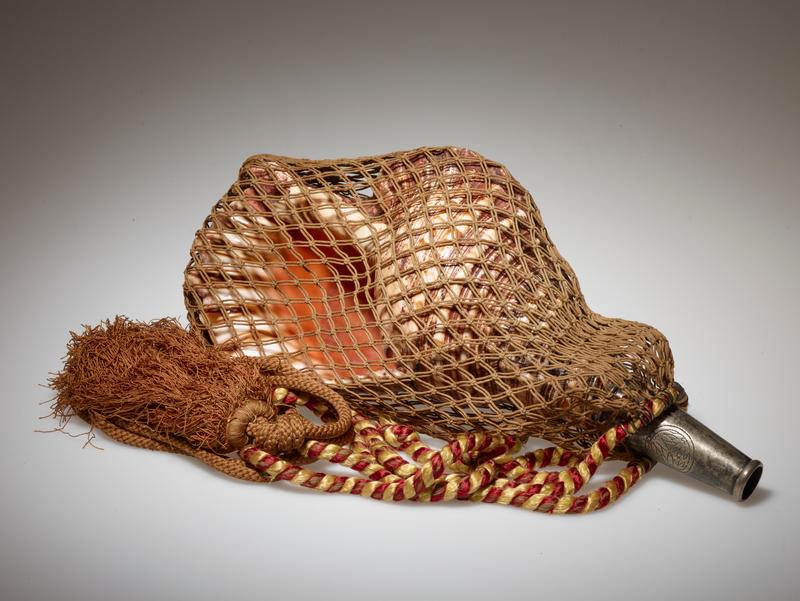
Battle horn
JapanLinkedCulture matchlcp-9cfc54f21d2c
- Date
- 19th century
- Medium
- Conch shell, silver, hemp, silk
- Department
- Asian Art
- Institution
- Minneapolis Institute of Art
- Object ID
- 147199
From the Minneapolis Institute of Art record
Conch shells (horagai) have been used in Japan as instruments for Buddhist rituals since the 8th or 9th century. Besides the war drum and the gong, they were also used as battle horns (gunkai or jingai) to conduct troop movements. Since it was used in outdoor terrain, mesh, cord, and sometimes tassels in flamboyant colors were preferred. The conch shell was fitted with a net covering and cord allowing it to be easily carried. In each feudal clan there was one family assigned the duty of blowing the horn and this function was passed down from generation to generation. The mouthpiece of this gunkai is made of silver and engraved on two sides with a family crest of 15 bamboo leaves in a circle (maru ni jūgomai sasa 丸に十五枚笹). This crest was used by several different families throughout Japan and it is therefore not possible today to firmly assign the object to one family. Asia
The authoritative record is held by Minneapolis Institute of Art. LinkedCulture surfaces this object and its connections; it does not alter institutional metadata.
Get printable QR codesHide QR codes
Open QR codes for this object page and the museum record. They stay collapsed until needed.
Provenance & credit
As published by the source institution. Coverage varies — not every institution's open-data feed includes ownership history.
- Credit line
- Gift of Robert and Kyoko Winter
Related across collections
Semantically similar works from Minneapolis Institute of Art and other institutions.