Art Institute of Chicago
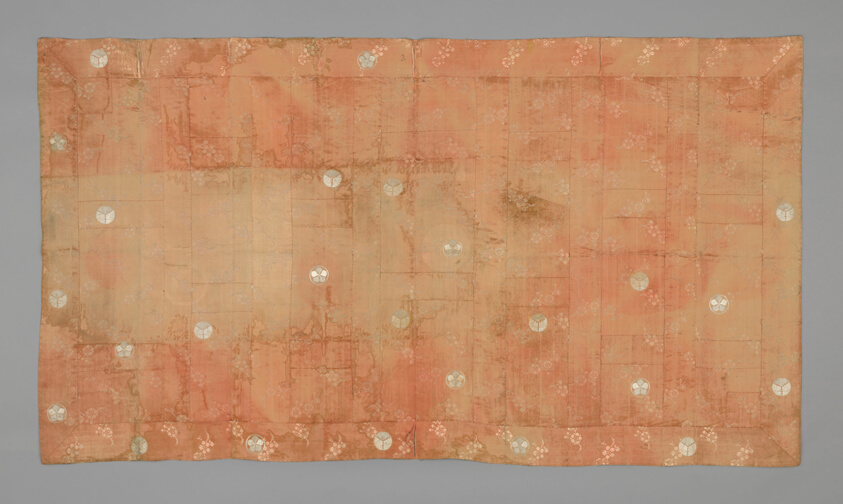
Kesa
Japan
- Date
- 19th century, Edo period (1789–1868)/ Meiji period (1868–1912)
- Medium
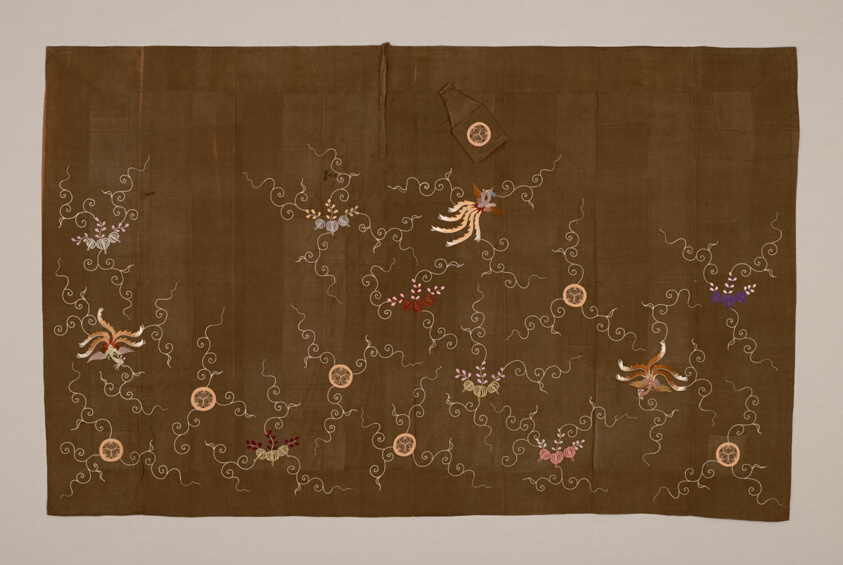
- Silk; plain weave self-patterned by rows of gauze crossings, embroidered with silk
- Culture
- Japan
- Department
- Textiles
- Institution
- Art Institute of Chicago
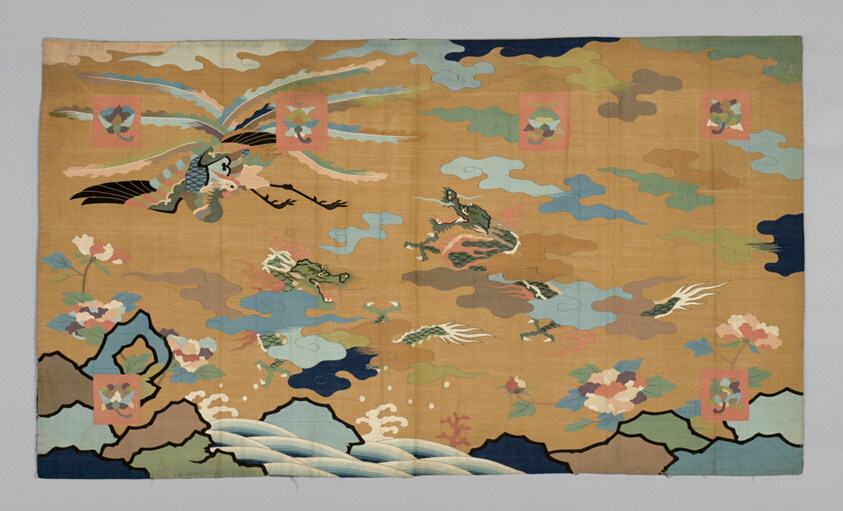
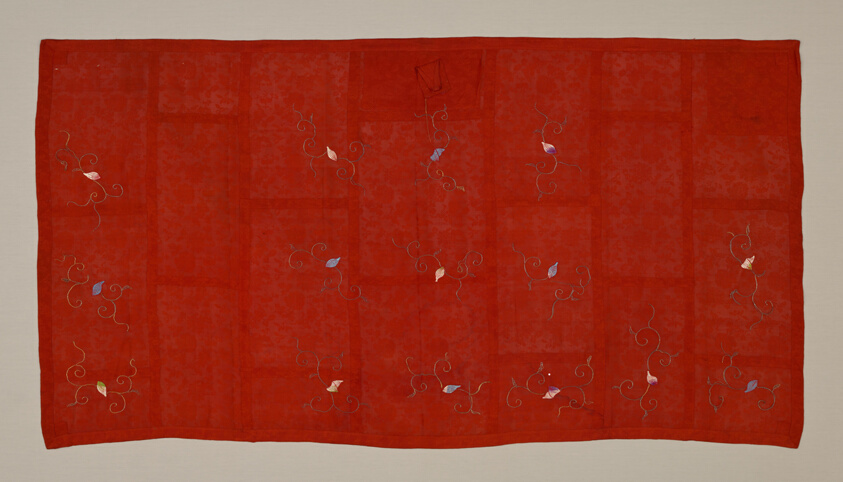
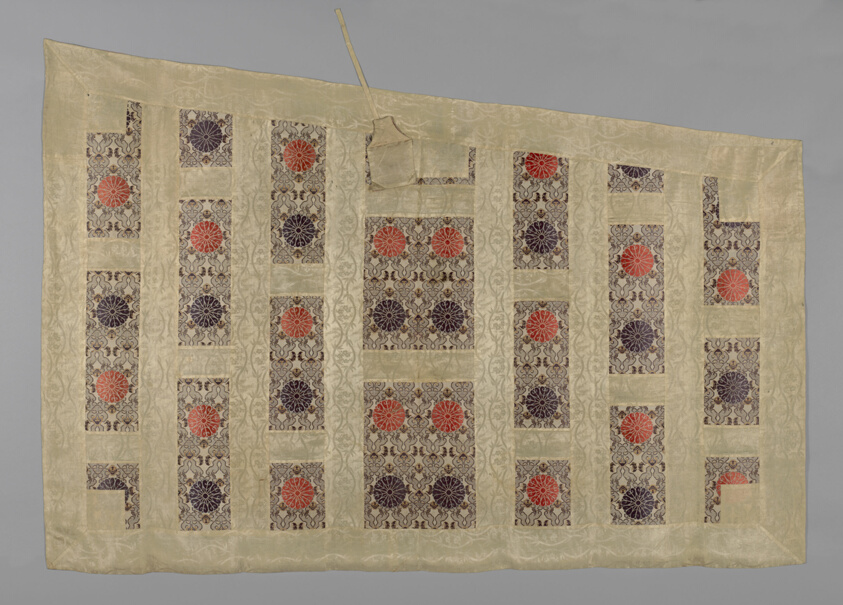
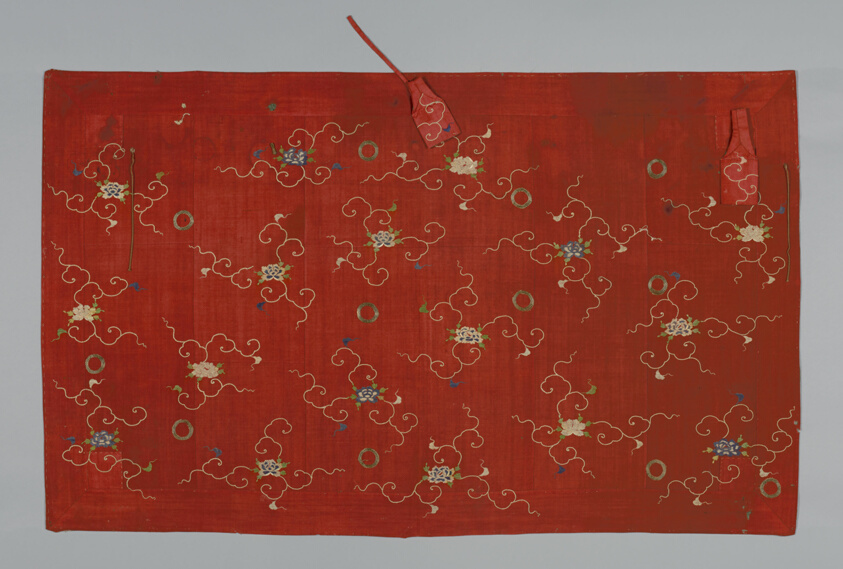
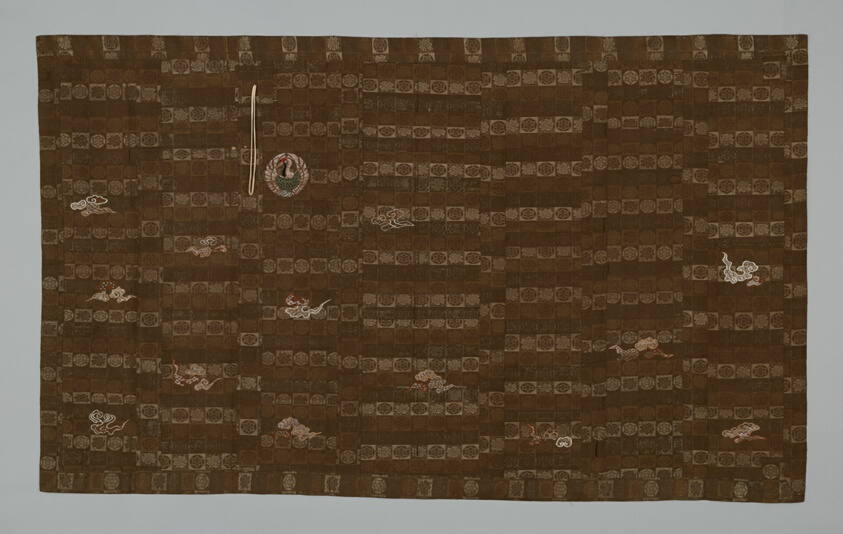
While this work may initially appear to be a decorative hanging showing various forms of marine life, closer inspection reveals that it is indeed a kesa pieced into a composition of seven columns. The embroidered decoration is not aquatic at all but rather consists of three varieties of motifsa phoenix, Paulownia flowers and leaves, and the family crest of the Tokugawa family, which ruled Japan during the Edo period. From each of these motifs emerge three or four curving tendrils. Unpatterned areas were planned to fall in the folds when the kesa was worn.
The authoritative record is held by Art Institute of Chicago. LinkedCulture surfaces this object and its connections; it does not alter institutional metadata.
Related across collections
Semantically similar works from Art Institute of Chicago and other institutions.
Kesa
Art Institute of Chicago
Kesa
Art Institute of Chicago
Kesa
Art Institute of Chicago
Kesa
Art Institute of Chicago
Kesa
Art Institute of Chicago
Kesa
Art Institute of Chicago
Kesa
Art Institute of Chicago
Kesa
Art Institute of Chicago
Kesa
Art Institute of Chicago
Kesa
Art Institute of Chicago
Kesa
Art Institute of Chicago
Kesa
Art Institute of Chicago