Art Institute of Chicago
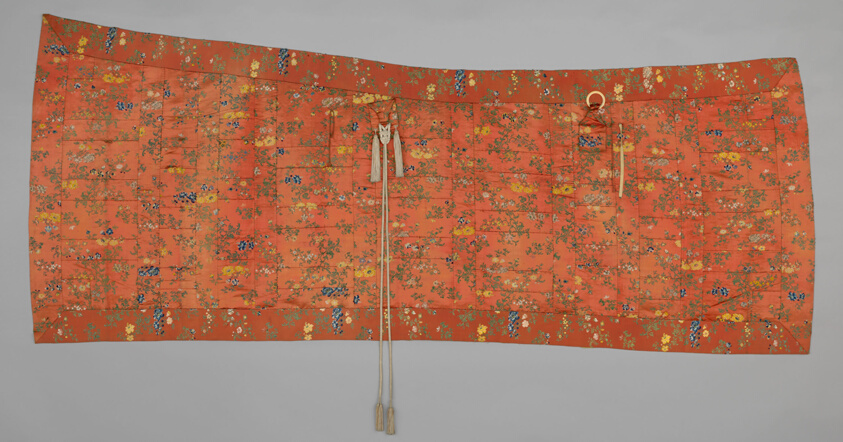
Kesa
Japan
- Date
- Early 19th century, Late Edo period (1789–1868)
- Medium
- Silk; satin weave with supplementary patterning wefts; silk cords and tassels; ivory ring
- Culture
- Japan
- Department
- Textiles
- Institution
- Art Institute of Chicago
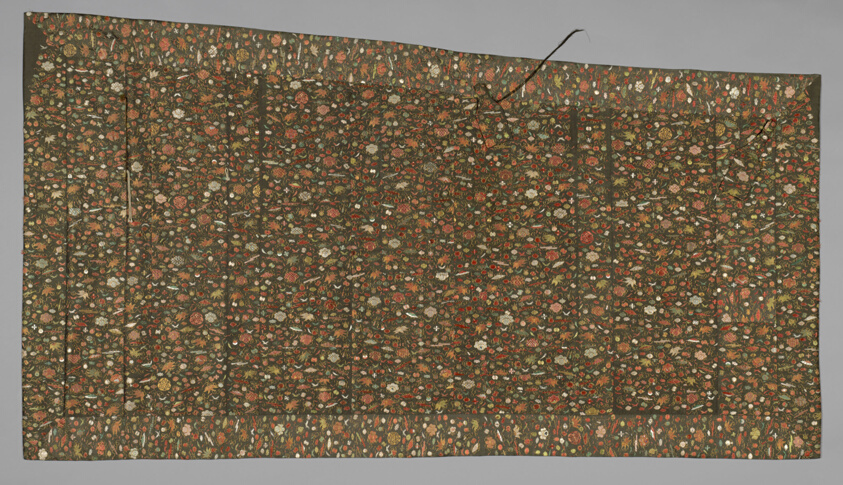
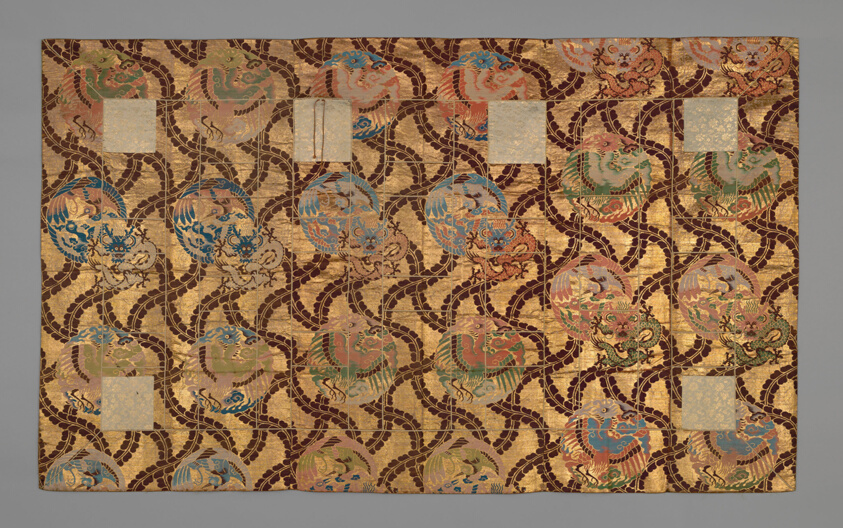
This kesa was among the first to enter the Art Institute's collection, in 1895. It is noteworthy for its large size, state of completeness (with ring, loop, cords, and tassels), and its pattern showing a profusion of European and Asian flowers. The pattern was made in the kara-ori technique, in which weft-float brocading resembles embroidery. An inscription on the lining states that the kesa was worn by the grand priest of a Buddhist temple.
The authoritative record is held by Art Institute of Chicago. LinkedCulture surfaces this object and its connections; it does not alter institutional metadata.
Linked open data
Authority identifiers that link this record into the wider web of cultural data — stable references you can follow to the source.
- Object type
- AAT300312158
Related across collections
Semantically similar works from Art Institute of Chicago and other institutions.

Buddhist priest's robe (kesa)
Minneapolis Institute of Art
Kesa
Art Institute of Chicago

Buddhist priest's robe (kesa)
Minneapolis Institute of Art

Buddhist priest’s robe with design of chrysanthemums and peonies
Minneapolis Institute of Art
Kesa
Art Institute of Chicago
Kesa
Art Institute of Chicago
Kesa
Art Institute of Chicago
Buddhist Vestment (Kesa)
Cleveland Museum of Art
Kesa
Art Institute of Chicago
Kesa
Art Institute of Chicago
Kesa
Art Institute of Chicago
Kesa
Art Institute of Chicago