Art Institute of Chicago
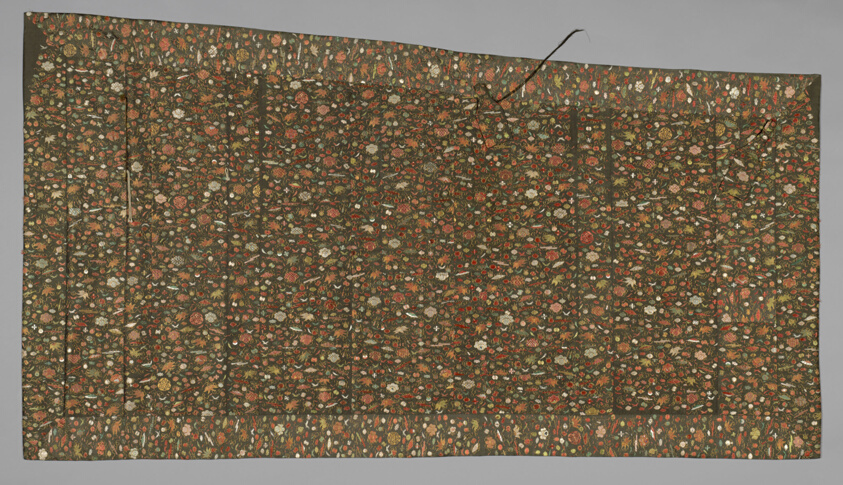
Kesa
Japan
- Date
- 1750/1800, Edo period (1615–1868)
- Medium
- Silk; plain weave, embroidered with silk and gilt-paper-strip-wrapped silk; silk cords
- Culture
- Japan
- Department
- Textiles
- Institution
- Art Institute of Chicago
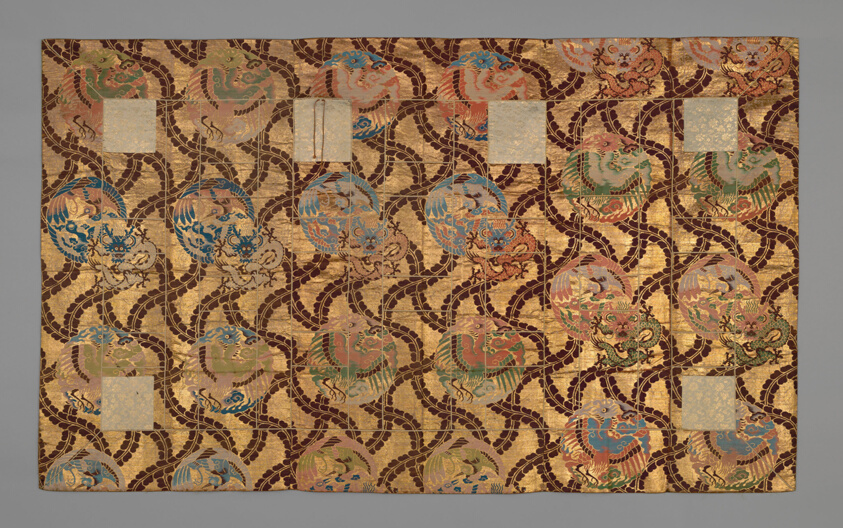
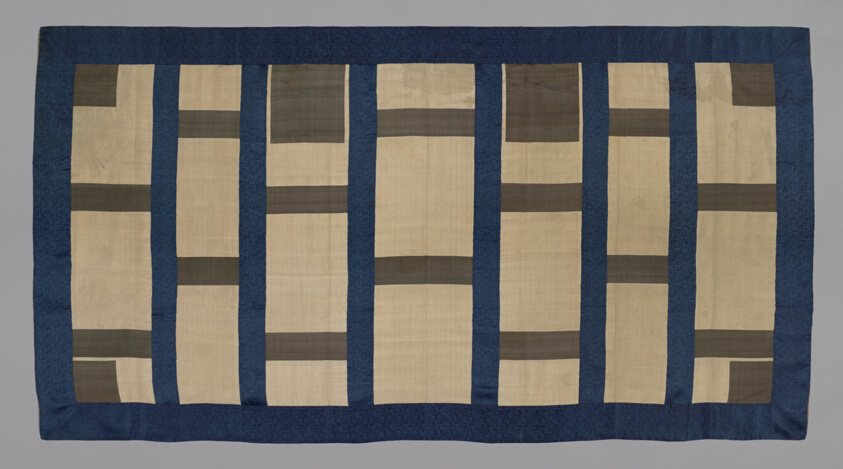
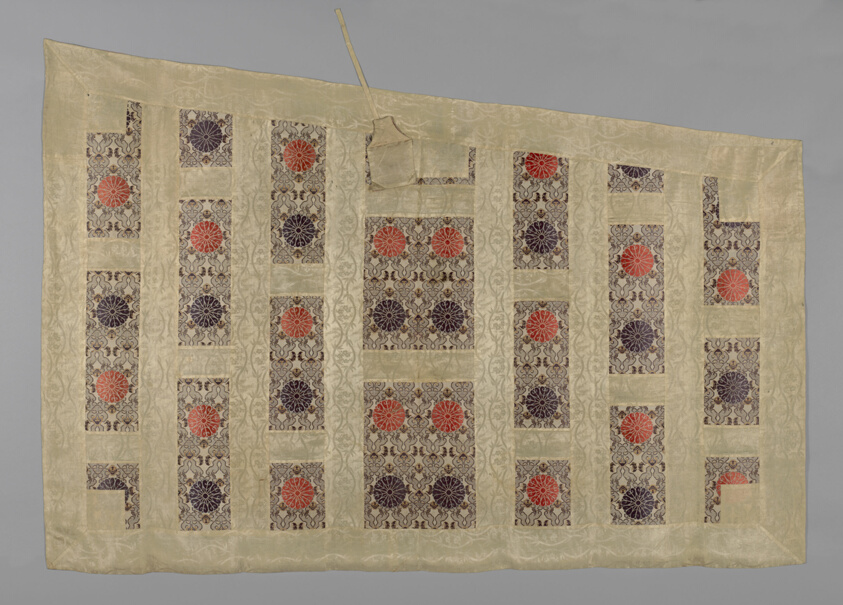
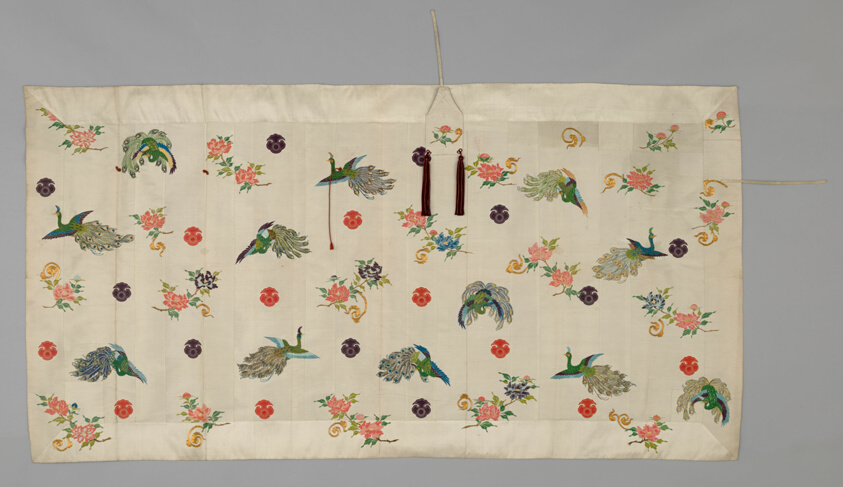
This large kesa was made for use by either the Jodo or the Rinzai sect from an elaborately embroidered kosode , or kimono with small sleeves, that was worn off the shoulders and held at the waist by a belt or sash. Together with a sheer white kimono, it was part of the formal summer dress favored by women of the samurai class. The pattern of the kesa fabric consists of the symbols of riches and good fortune, the so-called treasures ( takarazukushi ). The gold thread was made of gilt-paper strips, but in this work, unlike kinran , the strips were cut extremely fine and wrapped around a silk core.
The authoritative record is held by Art Institute of Chicago. LinkedCulture surfaces this object and its connections; it does not alter institutional metadata.
Linked open data
Authority identifiers that link this record into the wider web of cultural data — stable references you can follow to the source.
- Object type
- AAT300014063
Related across collections
Semantically similar works from Art Institute of Chicago and other institutions.
Kesa
Art Institute of Chicago
Kesa
Art Institute of Chicago
Kesa
Art Institute of Chicago
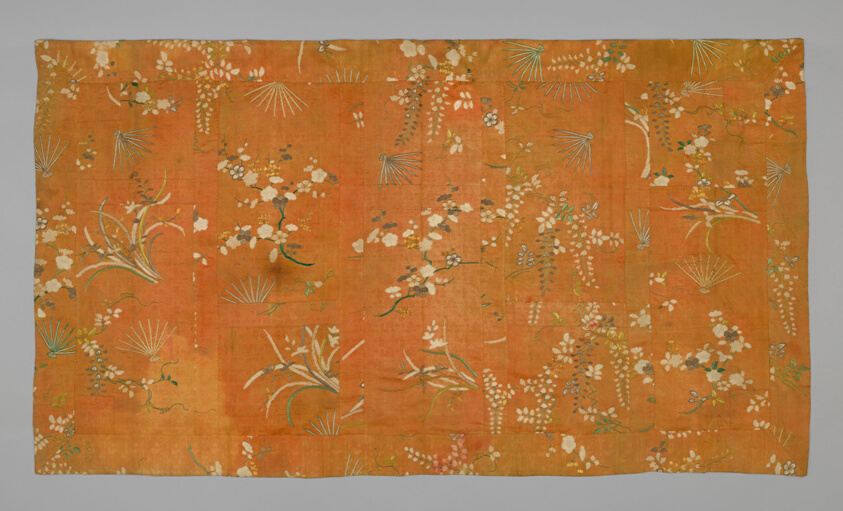
Kesa
Art Institute of Chicago
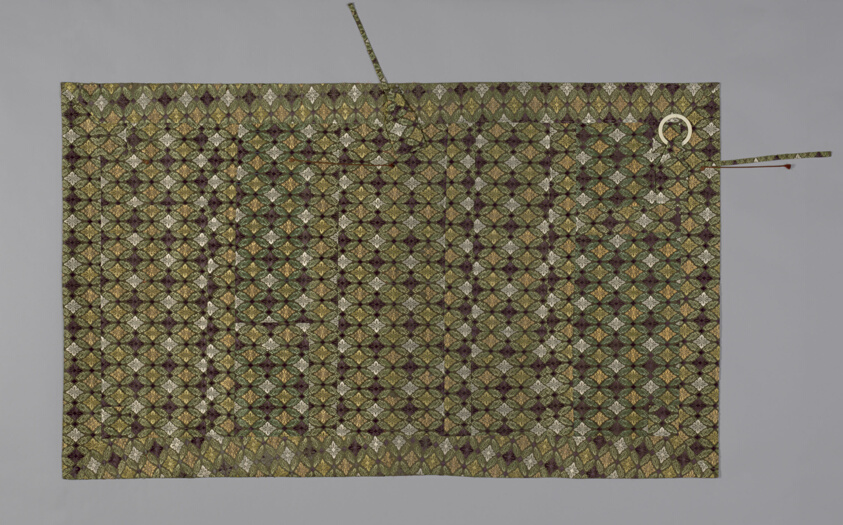
Kesa
Art Institute of Chicago
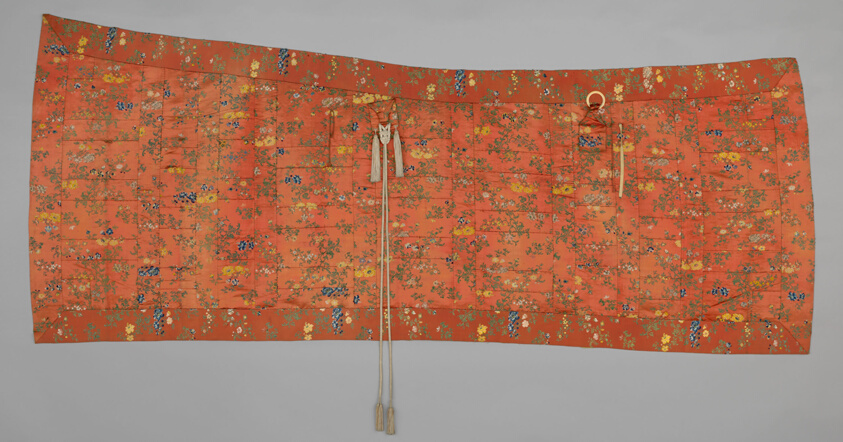
Kesa
Art Institute of Chicago
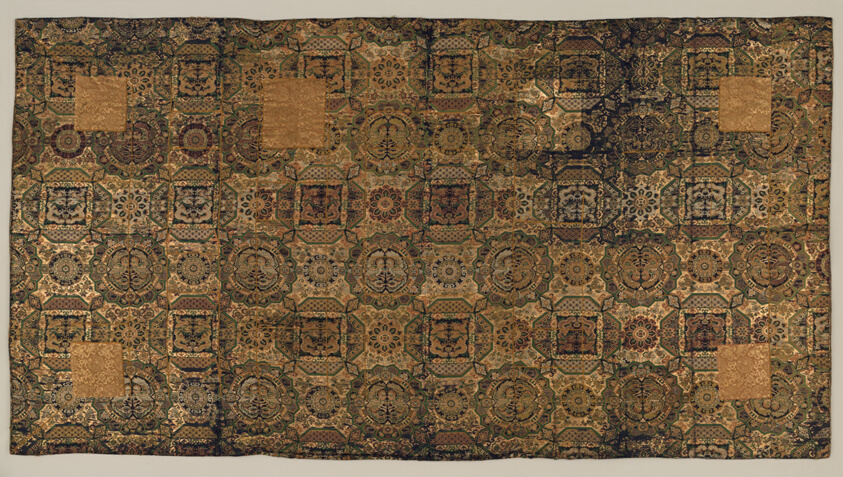
Kesa
Art Institute of Chicago
Kesa
Art Institute of Chicago

Buddhist priest's robe (kesa)
Minneapolis Institute of Art
Kesa
Art Institute of Chicago
Kesa
Art Institute of Chicago
Kesa
Art Institute of Chicago