Art Institute of Chicago
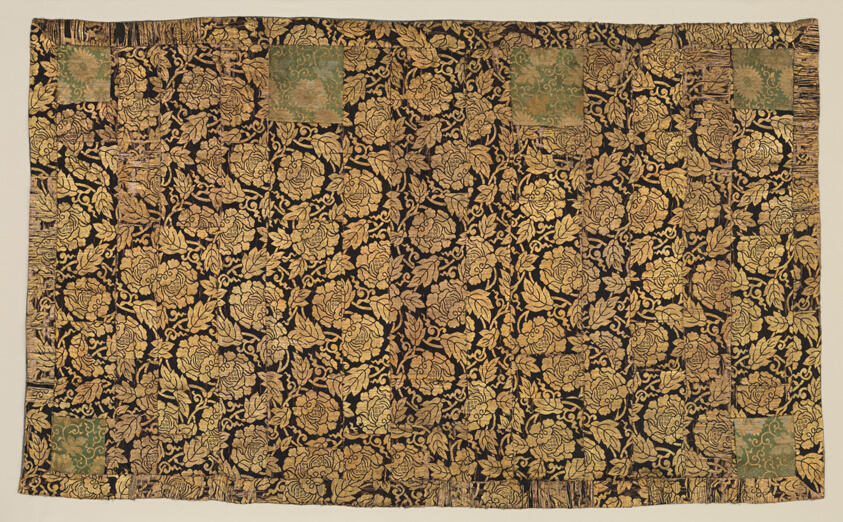
Kesa
Japan
- Date
- First half of the 19th century, Late Edo period (1789–1868)
- Medium
- Silk and gilt-paper strip; twill weave with secondary binding warps and supplementary patterning wefts; silk tassels
- Culture
- Japan
- Department
- Textiles
- Institution
- Art Institute of Chicago
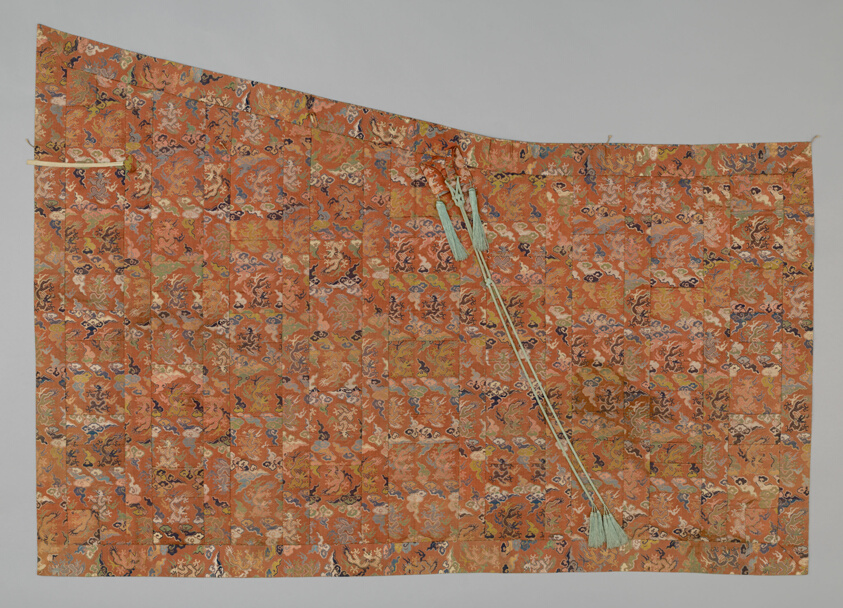
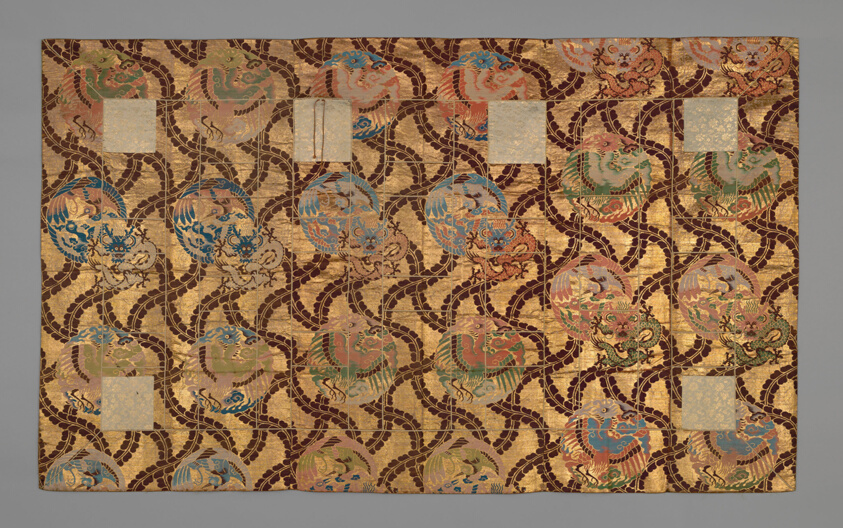
The fabric for this trapezoidal robe made for the Jodo sect is a famous type known in Japan as nishiki kinran a brocade that combines silk in various rich colors ( nishiki ) with flat gilt-paper thread ( kinran ). The pattern combines two types of dragons with two types of cloud designs in a Chinese manner. An inscription on the lining records that the robe was donated to the temple on February 14th (no year cited) by the presiding priest, a member of the 23rd generation of the family that owned the temple.
The authoritative record is held by Art Institute of Chicago. LinkedCulture surfaces this object and its connections; it does not alter institutional metadata.
Linked open data
Authority identifiers that link this record into the wider web of cultural data — stable references you can follow to the source.
- Object type
- AAT300014063
Related across collections
Semantically similar works from Art Institute of Chicago and other institutions.
Kesa
Art Institute of Chicago
Kesa
Art Institute of Chicago

Buddhist priest's robe (kesa)
Minneapolis Institute of Art

Buddhist priest's robe (kesa)
Minneapolis Institute of Art

Buddhist priest's robe (kesa)
Minneapolis Institute of Art
Kesa
Art Institute of Chicago
Kesa
Art Institute of Chicago
Kesa
Art Institute of Chicago
Kesa
Art Institute of Chicago
Kesa
Art Institute of Chicago

Buddhist priest’s robe with design of chrysanthemums and peonies
Minneapolis Institute of Art
Kesa
Art Institute of Chicago