Art Institute of Chicago
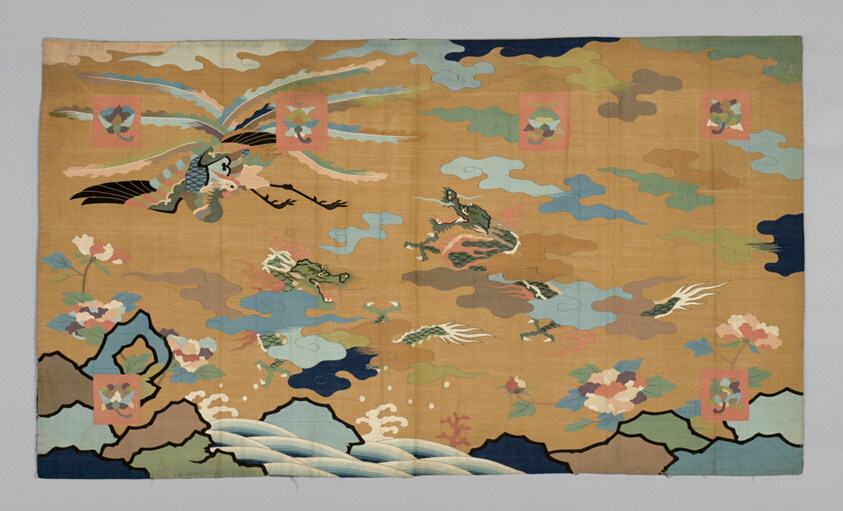
Kesa
Japan
- Date
- Edo period (1615–1868), Late 18th century
- Medium
- Silk, gilt-paper-strip-wrapped silk, and peacock-feather-wrapped silk; tapestry weave
- Culture
- Japan
- Department
- Textiles
- Institution
- Art Institute of Chicago
During the Edo period, artists took liberties with some of the long-established traditions related to kesa. For example, the patchwork process was sometimes ignored in favor of a single uncut fabric with seams implied by inwoven lines or added cording. The preferred technique for these uncut pictorial panels was tapestry weave. In this example, which is particularly Chinese in style and subject, no such lines have been added, suggesting it was used as a hanging for meditation purposes in the monastery.
The authoritative record is held by Art Institute of Chicago. LinkedCulture surfaces this object and its connections; it does not alter institutional metadata.
Linked open data
Authority identifiers that link this record into the wider web of cultural data — stable references you can follow to the source.
- Object type
- AAT300014063
Related across collections
Semantically similar works from Art Institute of Chicago and other institutions.
Kesa
Art Institute of Chicago
Kesa
Art Institute of Chicago
Kesa
Art Institute of Chicago
Kesa
Art Institute of Chicago
Kesa
Art Institute of Chicago
Buddhist Vestment (Kesa)
Cleveland Museum of Art

Buddhist priest’s robe with design of chrysanthemums and peonies
Minneapolis Institute of Art
Kesa
Art Institute of Chicago
Kesa
Art Institute of Chicago
Kesa
Art Institute of Chicago
Kesa
Art Institute of Chicago
Kesa
Art Institute of Chicago