Art Institute of Chicago
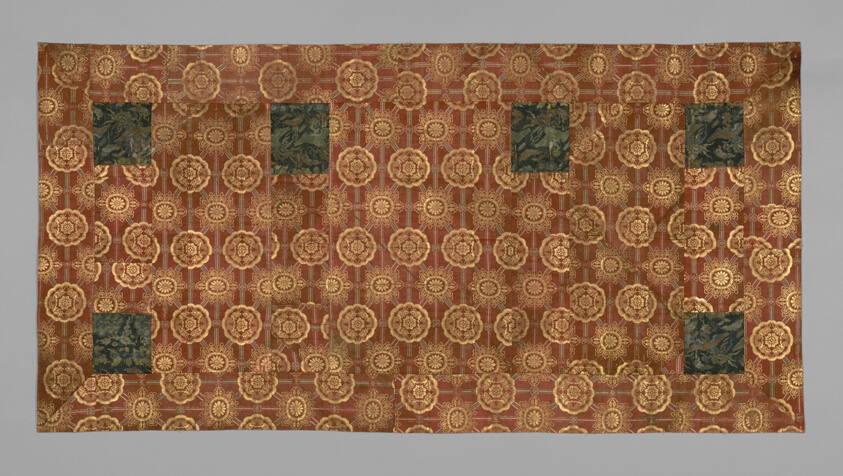
Kesa
Japan
- Date
- Early or mid–19th century, Edo period (1789–1868)
- Medium
- Silk and gilt-paper strip; twill and satin weaves with secondary binding warps and supplementary patterning wefts
- Culture
- Japan
- Department
- Textiles
- Institution
- Art Institute of Chicago
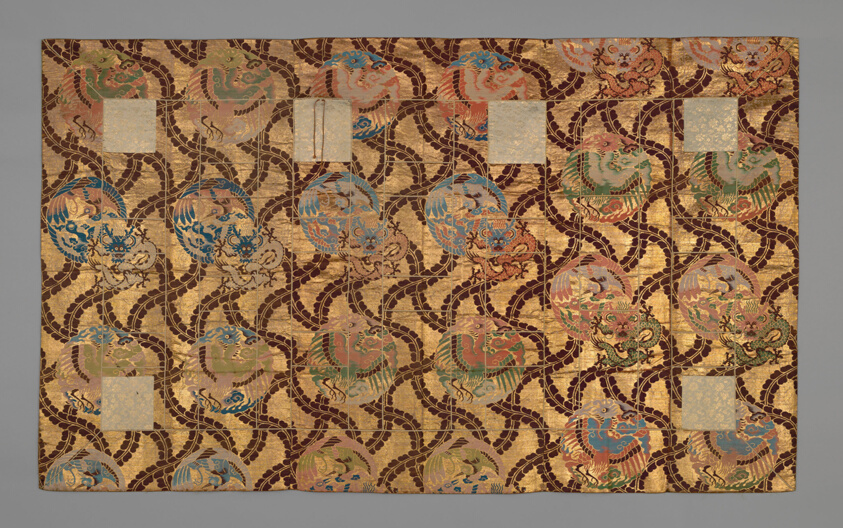
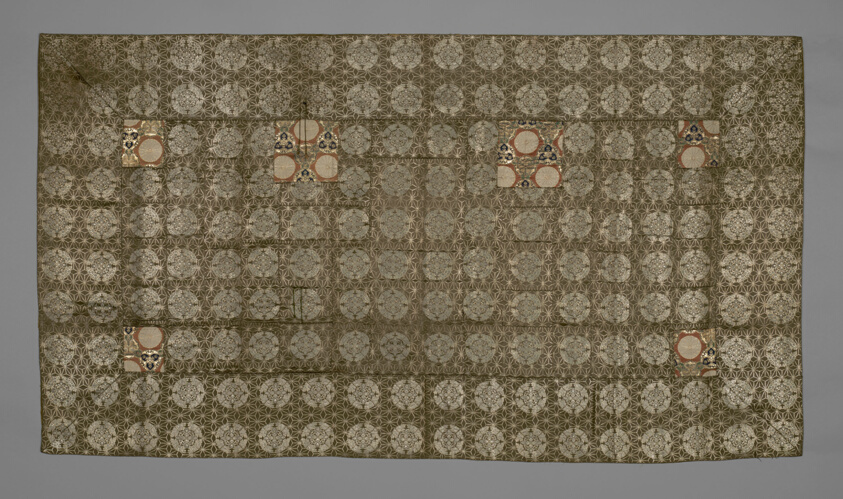
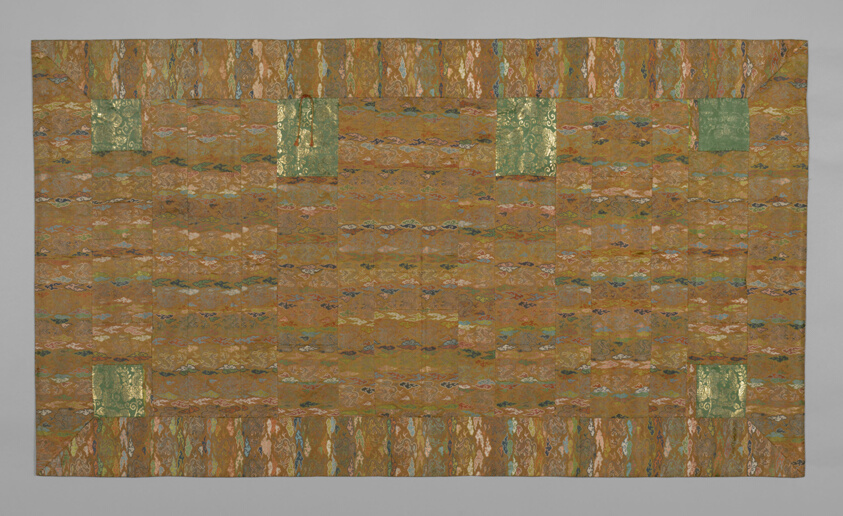
This attractive vestment is a good example of adaptive reuse. The pattern of the main fabric was originally used for hangings and furniture covers, and the presence of soil lines and mended areas suggests that this piece had been used as a cover. Multiple seams in the border fabric as well as the incorporation of the six squares in different material in place ofrather than on top ofthe main fabric indicate that the principal fabric was in short supply and had to be pieced judiciously.
The authoritative record is held by Art Institute of Chicago. LinkedCulture surfaces this object and its connections; it does not alter institutional metadata.
Linked open data
Authority identifiers that link this record into the wider web of cultural data — stable references you can follow to the source.
- Object type
- AAT300014063
Related across collections
Semantically similar works from Art Institute of Chicago and other institutions.
Kesa
Art Institute of Chicago
Kesa
Art Institute of Chicago
Kesa
Art Institute of Chicago
Kesa
Art Institute of Chicago
Kesa
Art Institute of Chicago
Kesa
Art Institute of Chicago
Kesa
Art Institute of Chicago
Kesa
Art Institute of Chicago
Kesa
Art Institute of Chicago
Kesa
Art Institute of Chicago
Kesa
Art Institute of Chicago
Kesa
Art Institute of Chicago