Art Institute of Chicago
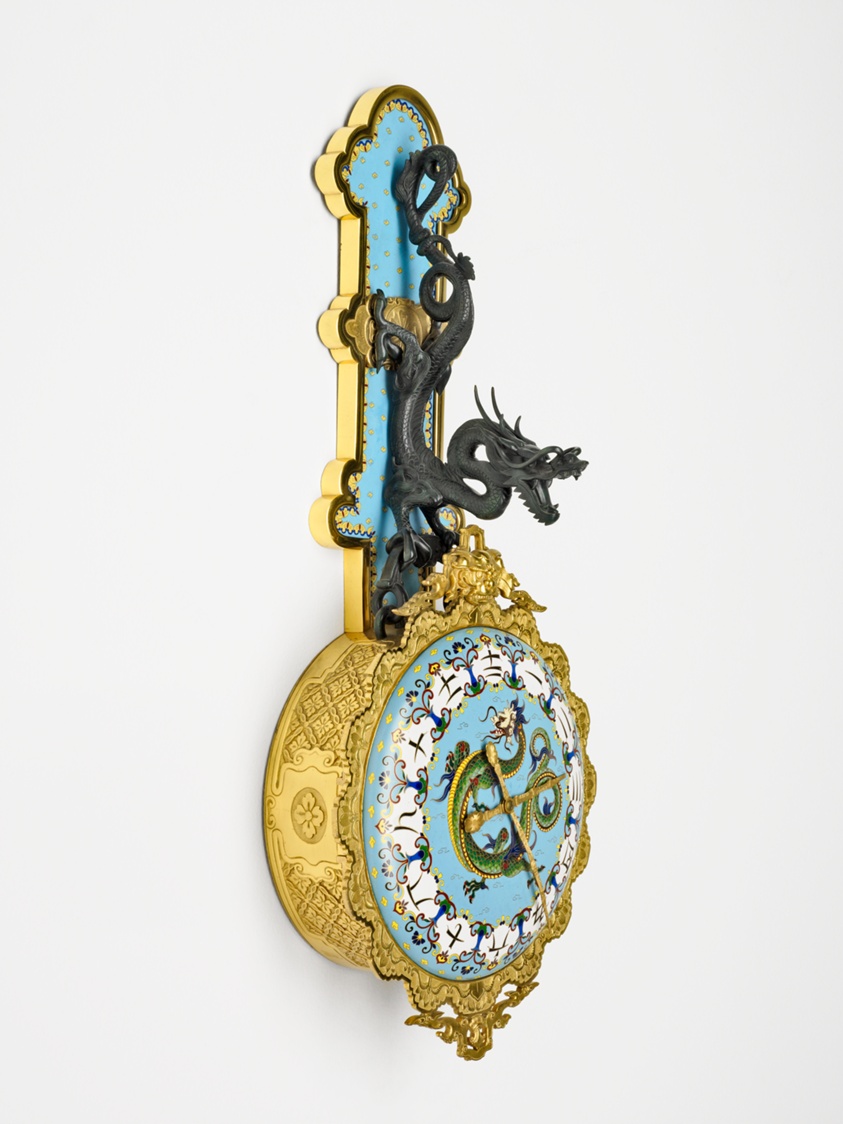
Wall Clock
Probably made by L’Escalier de Cristal (1802–1923)
- Date
- c. 1880
- Medium
- Bronze, gilded bronze, and cloisonné enamel
- Culture
- France
- Department
- Applied Arts of Europe
- Institution
- Art Institute of Chicago
This bronze and enamel clock originally came to New York in about 1880 shortly after it had been made in Paris by the firm L’Escalier de Cristal (The Crystal Staircase). It had been acquired for the richest man in America, the railroad magnate William H. Vanderbilt, whose wealth was then estimated at $200 million (about $40 billion in today’s money), and whose lavish mansion was then under construction at 640 Fifth Avenue. Most of the furnishings for the Vanderbilt home were made by Herter Brothers, America’s leading interior decorators, but selected works of art, including this clock, were imported from abroad. Vanderbilt only got to enjoy his opulent home for three years before his death in 1885. The clock was a central adornment for the Japanese Parlor, one of the most elaborate and exotic interiors made by Herter Brothers. The room deliberately contrasted with the rest of the interiors, which were firmly rooted in European historical styles. Although dubbed a “Japanese” clock, many of the decorations are actually interpretations of Chinese motifs: the dragons in bronze and cloisonné (inlaid enamel) are traditional Chinese symbols of good fortune, and the numbers on the clock face are Chinese.
The authoritative record is held by Art Institute of Chicago. LinkedCulture surfaces this object and its connections; it does not alter institutional metadata.
Linked open data
Authority identifiers that link this record into the wider web of cultural data — stable references you can follow to the source.
- Object type
- AAT300411548
Related across collections
Semantically similar works from Art Institute of Chicago and other institutions.
Wall Clock
Art Institute of Chicago

Wall Clock (Pendule à répétition)
Getty Museum
Timepiece
Art Institute of Chicago

Clock
Minneapolis Institute of Art

Wall Clock on Bracket
Getty Museum
Wall Clock
Cleveland Museum of Art

Mantel clock
Minneapolis Institute of Art
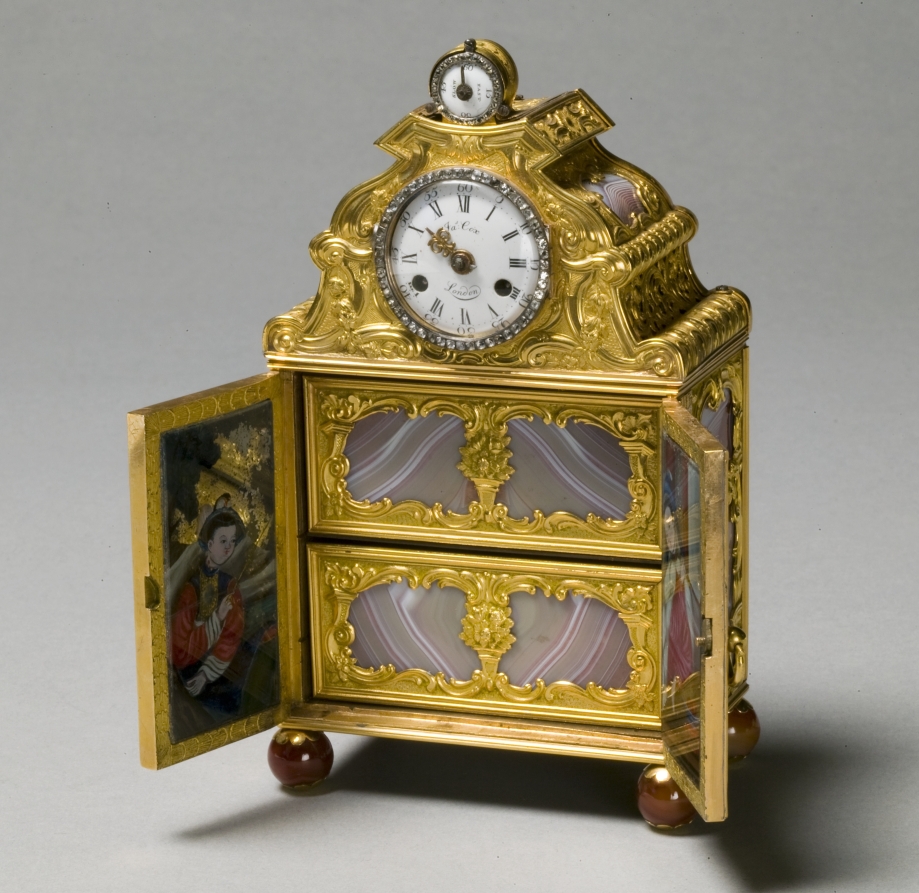
Cabinet Clock
Cleveland Museum of Art

Wall clock with bracket
Minneapolis Institute of Art

Wall Clock (pendule d'alcove)
Getty Museum
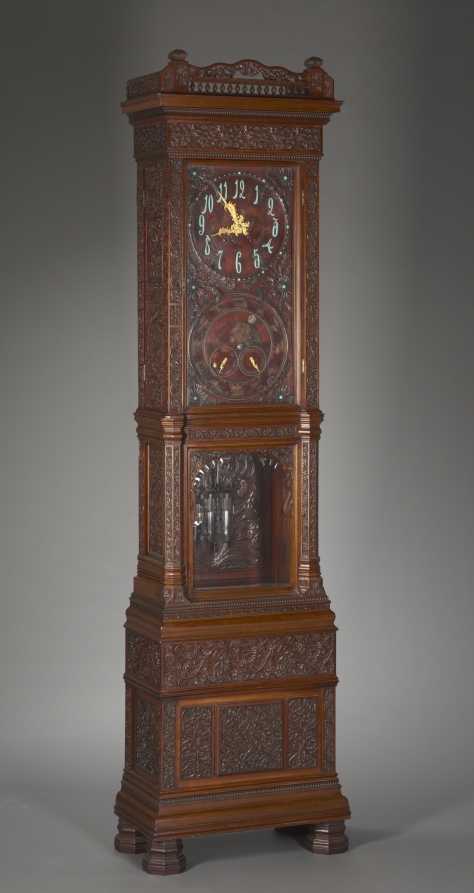
Tall Clock
Cleveland Museum of Art

Clock on Bracket (Cartel sur une console)
Getty Museum