Cleveland Museum of Art
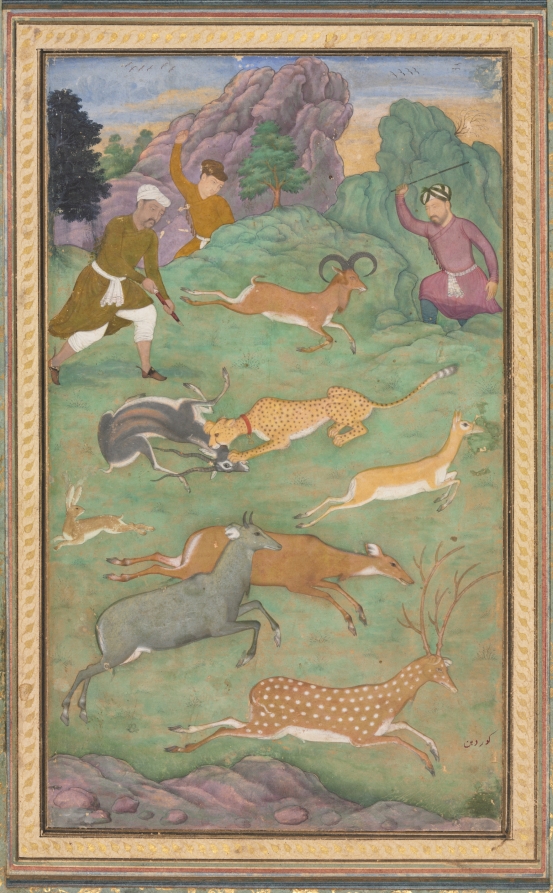
Antelope and deer hunt
Govardhan
- Date
- c. 1602–4
- Medium
- Gum tempera and gold on paper
- Culture
- Mughal India, Allahabad, made for Prince Salim (1569–1627)
- Department
- Indian and Southeast Asian Art
- Institution
- Cleveland Museum of Art
The Mughals used trained cheetahs, such as this one wearing a red collar, to capture prey during hunting expeditions in the wilderness. The metaphor of the hunt was also a potent image in Persian literature, in which the protagonist finally achieves a desired goal. The central image of the cheetah catching the black buck—a frequently repeated visual trope—resonates with the desire of Prince Salim (who was passionate about hunting) to capture the throne of the Mughal Empire from Akbar, his father. Between 1600 and 1605, when Prince Salim set up his own royal court in defiance of his father, he convinced some imperial artists to join him. The young Govardhan, a Hindu who would go on to achieve high stature in the atelier of the next two emperors, was one of them. The gray antelope in the foreground is called a nilgai and is the largest antelope in Asia.
The authoritative record is held by Cleveland Museum of Art. LinkedCulture surfaces this object and its connections; it does not alter institutional metadata.
Related across collections
Semantically similar works from Cleveland Museum of Art and other institutions.
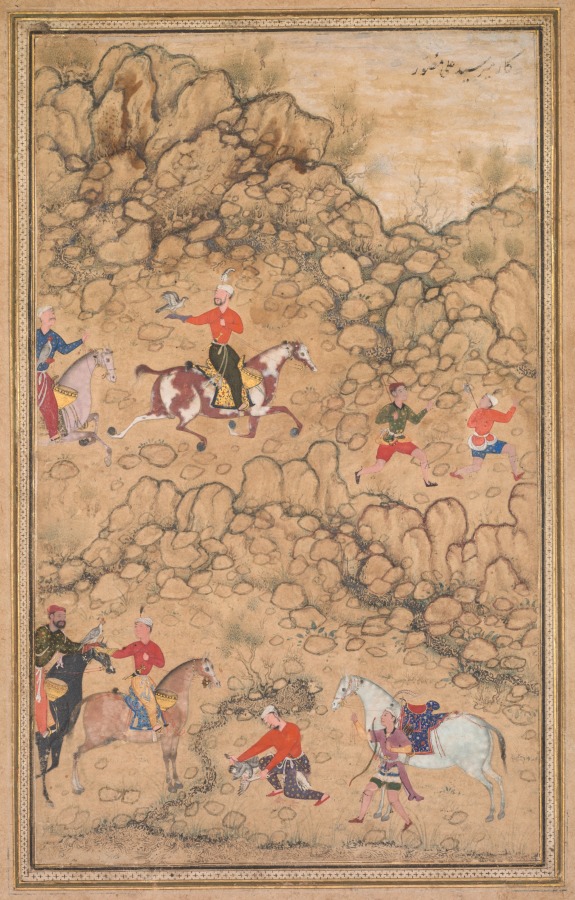
Hunting with falcons in a landscape (recto)
Cleveland Museum of Art
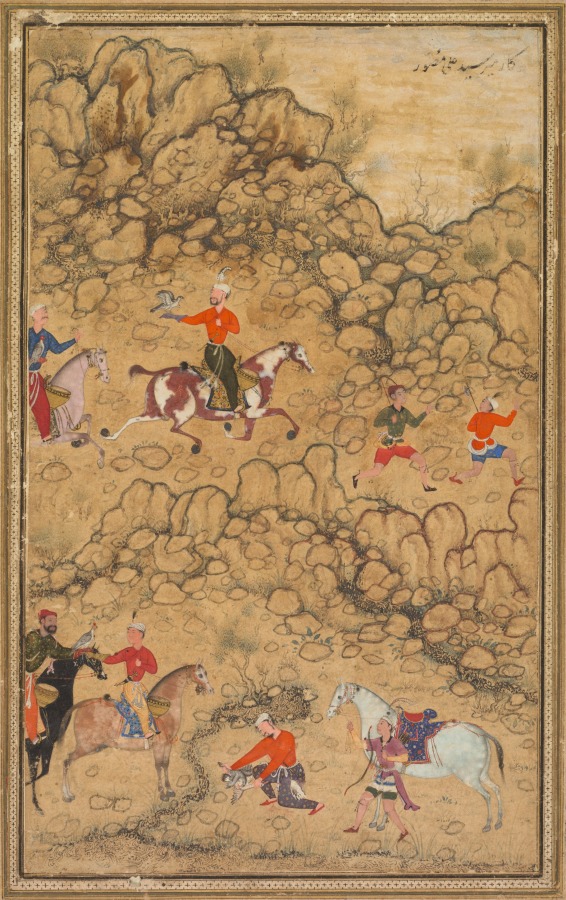
Hunting with falcons in a landscape; verso: Calligraphy of Chaghatai Turkish poems in praise of wine, Sultan Muhammad Nur (Persian, c. 1472–1536) and Mirza Muhammad (probably Persian, active c. 1520s)
Cleveland Museum of Art
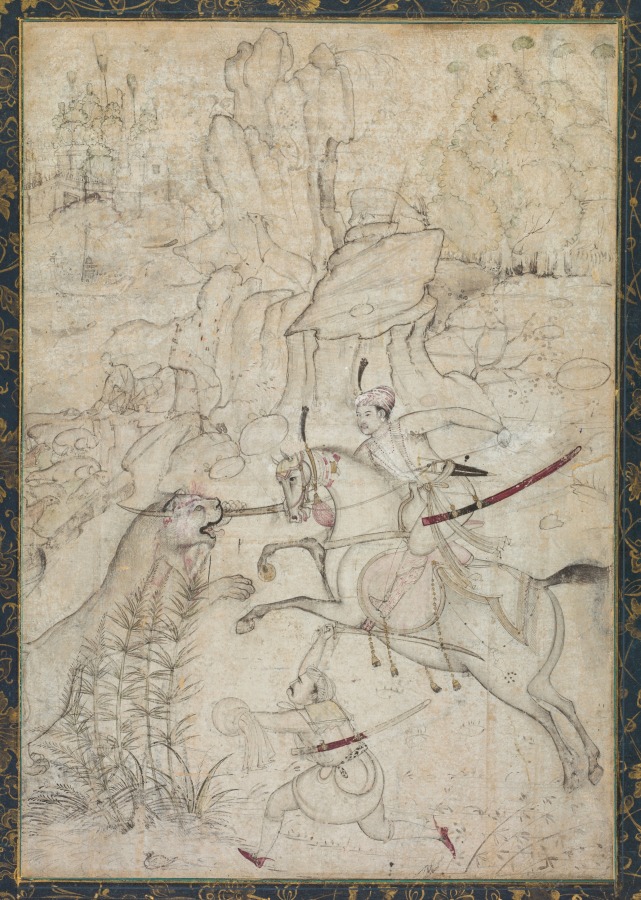
A Mounted Prince Hunting Lion in a Rocky Landscape
Cleveland Museum of Art
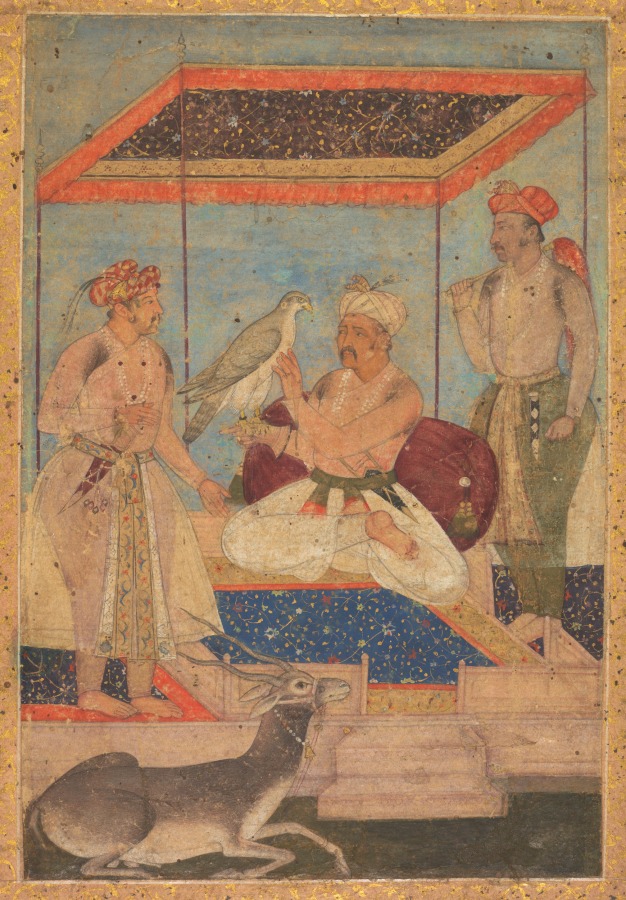
Akbar and Jahangir Examine a Ghir Falcon while Prince Khusrau Stands Behind
Cleveland Museum of Art
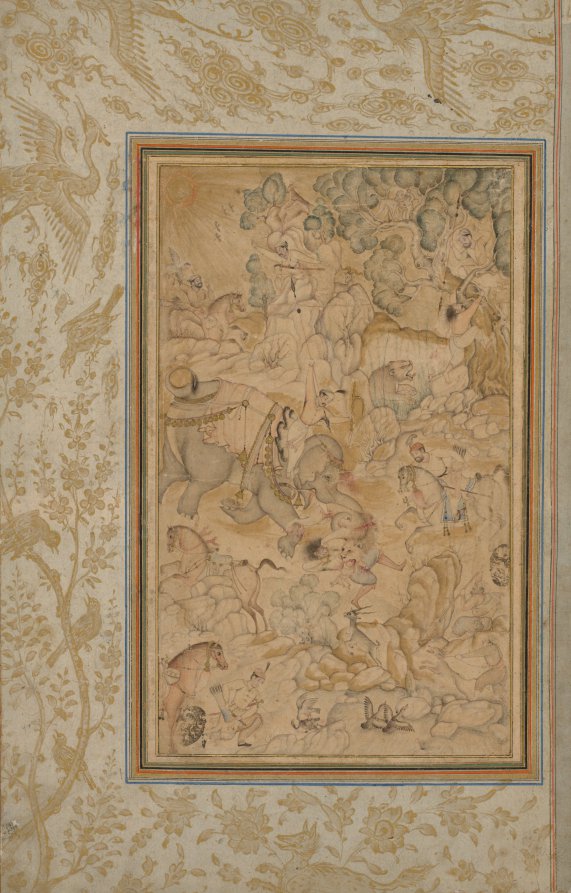
Princes hunting in a rocky landscape
Cleveland Museum of Art
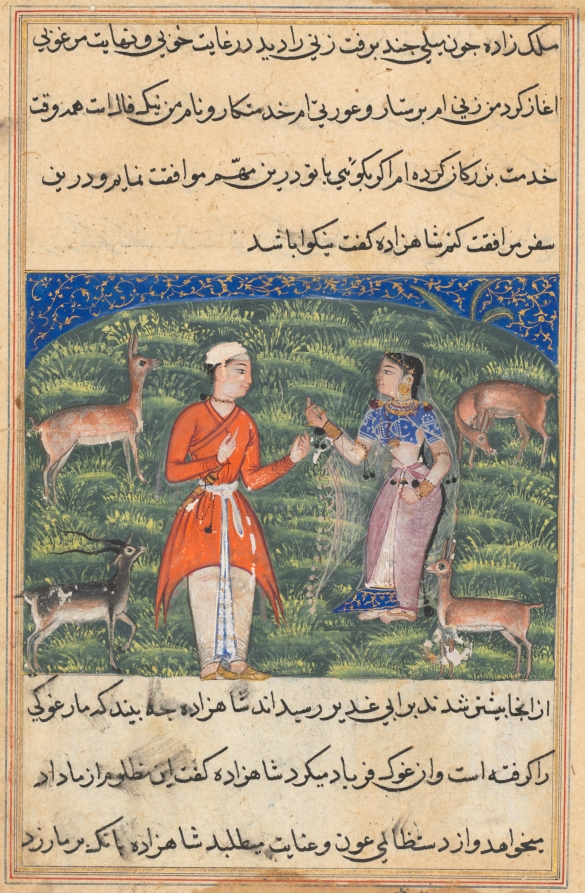
Nikfal, the fortune of the prince in the form of a woman, offers to accompany him, from a Tuti-nama (Tales of a Parrot): Eighteenth Night
Cleveland Museum of Art
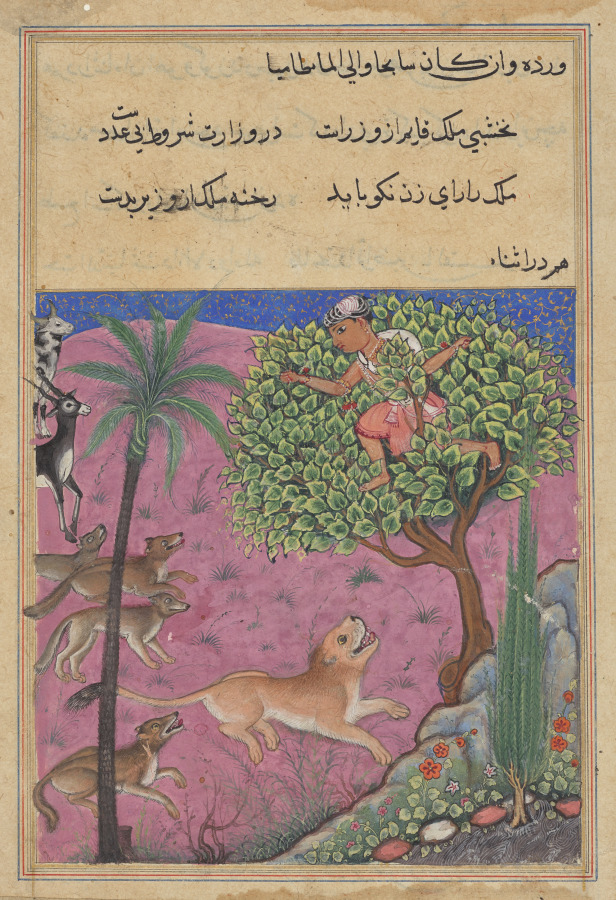
The wolf and the jackal, serving as viziers, instigate the lion who pursues the Brahman up a tree, from a Tuti-nama (Tales of a Parrot): Twenty-first Night
Cleveland Museum of Art
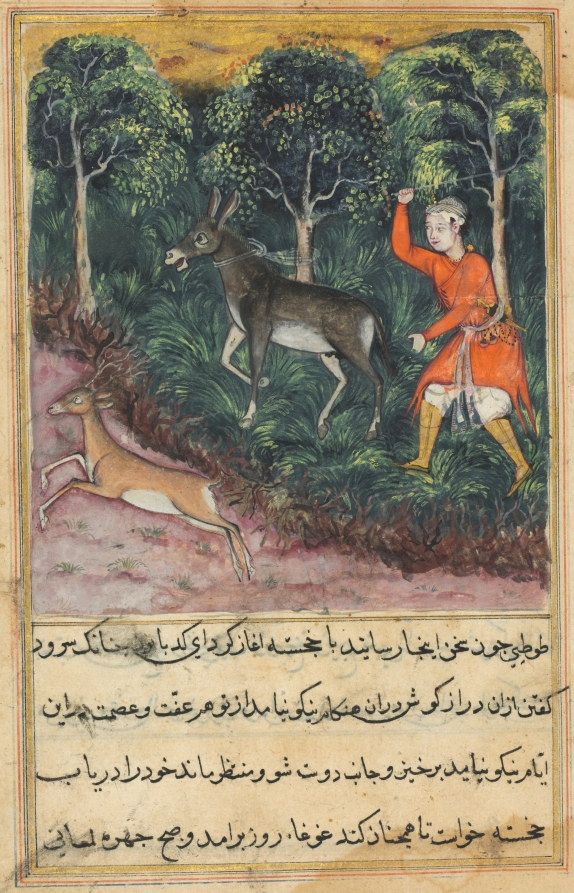
The gardener seizes and beats a donkey who insisted on braying, while the deer, its companion flees to safety, from a Tuti-nama (Tales of a Parrot): Forty-first Night
Cleveland Museum of Art
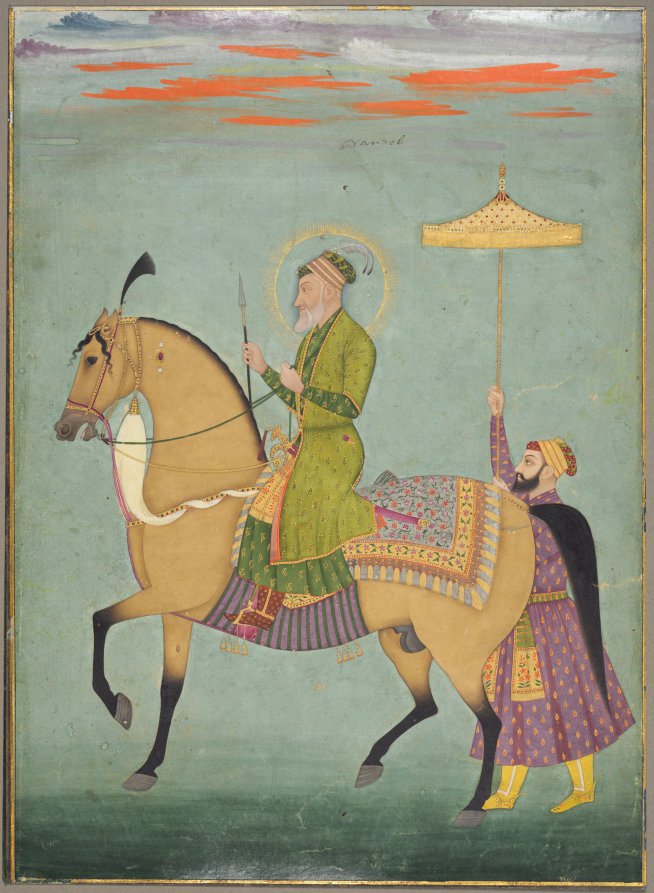
The Emperor Alamgir (reigned 1658–1707) on Horseback
Cleveland Museum of Art
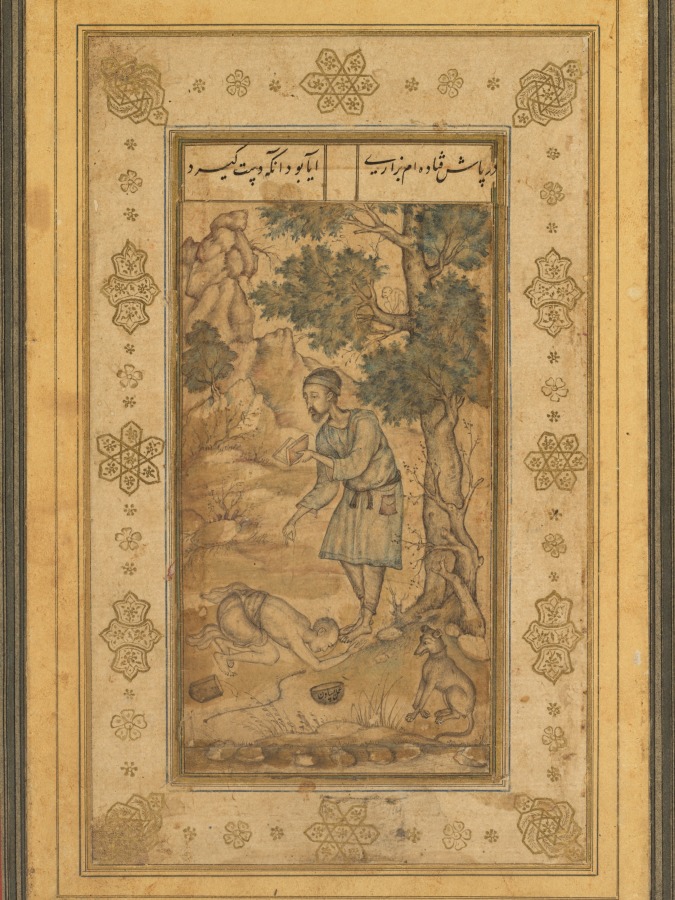
A mendicant bowing before a holy man, from the Prince Salim Album
Cleveland Museum of Art
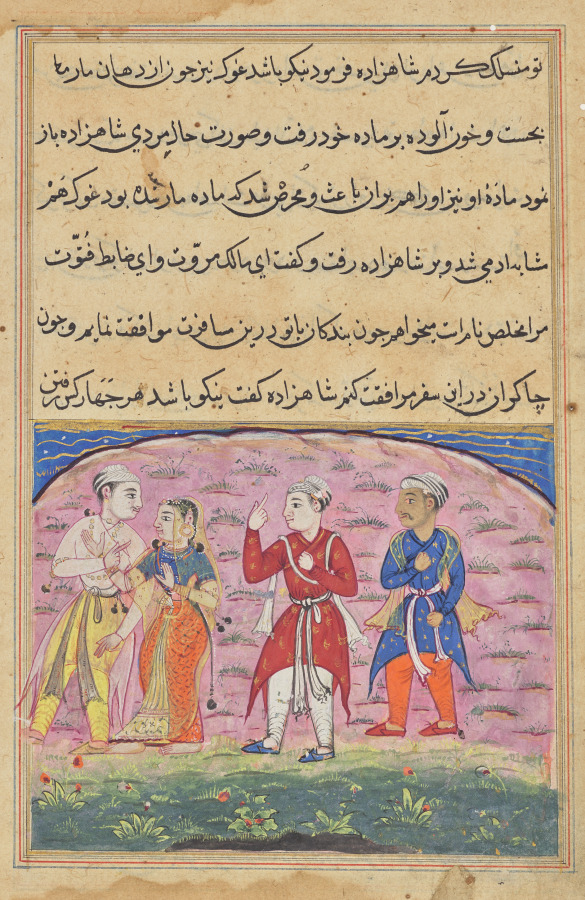
The prince and Nikfal are joined by Khalis and the Mukhlis who are the grateful snake and frog in human form, from a Tuti-nama (Tales of a Parrot): Eighteenth Night
Cleveland Museum of Art
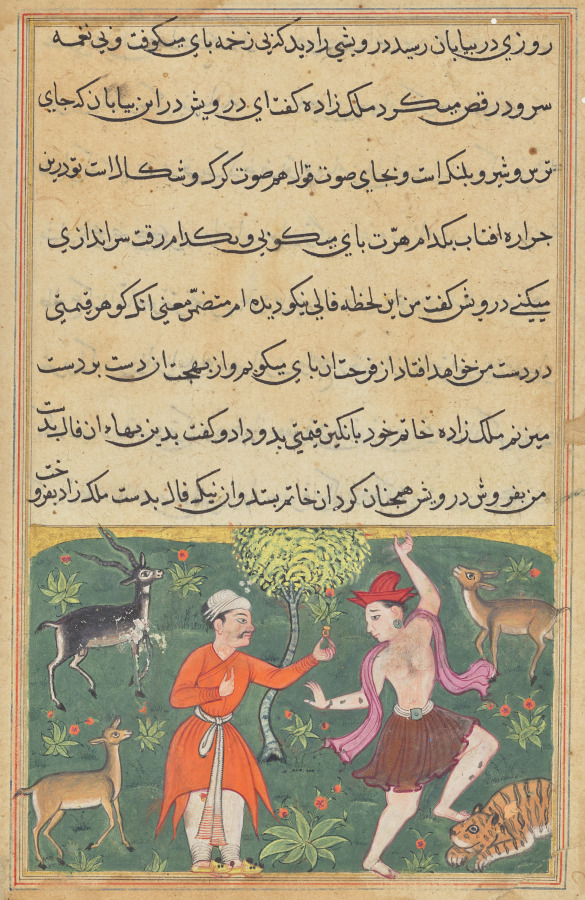
The prince meets a carefree dancing dervish whose good fortune he purchases for his ring, from a Tuti-nama (Tales of a Parrot): Eighteenth Night
Cleveland Museum of Art