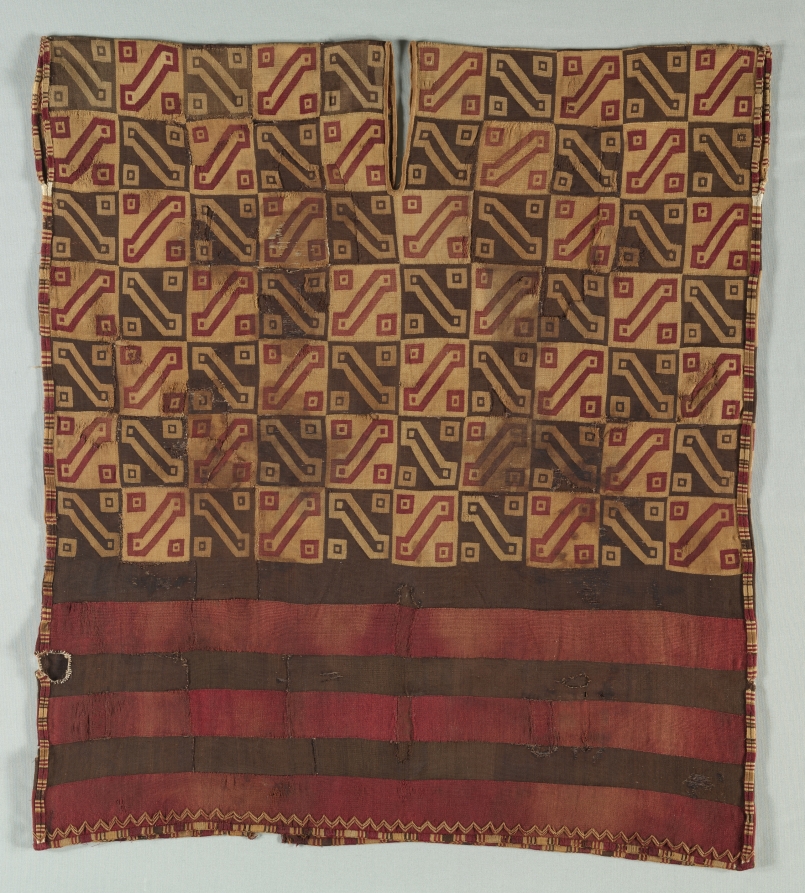
Cleveland Museum of Art
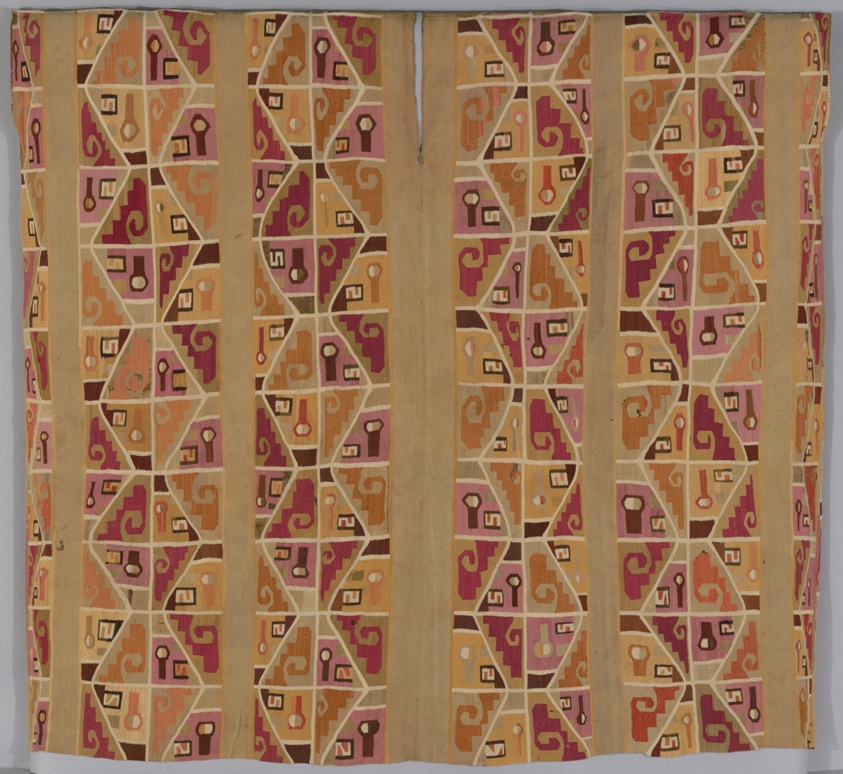
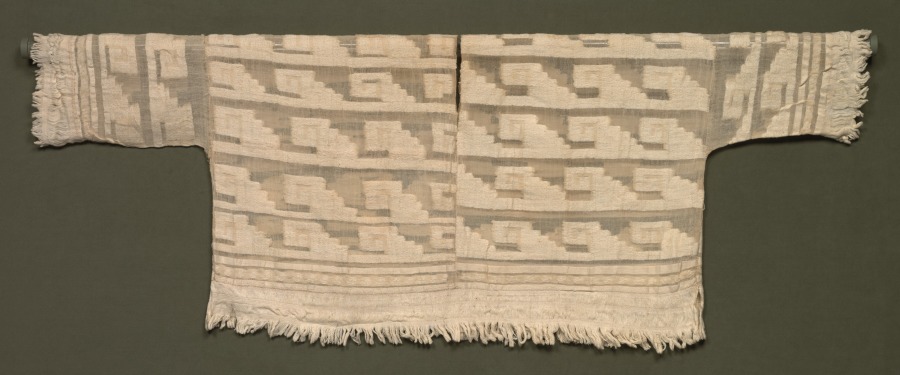
Tunic
- Date
- c. 1400–1540
- Medium
- tapestry; cotton and camelid fiber
- Culture
- Peru, Inca, 15th-16th century
- Department
- Textiles
- Institution
- Cleveland Museum of Art
Finely woven interlocked tapestry garments were a privilege of the nobility within the Inca Empire. Such garments were made throughout the vast Inca territory by women of noble families, by professional weavers, and by the Aclla (Chosen Women). These specialists lived in cloistered communities and served the state by brewing beer and weaving fine cloth. The products of their labor were redistributed by the Inca state as prized gifts to loyal vassals and allies. The standardized decorative scheme of this tunic, known as the Inca Key, is one of the most common Inca tunic patterns.
The authoritative record is held by Cleveland Museum of Art. LinkedCulture surfaces this object and its connections; it does not alter institutional metadata.
Related across collections
Semantically similar works from Cleveland Museum of Art and other institutions.
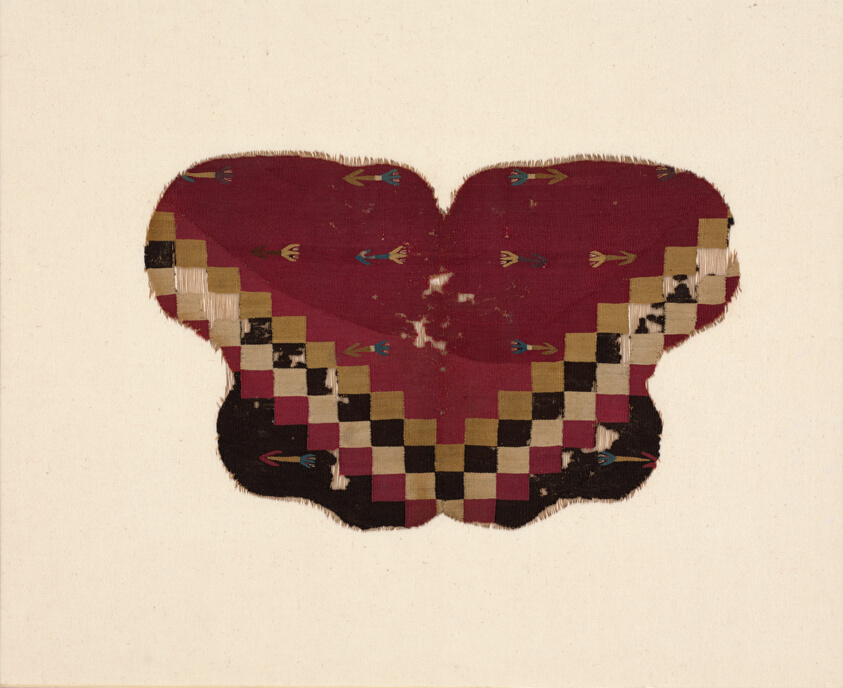
Fragment from the Shoulder of a Tunic (Uncu)
Art Institute of Chicago
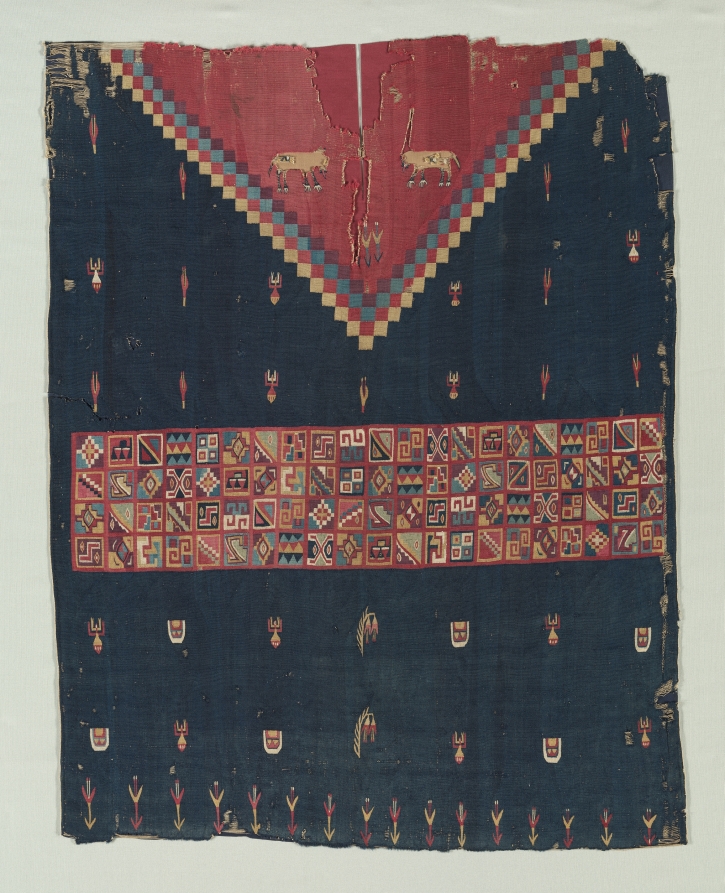
Half Tunic
Cleveland Museum of Art
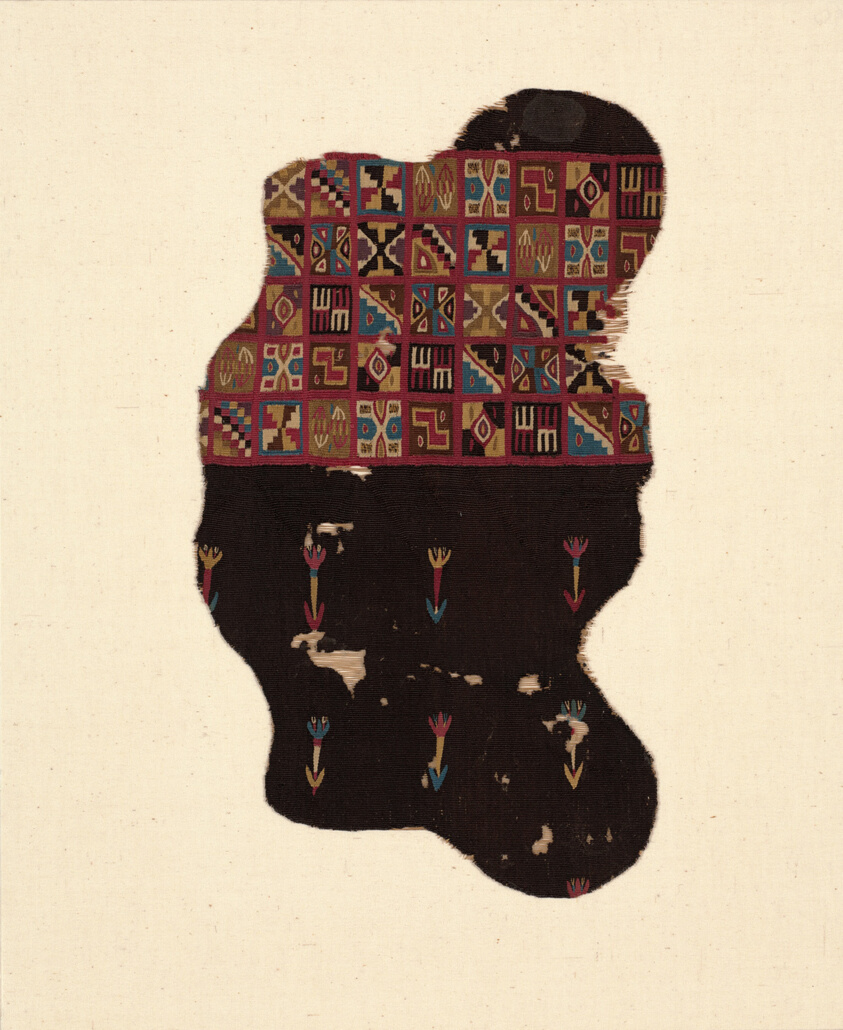
Fragment from the Topacu Waistband of a Tunic (Uncu)
Art Institute of Chicago
Tunic
Art Institute of Chicago
Lower Section of a Tunic
Cleveland Museum of Art
Tunic
Art Institute of Chicago
Tunic Fragment
Art Institute of Chicago
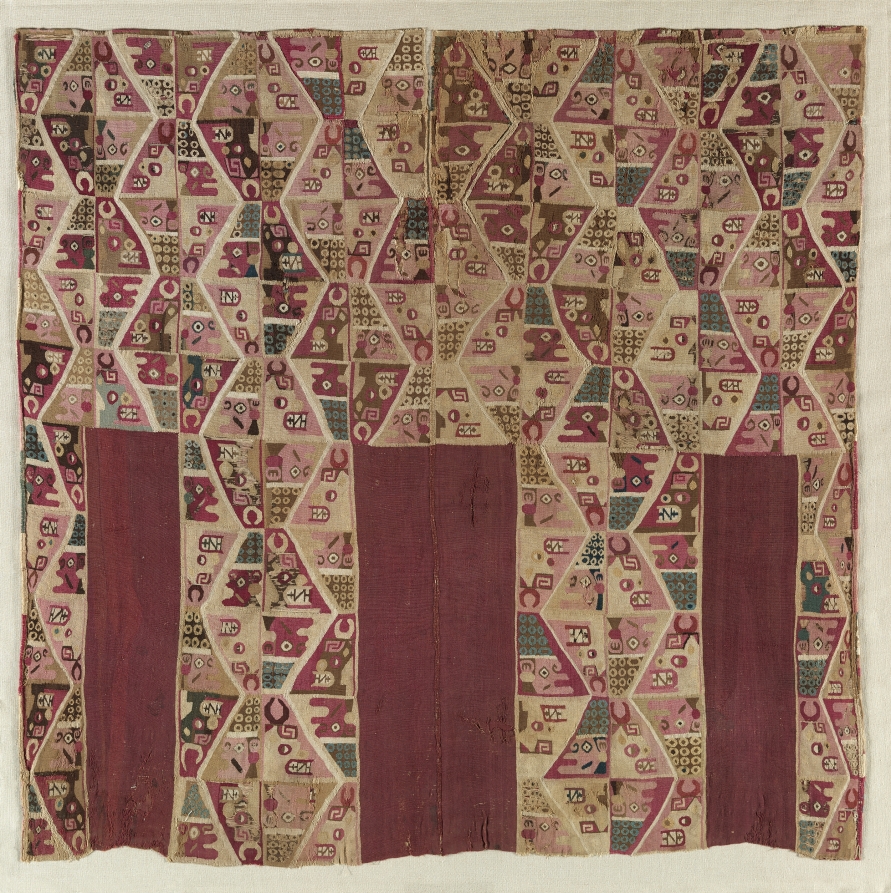
Tunic with Profile Animal and Human Heads
Cleveland Museum of Art
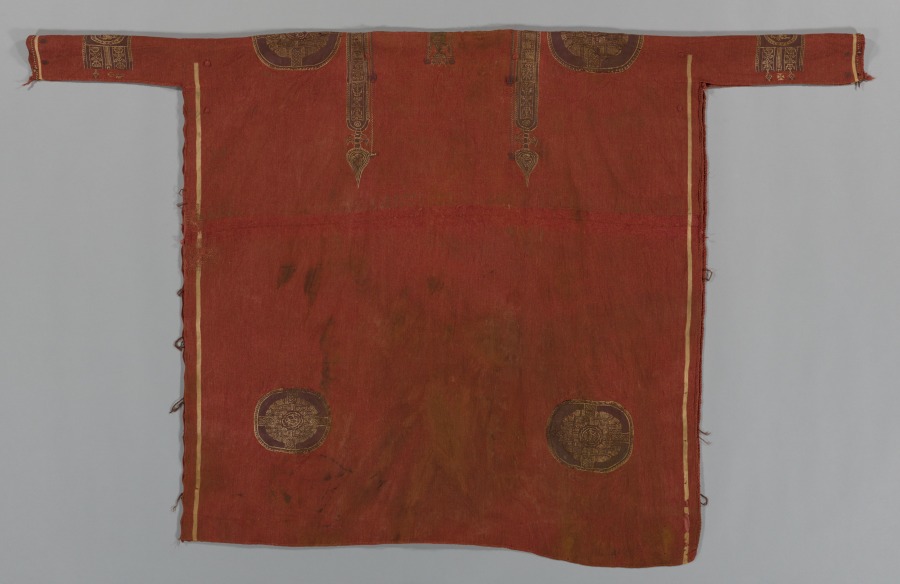
Luxurious Woolen Tunic with Decorated Bands and Roundels
Cleveland Museum of Art
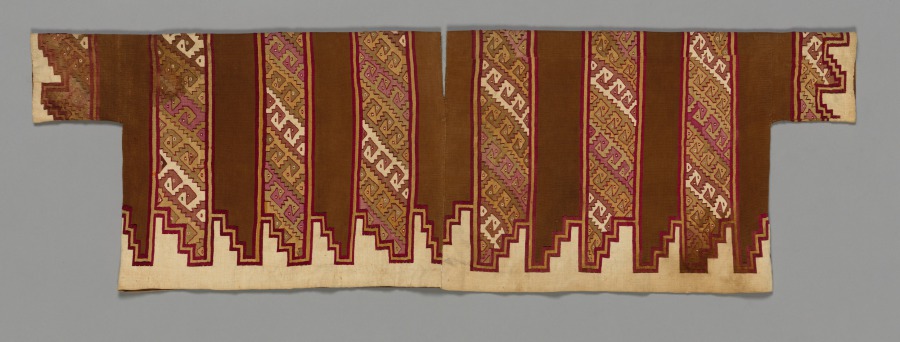
Sleeved Tunic
Cleveland Museum of Art
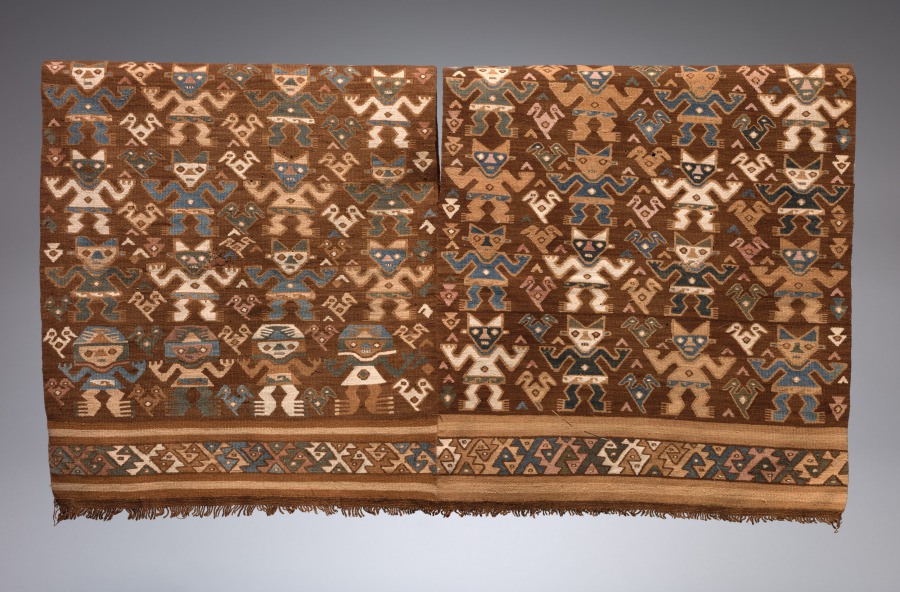
Tunic with Frontal Figures
Cleveland Museum of Art
Tunic
Cleveland Museum of Art