Cleveland Museum of Art
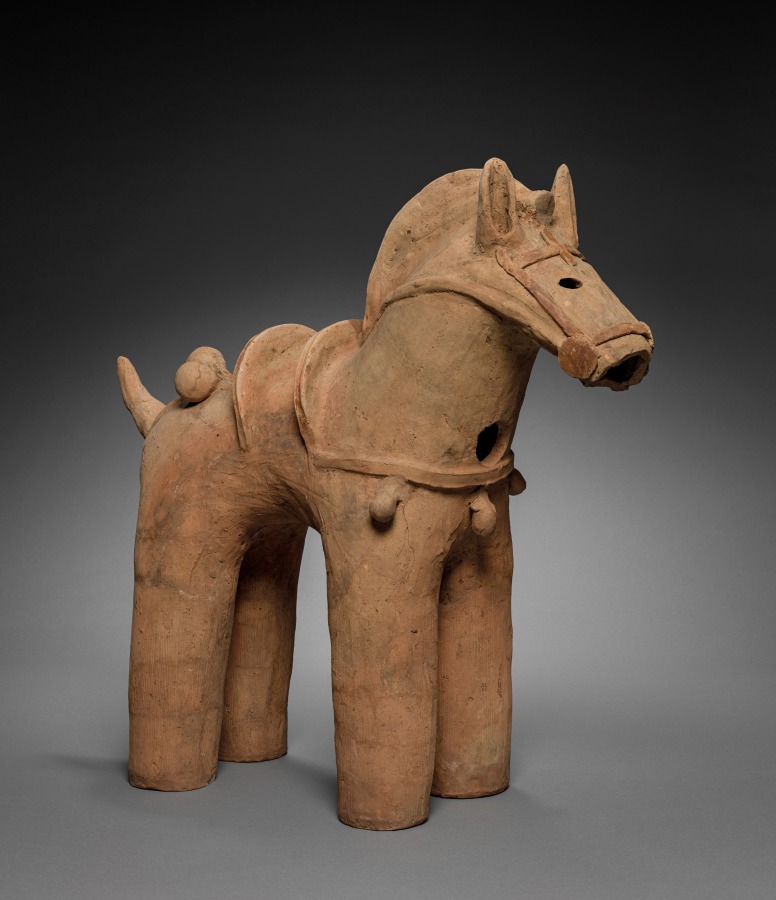
Haniwa Horse
- Date
- 400s–500s CE
- Medium
- earthenware with traces of pigment
- Culture
- Japan, Kofun period (300–710 CE)
- Department
- Japanese Art
- Institution
- Cleveland Museum of Art
This horse’s tack, with its round bells, resembles saddlery in fashion in Korea during the 400s–500s CE. Concurrent with mass migration from the Korean Peninsula, tombs covered with large earthen mounds similar to those on the Asian continent began to appear in Japan around the year 300 CE. Called “old mounds” ( kofun ), their surfaces were covered with hollow clay cylinders ( haniwa ). Sculptures of animals, buildings, and finally human figures followed, developing over the ensuing three centuries.
The authoritative record is held by Cleveland Museum of Art. LinkedCulture surfaces this object and its connections; it does not alter institutional metadata.
Related across collections
Semantically similar works from Cleveland Museum of Art and other institutions.
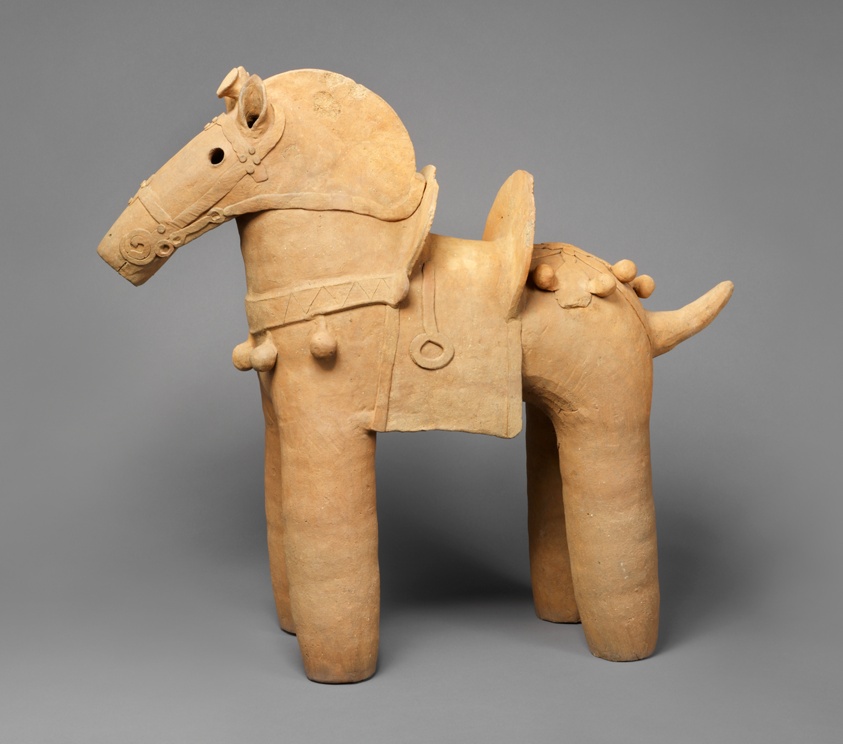
Horse
Art Institute of Chicago
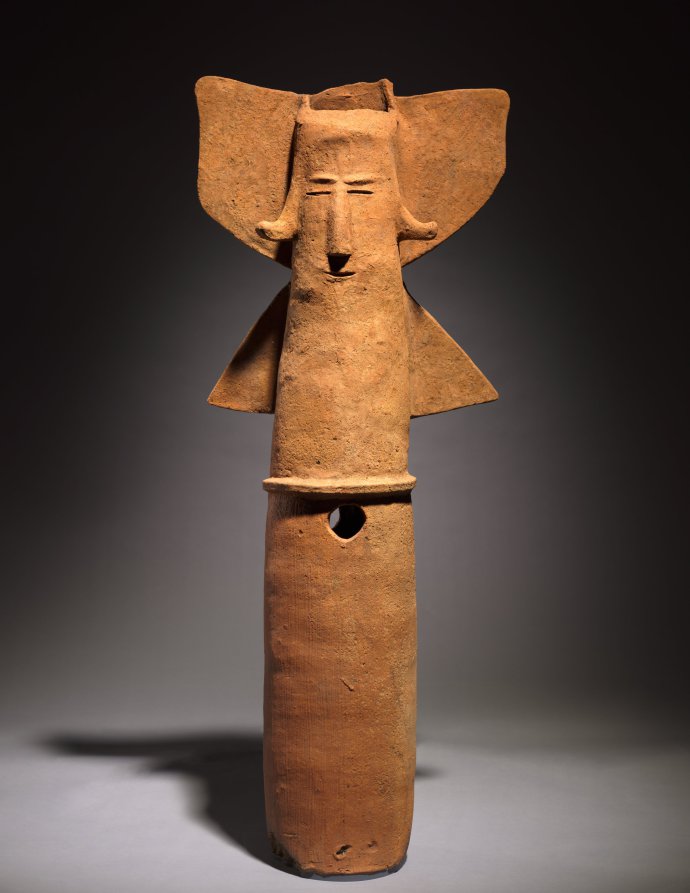
Haniwa in the Form of a Shield
Cleveland Museum of Art
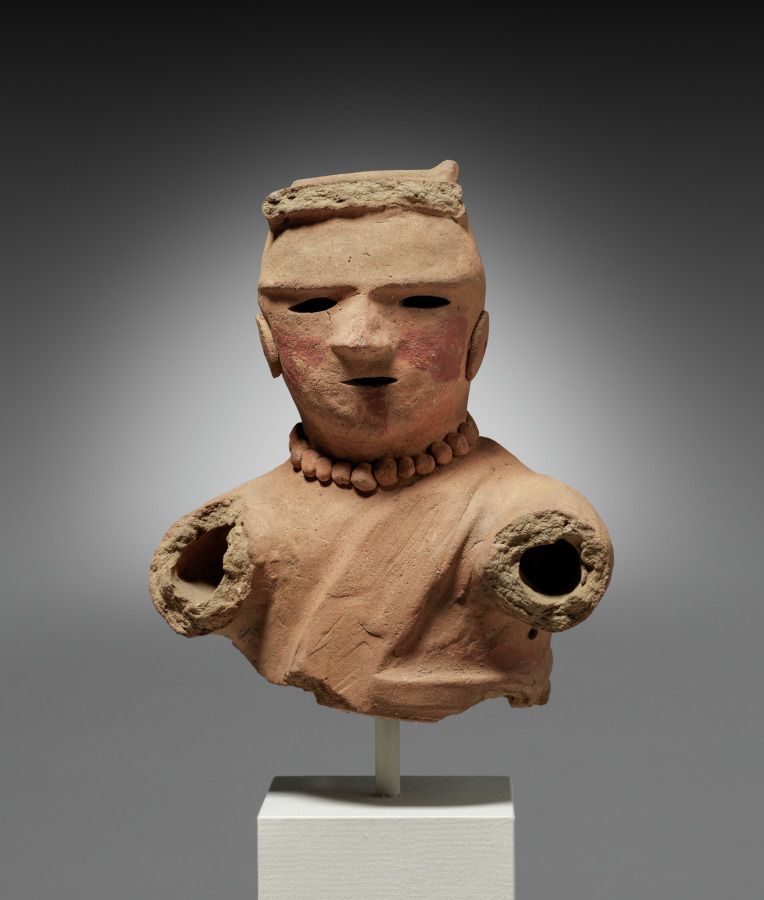
Haniwa Figure of a Female
Cleveland Museum of Art
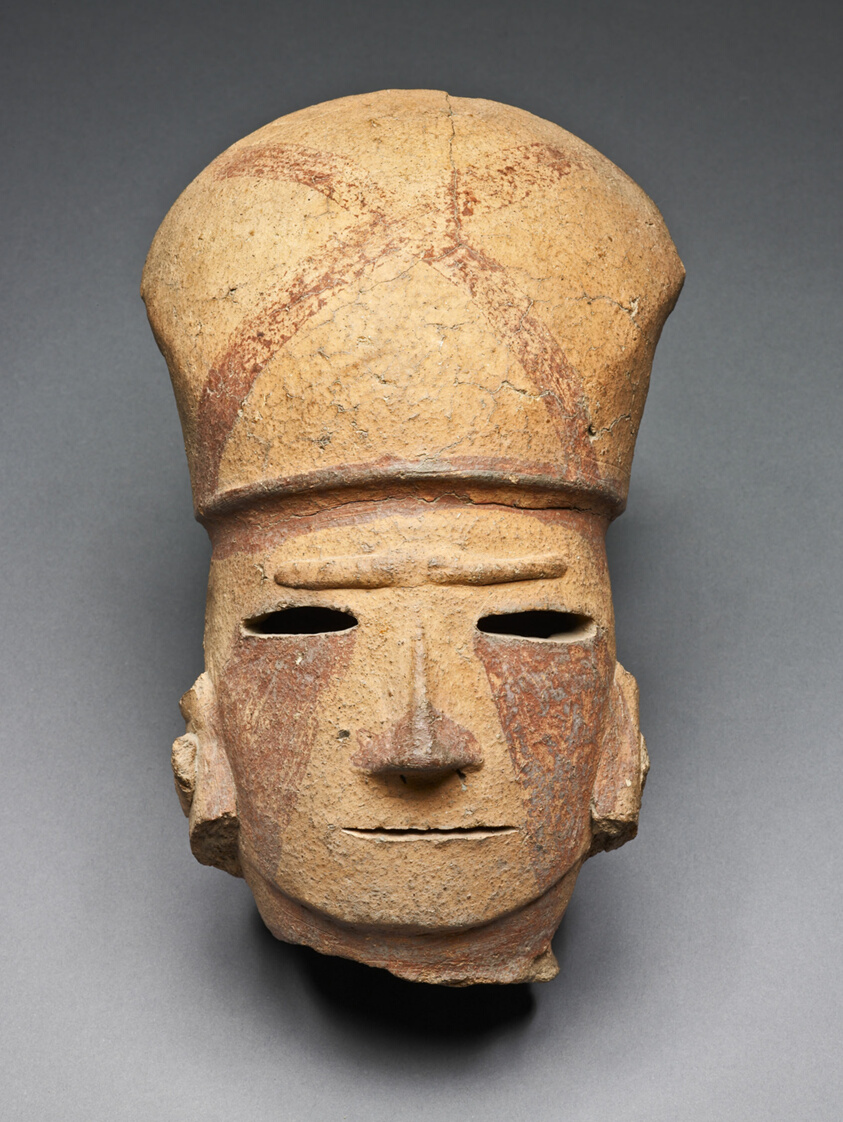
Head of a Warrior
Art Institute of Chicago
Standing Saddled Horse with Clipped Mane, Cropped and Tied Tail, and Roman-Style Bridle Ornaments
Harvard Art Museums
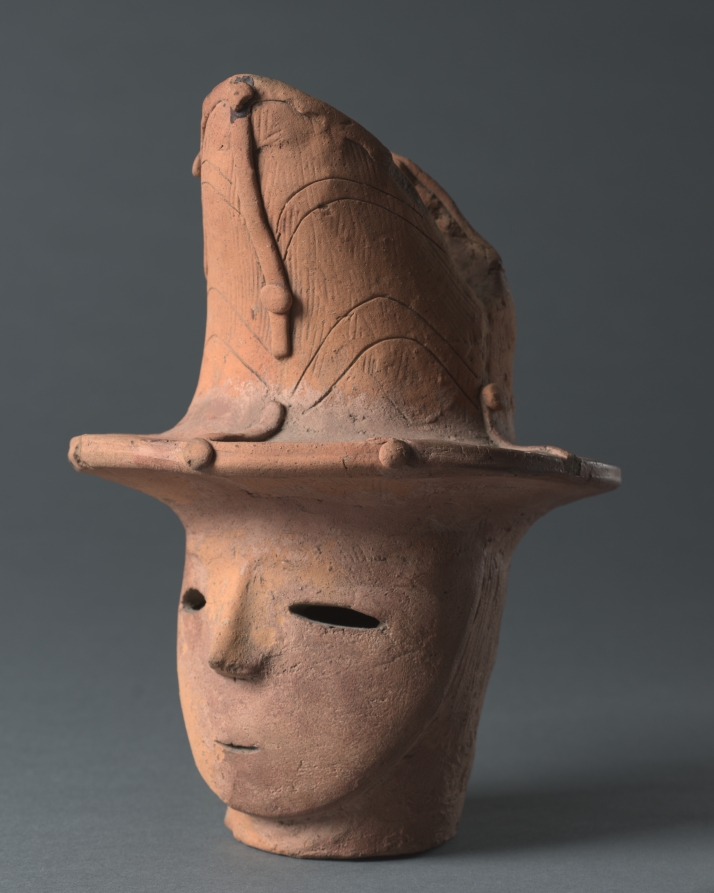
Male Haniwa Head
Cleveland Museum of Art

Equestrian figure
Minneapolis Institute of Art
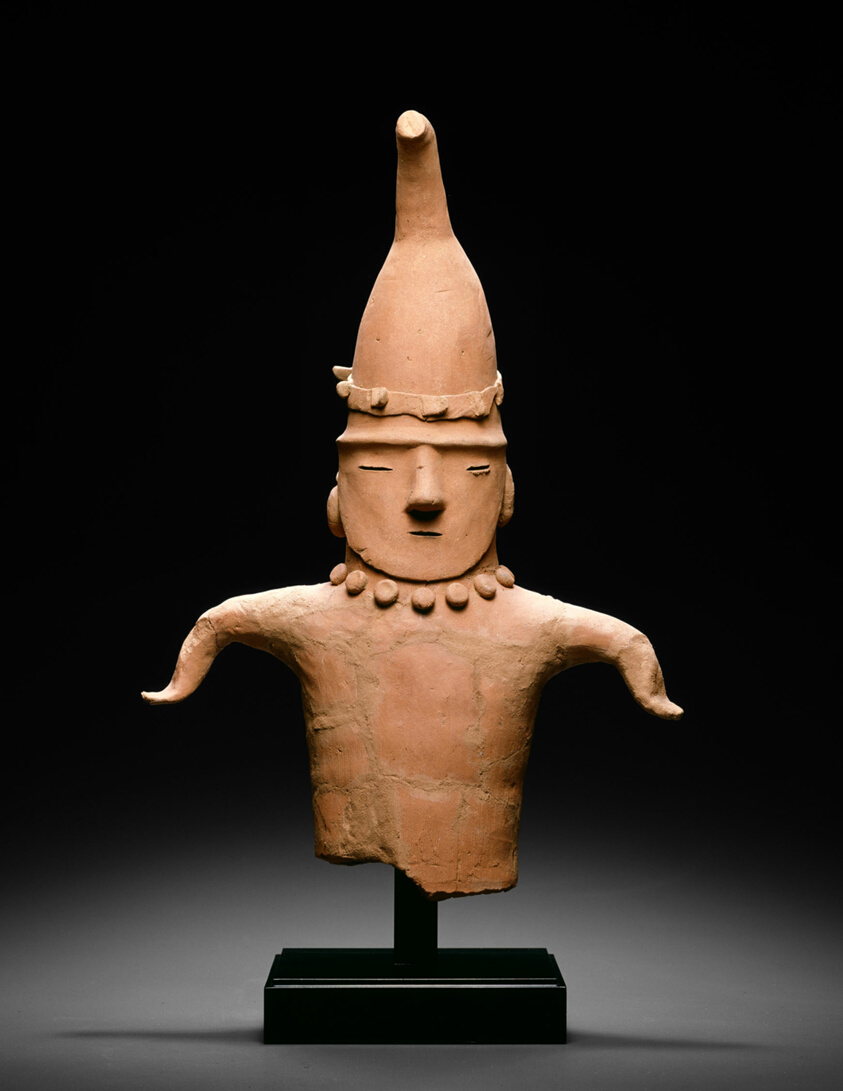
Head and Torso of a Dancing Figure
Art Institute of Chicago

Tomb Tile
Minneapolis Institute of Art

Rubbing of Horses and Riders
Minneapolis Institute of Art

Prancing Horse
Minneapolis Institute of Art
Tomb Sculpture in the Form of a Horse and Rider
Harvard Art Museums