Cleveland Museum of Art
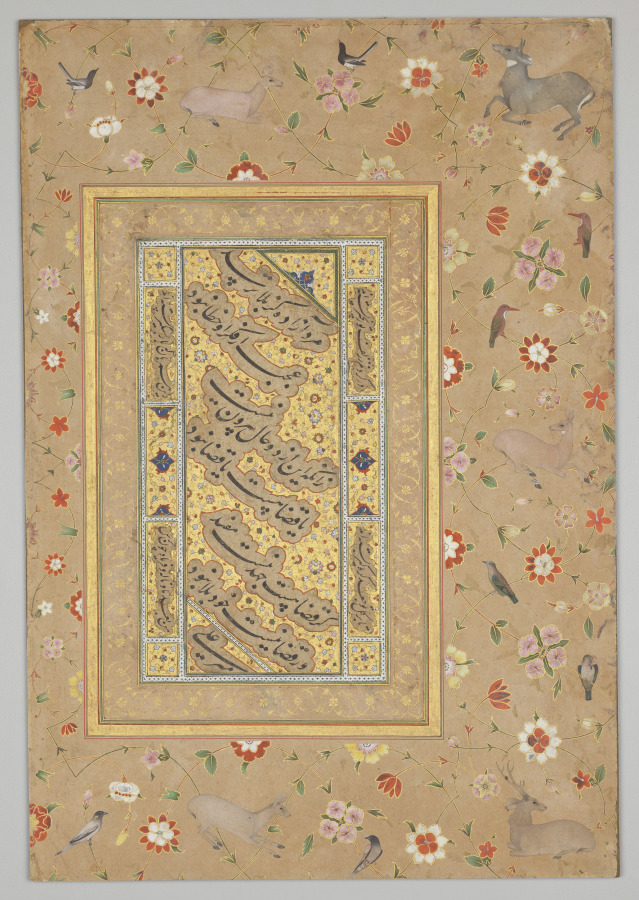
Persian calligraphy framed by an ornamental border of flowers, birds, and deer, from the Late Shah Jahan Album
Mir 'Ali Haravi
- Date
- calligraphy: c. 1500–1540; border: c. 1630–40
- Medium
- Gum tempera, gold, and ink on paper
- Culture
- Mughal India, court of Shah Jahan (reigned 1628–58)
- Department
- Indian and Southeast Asian Art
- Institution
- Cleveland Museum of Art
About 100 years after the calligraphy was completed by a Persian master and embellished with gold and floral arabesques, the small page was mounted into an album for the Mughal emperor of India. Mughal artists filled the outer border with floral vines, blooming and budding with many varieties. Pairs of birds perch throughout; male and female deer relax, listening to the birdsong. The Indian artists chose to emphasize nature’s abundance and life-giving forces, whereas the Persian artists sought to achieve exquisite, gemlike refinement. The central poem, by Ibn-i Yamin (Persian, 1286–1368), encourages the reader not to worry about unexpected calamities. On the right, two white-throated kingfishers, a species native to Asia, sit on thin vines.
The authoritative record is held by Cleveland Museum of Art. LinkedCulture surfaces this object and its connections; it does not alter institutional metadata.
Related across collections
Semantically similar works from Cleveland Museum of Art and other institutions.
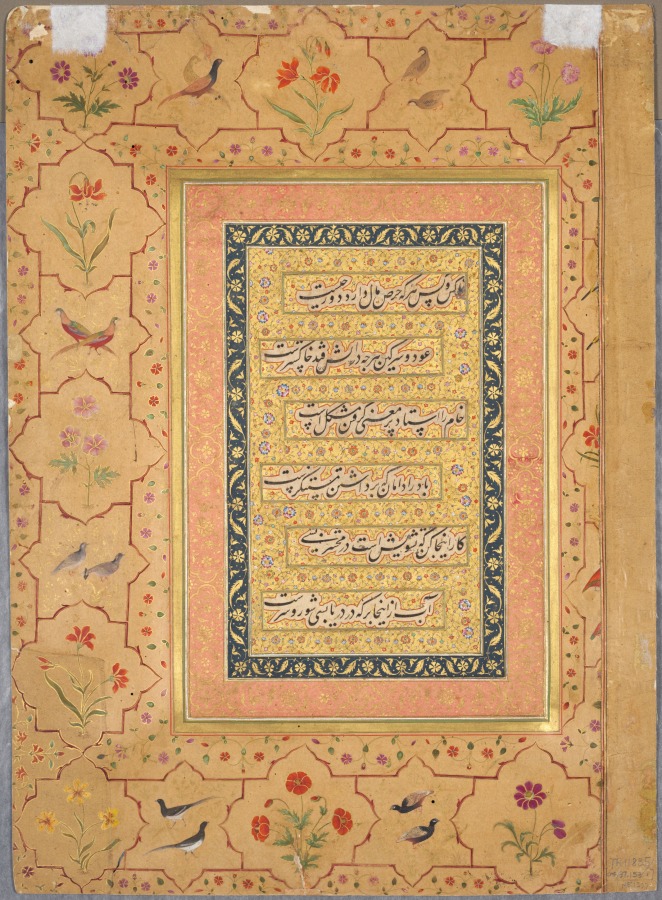
Calligraphy framed by an ornamental border with poppies and pairs of birds, from the Late Shah Jahan Album (verso)
Cleveland Museum of Art
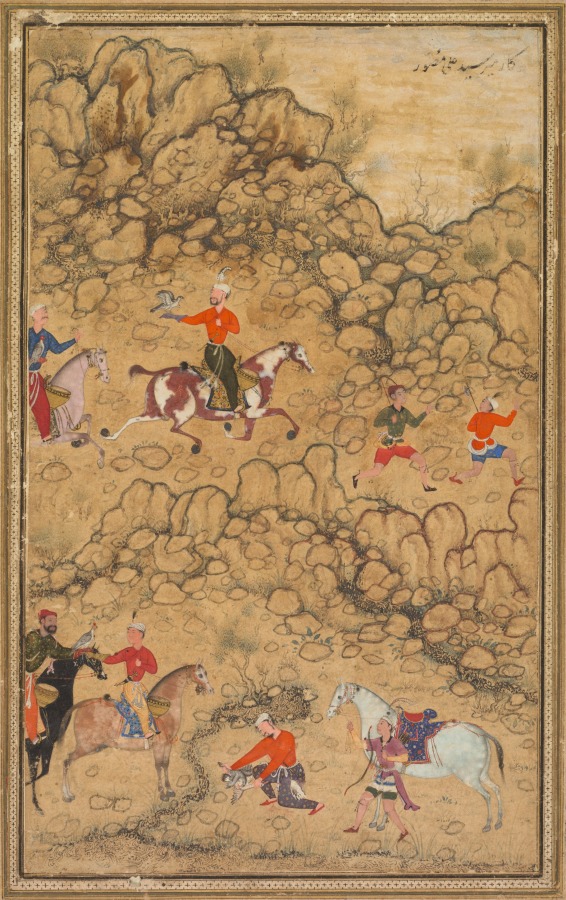
Hunting with falcons in a landscape; verso: Calligraphy of Chaghatai Turkish poems in praise of wine, Sultan Muhammad Nur (Persian, c. 1472–1536) and Mirza Muhammad (probably Persian, active c. 1520s)
Cleveland Museum of Art

Album folio of poetry
Minneapolis Institute of Art
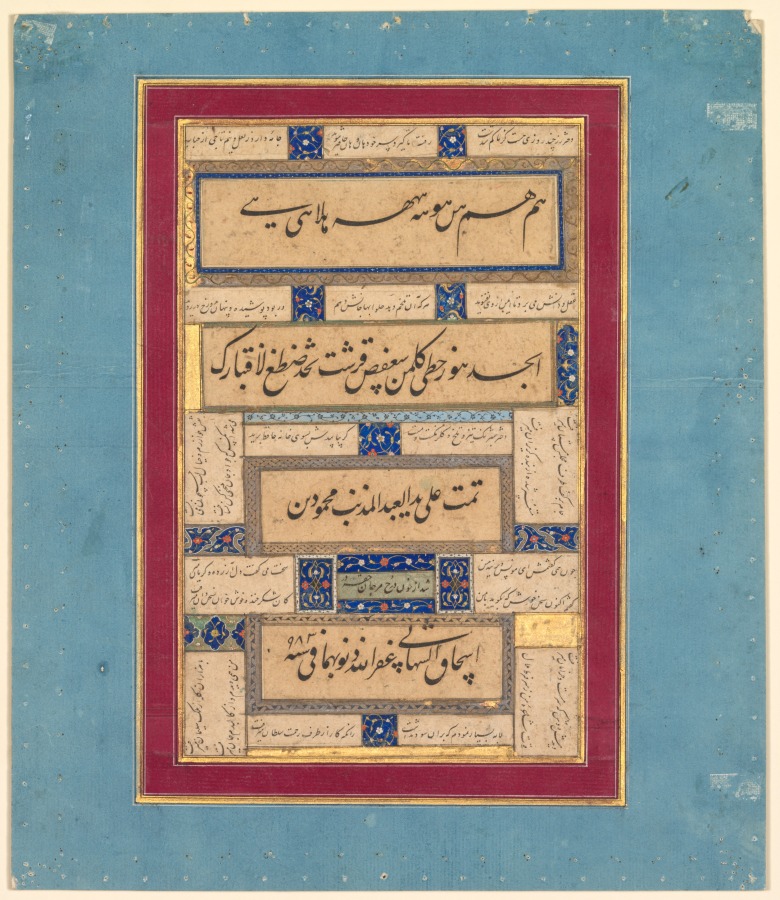
Calligraphic exercises and verses of Hafiz (Persian, about 1325–1389) (verso)
Cleveland Museum of Art
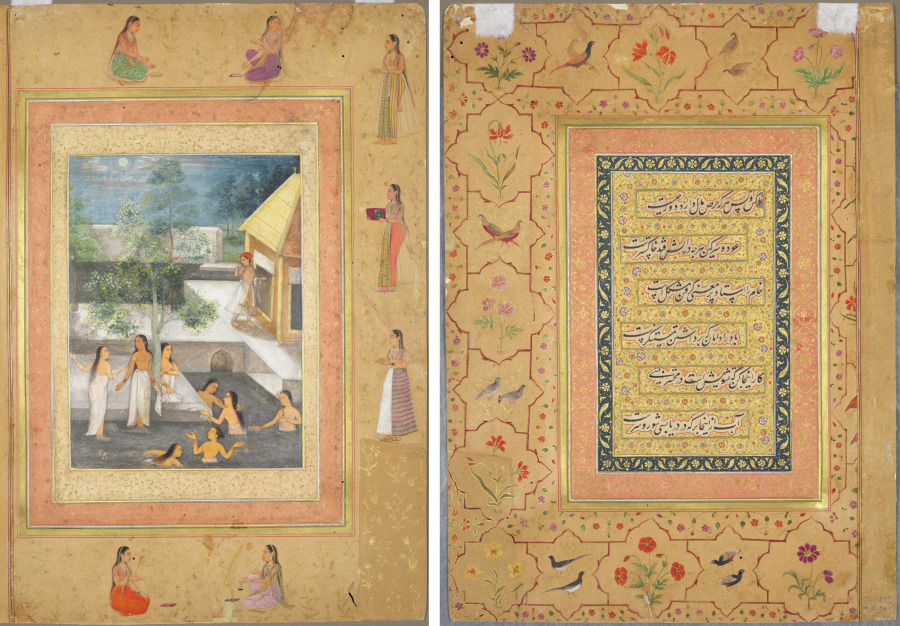
Leaf from the Late Shah Jahan Album: Harem Night-Bathing Scene (recto); Calligraphy Framed by an Ornamental Border of Flowers and Birds (verso)
Cleveland Museum of Art
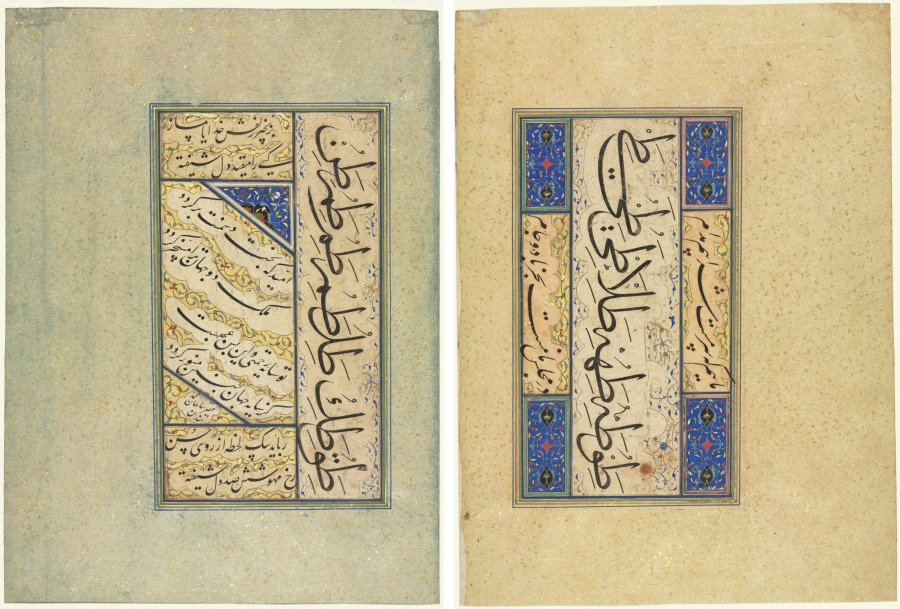
Persian Quatrains (Rubayi) and Calligraphic Exercises (recto); Persian Verse (khamriyya) (verso)
Cleveland Museum of Art
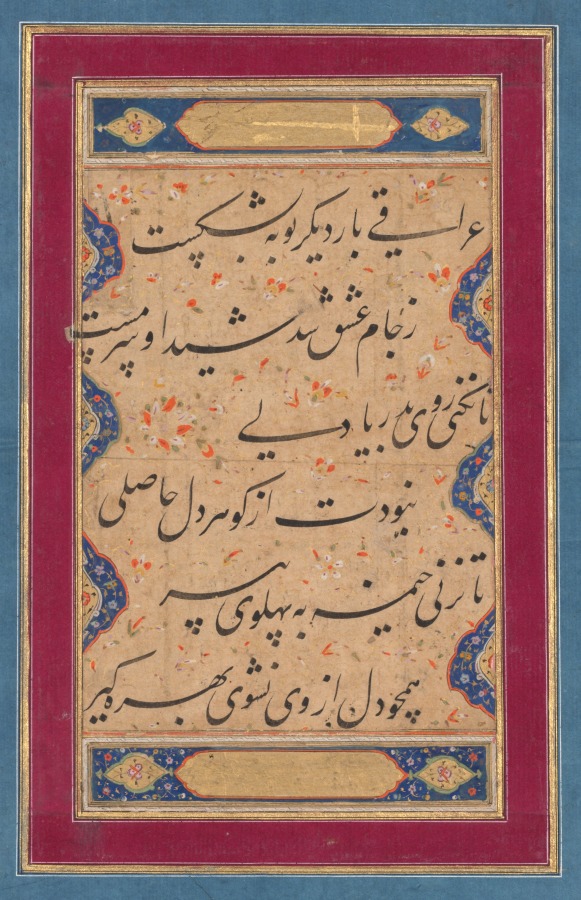
Calligraphy from a ghazal of Fakhr al-Din Iraqi (Persian, 1213–1289) and a verse from the Tuhfat al-ahrar (The Gift of the Free) of Abd al-Rahman Jami (verso)
Cleveland Museum of Art
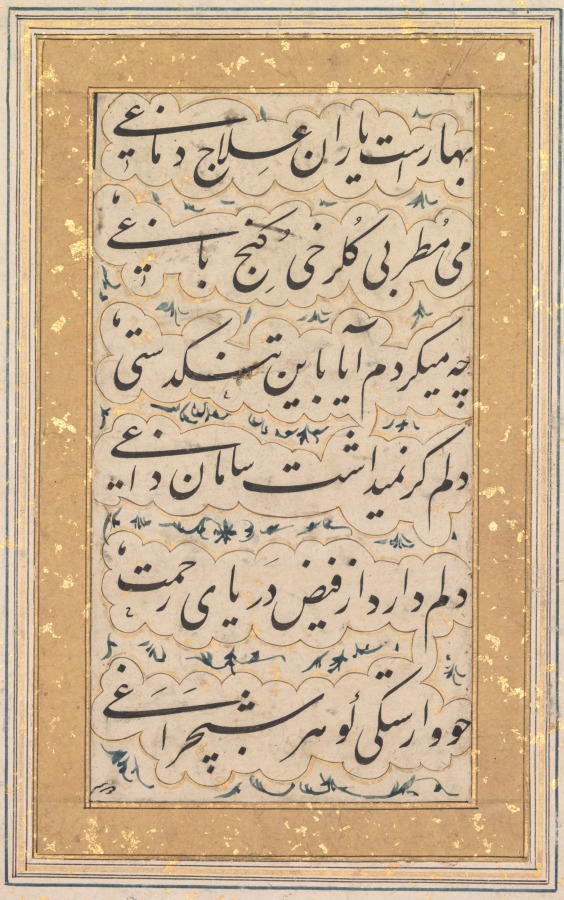
Calligraphy (verso)
Cleveland Museum of Art
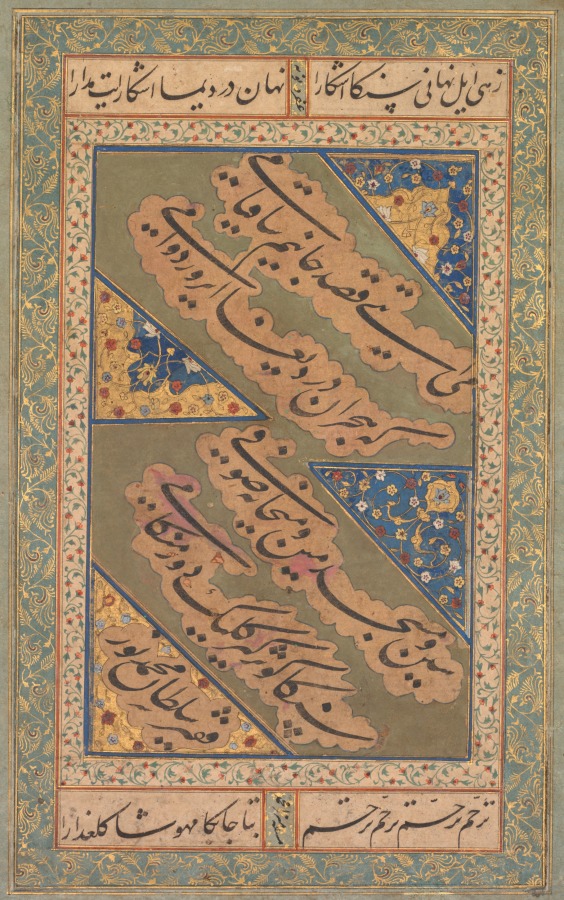
Calligraphy of Chaghatai Turkish Poems in Praise of Wine (verso)
Cleveland Museum of Art
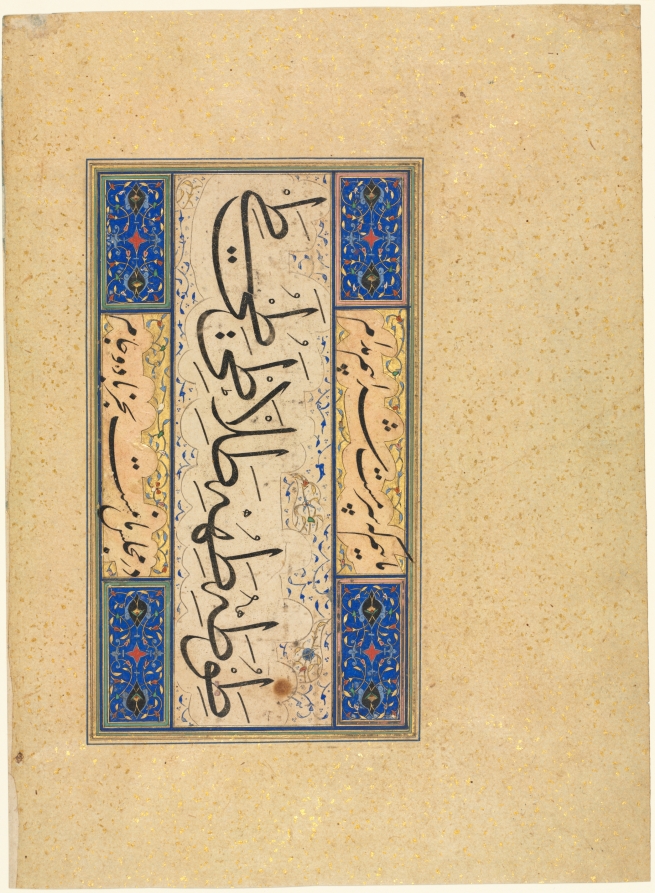
Persian Verse (khamriyya) (verso)
Cleveland Museum of Art
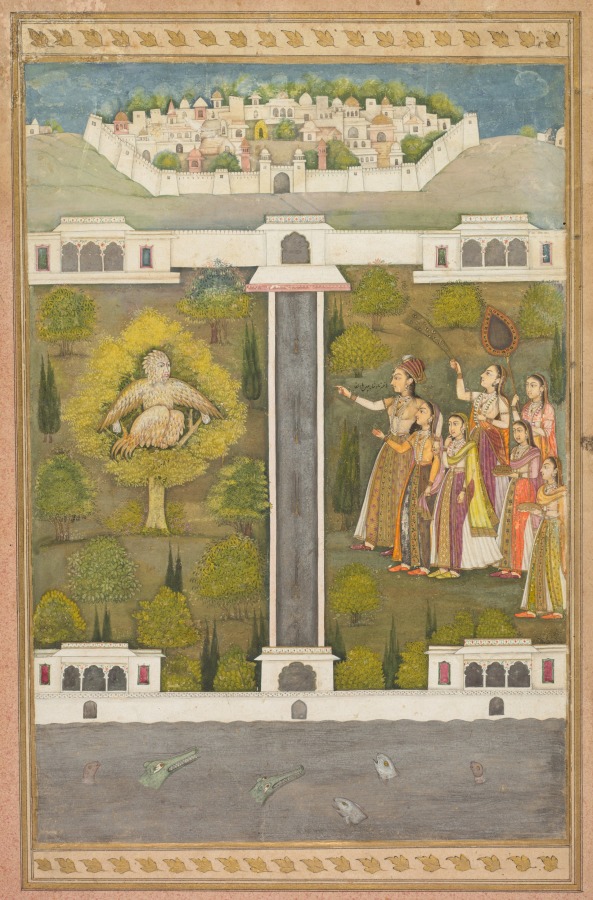
Mahliqa, Daughter of the Emperor of China, Pointing at the Bird-Man Khwaja Mubarak: A Leaf from a Poetical Romance Relating to Shah Alam I (verso); Stenciled Scenes of Lion and Gazelle (verso)
Cleveland Museum of Art
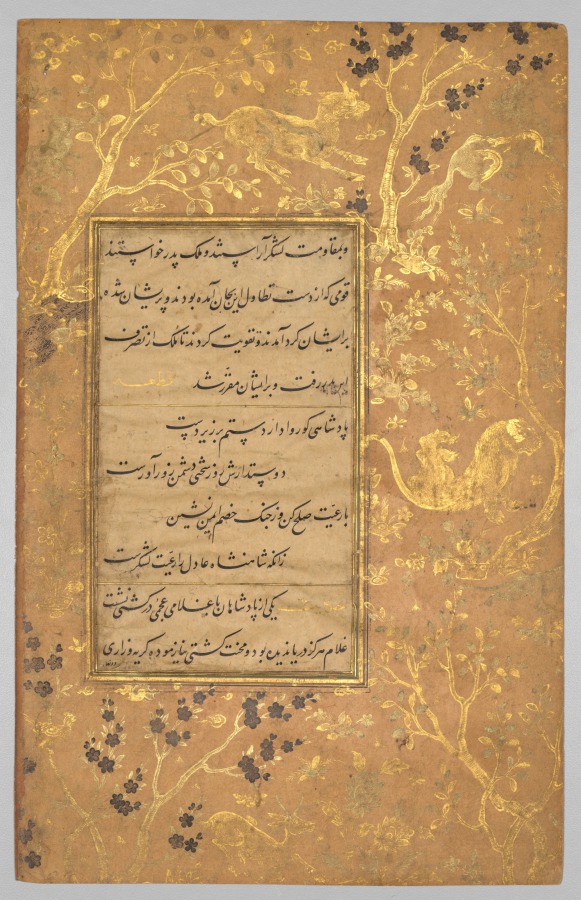
Illuminated folio from a Gulistan (Rose Garden) of Sa'di (c. 1213–1291)
Cleveland Museum of Art