Cleveland Museum of Art
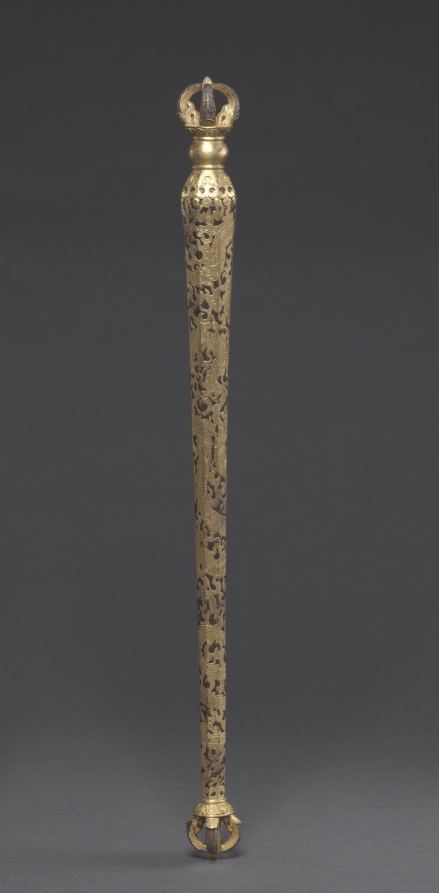
Ritual Mace
- Date
- early 1400s
- Medium
- iron alloy with gold inlay
- Culture
- Sino-Tibetan, Derge School, Yongle period (1403-1427)
- Department
- Indian and Southeast Asian Art
- Institution
- Cleveland Museum of Art
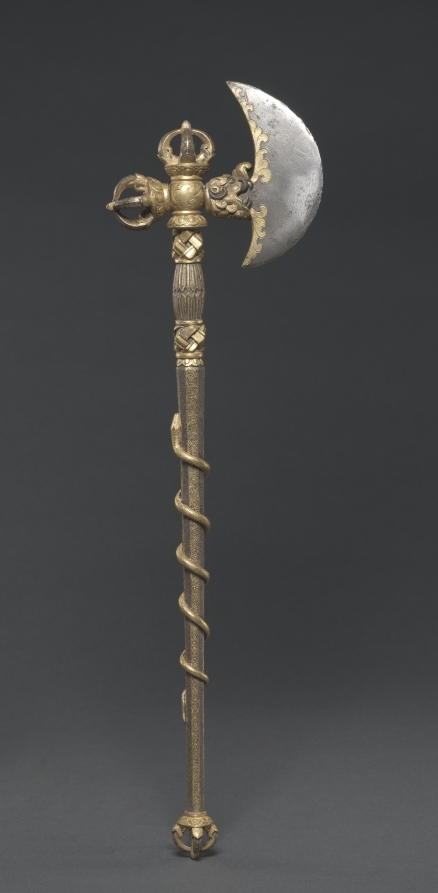
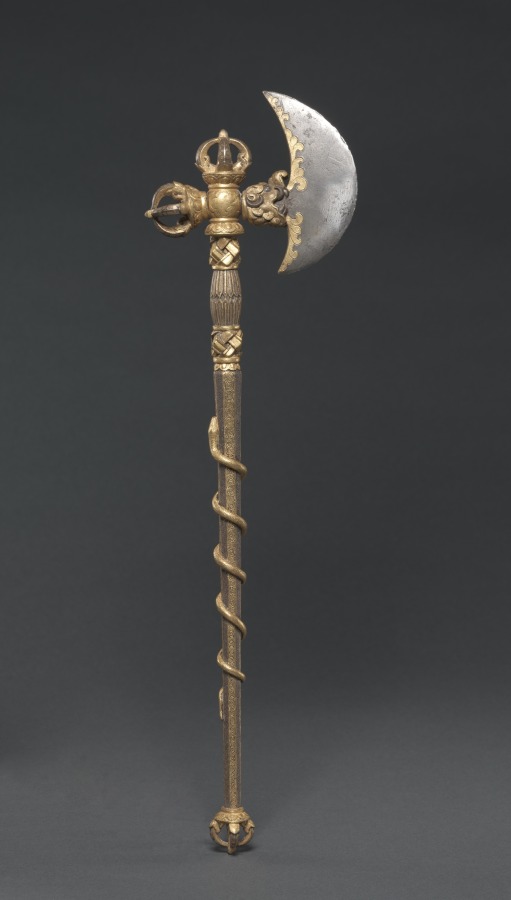
Ceremonial weaponry was used in tantric rituals to combat obstacles to enlightenment, such as ignorance and uncontrolled passions. In 1407 a high-ranking Tibetan monastic patriarch visited the emperor of the Ming dynasty, known as Yongle. The Yongle emperor presented him with a number of gifts, of which the axe, mace, flaying knife, incense burner (1983.154), and the gilt bronze Virupa (1972.96) appear to have been a part, since the sculpture and the axe bear his identifying inscription in a cartouche. Imperial Chinese workmanship is noted in the lush rendering of the lion heads from which the blades emerge, the calligraphic serpentine forms, and the cloud motifs.
The authoritative record is held by Cleveland Museum of Art. LinkedCulture surfaces this object and its connections; it does not alter institutional metadata.
Related across collections
Semantically similar works from Cleveland Museum of Art and other institutions.
Ritual Axe
Cleveland Museum of Art
Ritual Weapons
Cleveland Museum of Art

Ritual dagger (Phurba)
Minneapolis Institute of Art
Achala, King of the Wrathful Ones
Cleveland Museum of Art

Zhang scepter
Minneapolis Institute of Art
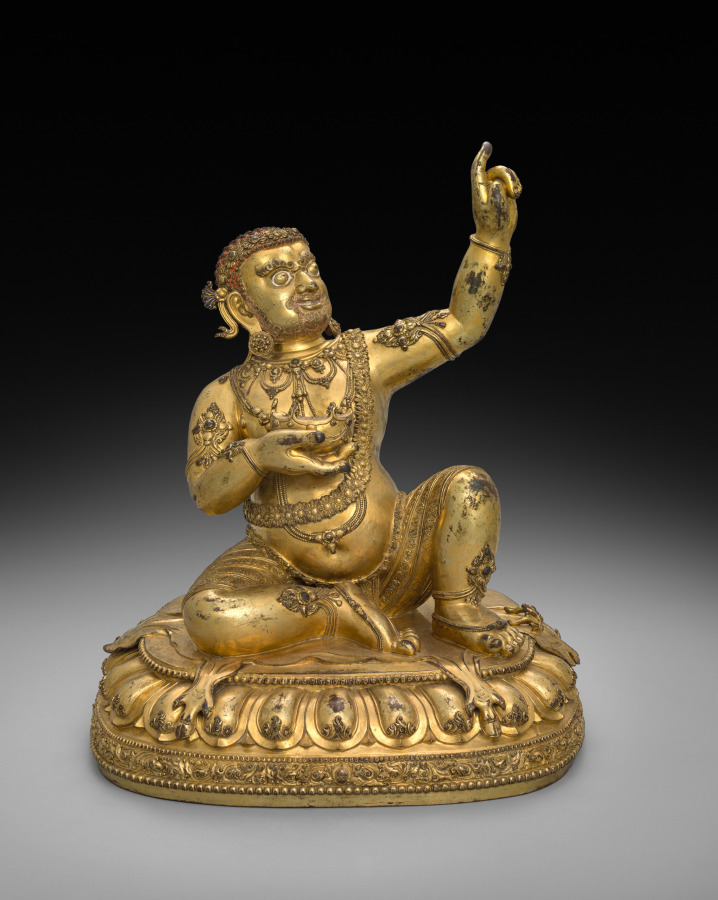
Virupa
Cleveland Museum of Art
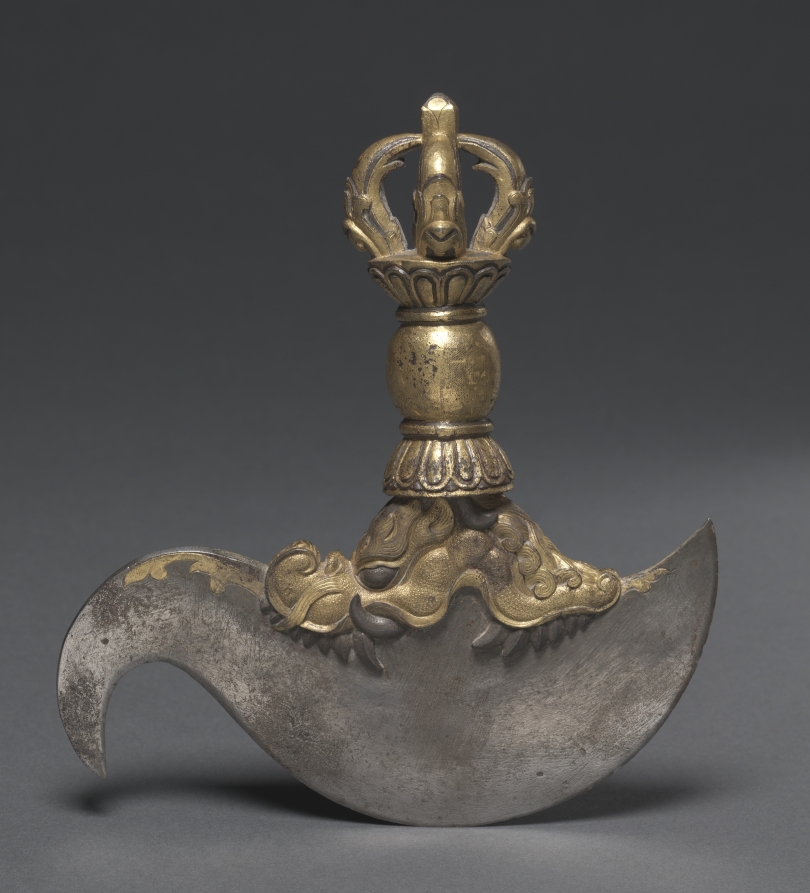
Ritual Flaying Knife
Cleveland Museum of Art
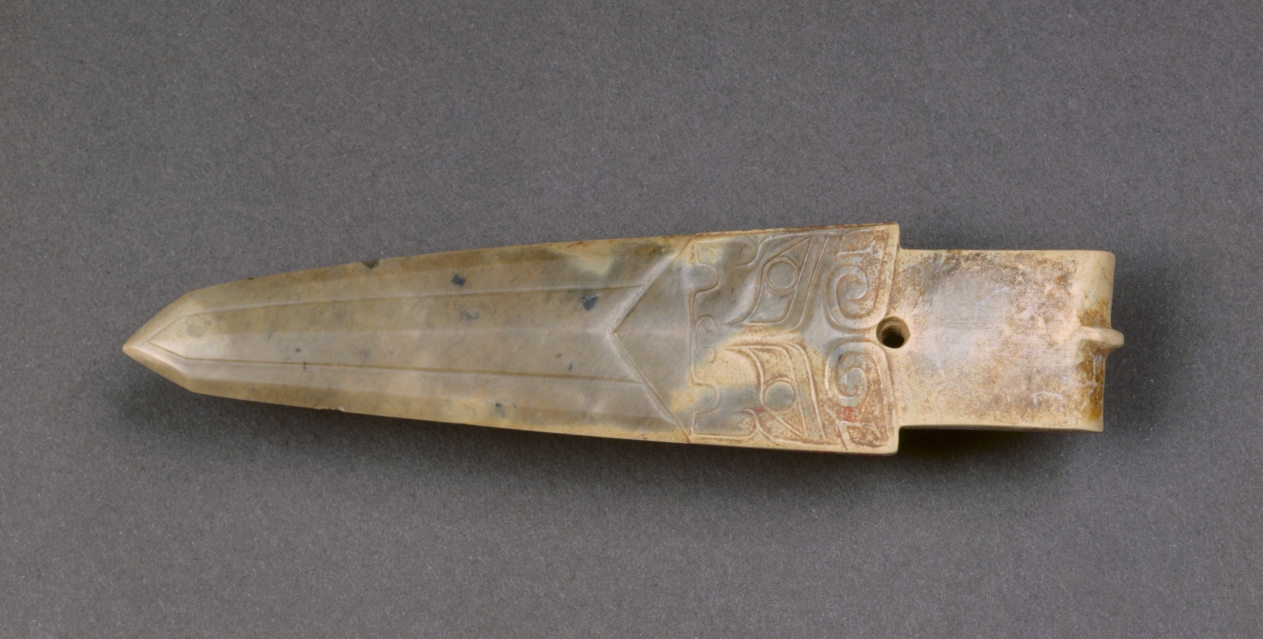
Ceremonial Dagger-Axe with Animal Masks (Ge)
Cleveland Museum of Art
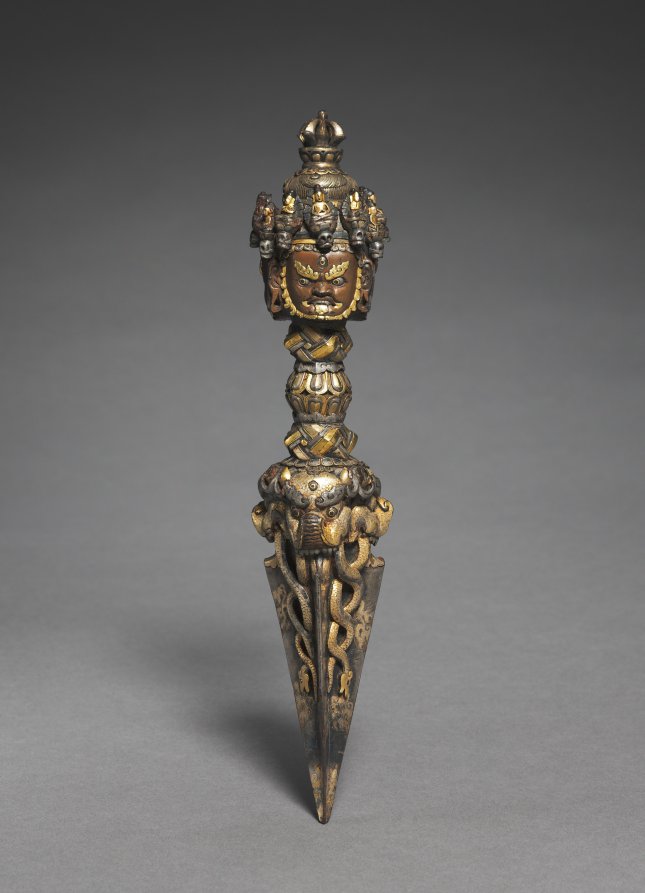
Phurbu
Cleveland Museum of Art
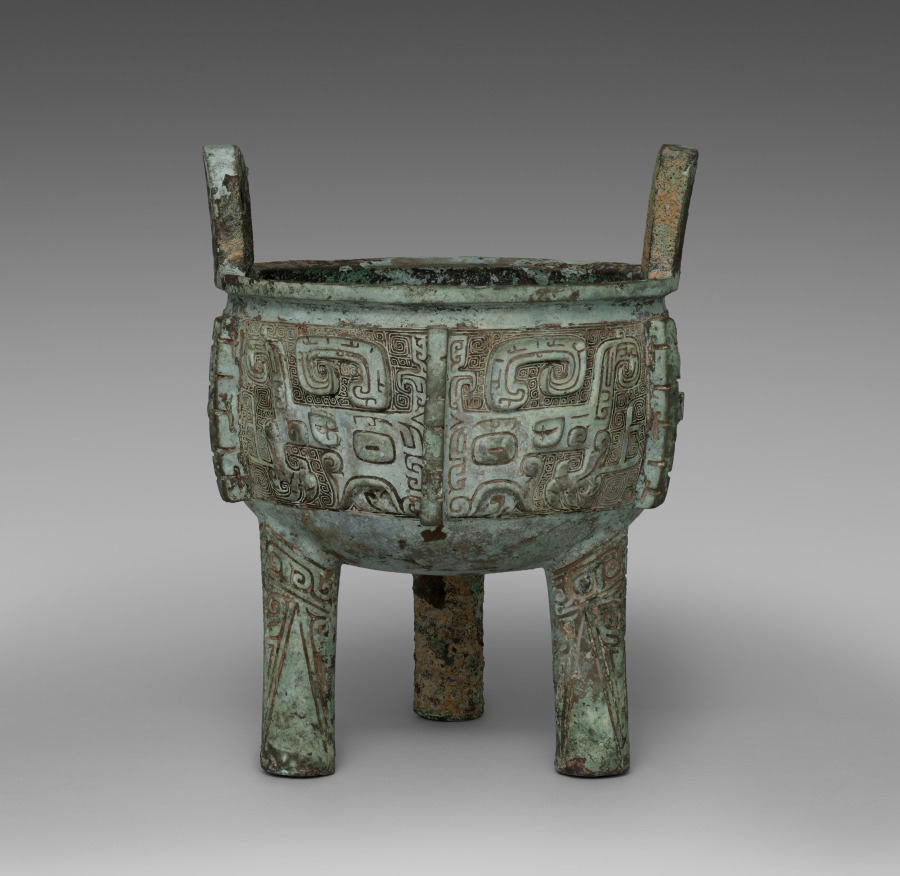
Tripod (Ding)
Cleveland Museum of Art
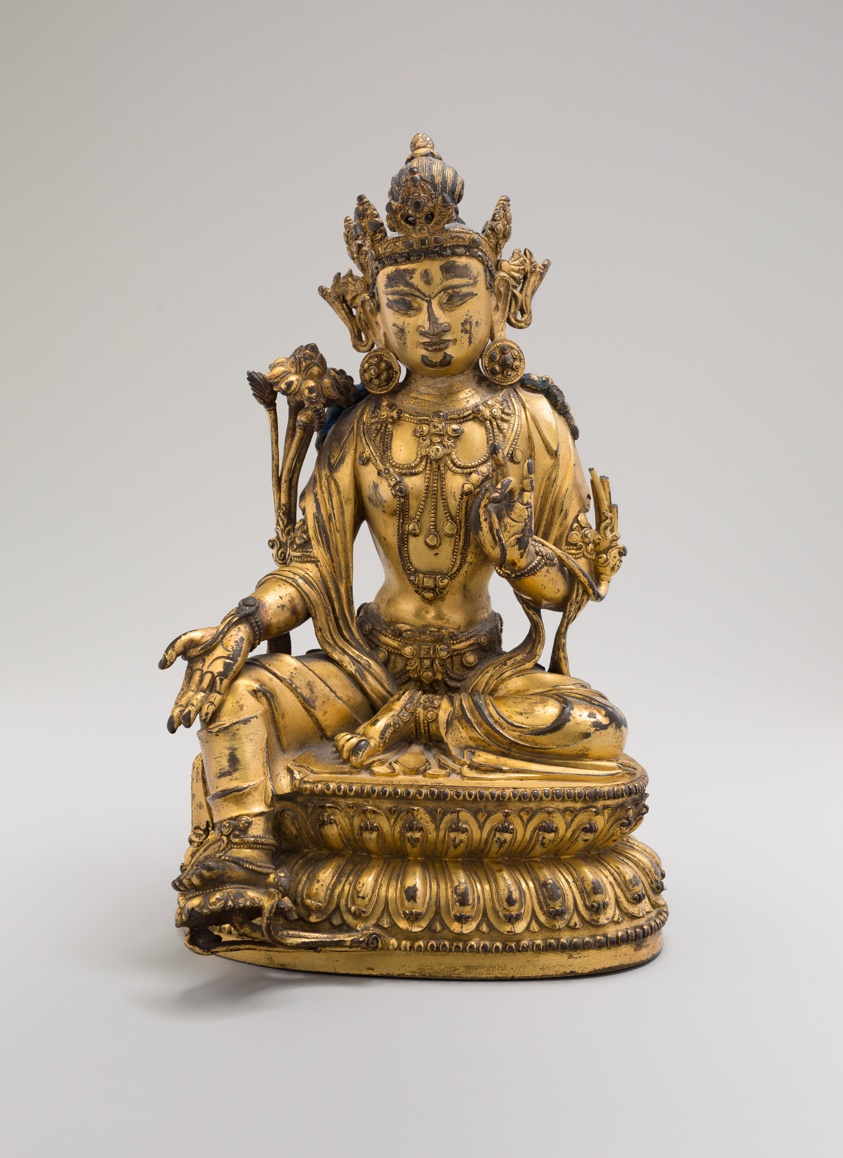
Green Tara, Seated in Pose of Royal Ease (Lalitasana), with Lotus Stalks on Right Shoulder and Hands in Gestures of Reasoning (Vitarkamudra) and Gift Conferring (Varadamudra)
Art Institute of Chicago

Imperial candlestick
Minneapolis Institute of Art