Cleveland Museum of Art
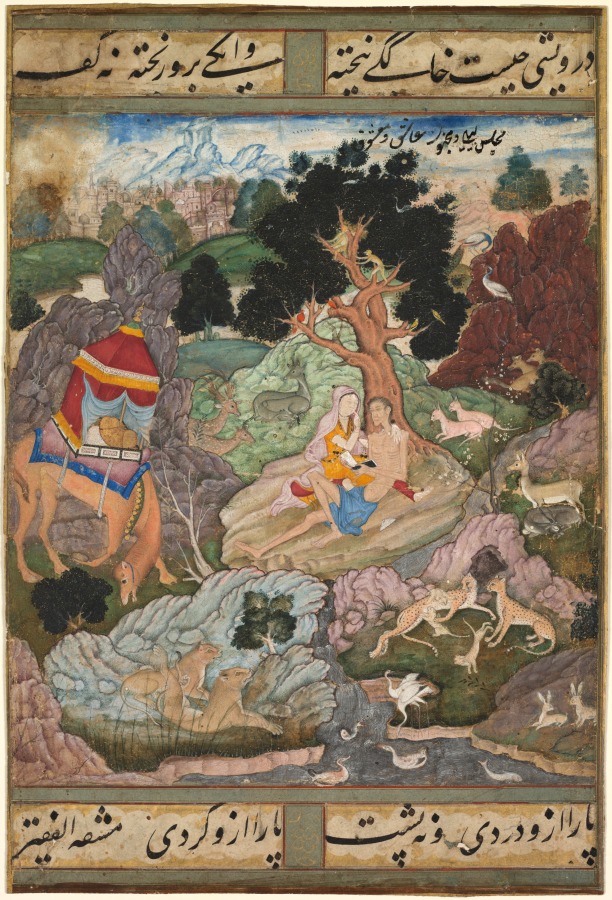
Layla and Majnun in the wilderness with animals, from a Khamsa (Quintet) of Amir Khusrau Dihlavi
SanwalahLinkedCulture matchlcp-e2e56e7b21f2
- Date
- c. 1590–1600
- Medium
- Gum tempera, ink, and gold on paper
- Department
- Indian and Southeast Asian Art
- Institution
- Cleveland Museum of Art
- Object ID
- 170796
From the Cleveland Museum of Art record
Nestled in the multicolored rocks are the reunited lovers Layla and Majnun, forced by society to remain separated for years. Majnun’s name means “madman,” since the separation drove him past the brink of sanity. Exiling himself to the wilderness, he became emaciated. When Layla found him after a prophetic dream, the wild animals gathered around, drawn to the purity and depth of their love. This painting illustrates a version of the story as told by an Indian author who wrote in Persian. He altered the ending given by previous Persian authors to the ancient Bedouin tale that originated among nomadic tribes of the Arabian Peninsula, in which Layla dies before the couple can be physically reunited. White paint, prone to flaking, chipped off her face, revealing the underdrawing.
The authoritative record is held by Cleveland Museum of Art. LinkedCulture surfaces this object and its connections; it does not alter institutional metadata.
Get printable QR codesHide QR codes
Open QR codes for this object page and the museum record. They stay collapsed until needed.
Provenance & credit
As published by the source institution. Coverage varies — not every institution's open-data feed includes ownership history.
- Credit line
- Gift in honor of Madeline Neves Clapp; Gift of Mrs. Henry White Cannon by exchange; Bequest of Louise T. Cooper; Leonard C. Hanna Jr. Fund; From the Catherine and Ralph Benkaim Collection
- Provenance
- December 12, 1966: (Sotheby’s, London, England, Fine Oriental Manuscripts and Miniatures, 12 December 1966 sale, lot 55, sold to Ralph Benkaim) | 1966–2013: Ralph Benkaim [1914–2001] and Catherine Glynn Benkaim [b. 1946], Beverly Hills, CA, sold to the Cleveland Museum of Art | 2013–: The Cleveland Museum of Art, Cleveland, OH
Related across collections
Semantically similar works from Cleveland Museum of Art and other institutions.