
Minneapolis Institute of Art
Man's tunic (chaoli)
Senegal
- Date
- 20th century
- Medium
- Cotton, needlework
- Department
- Arts of Global Africa
- Institution
- Minneapolis Institute of Art
In Senegal, voluminous robes with lavish embroidery, called boubou, are associated with high-ranking officials in Islamic societies. The volume of the garment creates an aesthetic of bigness that enhances both the physical presence and symbolic importance of the wearer. Embroidery is traditionally done by hand by a malam, a male religious specialist with knowledge of Arabic writing. The designs are drawn from an Islamic visual vocabulary referencing political leadership, and they are meant to offer protective powers. These motifs include the tambari or king's drum, a spiral motif signifying chieftaincy and the spiritual path to God. Today, these garments continue to be prized and are worn by political and religious elite as an expression of respect for the traditions of the past. Africa
The authoritative record is held by Minneapolis Institute of Art. LinkedCulture surfaces this object and its connections; it does not alter institutional metadata.
Related across collections
Semantically similar works from Minneapolis Institute of Art and other institutions.
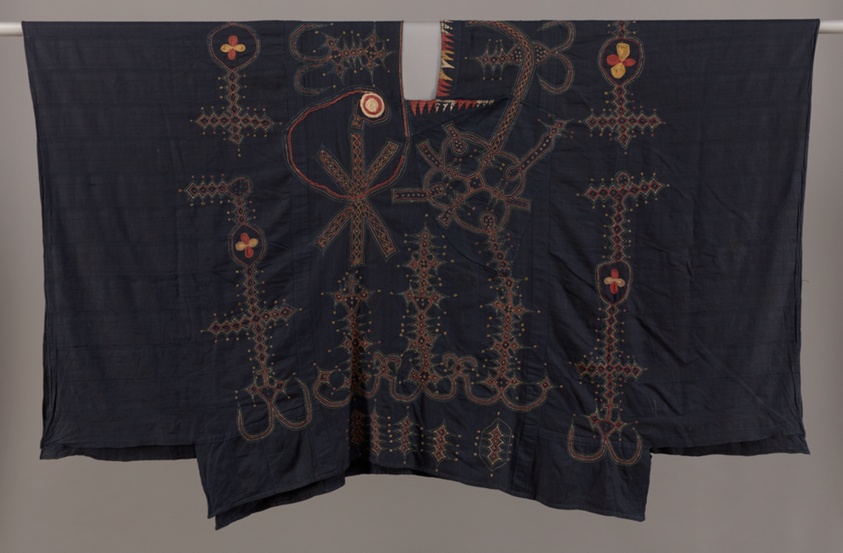
Robe (Boubou Lomasa)
Art Institute of Chicago

Man's Dance Tunic
Minneapolis Institute of Art

Tunic
Minneapolis Institute of Art

Tunic (faroumban)
Minneapolis Institute of Art
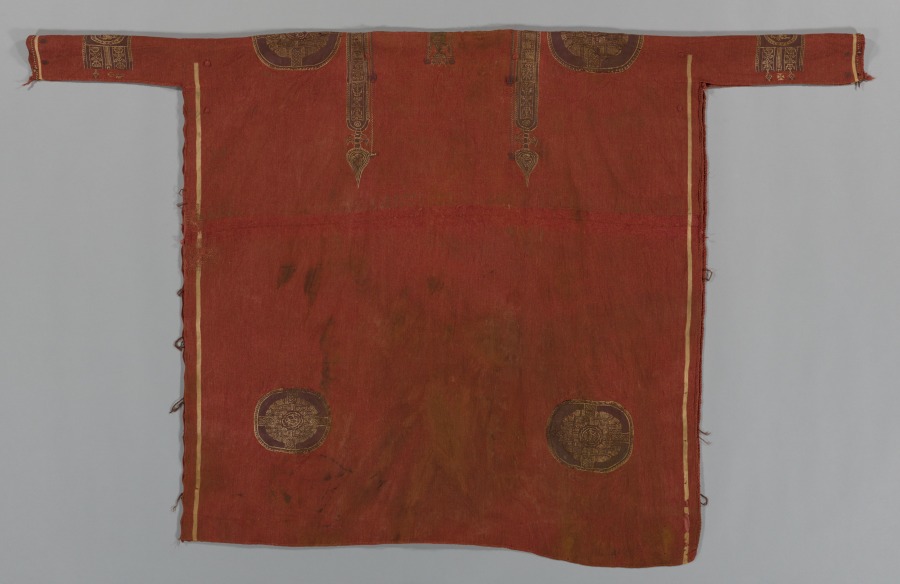
Luxurious Woolen Tunic with Decorated Bands and Roundels
Cleveland Museum of Art
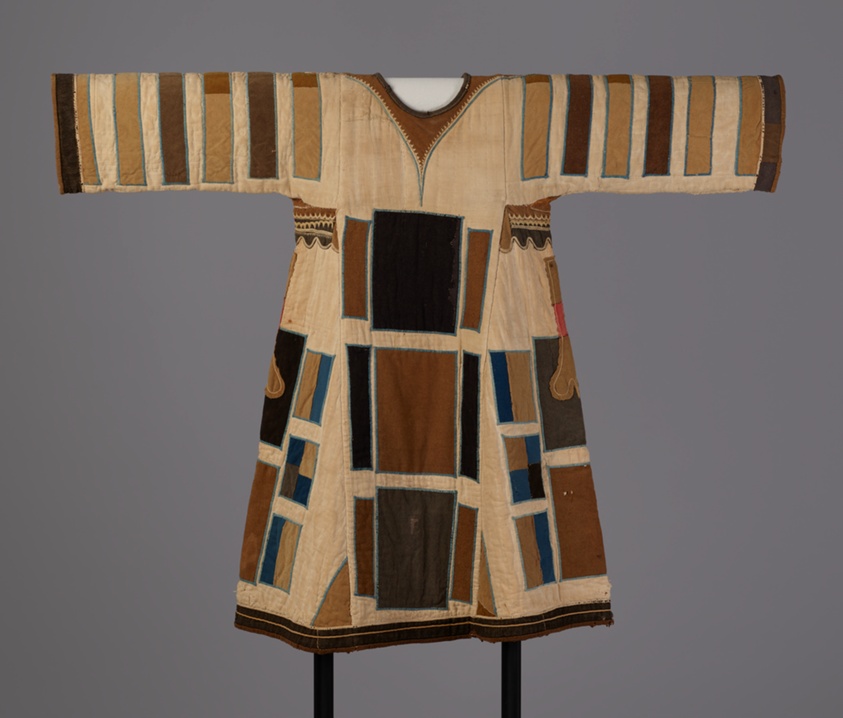
Tunic (Jibbeh)
Art Institute of Chicago
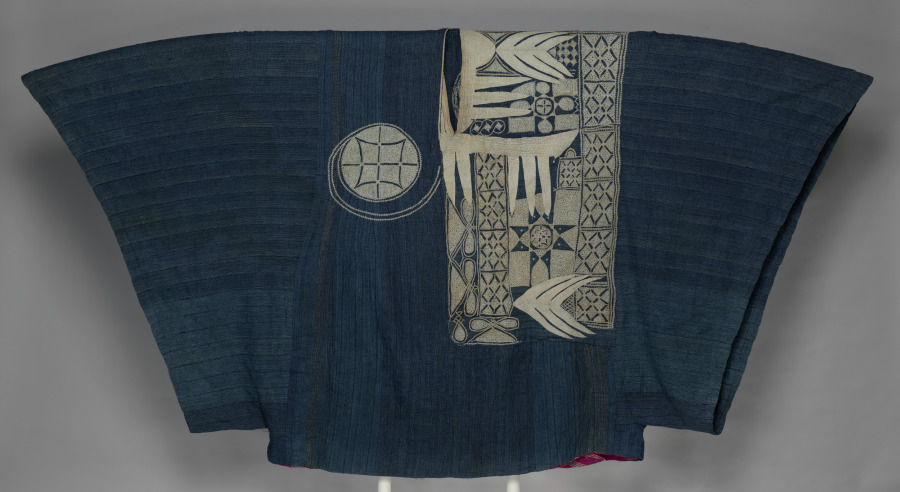
Prestige robe (riga)
Cleveland Museum of Art

Man's tunic (chaoli)
Minneapolis Institute of Art

Man's Dance Tunic
Minneapolis Institute of Art

Man's Dance Tunic
Minneapolis Institute of Art

Woman's tunic (Abho)
Minneapolis Institute of Art

Cape (Handira)
Minneapolis Institute of Art