Cleveland Museum of Art
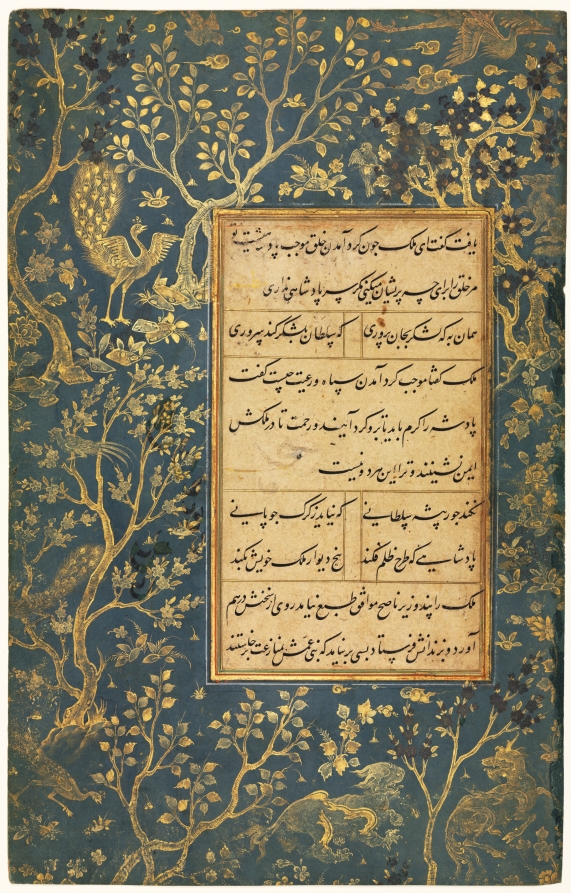
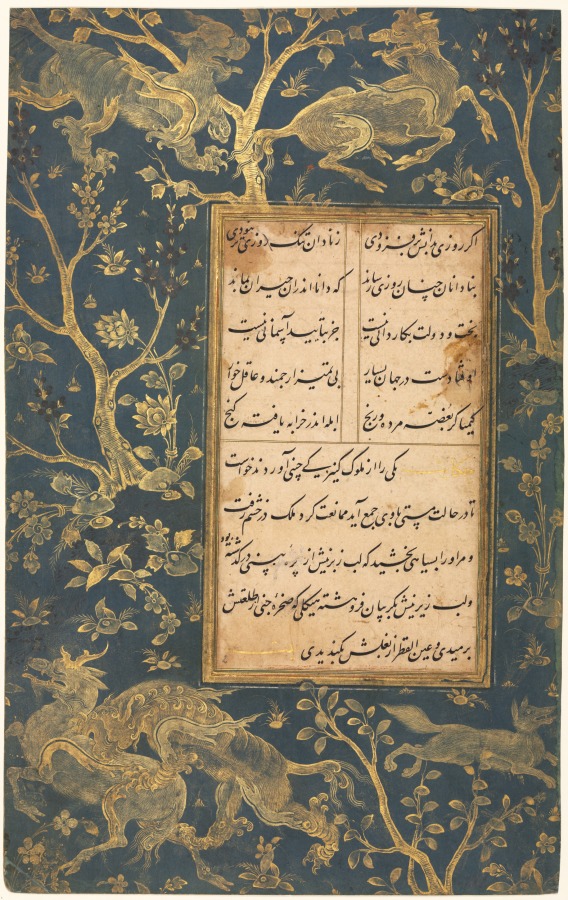
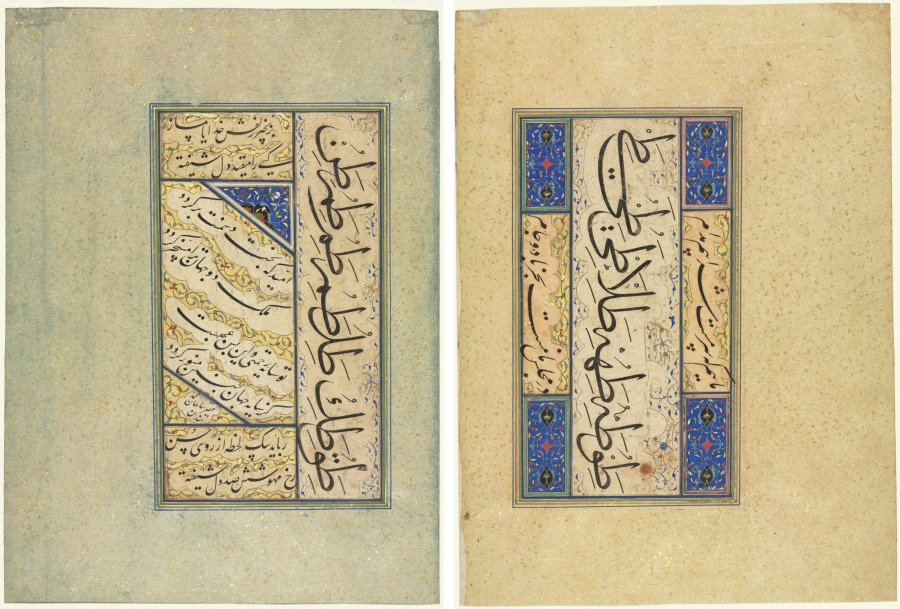
Illuminated Folio (recto) from a Gulistan (Rose Garden) of Sa'di (c. 1213–1291)
Sultan 'Ali al-Mashadi
- Date
- c. 1475–1500; border: c. 1550
- Medium
- Gum tempera, ink, gold, and silver on paper
- Culture
- Afghanistan, Herat, Timurid period (1370–1501)
- Department
- Islamic Art
- Institution
- Cleveland Museum of Art
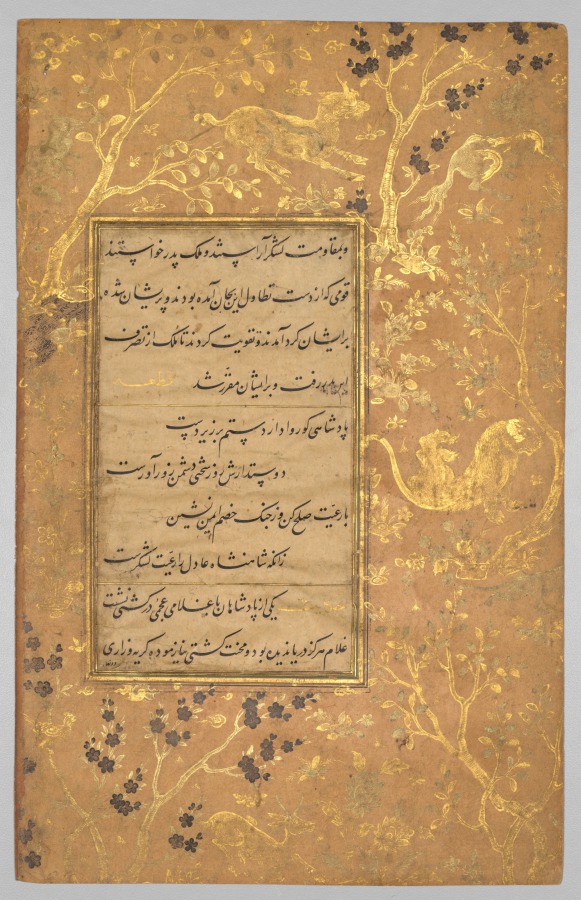
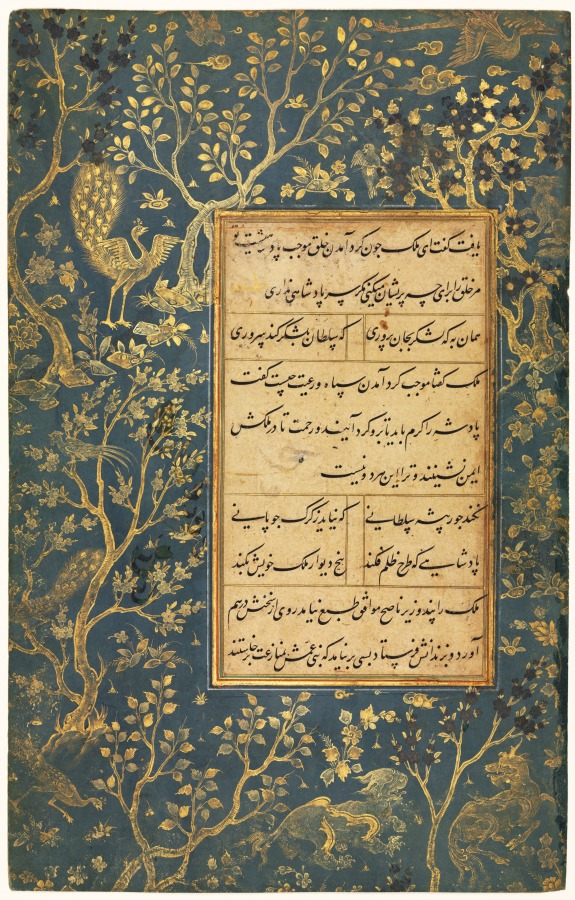
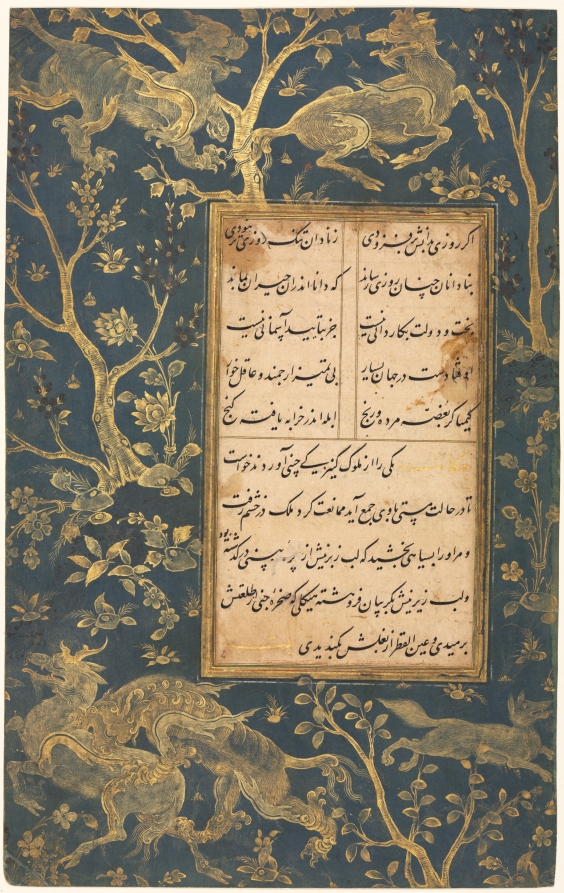
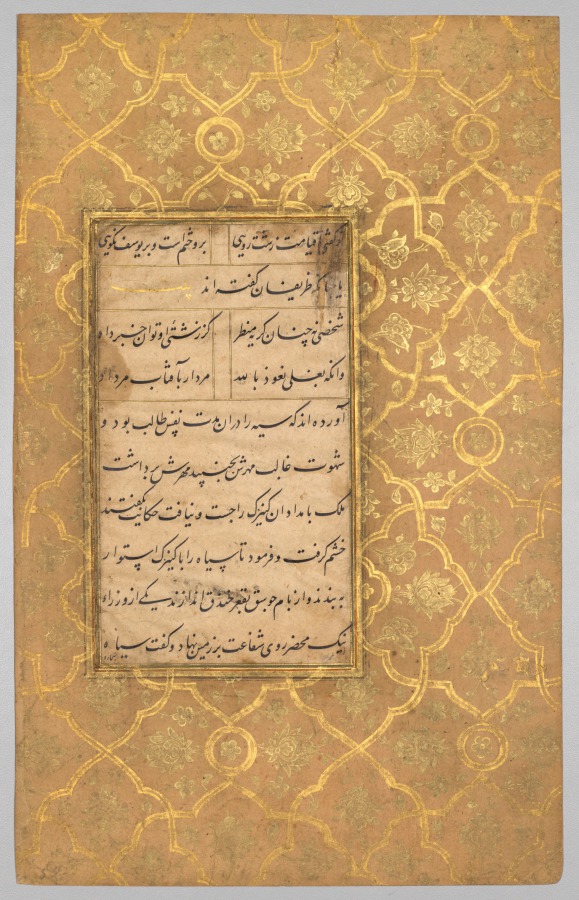
In the border surrounding the Persian poetical text, deer and a lion coexist peacefully in a forest. This imagery may reference the rule of a righteous king. The text is from the Gulistan , one of the most celebrated works of Persian literature, completed around 1258. Gulistan means “Rose Garden” in Persian; just as a rose garden is a collection of flowers, the contents are a collection of anecdotes. This page is from the section “On the Conduct of Kings.” The exquisite border was painted in gold and silver that has tarnished over time.
The authoritative record is held by Cleveland Museum of Art. LinkedCulture surfaces this object and its connections; it does not alter institutional metadata.
Related across collections
Semantically similar works from Cleveland Museum of Art and other institutions.
Illuminated folio from a Gulistan (Rose Garden) of Sa'di (c. 1213–1291)
Cleveland Museum of Art
Illuminated Folio from a Gulistan (Rose Garden) of Sa'di (c. 1213–1291)
Cleveland Museum of Art
Illuminated folio (recto) from a Gulistan (Rose Garden) of Sa'di (c. 1213–1291)
Cleveland Museum of Art
Illuminated Folio from a Gulistan (Rose Garden) of Sa'di (c. 1213–1291)
Cleveland Museum of Art
Illuminated folio (verso) from a Gulistan (Rose Garden) of Sa'di (c. 1213–1291)
Cleveland Museum of Art
Persian calligraphy framed by an ornamental border of flowers, birds, and deer, from the Late Shah Jahan Album
Cleveland Museum of Art
The Illuminated Border of Animals, double page from a copy of the Gulistan of Sa'di
Art Institute of Chicago
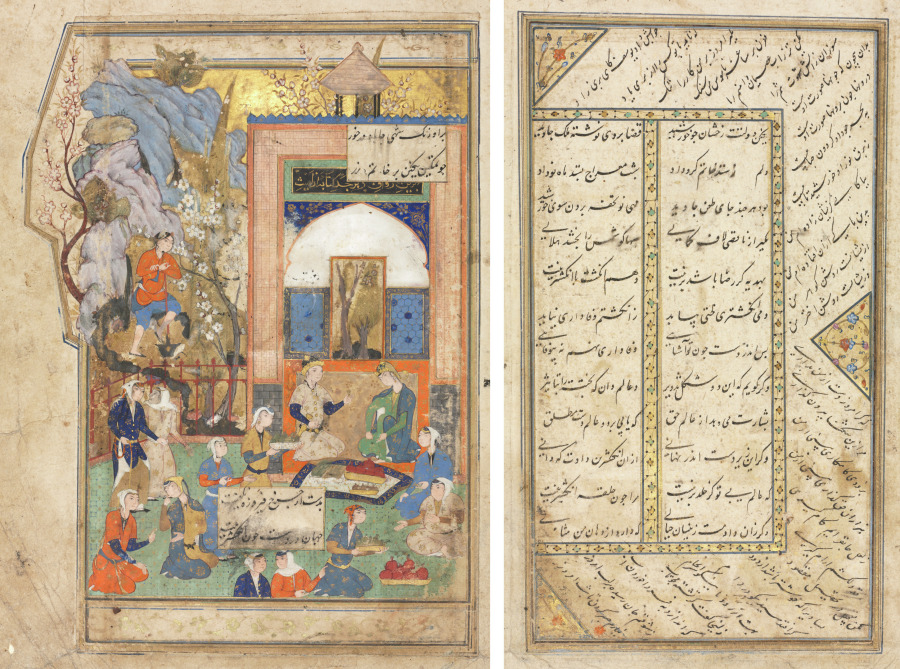
Yusuf and Zulaykha (recto); Text Page, Persian Verses (verso)
Cleveland Museum of Art
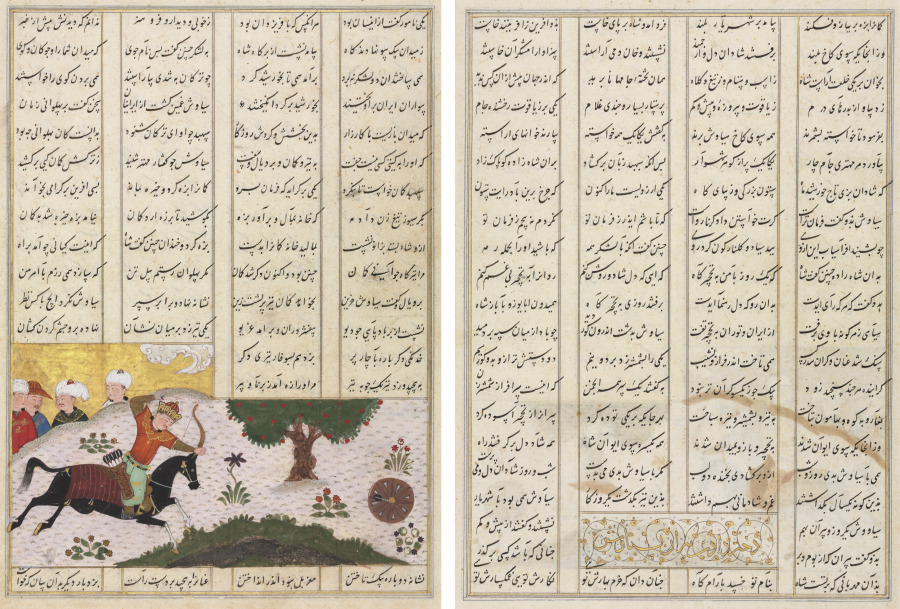
Siyavush on His Horse Hitting a Rolling Target (recto) and Persian verses (verso), from a Shahnama (Book of Kings) of Firdausi (940–1019 or 1025)
Cleveland Museum of Art
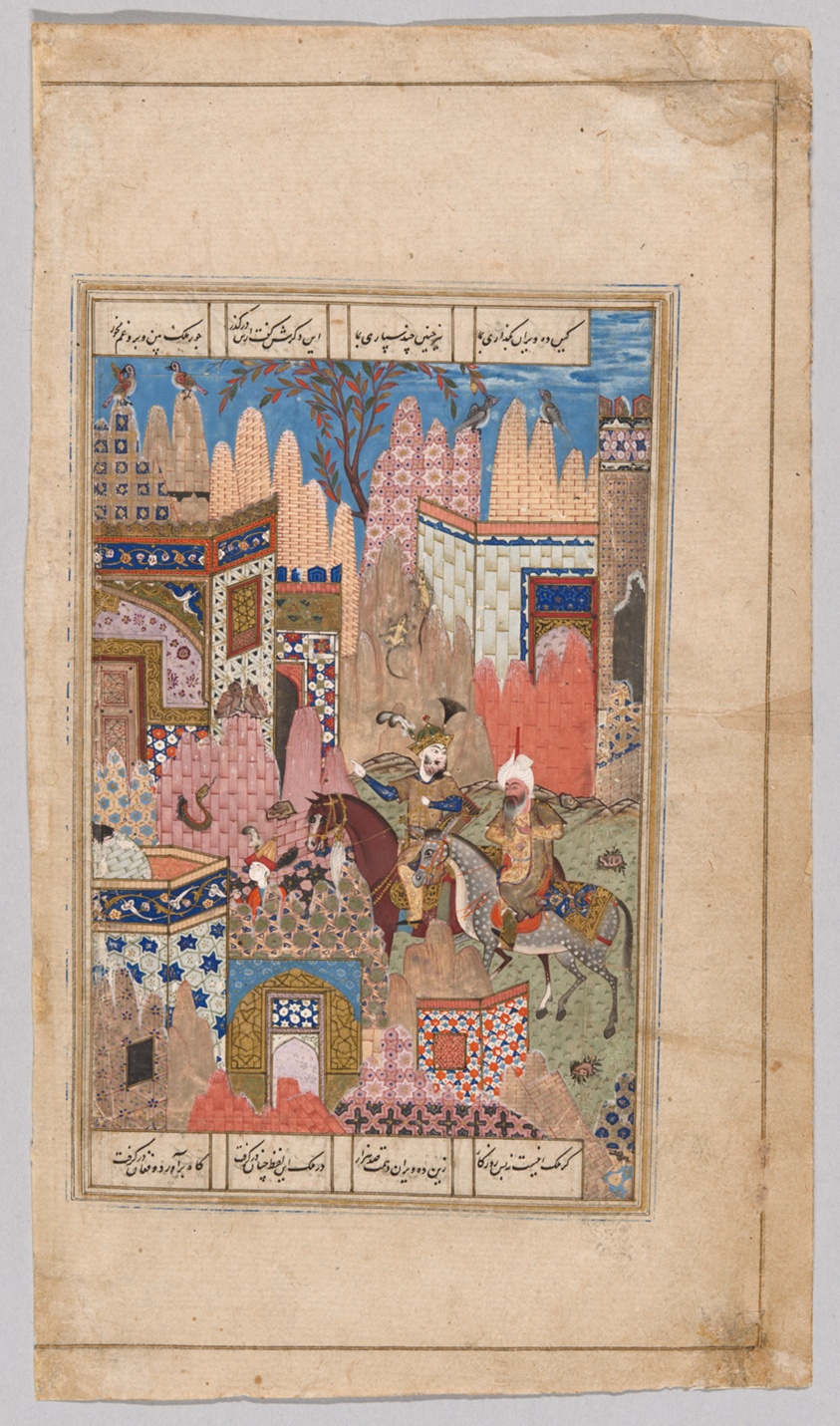
King Anushirwan and the Owls, from the Khamsa of Nizami
Art Institute of Chicago
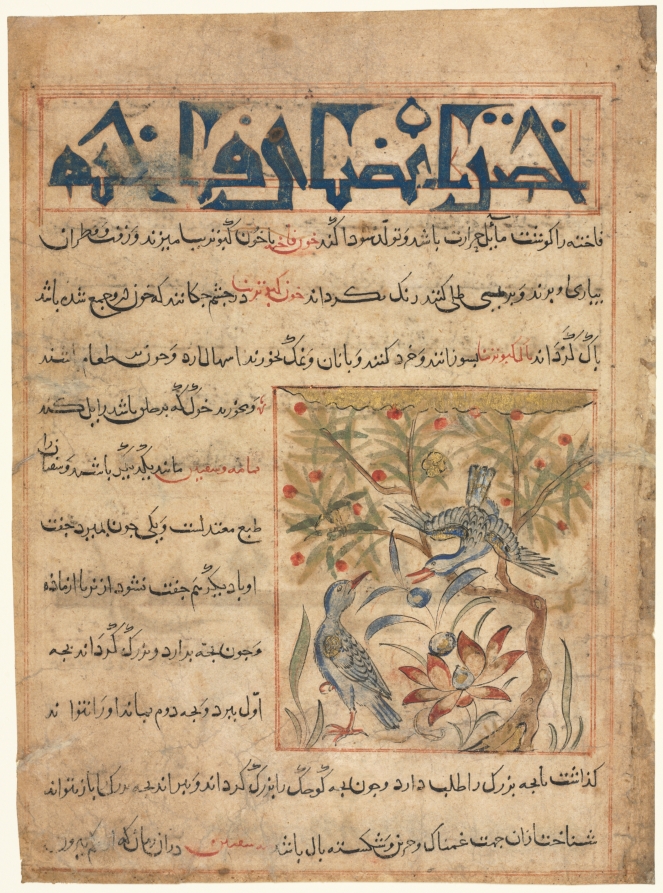
Folio from a Persian Manafi‘ al-Hayawan (The Benefits of Animals) of Abu Said Ubaid-Allah ibn Jibrail ibn Bakhtishu (died 1058–68) (recto)
Cleveland Museum of Art
Persian Quatrains (Rubayi) and Calligraphic Exercises (recto); Persian Verse (khamriyya) (verso)
Cleveland Museum of Art